Artwork
Saint Dominic
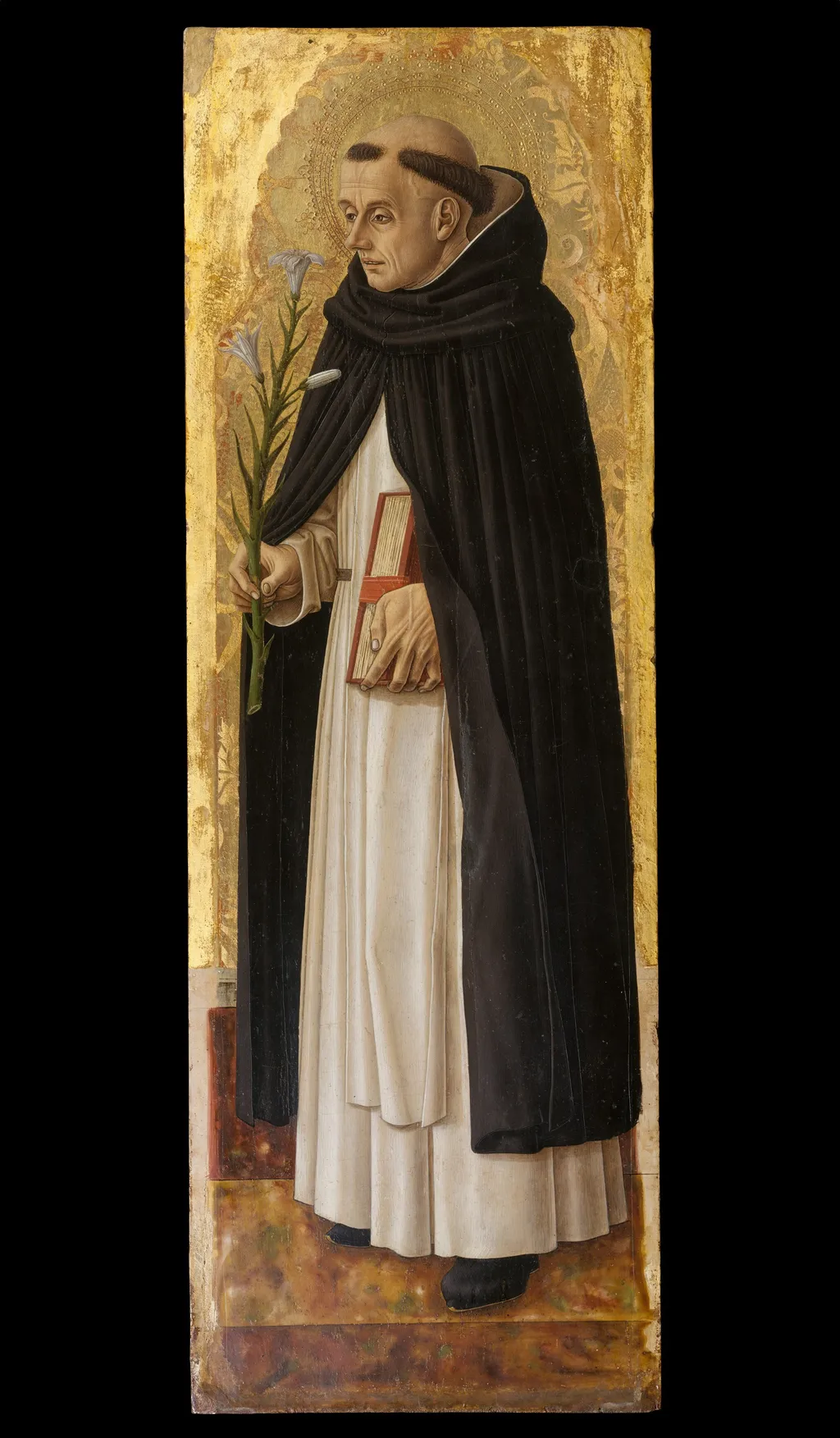
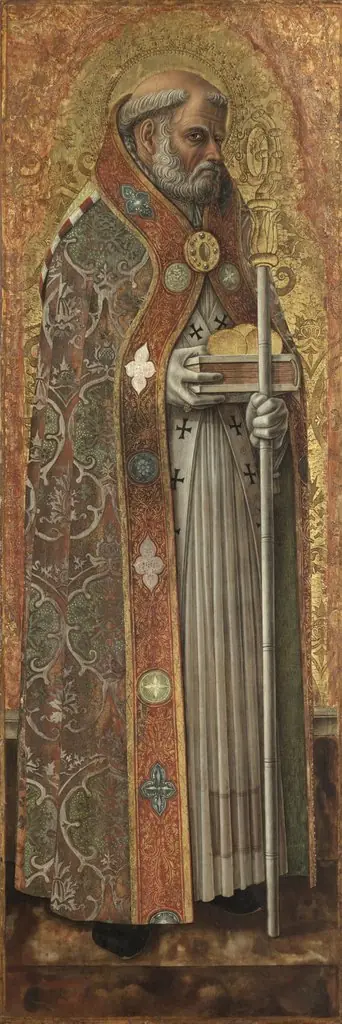
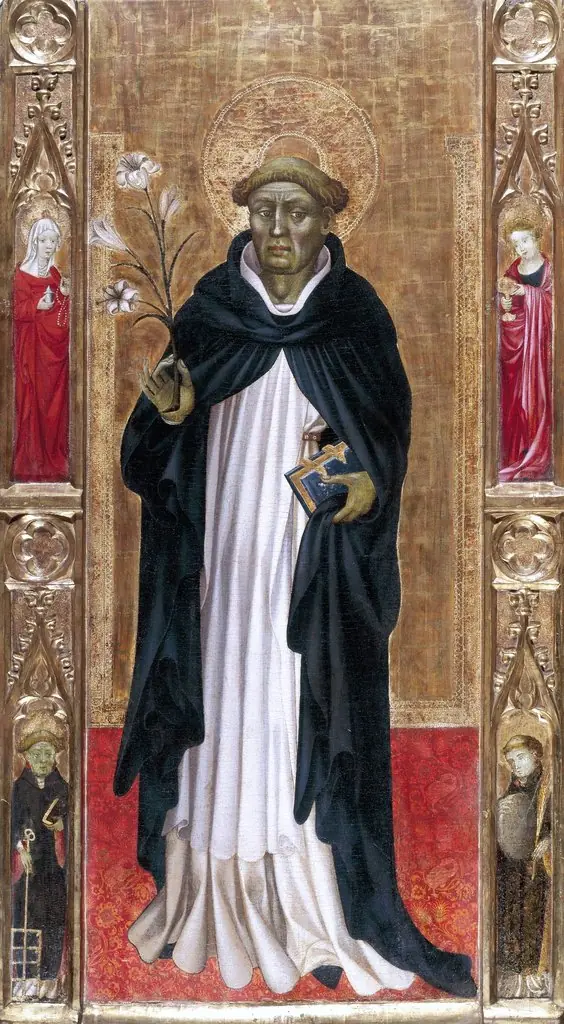
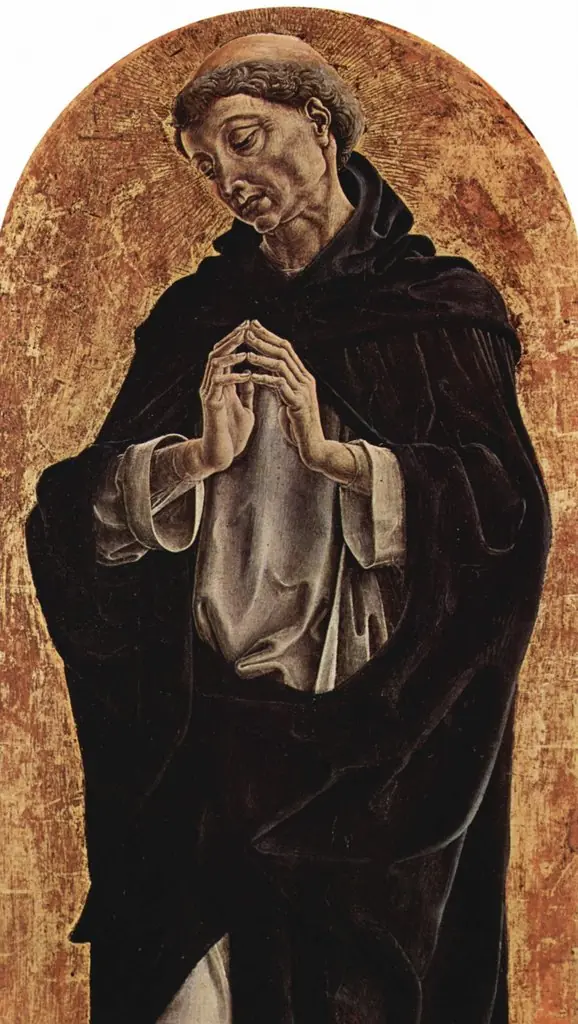
Saint Dominic is a tempera painting by the Northern Renaissance artist Carlo Crivelli. It dates from 1472 and is held in the collection of the Metropolitan Museum of Art.
About this work
Subject & Meaning
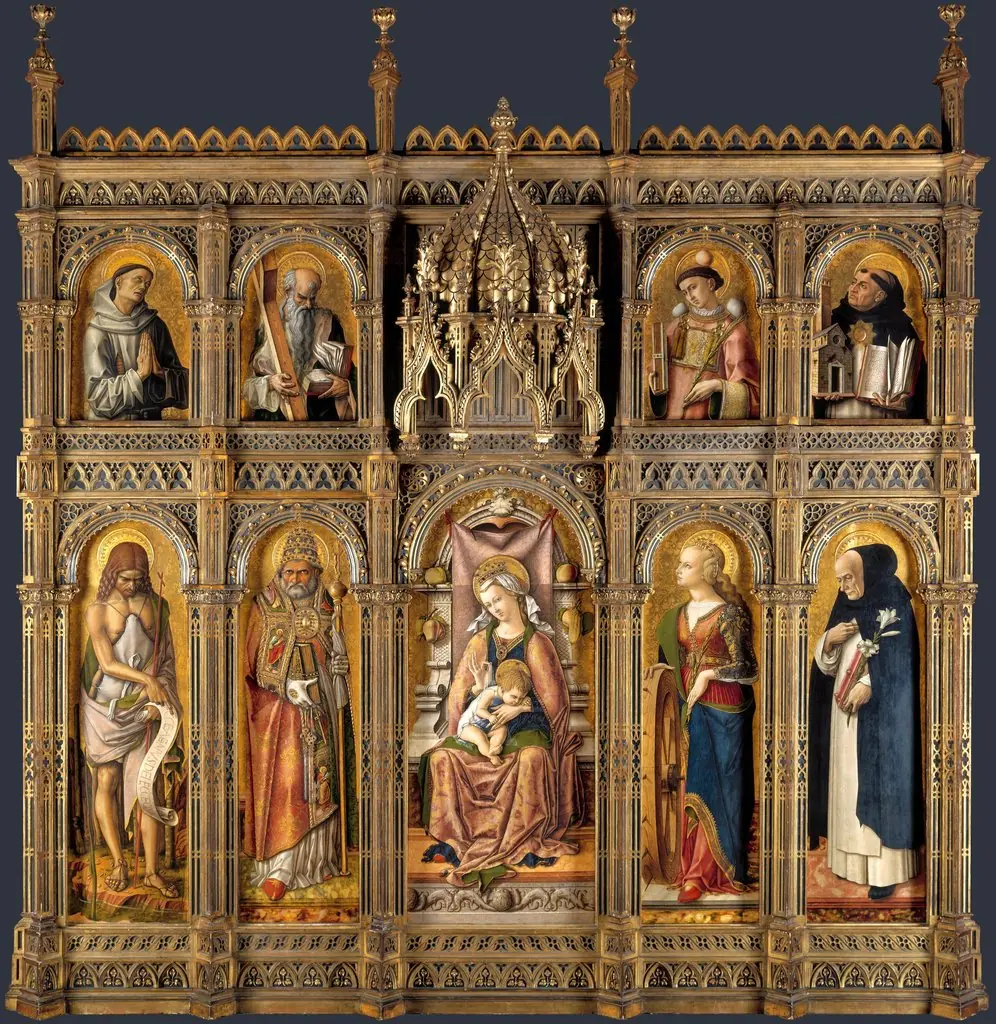
The work originates from the 1472 polyptych, originally linked to the church of San Domenico in Fermo, and now resides in the Metropolitan Museum of Art.
In this panel, Carlo Crivelli portrays Saint Dominic wearing the black-and-white habit of the Dominican Order, his head tonsured and a white lily held out toward the Virgin Mary. The lily functions as his traditional attribute, signifying purity and the order's Marian devotion. Dominic's gaze is directed at the central Madonna, while his outstretched hand mirrors her gesture, emphasizing his role as a heavenly intercessor.
The gold-ground background, richly patterned like damask, frames the figure with ornamental detail, reflecting Crivelli's blend of naturalistic rendering of flesh and meticulous decorative motifs. The work originates from the 1472 polyptych, originally linked to the church of San Domenico in Fermo, and now resides in the Metropolitan Museum of Art.
Technique & Style
Saint Dominic is executed in tempera and gold on panel, a technique characteristic of mid-Quattrocento Italian devotional painting. The panel measures approximately 94 × 27 cm (with Wikidata recording the work at 97.2 × 32.4 cm) and originally formed one wing of Crivelli's 1472 polyptych. The gold ground is elaborately tooled to imitate the surface of a damask textile, lending the figure a luminous, tapestry-like backdrop.
The saint is rendered with an intensely naturalistic handling of flesh: Crivelli's meticulous modeling of the face and hands registers the underlying structure of bones, tendons, and veins, producing a hyper-realistic effect that the Italian source links to the artist's study of Donatello. This sculptural, almost tactile treatment of anatomy is paired with equally precise attention to decorative detail in the Dominican habit and attributes, a combination the sources identify as the expressive core of Crivelli's distinctive style within the Italian panorama of the period.
History & Provenance
Carlo Crivelli created the tempera and gold on panel painting of Saint Dominic in 1472 as a component of the larger 1472 Polyptych. The work was originally installed in the Church of Saint Dominic in Fermo before the altarpiece was dismantled shortly before 1834, with panels dispersed into the art market. By 1840, this specific panel, along with one depicting Saint George, was held in the Roman collection of Cardinal Fesch.
It subsequently entered the London collection of Reverend Walter Davenport-Bromley in 1863, later passing to Lady Ashburton. The Metropolitan Museum of Art in New York acquired the painting in 1905, where it remains part of the permanent collection today.
Context
Saint Dominic is a tempera panel painted by Carlo Crivelli in 1472 that formed a wing of the 1472 polyptych originally destined for the church of San Domenico in Fermo. After the polyptych was dismantled before 1834, the panel passed through the collections of Cardinal Fesch, Reverend Walter Davenport-Bromley, and Lady Ashburton, entering the Metropolitan Museum of Art in 1905. Scholarship, notably Pietro Zampetti's 1986 monograph, emphasizes its hyper-realist rendering derived from the study of Donatello, its meticulous naturalism of flesh and veins, and its parallel devotion to decorative detail, a combination deemed original in the Italian milieu of the period.
These qualities secure its place as a key example of Crivelli's mature style within the broader context of fifteenth-century Italian religious painting.
Overview
This painting, Saint Dominic, was created by the Italian Renaissance artist Carlo Crivelli in 1472. Executed in tempera, the work portrays Saint Dominic, a significant figure in Christian history. The artwork is currently held in the collection of The Metropolitan Museum of Art.
Crivelli's distinctive approach to painting is evident in this religious depiction, which showcases his characteristic style from the late 15th century.
Artist & collection
Artist
Carlo Crivelli (c. 1430 – c. 1495) was an Italian Renaissance painter of conservative Late Gothic decorative sensibility, who spent his early years in the Veneto, where he absorbed influences from the Vivarini,…