Artwork
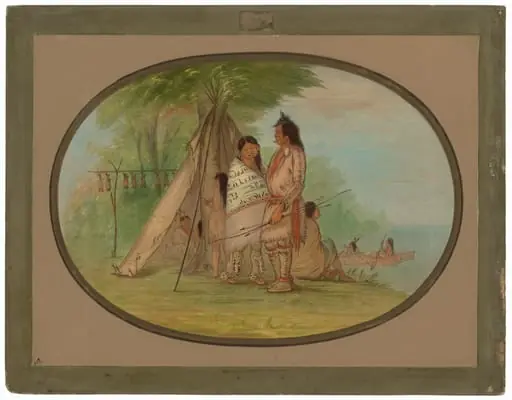
A Crow Chief at His Toilette
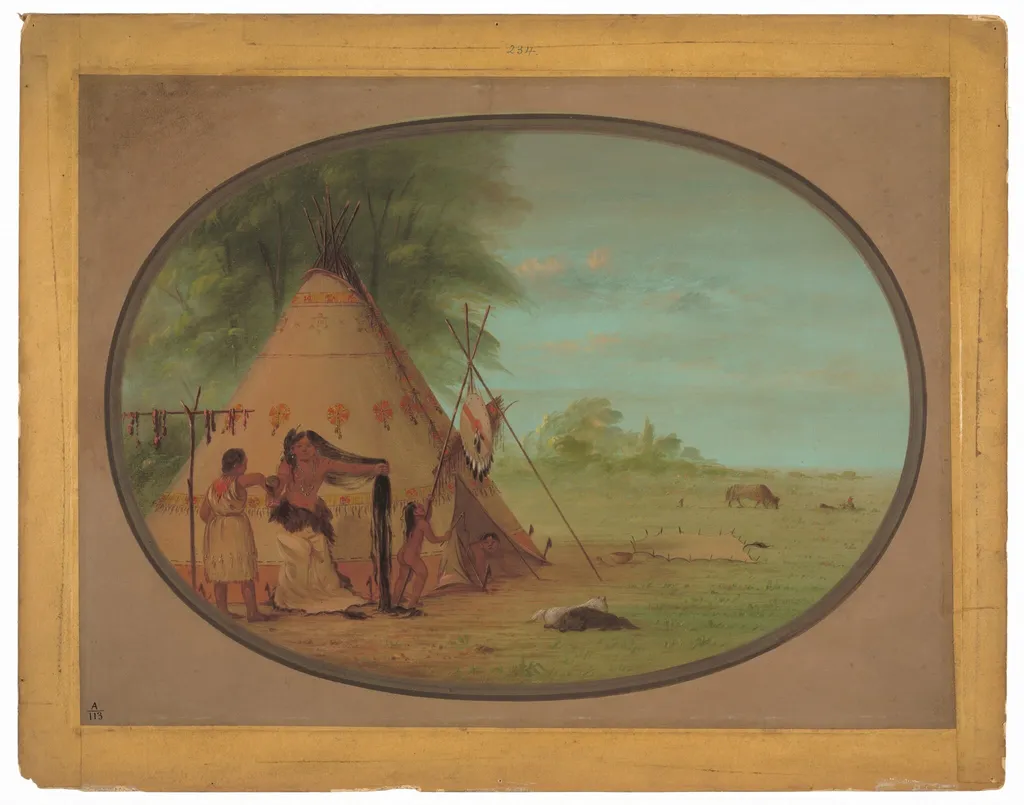
A Crow Chief at His Toilette is an oil painting by the Impressionist artist George Catlin. It dates from 1865 and is held in the collection of the National Gallery of Art.
About this work
Technique & Style
Stylistically, the composition functions as a genre portrait that incorporates environmental elements, specifically depicting a tree within the scene.
Created in 1861, this portrait utilizes oil paint applied to a card support, which is subsequently mounted on paperboard. The work measures 47 cm in height and 63.3 cm in width. Stylistically, the composition functions as a genre portrait that incorporates environmental elements, specifically depicting a tree within the scene. The physical construction involves a layered support system distinct from traditional canvas or wooden panel preparations.
History & Provenance
The painting was created by George Catlin in 1861 as an oil on card mounted on paperboard portrait. It descended through the artist's daughters Clara Gregory Catlin, Louise Catlin Kinney, and Elizabeth Wing Catlin before being purchased in 1912 from Elizabeth Wing Catlin by the American Museum of Natural History. The work was later sold in 1959 through Kennedy Galleries in New York to Paul Mellon of Upperville, Virginia, and subsequently gifted to the National Gallery of Art in 1965.
The painting A Crow Chief at His Toilette, created by George Catlin in 1861, is part of the National Gallery of Art's collection in Washington, D.C., having entered the museum through a 1965 gift from Paul Mellon. It was previously held by the American Museum of Natural History after being purchased from Elizabeth Wing Catlin in 1912 and later acquired from Kennedy Galleries in 1959.
Overview
Created in 1865, A Crow Chief at His Toilette is an oil painting executed on card that has been mounted on paperboard. The work presents a solitary figure seated before a tree, attending to his hair and attire. The composition is intimate, focusing on the chief’s personal routine rather than any ceremonial or martial context.
Subject & Meaning
The portrait captures a Crow chief in a moment of private preparation, dressed in traditional regalia that includes feathered ornaments and fur garments. By depicting the chief engaged in a quotidian act, the image offers a nuanced glimpse into the everyday life of Plains Indian leadership, emphasizing individuality over stereotypical representations of Native warriors.
Context
The work belongs to a broader corpus of mid‑nineteenth‑century American art that sought to record the cultures of Native peoples amid rapid westward expansion. Catlin’s approach combined ethnographic observation with artistic convention, positioning his subjects within natural settings that underscore their connection to the landscape.
Legacy
Although not as widely reproduced as some of Catlin’s earlier engravings, the portrait contributes to the visual archive of Crow leadership and informs contemporary understandings of Indigenous daily life during a period of significant cultural disruption.
Own this work as a print
Artist & collection

Artist
George Catlin ( KAT-lin; July 26, 1796 – December 23, 1872) was an American lawyer, painter, author, and traveler, who specialized in portraits of Native Americans in the American frontier.

 Bulls Fighting
 Expedition Encamped on a Texas Prairie. April 1686
 An Alligator's Nest
 Mrs. George Catlin (Clara Bartlet Gregory)
 Chief of the Taensa Indians Receiving La Salle. March 20, 1682
 A Small Village - Payaguas Indians
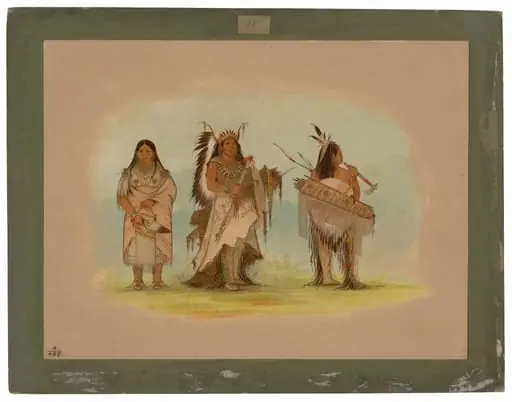 Omaha Chief, His Wife, and a Warrior
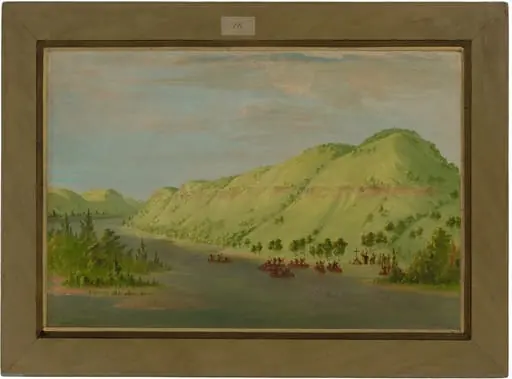 Father Hennepin Leaving the Mississippi to Join La Salle. May 8, 1680
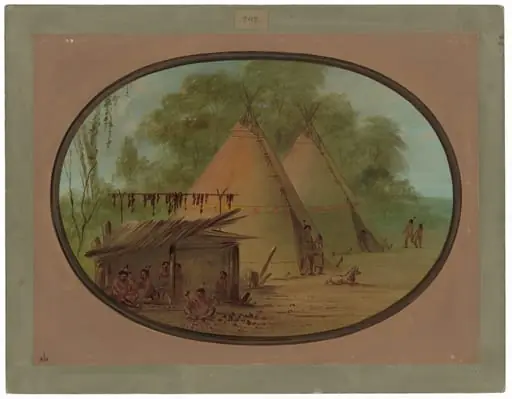 Making Flint Arrowheads - Apachees
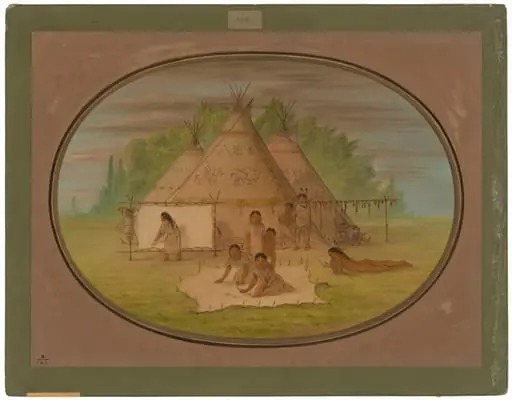 Cheyenne Village
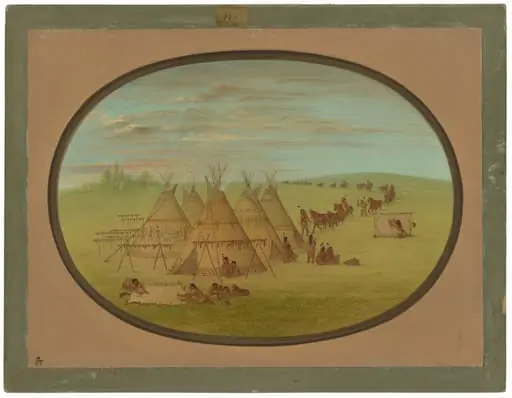 A Little Sioux Village
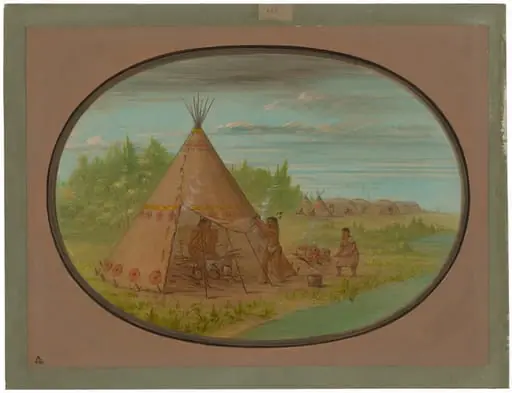 Vapor Bath - Minatarree
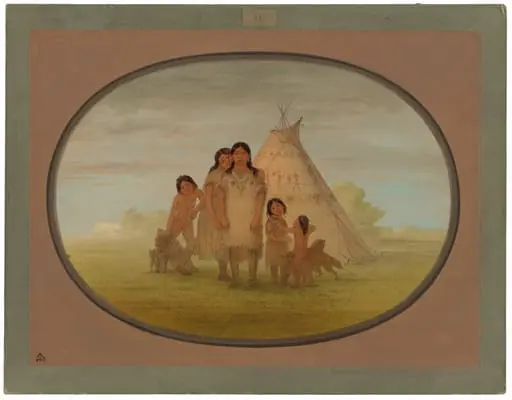 Camanchee Chief's Children and Wigwam
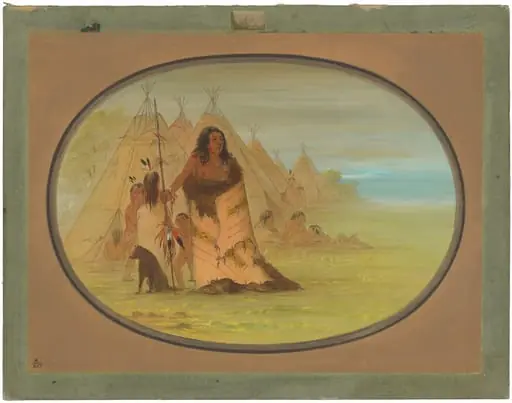 Puncah Chief Surrounded by His Family
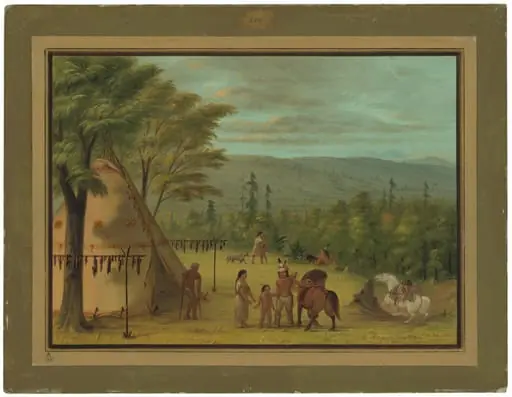 The Cheyenne Brothers Starting on Their Fall Hunt
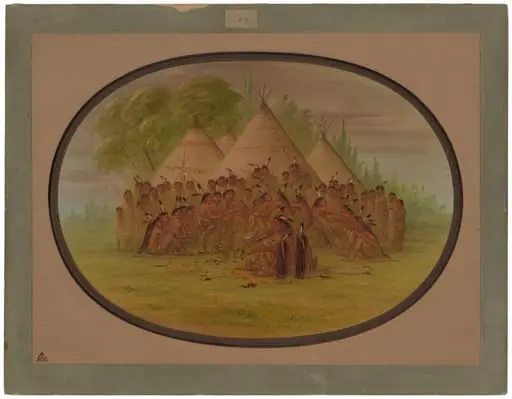 Pipe Dance - Assinneboine
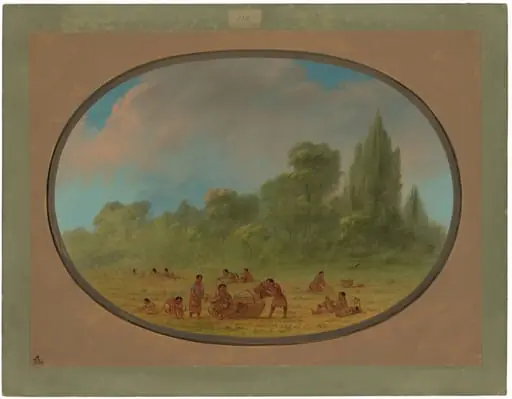 Caddoe Indians Gathering Wild Strawberries
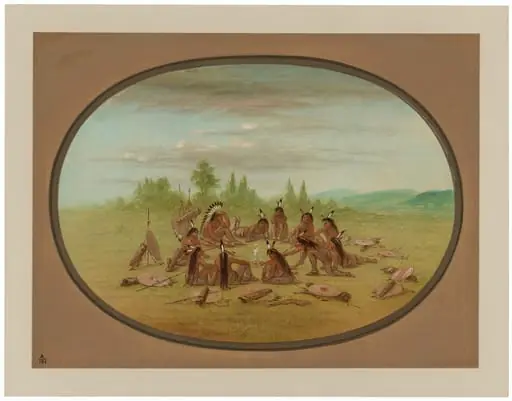 A Foot War Party in Council - Mandan
 Nayas Indians
- Crow Warriors Bathing