Artwork
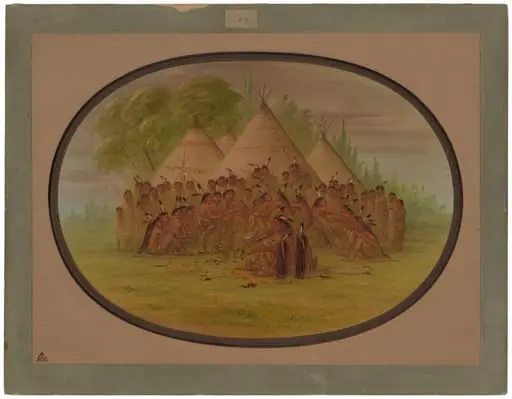
A Foot War Party in Council - Mandan
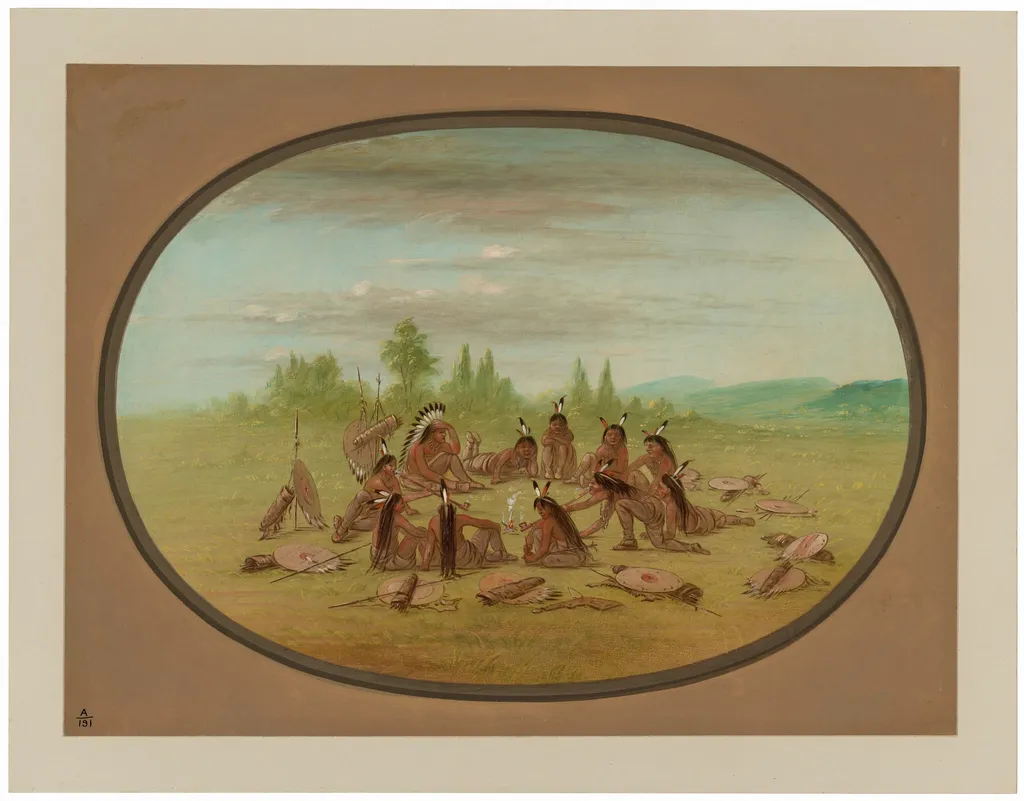
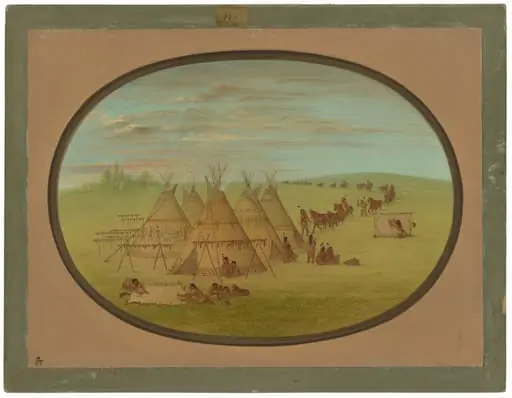
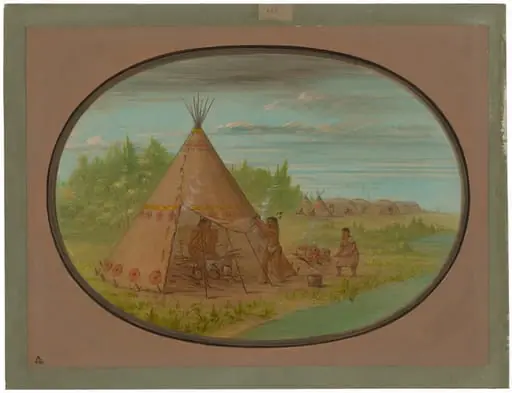
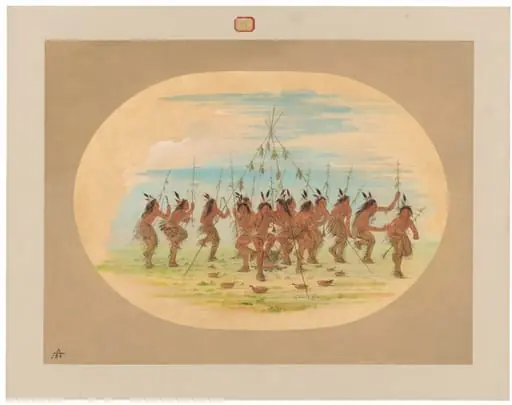
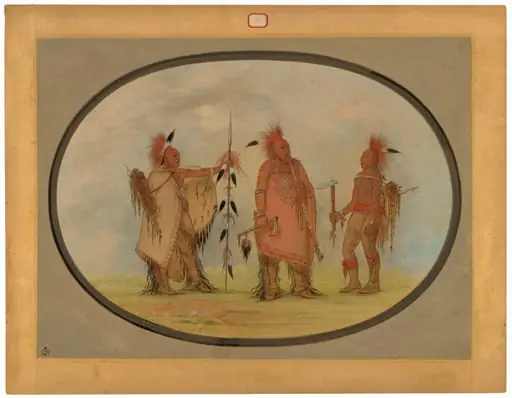
A Foot War Party in Council - Mandan is an oil painting by the Impressionist artist George Catlin. It dates from 1865 and is held in the collection of the National Gallery of Art. Created in 1865, A Foot War Party in Council – Mandan is an oil painting executed on card that has been mounted on paperboard.
About this work
Subject & Meaning
The work belongs to George Catlin's genre painting series documenting Plains Indian life, created in 1861 using oil on card mounted on paperboard.
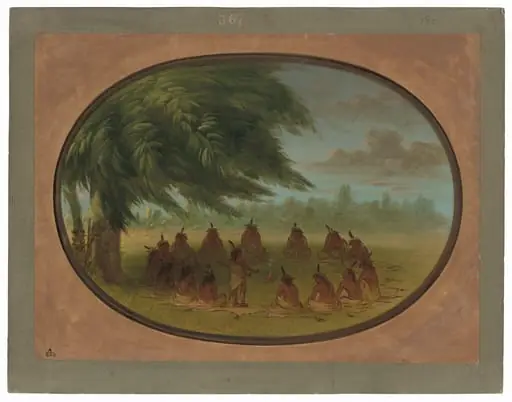
A Foot War Party in Council depicts a Mandan council scene of war party preparations, featuring a prominent tree that serves as a symbolic focal point within the composition. The tree functions as a key iconographic element representing communal gathering and ceremonial context in the depicted cultural narrative.
The work belongs to George Catlin's genre painting series documenting Plains Indian life, created in 1861 using oil on card mounted on paperboard. Currently housed in the National Gallery of Art in Washington, D.C., the painting entered the museum's collection through a series of documented transfers from the artist's descendants to Elizabeth Wing Catlin, then to Paul Mellon, and finally as a 1965 gift.
History & Provenance
George Catlin created A Foot War Party in Council - Mandan in 1861, working in oil on card mounted on paperboard. The painting remained in the artist's possession during his lifetime and passed by descent to his three daughters, Clara Gregory Catlin, Louise Catlin Kinney, and Elizabeth Wing Catlin. In 1912, the American Museum of Natural History purchased the work from Elizabeth Wing Catlin.
It was sold in 1959 through Kennedy Galleries in New York to Paul Mellon of Upperville, Virginia. Mellon subsequently gave the painting to the National Gallery of Art in 1965, where it remains in the collection.
The 1861 date is consistent with Catlin's later career, when he produced a number of small oil paintings revisiting his earlier sketches of Plains Indian life made decades before on his western travels.
The painting is held by the National Gallery of Art, Washington, D.C., where it is accessioned as 1965.1.17.
It was first owned by the artist George Catlin and descended to his daughters before being purchased in 1912 by the American Museum of Natural History. It was later sold in 1959 through Kennedy Galleries, New York, to Paul Mellon, and gifted by Mellon to the National Gallery of Art in 1965.
Overview
Created in 1865, A Foot War Party in Council – Mandan is an oil painting executed on card that has been mounted on paperboard. The work presents a small gathering of figures seated beneath the spreading branches of a tree, engaged in conversation. The scene is rendered in a modest scale, typical of the portable formats used by the artist during his field studies.
Technique & Style
Catlin employed oil pigments on a prepared card surface, allowing for swift execution while traveling. The handling of light and shadow demonstrates a chiaroscuro approach, giving the figures three‑dimensional presence against the darker foliage. Brushwork remains relatively loose, emphasizing the immediacy of observation over meticulous detail.
Own this work as a print
Artist & collection

Artist
George Catlin ( KAT-lin; July 26, 1796 – December 23, 1872) was an American lawyer, painter, author, and traveler, who specialized in portraits of Native Americans in the American frontier.

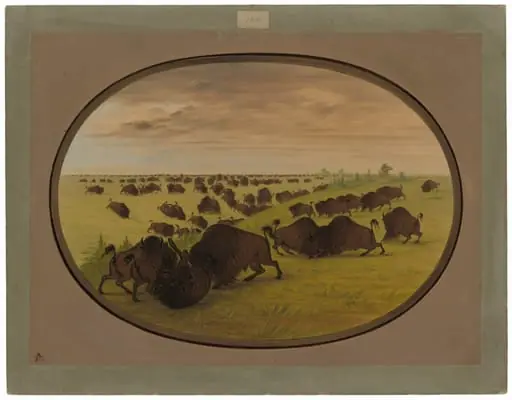 Bulls Fighting
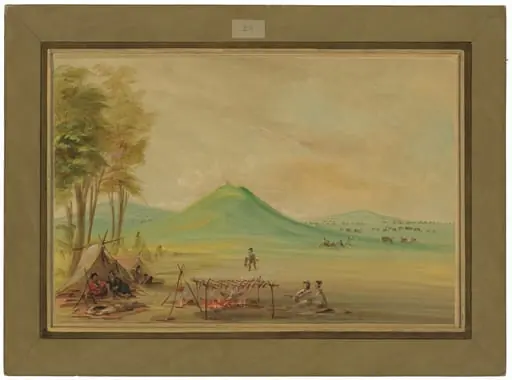 Expedition Encamped on a Texas Prairie. April 1686
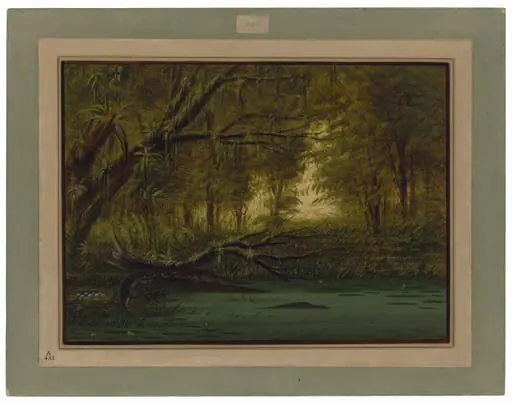 An Alligator's Nest
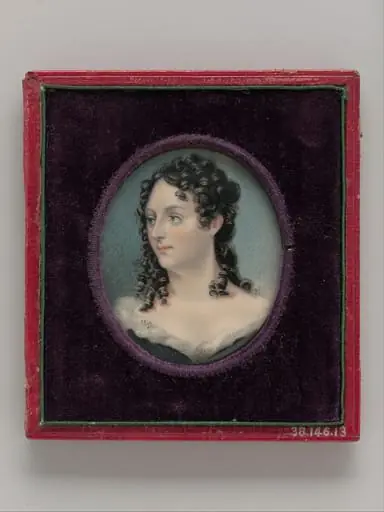 Mrs. George Catlin (Clara Bartlet Gregory)
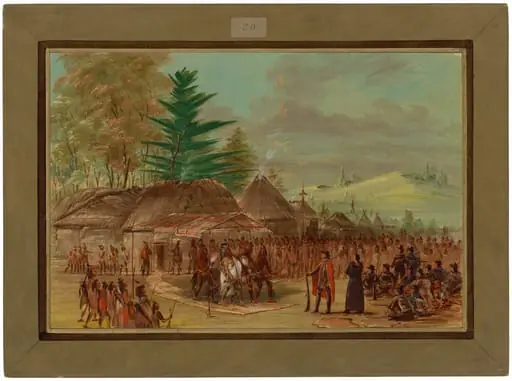 Chief of the Taensa Indians Receiving La Salle. March 20, 1682
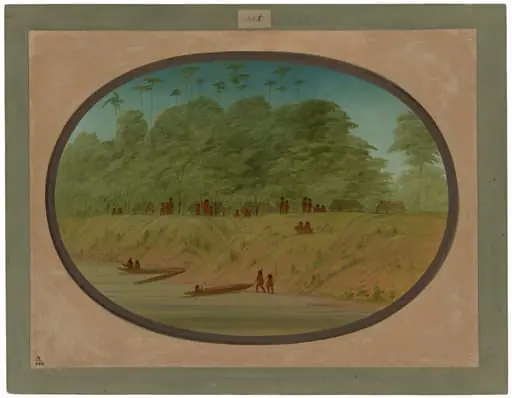 A Small Village - Payaguas Indians
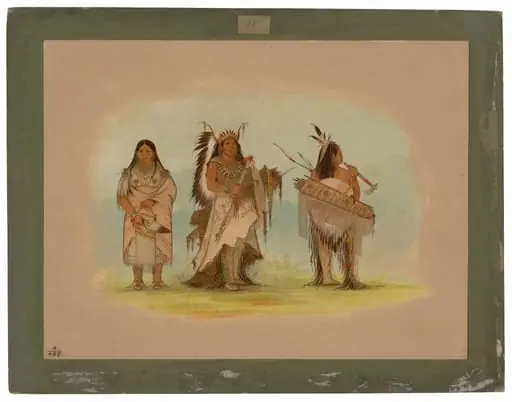 Omaha Chief, His Wife, and a Warrior
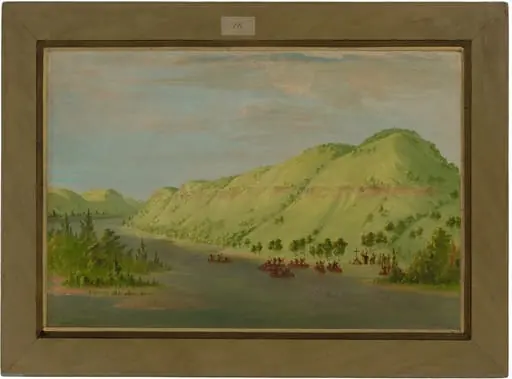 Father Hennepin Leaving the Mississippi to Join La Salle. May 8, 1680