Artwork
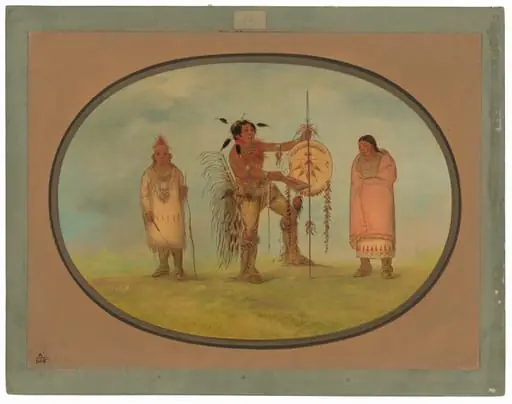
Black Hawk and the Prophet - Saukie
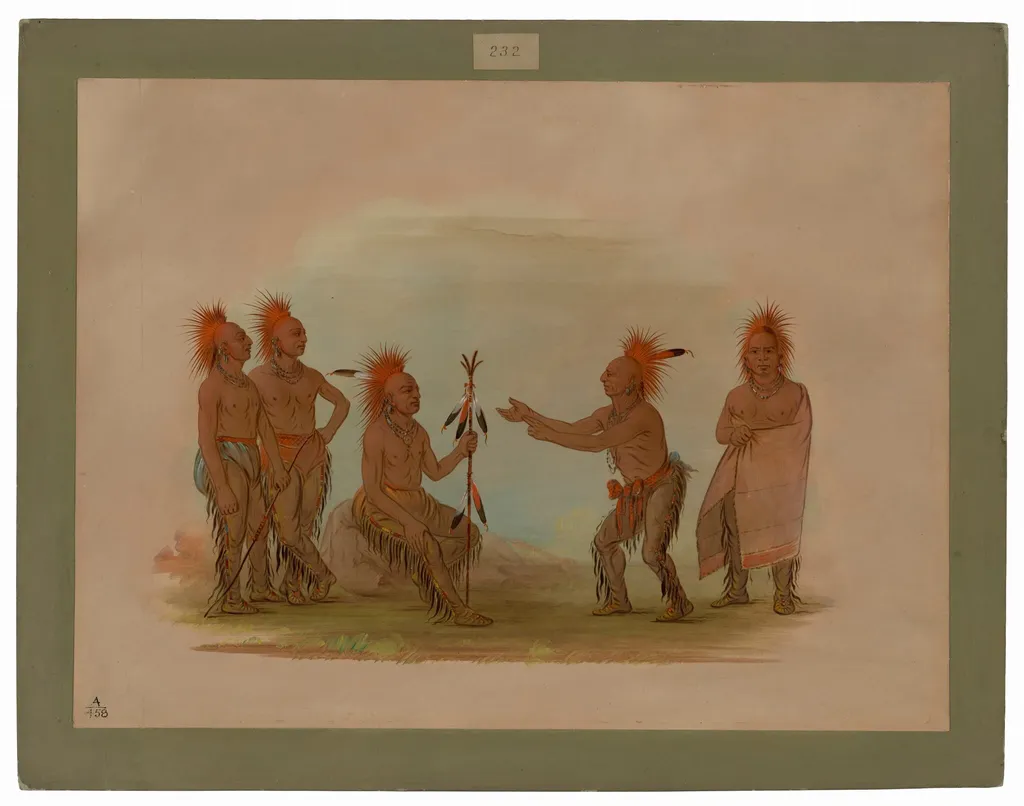
Black Hawk and the Prophet - Saukie is an oil painting by the Impressionist artist George Catlin. It dates from 1865 and is held in the collection of the National Gallery of Art.
About this work
Overview
4 centimeters, the work belongs to Catlin's later body of work known as the Cartoon Collection, which he created during the 1850s and 1860s.
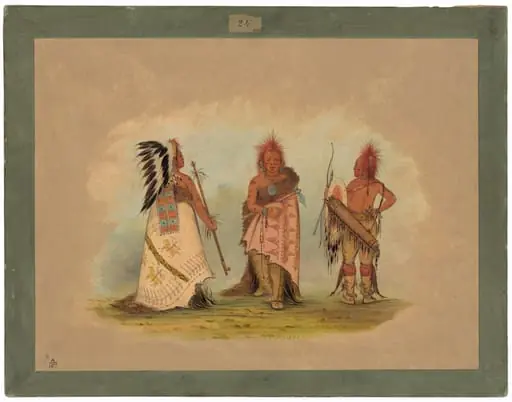
Black Hawk and the Prophet - Saukie is an 1861 painting by American artist George Catlin, executed in oil on card mounted on paperboard. Measuring 46.4 by 62.4 centimeters, the work belongs to Catlin's later body of work known as the Cartoon Collection, which he created during the 1850s and 1860s. The painting is currently held by the National Gallery of Art in Washington, D.C., under accession number 1965.16.314. It depicts a dramatic historical episode involving prominent Sauk leaders during the Black Hawk War.
Subject & Meaning
The painting illustrates a specific political confrontation, described by Catlin's own 1871 catalog entry as Black Hawk and the Prophet demanding of Keeokuk warriors to assist in the Black Hawk War in 1831. Five male figures occupy a shallow landscape under a hazy, atmospheric background of muted green and beige. Four figures stand while one sits on a central rock, holding a feathered and ribboned staff. The central standing figure, likely Black Hawk, gestures with both hands extended toward the seated man. The figures wear orange-red roach headdresses with spiky, radiating forms, fringed garments, sashes, and necklaces, with one figure at the far right wrapped in a striped blanket. The composition captures the tension of the political dispute within the Sauk leadership regarding the war.
Technique & Style
Catlin executed the work in oil on card mounted on paperboard, a support characteristic of his later Cartoon Collection rather than the canvas he used in the 1830s. The composition is dominated by earthy browns, soft oranges, and olive greens. The surface reveals smooth, detailed brushwork with careful attention to costume and adornment. Diffuse light enters from the left, casting gentle shadows to the right, while distant hills dissolve into the pale sky. A paper label numbered 232 appears at the top center, corresponding to the Cartoon Collection catalog, and the inscription A/158 is visible at the lower left. The image is mounted on a wide green border.
History & Provenance
Created between 1861 and 1869, the painting remained with George Catlin until his death in 1872. It descended to his three daughters, Clara Gregory Catlin, Louise Catlin Kinney, and Elizabeth Wing Catlin. In 1912, the American Museum of Natural History in New York purchased the surviving works of the Cartoon Collection from Elizabeth Wing Catlin. When the museum deaccessioned the collection, Paul Mellon purchased more than 300 of these paintings through Kennedy Galleries in 1959. Mellon gifted 351 works, including this painting, to the National Gallery of Art in 1965. The work was exhibited at the Arkansas Arts Center and on a statewide tour from 1966 to 1968, and later at the National Portrait Gallery in Washington, D.C., for the 1978 exhibition Blackhawk and Keokuk.
Context
This painting is a product of Catlin's Cartoon Collection, his second major endeavor comprising over 600 works created in the 1850s and 1860s. This followed his initial Indian Gallery of the 1830s, which contained over 500 works and is largely housed at the Smithsonian American Art Museum. Catlin painted the principal figures of the Black Hawk War, including Black Hawk and the Prophet, from life in the fall of 1832 while the leaders were imprisoned at Jefferson Barracks near St. Louis following their surrender. The Cartoon Collection works, including this one, reinterpreted these earlier encounters decades later. The painting was documented in the catalog published for the 1871 New York exhibition of the Cartoon Collection, ensuring a recorded historical context for the scene.
Legacy
As part of the substantial gift from Paul Mellon, the painting entered the National Gallery of Art in 1965, securing its long term preservation and public accessibility. The work has been featured in NGA National Lending Service exhibitions, traveling to institutions such as the Delaware Art Museum, the Palm Springs Desert Museum, and the Boise Art Museum during the early 1990s. It has been consistently documented in NGA catalogs, including the 1970, 1980, and 1992 editions of American Paintings: An Illustrated Catalogue. The painting remains a vital visual document of the internal political dynamics of the Sauk tribe prior to the Black Hawk War, preserving Catlin's later interpretation of a pivotal moment in Native American and United States history.
Own this work as a print
Artist & collection

Artist
George Catlin ( KAT-lin; July 26, 1796 – December 23, 1872) was an American lawyer, painter, author, and traveler, who specialized in portraits of Native Americans in the American frontier.

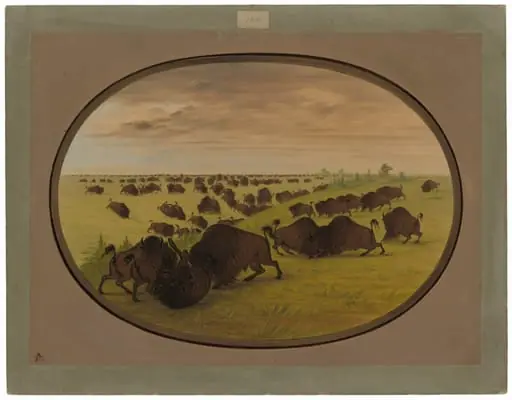 Bulls Fighting
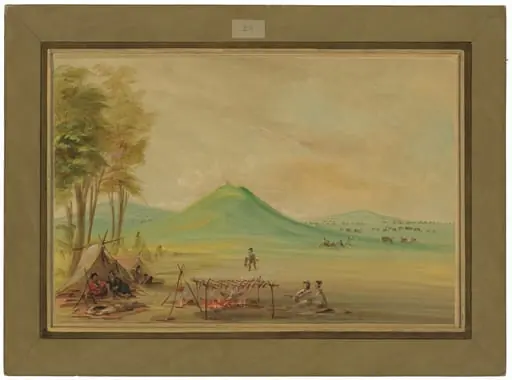 Expedition Encamped on a Texas Prairie. April 1686
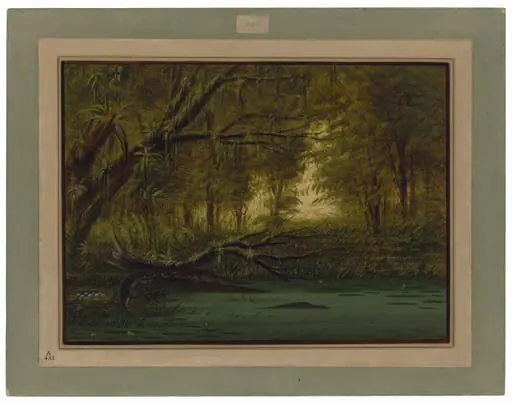 An Alligator's Nest
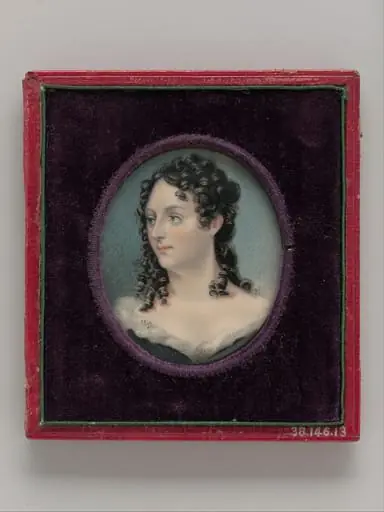 Mrs. George Catlin (Clara Bartlet Gregory)
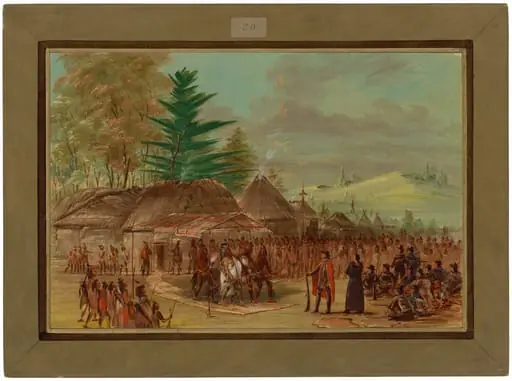 Chief of the Taensa Indians Receiving La Salle. March 20, 1682
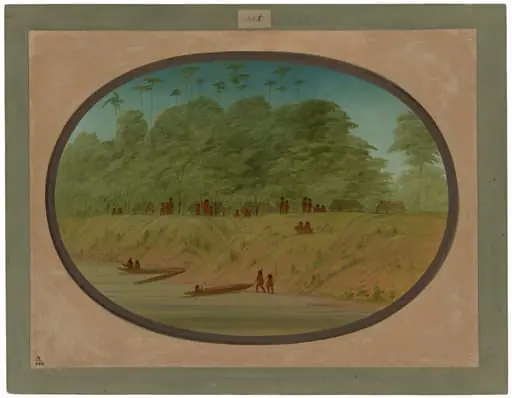 A Small Village - Payaguas Indians
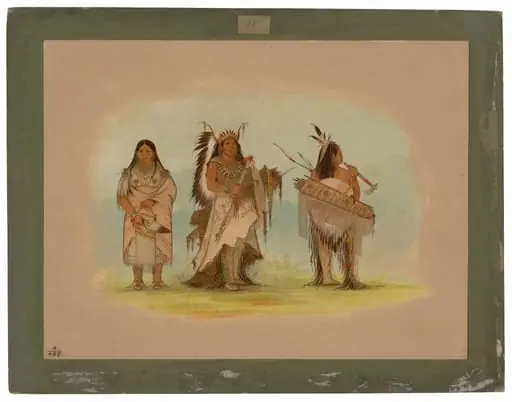 Omaha Chief, His Wife, and a Warrior
 Father Hennepin Leaving the Mississippi to Join La Salle. May 8, 1680