Artwork
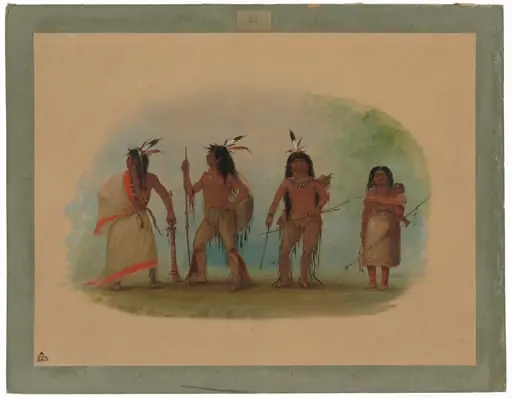
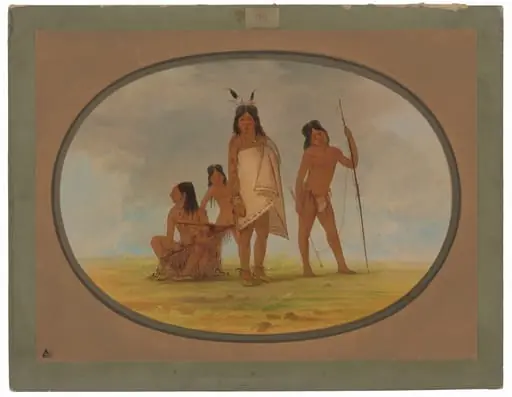
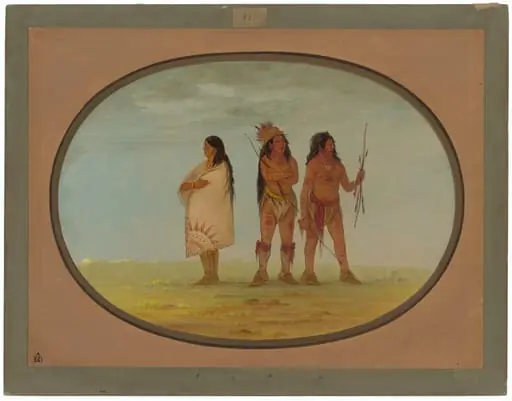
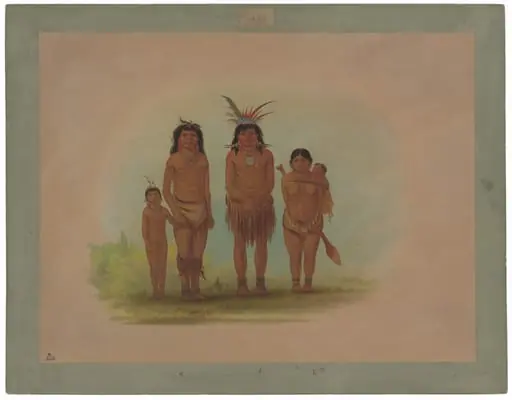
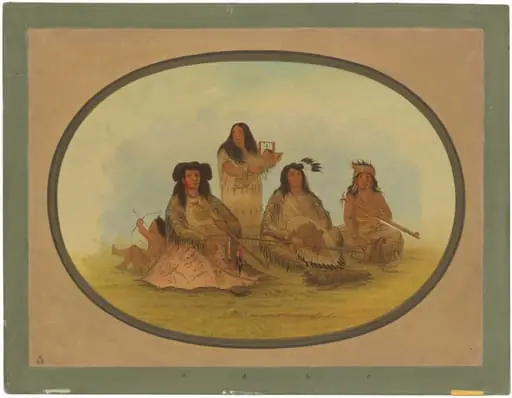
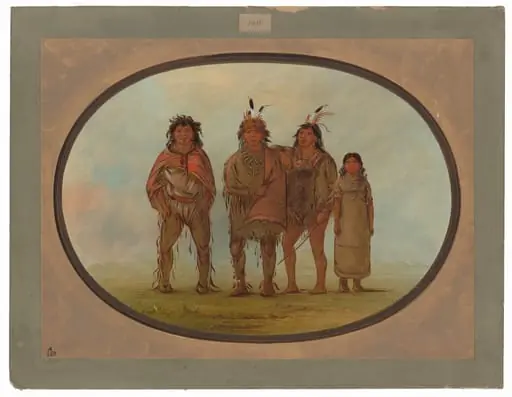
Four Kiowa Indians
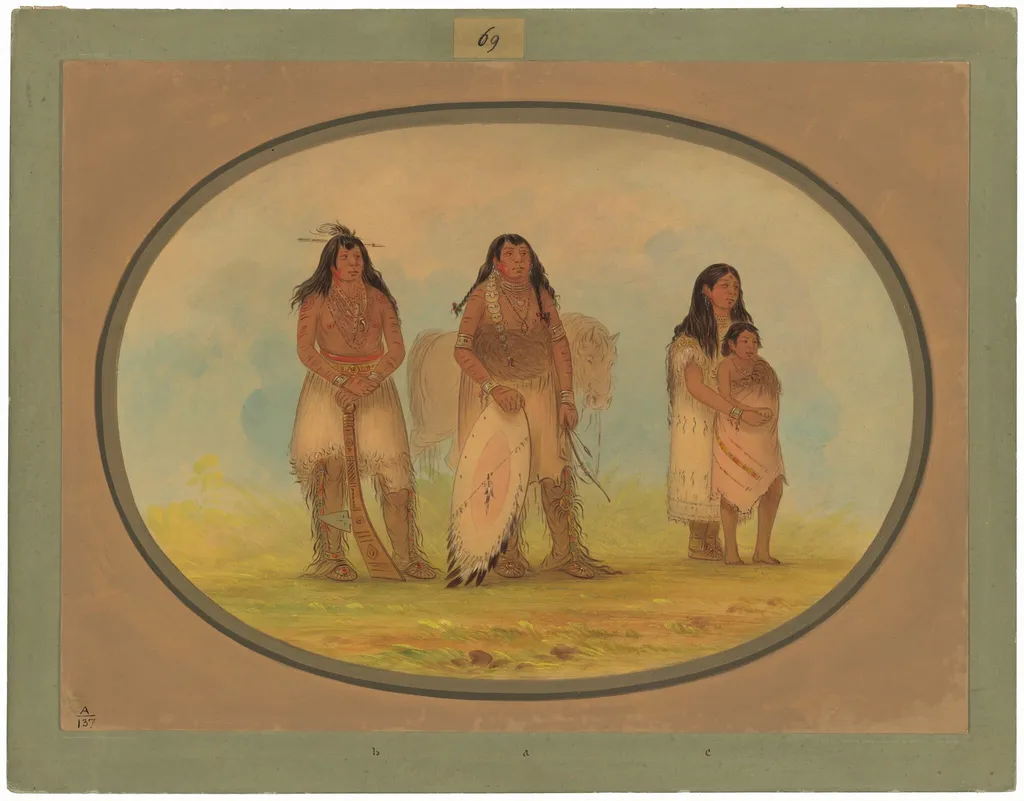
Four Kiowa Indians is an oil painting by the American Folk Art artist George Catlin. It dates from 1865 and is held in the collection of the National Gallery of Art.
About this work
Subject & Meaning
Their traditional dress and postures convey a dignified presence, reflecting 19th‑century interest in documenting Native peoples as distinct cultural groups.
The painting portrays four members of the Kiowa tribe, rendered as individual portrait subjects rather than a narrative scene. Their traditional dress and postures convey a dignified presence, reflecting 19th‑century interest in documenting Native peoples as distinct cultural groups. The work functions both as a record of specific individuals and as a broader representation of Kiowa identity during a period of intense cultural change.
Technique & Style
The painting is executed in oil on a card that is mounted on paperboard, a support typical of mid-19th-century portrait practice. Its dimensions are 46.9 centimeters in height and 63.3 centimeters in width, as recorded in the catalog data. The work portrays four members of the Kiowa tribe, rendered with a focus on individual likeness and ceremonial detail characteristic of George Catlin's ethnographic portraiture.
The surface condition appears stable, with no noted alterations to the original handling or structural integrity since its acquisition by the National Gallery of Art.
History & Provenance
Painted in 1861 by George Catlin, Four Kiowa Indians was first owned by the artist himself. It passed by descent to his daughters Clara Gregory Catlin, Louise Catlin Kinney, and Elizabeth Wing Catlin. In 1912 the work entered the collection of the American Museum of Natural History after being purchased from Elizabeth Wing Catlin.
Kennedy Galleries of New York sold the painting in 1959 to Paul Mellon, who later gifted it to the National Gallery of Art in 1965.
The canvas measures 46.9 cm by 63.3 cm and remains in the National Gallery of Art’s collection in Washington, D.C.
Four Kiowa Indians is held by the National Gallery of Art in Washington, D.C., where it entered the collection in 1965 as a gift from Paul Mellon of Upperville, Virginia. Mellon had acquired the painting in 1959 through Kennedy Galleries in New York. The work had previously been owned by the American Museum of Natural History, which purchased it in 1912 from Elizabeth Wing Catlin, one of George Catlin's daughters, following descent from the artist through Clara Gregory Catlin and Louise Catlin Kinney.
No specific exhibition history beyond this provenance chain is documented in the available sources.
Context
Painted in 1861, Four Kiowa Indians is an oil portrait on card mounted on paperboard that entered the National Gallery of Art through the collection of George Catlin and subsequent donors. The work has been discussed in scholarship as an early example of ethnographic portraiture by a European American artist seeking to document Native peoples, situating it within Catlin's broader mission of visual anthropology and his influence on later depictions of Indigenous subjects. Its provenance reflects a documented chain from the artist's descendants to the American Museum of Natural History, a 1959 sale by Kennedy Galleries to Paul Mellon, and a 1965 gift to the National Gallery of Art.
The painting is cataloged in major art databases, including the National Gallery of Art's collection, where it remains on view, underscoring its recognized significance in American art history.
Overview
George Catlin’s 1865 work titled Four Kiowa Indians is executed in oil on a card that has been mounted onto paperboard. The composition presents three standing figures against a muted, grassy backdrop, rendered in a palette of earthy browns, soft yellows and subdued greens that lend the scene a tranquil, everyday atmosphere.
Own this work as a print
Artist & collection

Artist
George Catlin ( KAT-lin; July 26, 1796 – December 23, 1872) was an American lawyer, painter, author, and traveler, who specialized in portraits of Native Americans in the American frontier.

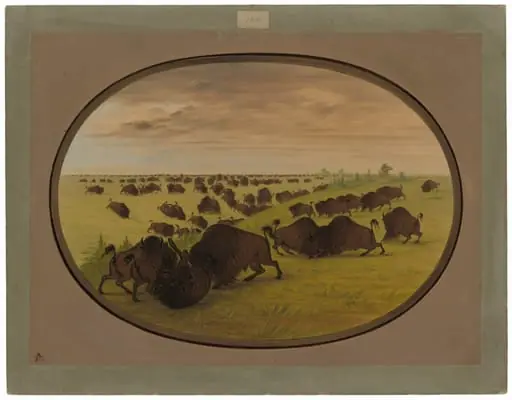 Bulls Fighting
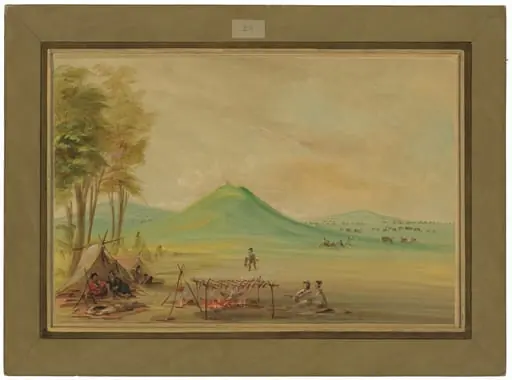 Expedition Encamped on a Texas Prairie. April 1686
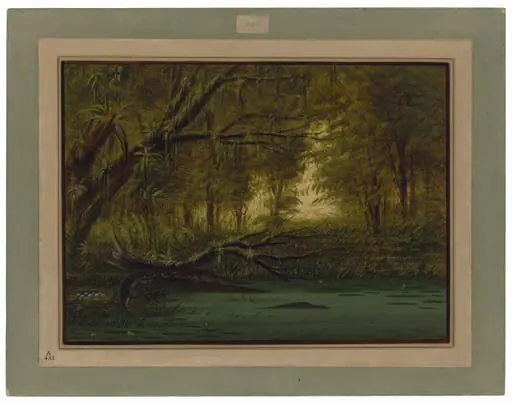 An Alligator's Nest
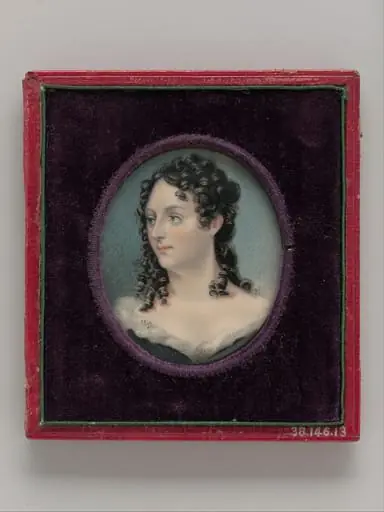 Mrs. George Catlin (Clara Bartlet Gregory)
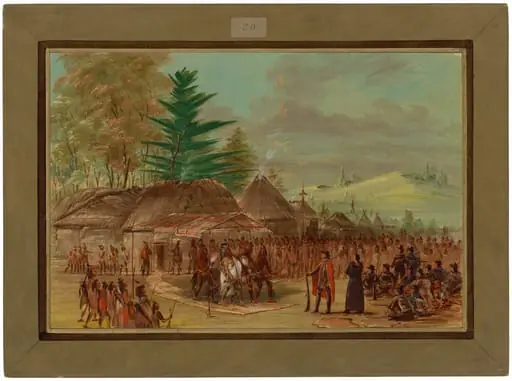 Chief of the Taensa Indians Receiving La Salle. March 20, 1682
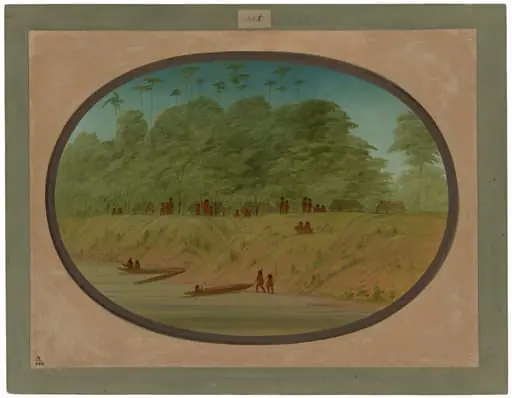 A Small Village - Payaguas Indians
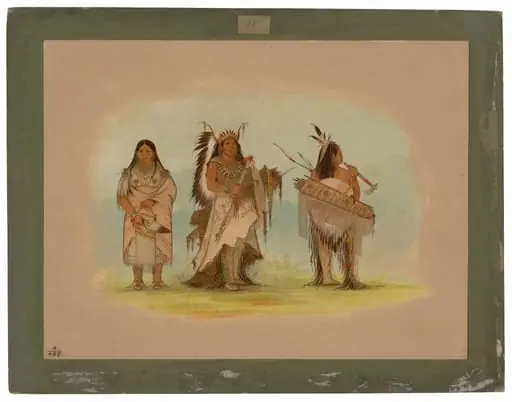 Omaha Chief, His Wife, and a Warrior
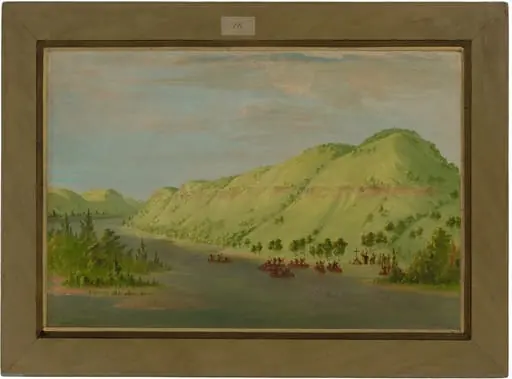 Father Hennepin Leaving the Mississippi to Join La Salle. May 8, 1680