Artwork
Catching Wild Horses - Pawnee
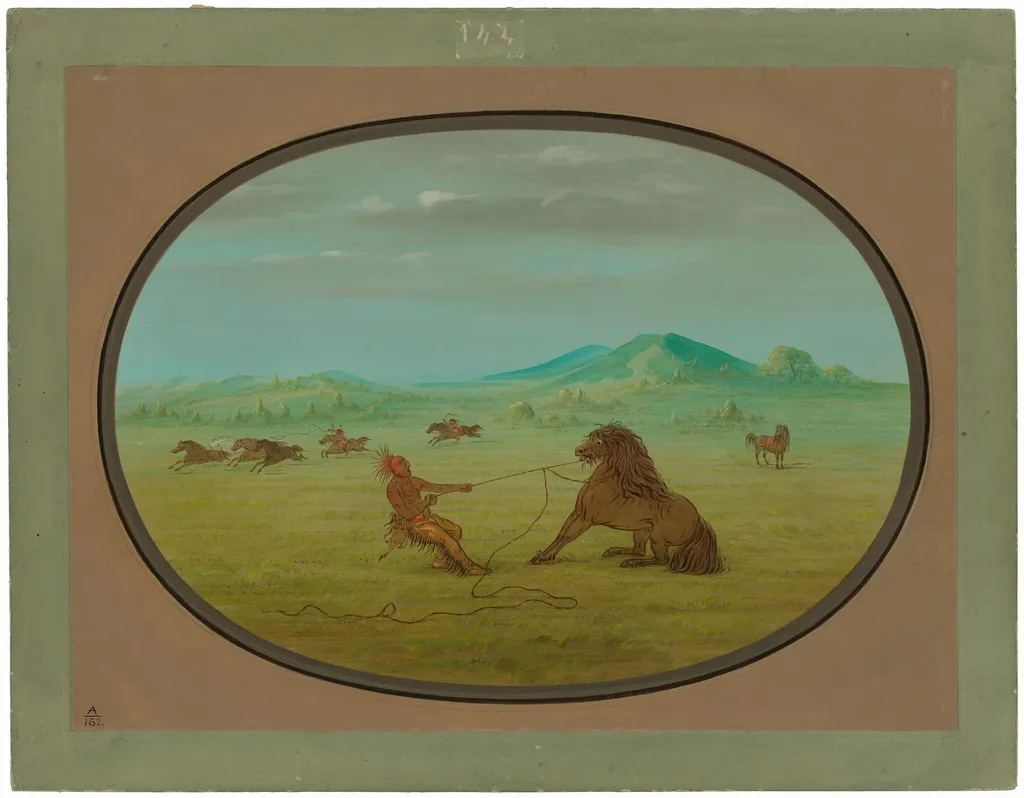
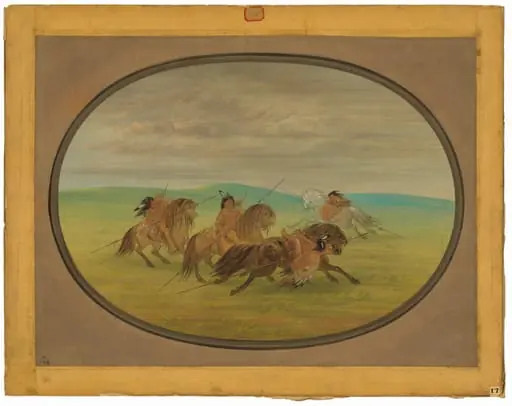
Catching Wild Horses - Pawnee is an oil painting by the Impressionist artist George Catlin. It dates from 1865 and is held in the collection of the National Gallery of Art.
About this work
Technique & Style
The work is painted in oil on a thin card support that has been mounted onto a paperboard, a format Catlin used for portability during field campaigns.
The work is painted in oil on a thin card support that has been mounted onto a paperboard, a format Catlin used for portability during field campaigns. The handling is fluid and descriptive, with quick, confident strokes that define figures and landscape without dense modeling. Trees and foliage are rendered in loose, abbreviated touches that establish setting rather than detailed botanical study.
Stylistically, the composition favors a panoramic arrangement, with the Pawnee riders and horses arranged in a broad, low band across the lower half of the sheet. The sky occupies a simplified upper zone, heightening the scene's graphic clarity. The palette is earthy and restrained, relying on muted greens, ochres, and umbers to evoke the Great Plains environment.
History & Provenance
Catching Wild Horses – Pawnee was painted by George Catlin in 1865. The work was retained by the artist and later passed by descent to his daughters Clara Gregory Catlin, Louise Catlin Kinney, and Elizabeth Wing Catlin. In 1912 it was purchased from Elizabeth Wing Catlin by the American Museum of Natural History.
The painting was sold in 1959 through Kennedy Galleries, New York, to Paul Mellon, Upperville, Virginia. Mellon gifted the work to the National Gallery of Art, Washington, D.C., in 1965, where it remains in the collection.
Catching Wild Horses - Pawnee is held in the collection of the National Gallery of Art in Washington, D.C., under accession number 1965.17. It entered the collection through a gift from Paul Mellon in 1965, following its acquisition from Kennedy Galleries in 1959 and prior ownership by the American Museum of Natural History through descent from George Catlin's daughters. No exhibition history beyond its inclusion in the institution's holdings is documented in the available records.
Context
The work entered the National Gallery of Art collection through the philanthropy of Paul Mellon in 1965, having previously been held by Kennedy Galleries and the American Museum of Natural History, establishing its provenance as a notable example of George Catlin's frontier genre scenes.
Scholarly attention to the painting has focused on its representation of Pawnee life and its place within 19th-century ethnographic art, situating it within Catlin's broader mission to document Native American cultures before significant Euro-American encroachment.
The painting's formal qualities, including its depiction of a solitary tree against an expansive landscape, reflect Catlin's interest in both natural environment and cultural narrative, contributing to its recognition as an important piece within the development of American frontier genre painting.
Legacy
Catching Wild Horses - Pawnee (1865) by George Catlin has been recognized for its role in documenting Indigenous life and frontier narratives, influencing later American artists who explored themes of wilderness and cultural encounter. Its presence in the National Gallery of Art's collection since 1965 has reinforced its status as a key example of 19th-century genre painting, cited in scholarly discussions of Catlin's contributions to ethnographic art and the evolution of narrative landscape painting.
Overview
George Catlin’s 1865 oil painting Catching Wild Horses – Pawnee depicts a dynamic chase scene on the Great Plains. Executed on card mounted to paperboard, the work captures a moment of horsemen pursuing untamed horses, with figures and animals moving in a tangled, energetic composition that reflects the volatility of frontier life.
Subject & Meaning
The image portrays Pawnee riders attempting to corral wild horses, a practice that combined subsistence, sport, and ritual. By illustrating the chaotic interaction between humans and the untamed herd, Catlin emphasizes the challenges of survival and the cultural significance of horse capture within Plains societies.
Own this work as a print
Artist & collection

Artist
George Catlin ( KAT-lin; July 26, 1796 – December 23, 1872) was an American lawyer, painter, author, and traveler, who specialized in portraits of Native Americans in the American frontier.

 Bulls Fighting
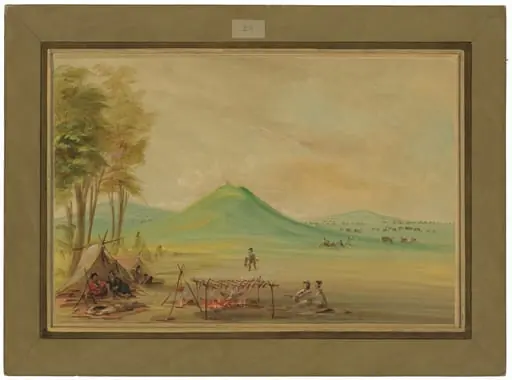 Expedition Encamped on a Texas Prairie. April 1686
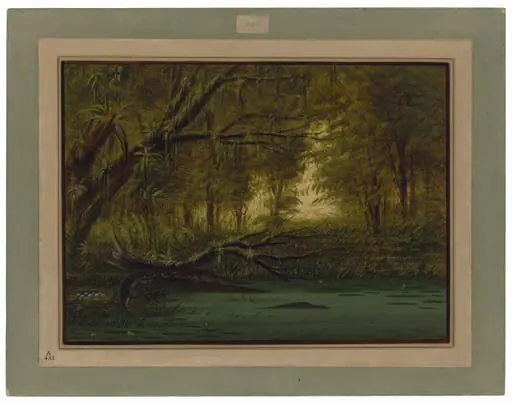 An Alligator's Nest
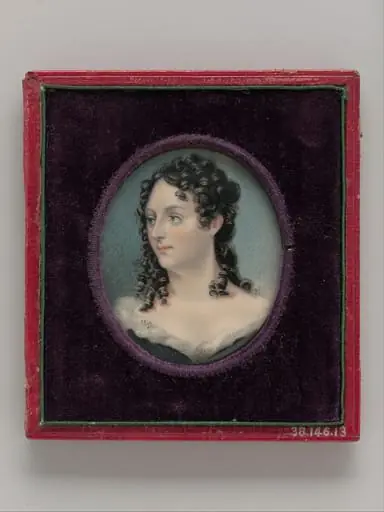 Mrs. George Catlin (Clara Bartlet Gregory)
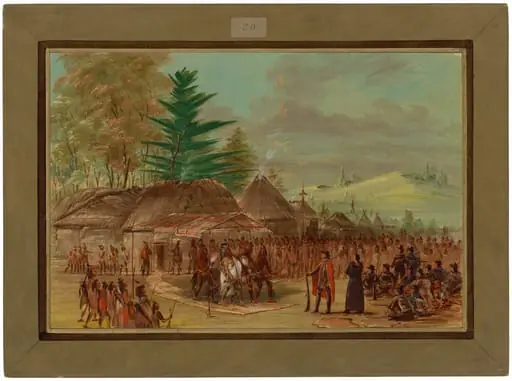 Chief of the Taensa Indians Receiving La Salle. March 20, 1682
 A Small Village - Payaguas Indians
 Omaha Chief, His Wife, and a Warrior
 Father Hennepin Leaving the Mississippi to Join La Salle. May 8, 1680