Artwork
Catlin Painting the Portrait of Mah-to-toh-pa - Mandan
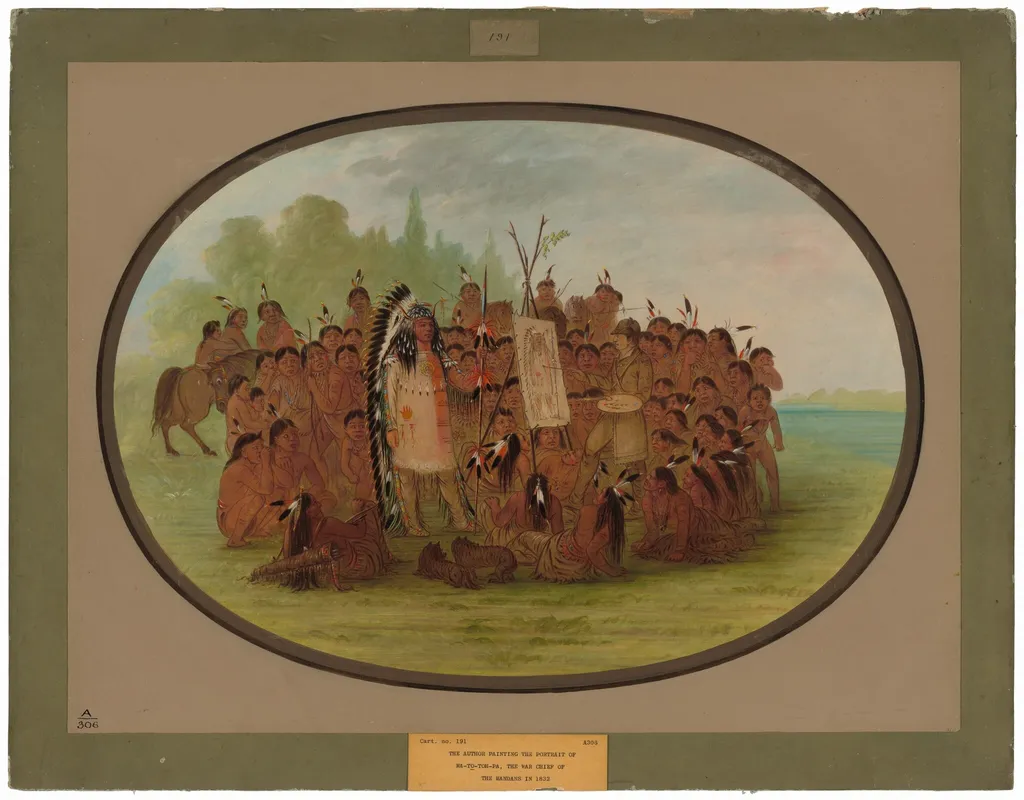
Catlin Painting the Portrait of Mah-to-toh-pa - Mandan is an oil painting by the Impressionist artist George Catlin. It dates from 1865 and is held in the collection of the National Gallery of Art.
About this work
Subject & Meaning
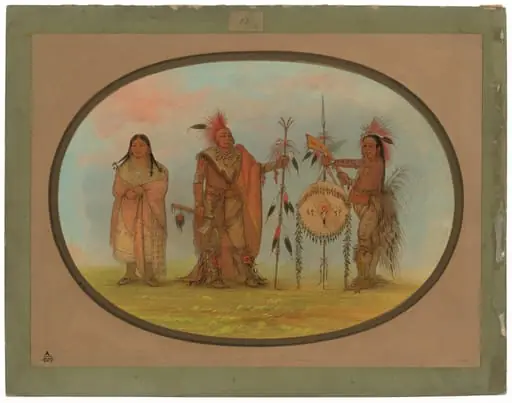
The painting portrays Mah-to-toh-pa, a Mandan chief, captured by George Catlin in 1861 as a formal portrait.
The painting portrays Mah-to-toh-pa, a Mandan chief, captured by George Catlin in 1861 as a formal portrait. Rendered in oil on card mounted on paperboard, the work belongs to the portrait genre and shows the sitter against a background that includes a tree, a detail noted in the catalog records. The tree appears in the background, providing a natural element to the composition.
As part of Catlin’s broader project to document indigenous leaders, the image functions both as a record of a prominent Mandan figure and as an artifact of 19th‑century cross‑cultural observation.
Technique & Style
George Catlin executed the 1861 portrait Catlin Painting the Portrait of Mah-to-toh-pa - Mandan using oil paint applied to a card support, which is subsequently mounted on paperboard. The work measures 47 cm in height and 62.3 cm in width. Classified as a portrait, the composition includes a depiction of a tree within the scene. The piece is currently held in the collection of the National Gallery of Art in Washington, D.C.
History & Provenance
The work was painted by George Catlin in 1861, as recorded in the artist’s records and the painting’s inscription.
It descended by family agreement to Catlin’s daughters, Clara Gregory Catlin, Louise Catlin Kinney, and Elizabeth Wing Catlin, before being purchased in 1912 by the American Museum of Natural History from Elizabeth Wing Catlin. In 1959, the museum sold it through Kennedy Galleries in New York to Paul Mellon, who later gifted it to the National Gallery of Art, Washington, in 1965.
The work is currently held in the collection of the National Gallery of Art in Washington, D.C. Its provenance traces back to the artist George Catlin, passing by descent to his daughters before being purchased in 1912 by the American Museum of Natural History from Elizabeth Wing Catlin. The museum sold the painting in 1959 through Kennedy Galleries in New York to Paul Mellon of Upperville, Virginia. It entered the National Gallery of Art as a gift from Mellon in 1965.
The provided sources do not contain specific inventory numbers or a record of past exhibitions for this work.
Overview
This 1865 oil painting by George Catlin, titled Catlin Painting the Portrait of Mah-to-toh-pa - Mandan, captures a significant moment of artistic creation. The work depicts the American artist himself in the act of painting Mah-to-toh-pa, a prominent chief of the Mandan people. Rendered in oil on card mounted on paperboard, this self-referential portrait serves as both a record of an encounter and an example of Catlin's dedication to documenting Native American cultures.
Context
George Catlin, originally trained as a lawyer, transitioned to painting with a specific mission. During the 1830s, he embarked on extensive journeys across the American West, dedicating himself to documenting the diverse cultures of Plains Indians. His artistic output included numerous portraits and detailed written accounts, forming a comprehensive record of these communities.
Earlier in his career, Catlin had also produced topographical sketches, notably along the Erie Canal, which were later disseminated through early lithographic processes.
Own this work as a print
Artist & collection

Artist
George Catlin ( KAT-lin; July 26, 1796 – December 23, 1872) was an American lawyer, painter, author, and traveler, who specialized in portraits of Native Americans in the American frontier.

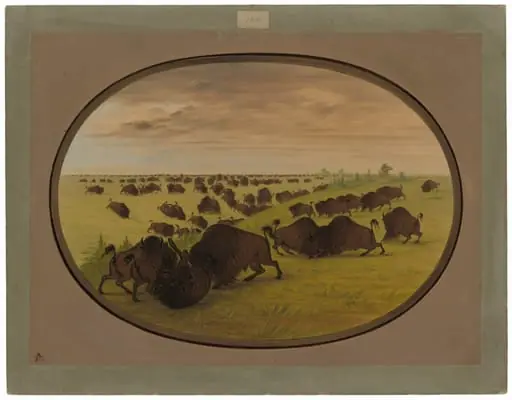 Bulls Fighting
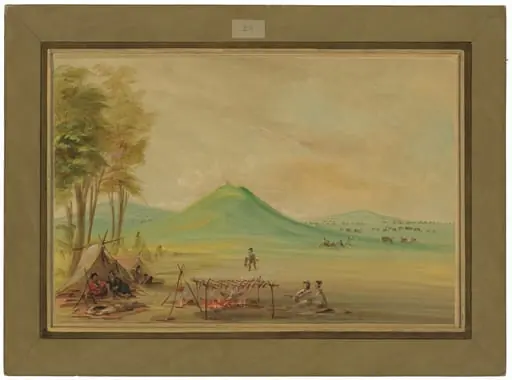 Expedition Encamped on a Texas Prairie. April 1686
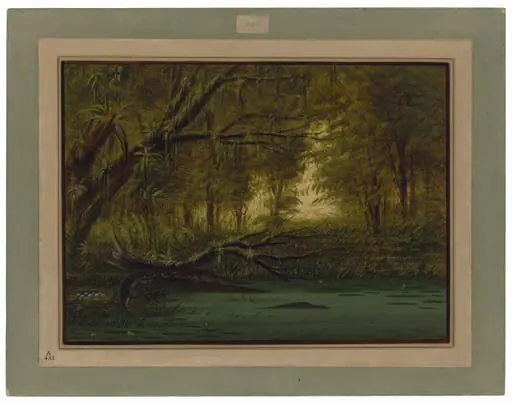 An Alligator's Nest
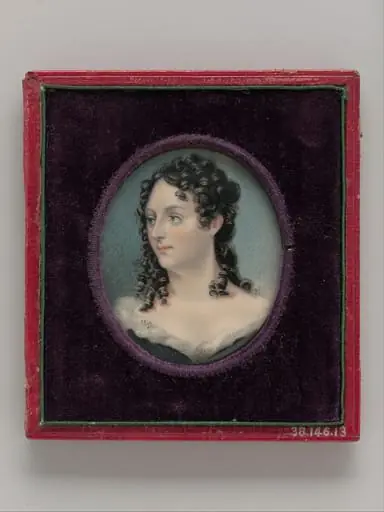 Mrs. George Catlin (Clara Bartlet Gregory)
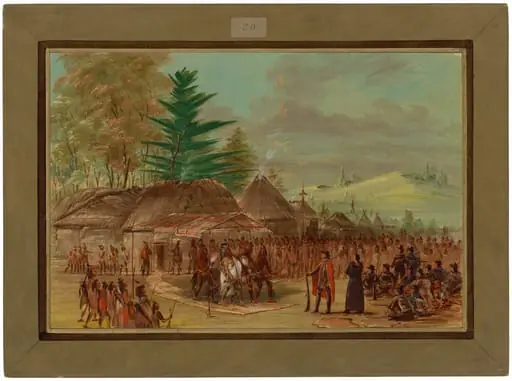 Chief of the Taensa Indians Receiving La Salle. March 20, 1682
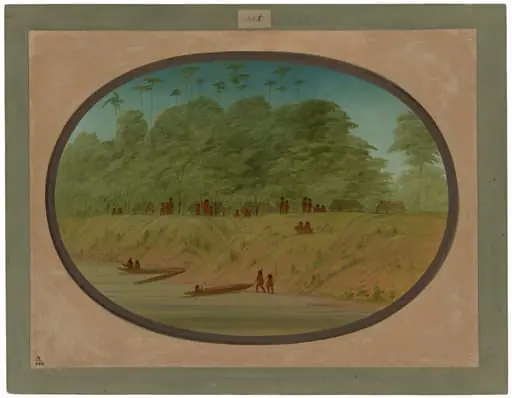 A Small Village - Payaguas Indians
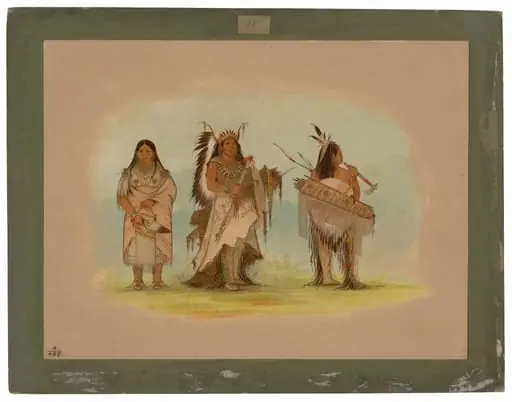 Omaha Chief, His Wife, and a Warrior
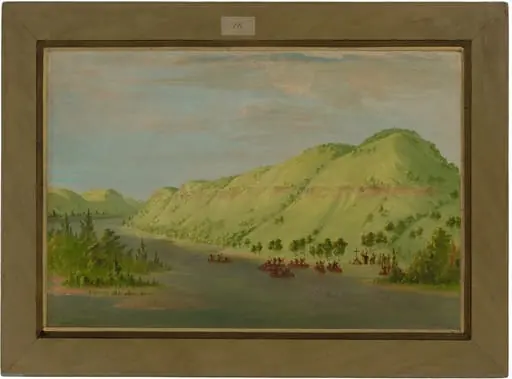 Father Hennepin Leaving the Mississippi to Join La Salle. May 8, 1680