Artwork
Ojibbeway Indians
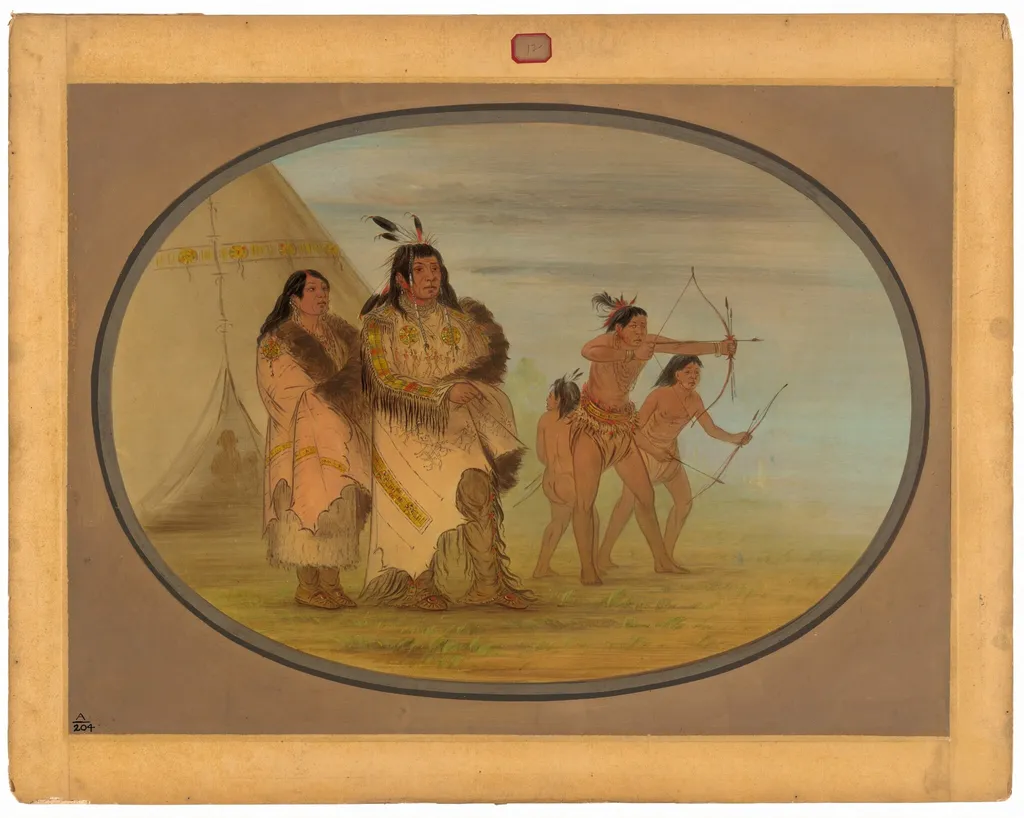
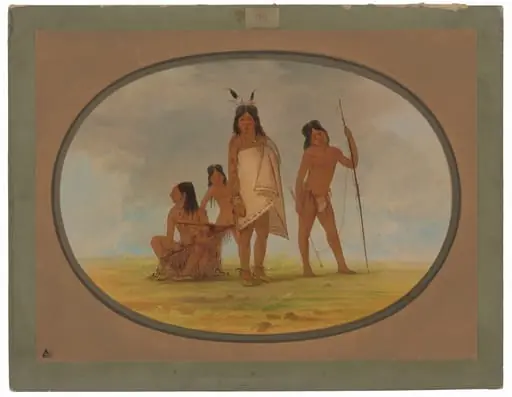
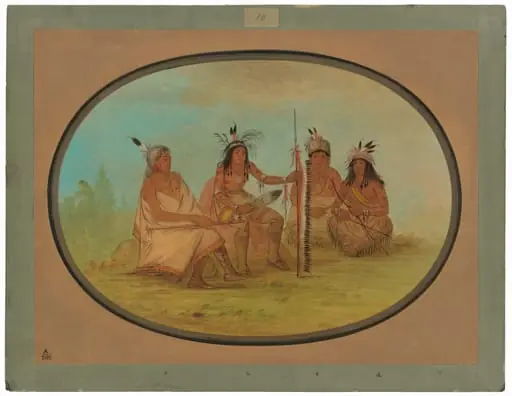
Ojibbeway Indians is an oil painting by the American Folk Art artist George Catlin. It dates from 1865 and is held in the collection of the National Gallery of Art.
About this work
Technique & Style
As a portrait, the composition focuses on the depiction of the Ojibbeway Indians, utilizing the oil medium to render the subjects on the prepared card surface.
The work is executed in oil paint applied to a card support, which is subsequently mounted onto a paperboard backing. Created in 1861, the piece functions as a portrait within the broader genre of painting. The physical dimensions of the artwork measure 46.3 cm in height and 62.5 cm in width.
As a portrait, the composition focuses on the depiction of the Ojibbeway Indians, utilizing the oil medium to render the subjects on the prepared card surface.
History & Provenance
George Catlin painted Ojibbeway Indians in 1861, creating an oil on card mounted on paperboard portrait now in the National Gallery of Art, Washington, D.C. (46.3 cm × 62.5 cm). The work descended through Catlin's daughters to Elizabeth Wing Catlin, who sold it in 1912 to the American Museum of Natural History; it was later sold in 1959 through Kennedy Galleries to Paul Mellon and gifted to the National Gallery of Art in 1965.
The painting Ojibbeway Indians is currently held by the National Gallery of Art in Washington, D.C. Its provenance traces from the artist George Catlin to his daughters, with Elizabeth Wing Catlin selling the work to the American Museum of Natural History in 1912. The museum sold it in 1959 through Kennedy Galleries to Paul Mellon, who subsequently gifted the piece to the National Gallery of Art in 1965.
The provided sources do not list a specific inventory or accession number for this work, nor do they document any exhibition history.
Overview
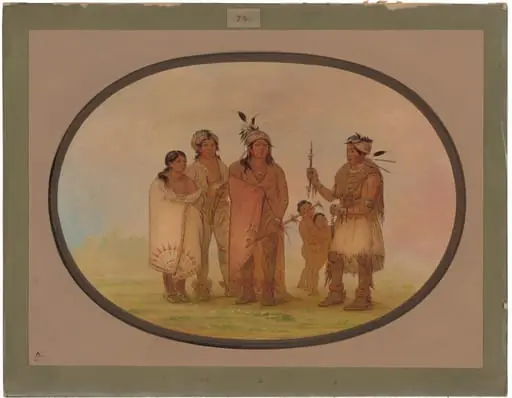
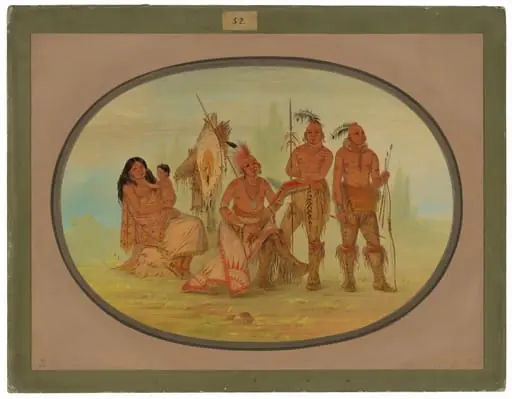
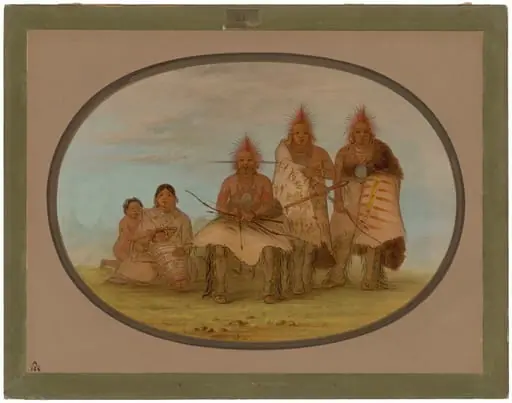
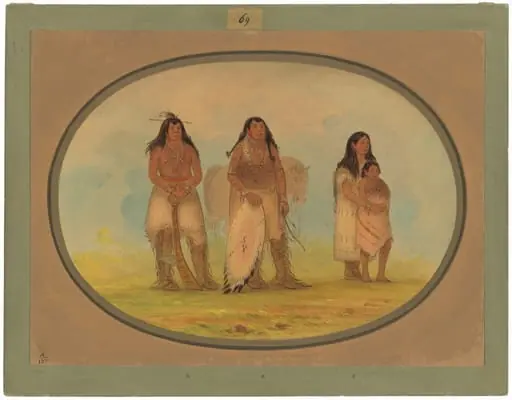
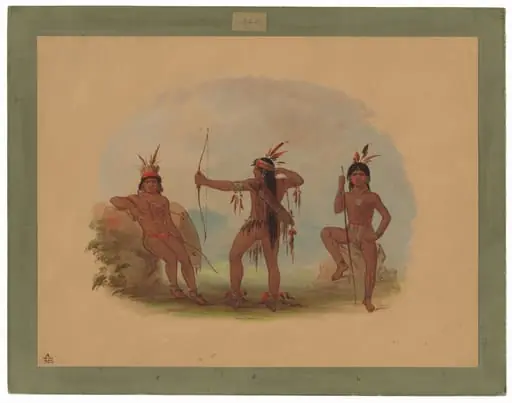
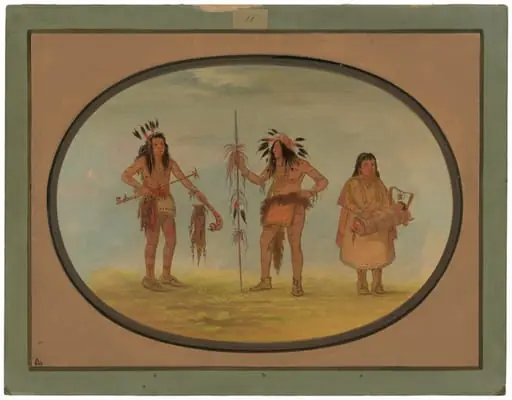
George Catlin’s 1865 work Ojibbeway Indians is an oil painting executed on card that has been mounted to a paperboard support. The composition presents a small group of five figures gathered outdoors beside a tent, set against a softly rendered landscape and pale sky.
Subject & Meaning
The scene depicts members of an Ojibwe community, with two adult figures in fur‑trimmed, ornamented attire, one kneeling, the other standing, flanked by three individuals bearing bows and arrows in simpler dress. The careful rendering of clothing, feathers, and beadwork reflects Catlin’s intent to record the material culture of the people he observed.
Context
Created during a period when Catlin was compiling a visual archive of Indigenous life, the painting aligns with his broader project to document cultures he feared were disappearing under expanding settlement. It exemplifies the 19th‑century American folk tradition of narrative portraiture.
Own this work as a print
Artist & collection

Artist
George Catlin ( KAT-lin; July 26, 1796 – December 23, 1872) was an American lawyer, painter, author, and traveler, who specialized in portraits of Native Americans in the American frontier.

 Bulls Fighting
 Expedition Encamped on a Texas Prairie. April 1686
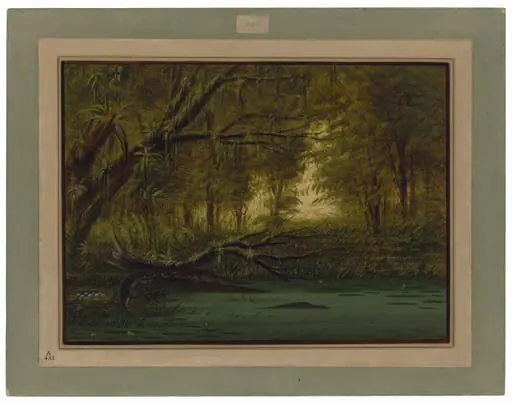 An Alligator's Nest
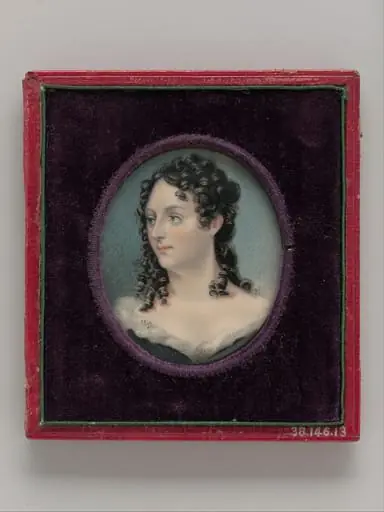 Mrs. George Catlin (Clara Bartlet Gregory)
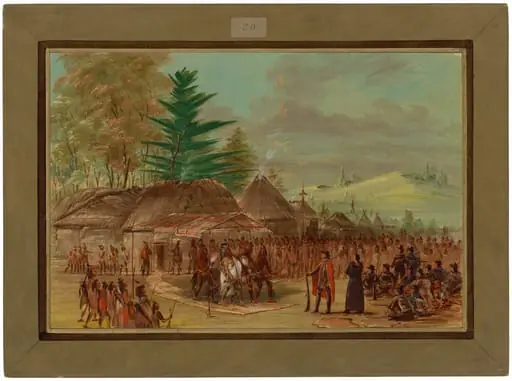 Chief of the Taensa Indians Receiving La Salle. March 20, 1682
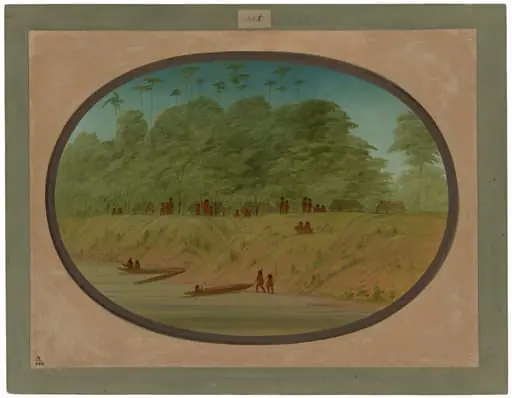 A Small Village - Payaguas Indians
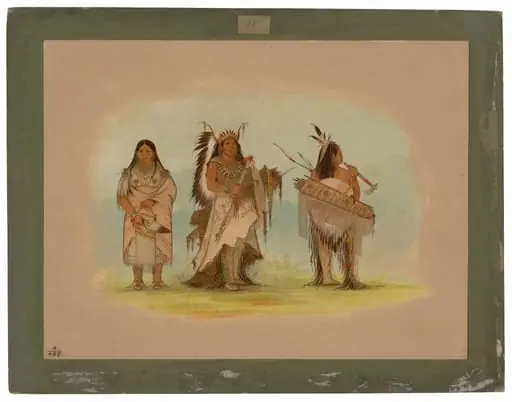 Omaha Chief, His Wife, and a Warrior
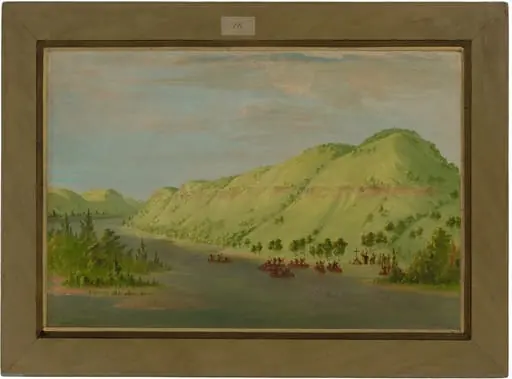 Father Hennepin Leaving the Mississippi to Join La Salle. May 8, 1680