Artwork
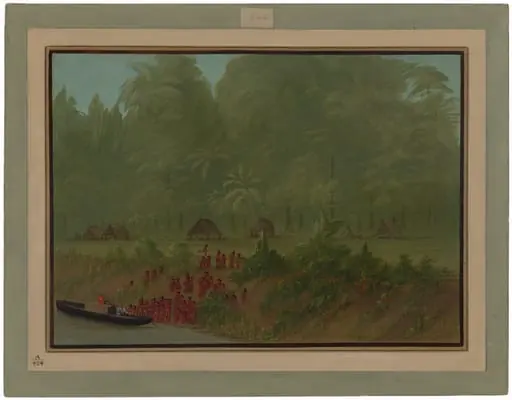
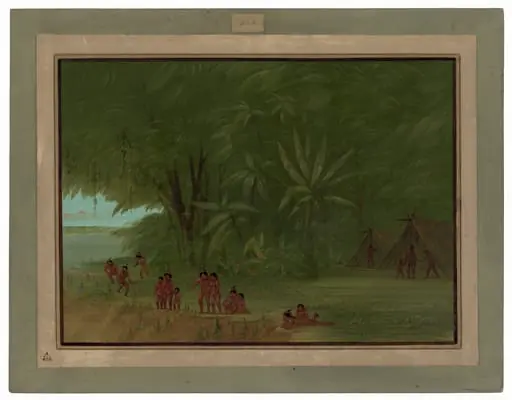
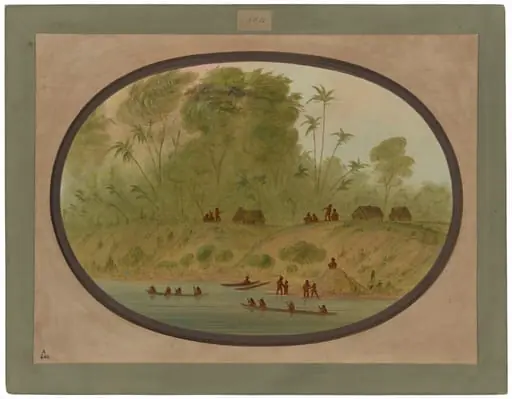
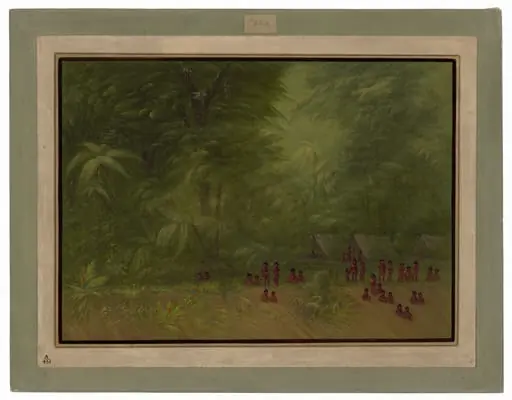
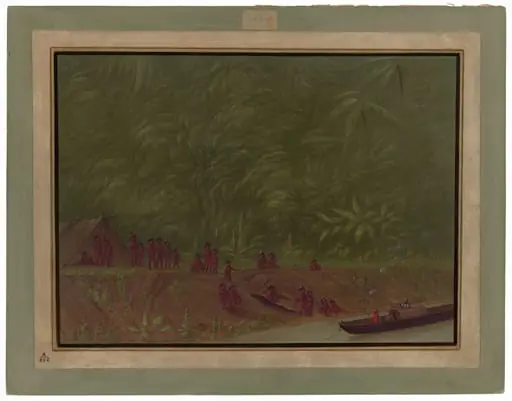
Encampment of Cocomas - Looking Ashore
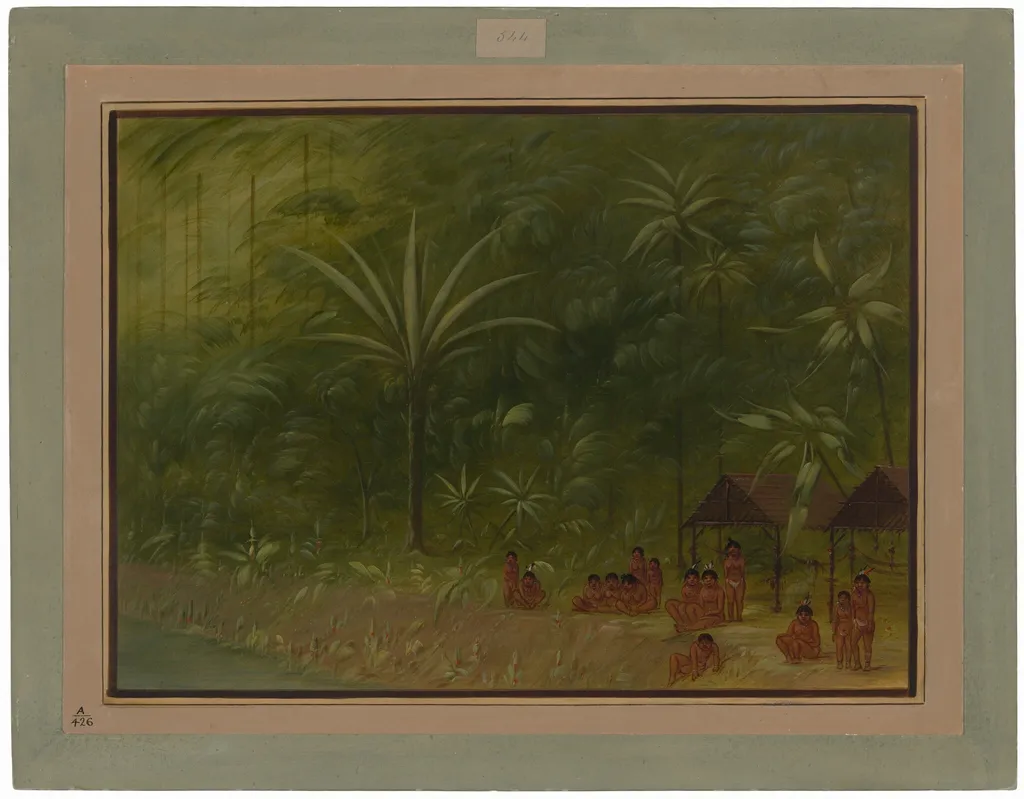
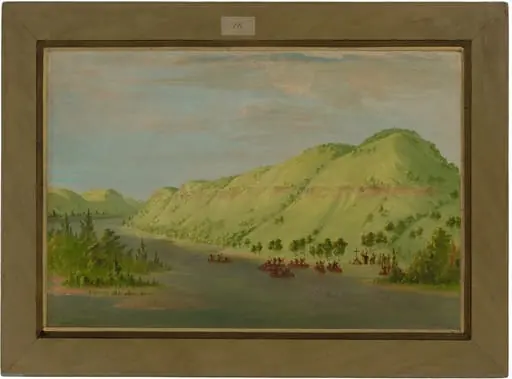
Encampment of Cocomas - Looking Ashore is an oil painting by the American Folk Art artist George Catlin. It dates from 1862 and is held in the collection of the National Gallery of Art.
About this work
Technique & Style
The composition belongs to the genre‑scene category and centers on a solitary tree, reflecting Catlin’s interest in documentary realism.
Encampment of Cocomas – Looking Ashore is an oil painting executed on a rigid card that is affixed to a paperboard support, a method typical of mid‑nineteenth‑century American works. The composition belongs to the genre‑scene category and centers on a solitary tree, reflecting Catlin’s interest in documentary realism. Executed in 1861, the work measures 46.7 cm by 63 cm and is part of the National Gallery of Art’s collection in Washington, D.C., having entered the museum through a series of descents and a 1965 gift. Its formal qualities are defined by a restrained palette and careful rendering of natural forms.
History & Provenance
Encampment of Cocomas – Looking Ashore was painted by George Catlin in 1861, executed in oil on card mounted on paperboard. The work remained in the artist’s family, passing by descent to his daughters Clara Gregory Catlin, Louise Catlin Kinney, and Elizabeth Wing Catlin. In 1912 Elizabeth Wing Catlin sold the painting to the American Museum of Natural History.
It was later sold in 1959 through Kennedy Galleries, New York, to Paul Mellon of Upperville, Virginia, who gave it to the National Gallery of Art in Washington, D.C., in 1965, where it has remained.
Legacy
The painting entered the National Gallery of Art in 1965, where it remains in the museum’s collection, ensuring continued scholarly attention. Its provenance traces a path from the artist’s studio to private collectors and finally to a public institution, highlighting its recognized significance within 19th‑century American genre painting. As a work depicting a tree, it is part of Catlin’s broader genre_scene output, reflecting its inclusion in assessments of his oeuvre.
Overview
George Catlin's 1862 painting, "Encampment of Cocomas - Looking Ashore," is an oil on card mounted on paperboard. This work of American folk art portrays an indigenous encampment, featuring people and horses gathered near a tree, observing a distant point. It offers a tranquil depiction of daily life, reflecting Catlin's enduring interest in documenting Native American cultures through genre scenes.
Subject & Meaning
The painting captures a serene moment within an indigenous encampment. A group of individuals and horses are depicted gathered by a tree, their gaze directed towards an unseen point in the distance. This tranquil genre scene provides an intimate view into the everyday existence of a particular community, emphasizing a sense of calm and observation rather than overt action.
Context
George Catlin, originally trained in law, dedicated his artistic career to documenting Native American cultures. While he extensively traveled the American West in the 1830s, creating numerous portraits and landscapes of Plains tribes, this 1862 work demonstrates his sustained interest in depicting everyday life. It reflects a later period in his career, yet maintains his characteristic focus on genre scenes.
Own this work as a print
Artist & collection

Artist
George Catlin ( KAT-lin; July 26, 1796 – December 23, 1872) was an American lawyer, painter, author, and traveler, who specialized in portraits of Native Americans in the American frontier.

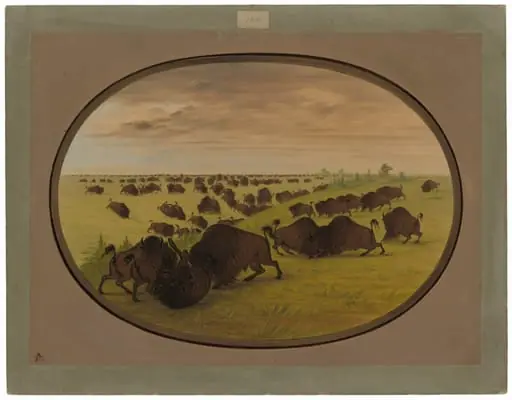 Bulls Fighting
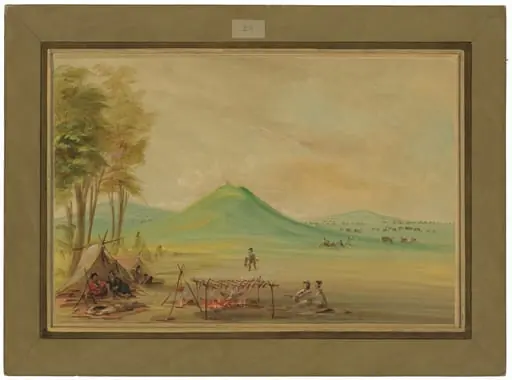 Expedition Encamped on a Texas Prairie. April 1686
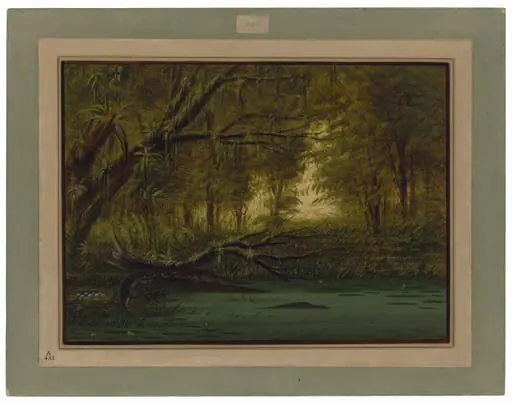 An Alligator's Nest
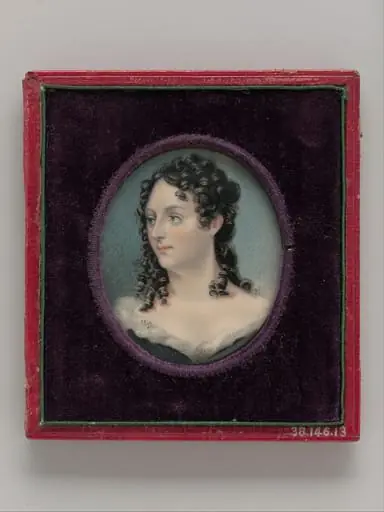 Mrs. George Catlin (Clara Bartlet Gregory)
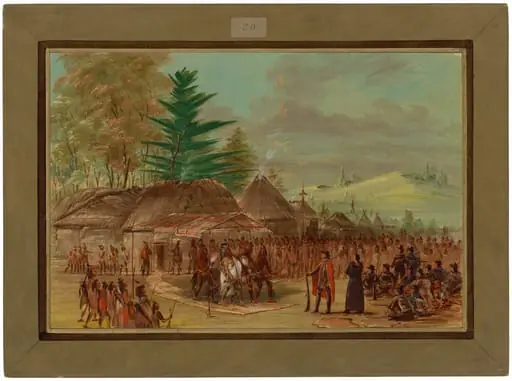 Chief of the Taensa Indians Receiving La Salle. March 20, 1682
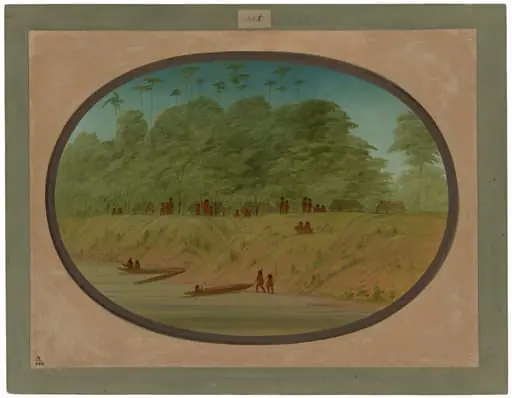 A Small Village - Payaguas Indians
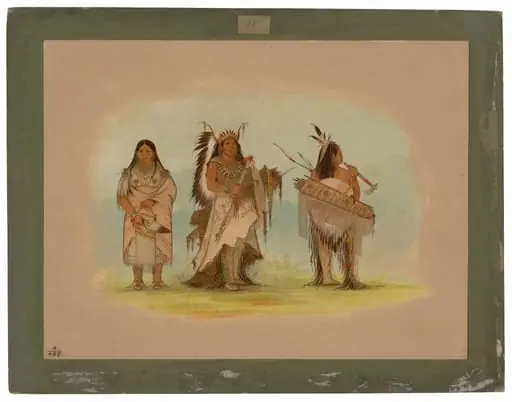 Omaha Chief, His Wife, and a Warrior
 Father Hennepin Leaving the Mississippi to Join La Salle. May 8, 1680