Artwork
The Great Ant-Eater
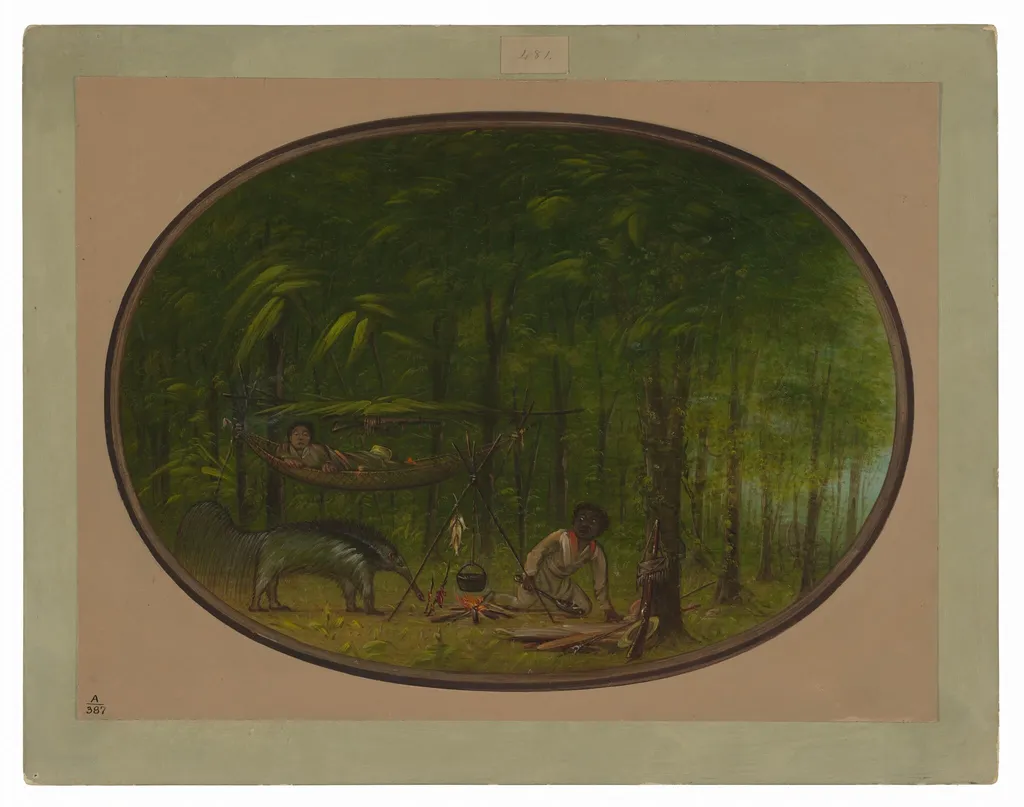
The Great Ant-Eater is an oil painting by the Impressionist artist George Catlin. It dates from 1862 and is held in the collection of the National Gallery of Art.
About this work
You see an ant-eater curled in a tree. Its striped tail wraps around a branch. Soft fur glows in the dappled light.
George Catlin painted this in 1854. He spent years watching animals and Native Plains tribes. Most artists stuck to fancy European scenes. Catlin chose the American West instead.
This small oil card shows his exact brushwork. Look for the rough paper edges under the paint.
Search for another Catlin, George
Technique & Style
The Great Ant-Eater is an oil painting on card mounted on paperboard, reflecting Catlin's practice of combining unconventional supports with traditional oil pigments to achieve both structural stability and textural nuance. The work's flat, almost illustrative rendering of a solitary tree emphasizes formal simplification and a focus on silhouette, while the handling of pigment reveals a restrained palette and smooth surface finish characteristic of mid-19th-century American genre painting. These stylistic choices underscore the artist's interest in documenting frontier subjects with a blend of documentary precision and romanticized composition, aligning with broader trends in 19th-century landscape and naturalist art.
History & Provenance
Following the artist's death in 1872, the work passed by descent to his three daughters: Clara Gregory Catlin, Louise Catlin Kinney, and Elizabeth Wing Catlin.
George Catlin executed The Great Ant-Eater in 1867 as an oil painting on card mounted to paperboard. Following the artist's death in 1872, the work passed by descent to his three daughters: Clara Gregory Catlin, Louise Catlin Kinney, and Elizabeth Wing Catlin. In 1912, the American Museum of Natural History purchased the piece directly from Elizabeth Wing Catlin.
The museum retained ownership until 1959, when it sold the painting through Kennedy Galleries of New York to Paul Mellon of Upperville, Virginia. Mellon subsequently donated the work to the National Gallery of Art in Washington, D.C., in 1965.
The painting is held by the National Gallery of Art, Washington, D.C., where it is recorded as accession number 1965.16.1.
It entered the Gallery’s collection in 1965 as a gift from Mr. Paul Mellon, who had acquired it in 1959 through Kennedy Galleries, New York, from Elizabeth Wing Catlin.
Legacy
The Great Ant-Eater has been recognized as an important example of George Catlin's work that blends natural history illustration with Romantic-era artistic sensibilities. Its depiction of a tree in a naturalistic setting contributed to early discussions about ecological relationships in American art. The painting's journey from Catlin's studio to the National Gallery of Art through family descent and the 1959 Kennedy Galleries sale helped establish its provenance as a significant work in American art history.
Today it remains part of the National Gallery of Art's permanent collection in Washington, D.C., where it continues to be studied for its contribution to 19th-century American art and naturalist painting traditions.
Overview
The Great Ant‑Eater is a modestly sized oil painting on card, later mounted on paperboard, executed by the American artist George Catlin in 1862. The composition centers on a solitary anteater perched in a tree, its striped tail coiled around a branch, illuminated by dappled light that highlights the animal’s soft fur.
Subject & Meaning
Catlin presents the anteater as a quiet observer of its environment, emphasizing the creature’s integration with the tree rather than any dramatic action. The work reflects his broader interest in documenting the natural world of the American frontier, offering a glimpse of wildlife that was rarely portrayed in contemporary art.
Context
In the mid‑19th century most American artists favored European subjects or idealized landscapes. Catlin’s focus on the western frontier, both its peoples and its wildlife, set him apart from his peers. The ant‑eater, a creature unfamiliar to many eastern viewers, illustrates his commitment to recording the diversity of the continent’s natural environment.
Own this work as a print
Artist & collection

Artist
George Catlin ( KAT-lin; July 26, 1796 – December 23, 1872) was an American lawyer, painter, author, and traveler, who specialized in portraits of Native Americans in the American frontier.

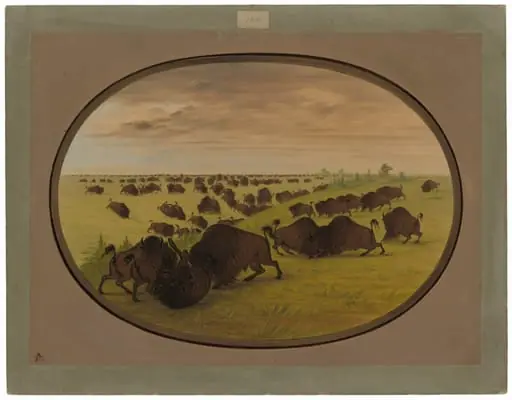 Bulls Fighting
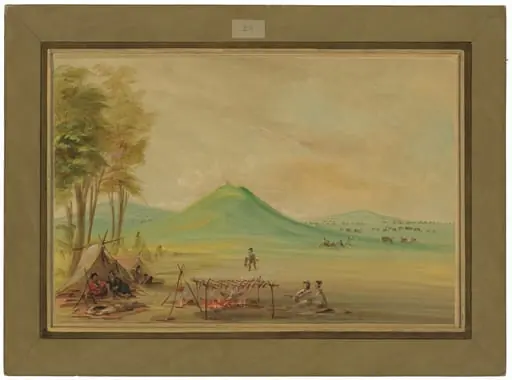 Expedition Encamped on a Texas Prairie. April 1686
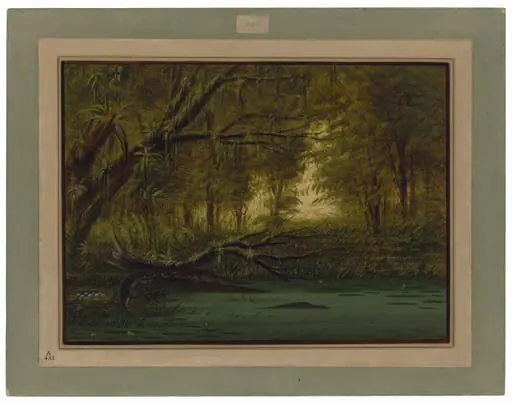 An Alligator's Nest
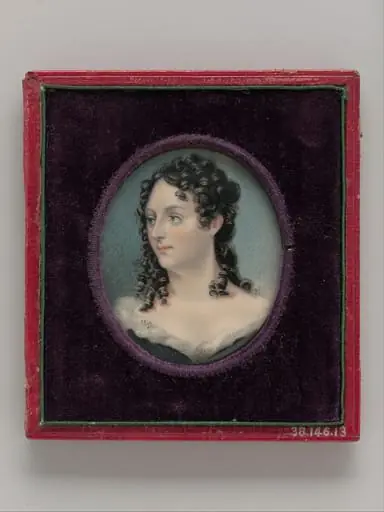 Mrs. George Catlin (Clara Bartlet Gregory)
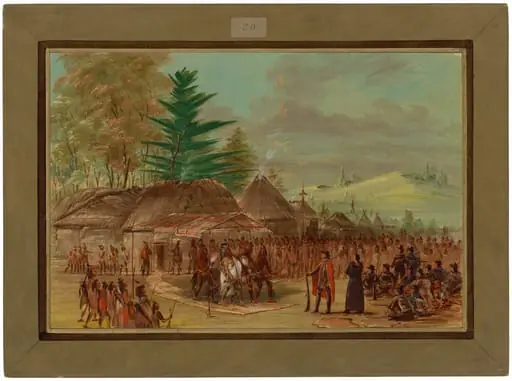 Chief of the Taensa Indians Receiving La Salle. March 20, 1682
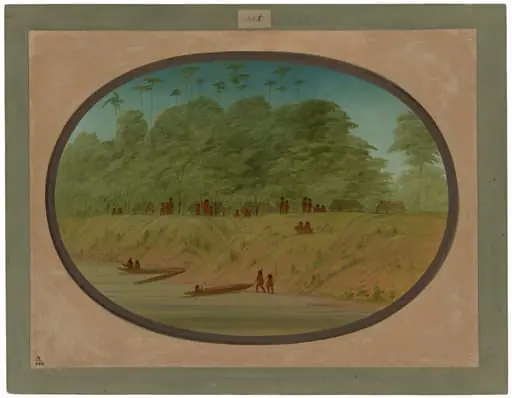 A Small Village - Payaguas Indians
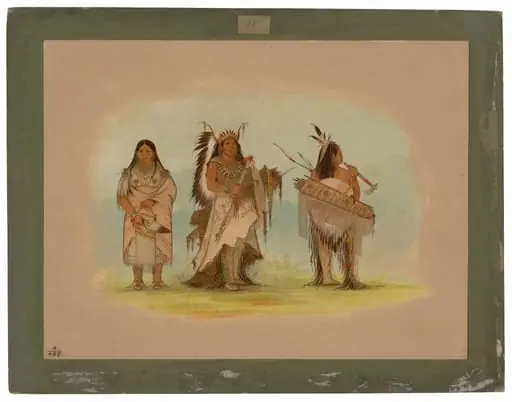 Omaha Chief, His Wife, and a Warrior
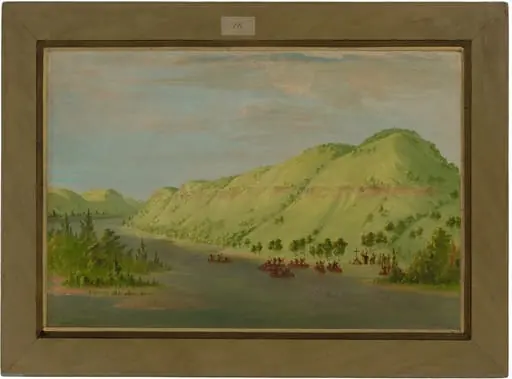 Father Hennepin Leaving the Mississippi to Join La Salle. May 8, 1680