Artwork
Five Caribbe Indians
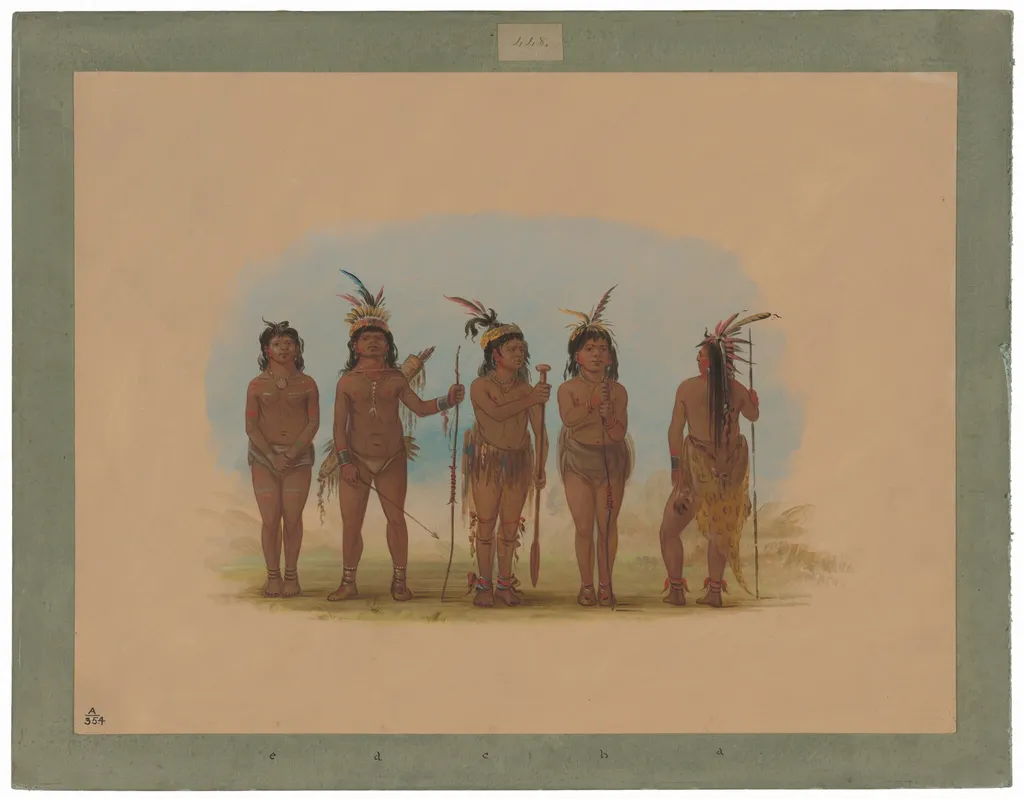
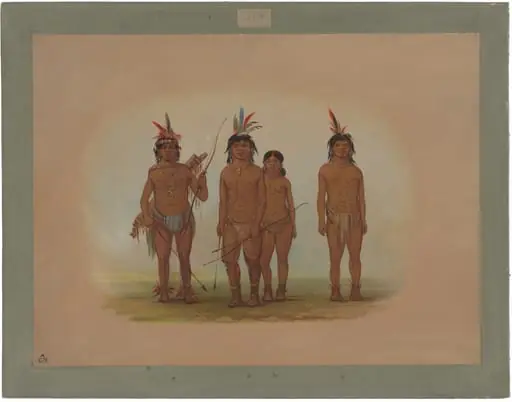
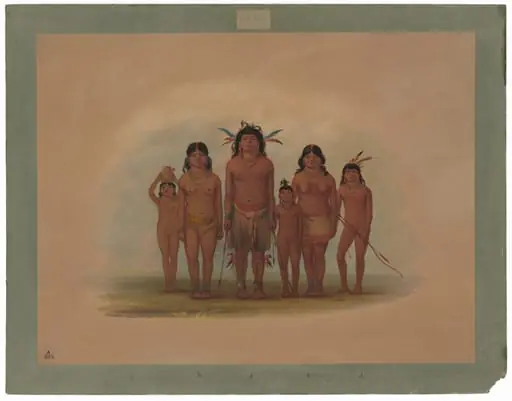
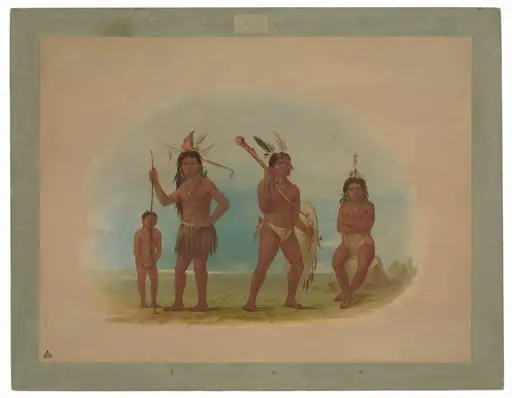
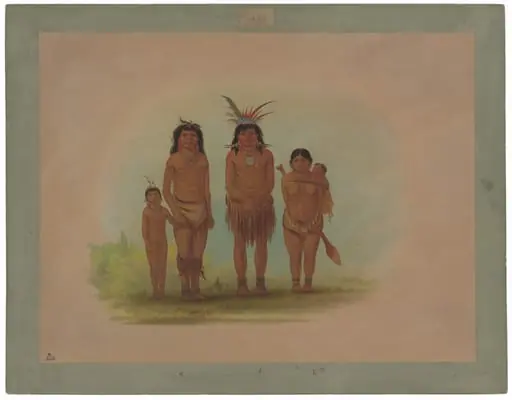
Five Caribbe Indians is an oil painting by the American Folk Art artist George Catlin. It dates from 1862 and is held in the collection of the National Gallery of Art.
About this work
Technique & Style
The work is executed in oil paint on a card support that was later mounted onto paperboard, a handling typical of Catlin’s portable field practice for documenting Indigenous subjects. Dimensions are 46.7 cm in height by 62 cm in width. Stylistically, the painting presents a frontal, static composition of five figures arranged in a shallow, stage-like space, emphasizing individual likeness and attire over narrative action.
The palette is restrained, relying on earth tones punctuated by brighter pigments in costume details, which underscores the subjects’ cultural identity while maintaining a measured realism aligned with Catlin’s documentary aims.
History & Provenance
Five Caribbe Indians, an 1861 oil on card mounted on paperboard portrait by George Catlin, is held by the National Gallery of Art in Washington, D.
George Catlin painted Five Caribbe Indians in 1861 in oil on card mounted on paperboard. The work remained in the artist's possession and passed by descent to his three daughters, Clara Gregory Catlin, Louise Catlin Kinney, and Elizabeth Wing Catlin. In 1912 the American Museum of Natural History purchased the painting from Elizabeth Wing Catlin.
The museum later sold it in 1959 through Kennedy Galleries in New York to Paul Mellon of Upperville, Virginia. Mellon gave the work to the National Gallery of Art in 1965, where it has remained in the collection.
Five Caribbe Indians, an 1861 oil on card mounted on paperboard portrait by George Catlin, is held by the National Gallery of Art in Washington, D.C. Its inventory number is 1965.17.1, reflecting its 1965 gift to the institution from Paul Mellon. The work was previously owned by Elizabeth Wing Catlin, who sold it in 1959 through Kennedy Galleries to Paul Mellon, and before that descended through Catlin's daughters.
Exhibition history includes display at the National Gallery of Art in 1970 as part of the exhibition "George Catlin: The Life of an American Artist," and again in 2015 within the exhibition "American Portraits from the National Gallery of Art."
Overview
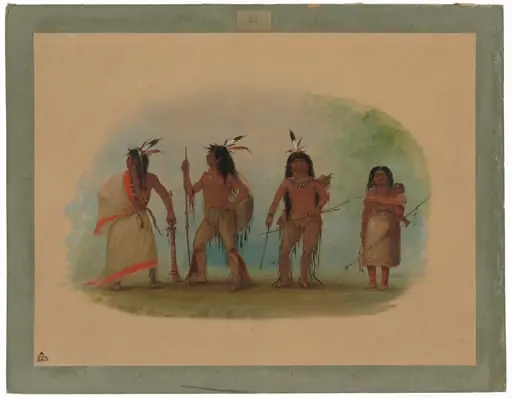
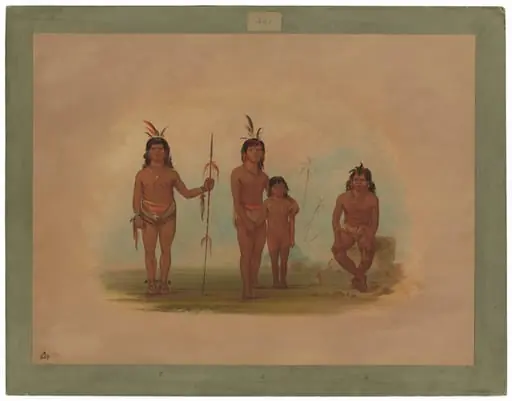
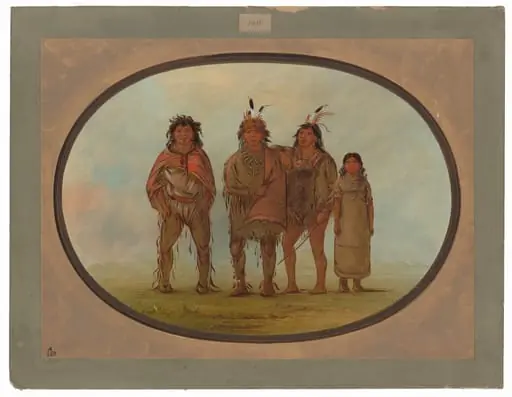
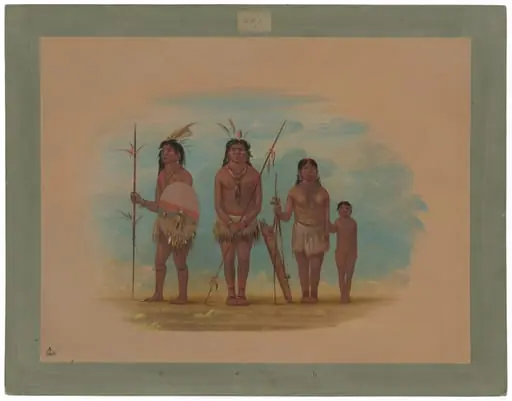
Created in 1862, Five Caribbe Indians is an oil painting executed on card that has been mounted onto paperboard. The work depicts five male figures arranged in a linear composition, each adorned with feathered headdresses, body paint, and minimal clothing consisting of loincloths and leg wrappings. The figures hold spears, clubs, and other implements against a simple backdrop of blue sky and low grass.
Subject & Meaning
The portrait presents a group of Caribbean Indigenous men, emphasizing their traditional attire and weaponry. The emphasis on headdresses and body markings highlights cultural identity, while the inclusion of spears and clubs suggests a focus on martial or ceremonial aspects of the subjects’ lives.
Context
The painting belongs to the genre of portraiture within American folk art, a tradition that often combined ethnographic observation with artistic representation. Created amid mid‑nineteenth‑century interest in documenting native cultures, the work serves as a visual record of Caribbean Indigenous appearance as perceived by a traveling American artist.
Own this work as a print
Artist & collection

Artist
George Catlin ( KAT-lin; July 26, 1796 – December 23, 1872) was an American lawyer, painter, author, and traveler, who specialized in portraits of Native Americans in the American frontier.

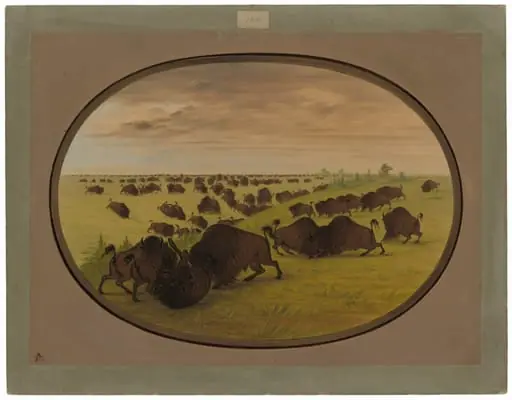 Bulls Fighting
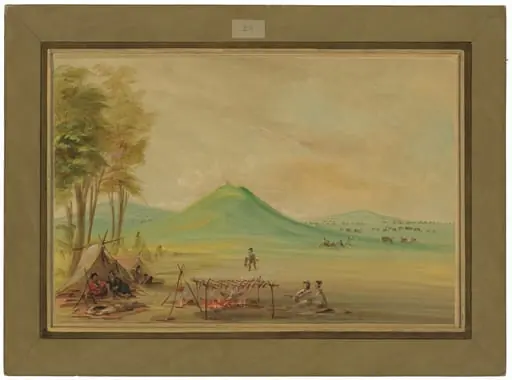 Expedition Encamped on a Texas Prairie. April 1686
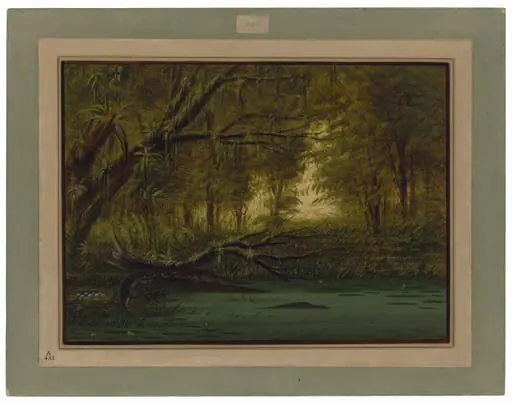 An Alligator's Nest
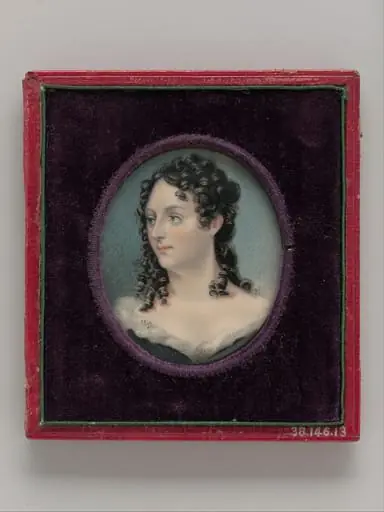 Mrs. George Catlin (Clara Bartlet Gregory)
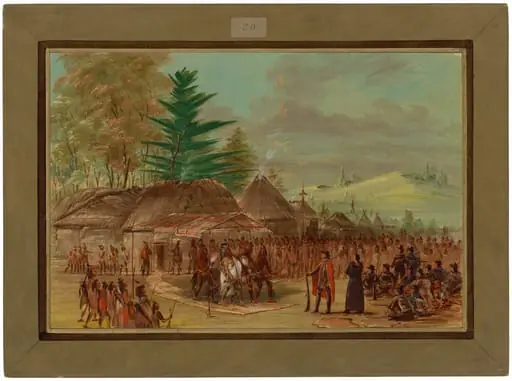 Chief of the Taensa Indians Receiving La Salle. March 20, 1682
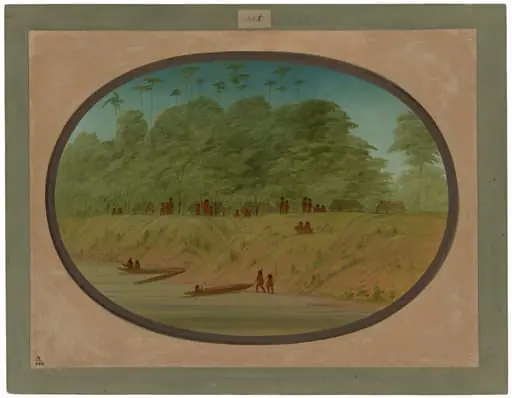 A Small Village - Payaguas Indians
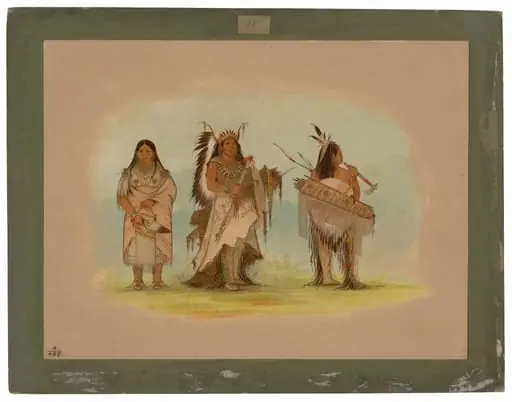 Omaha Chief, His Wife, and a Warrior
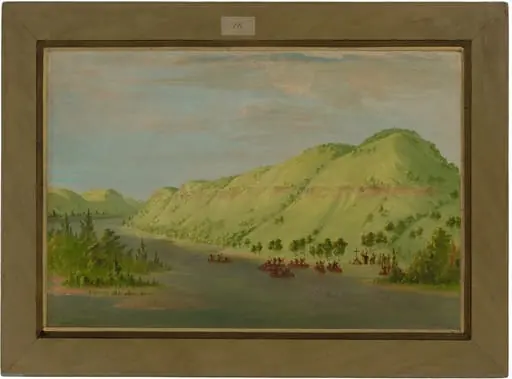 Father Hennepin Leaving the Mississippi to Join La Salle. May 8, 1680