Artwork
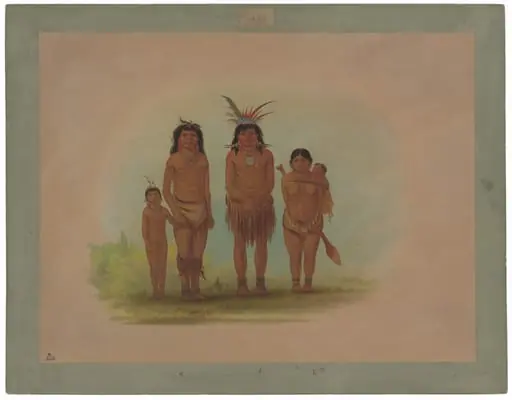
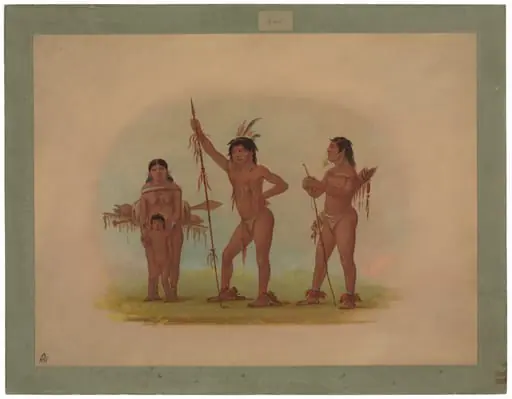
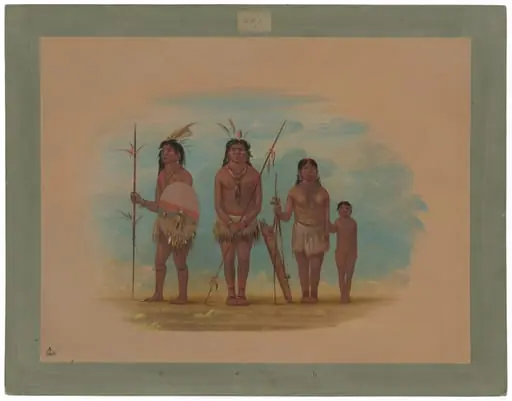
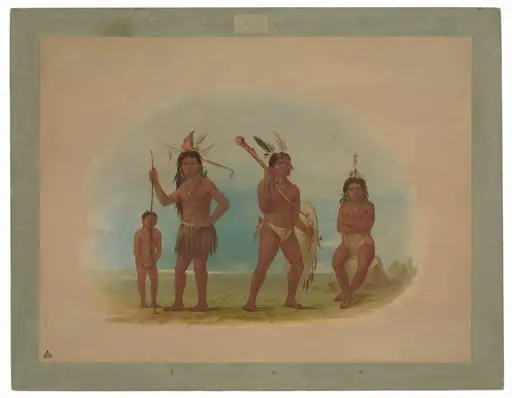
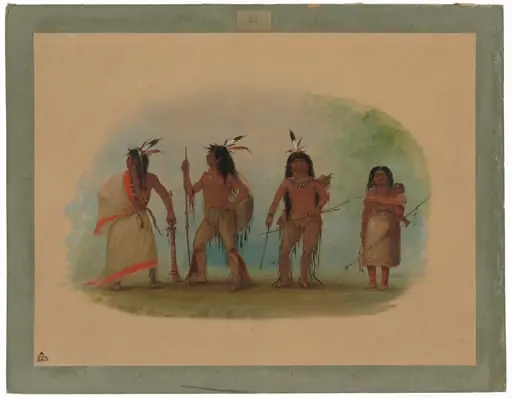
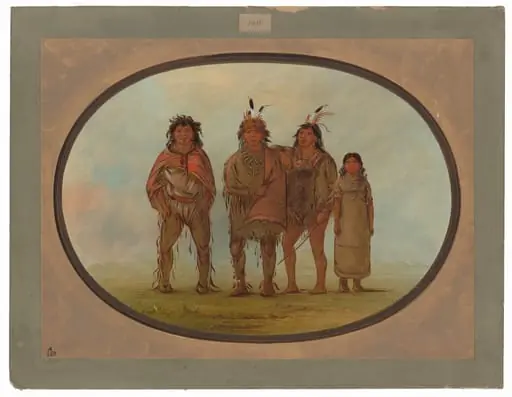
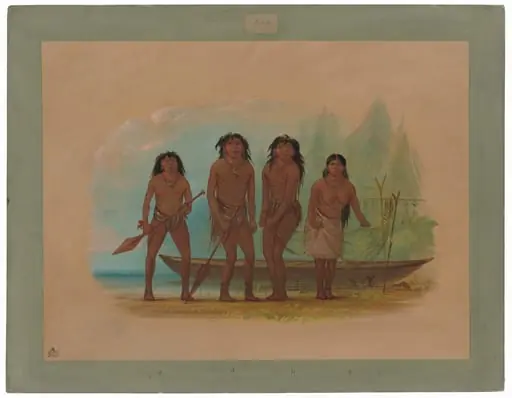
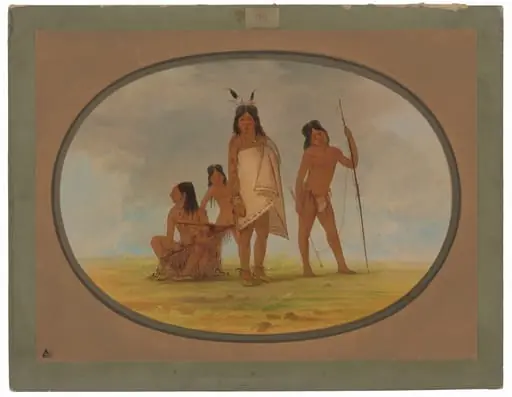
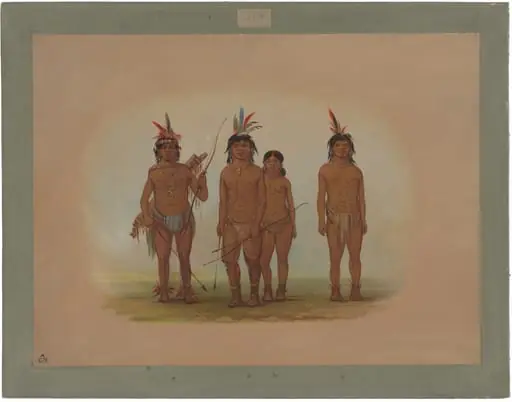
Four Goo-a-give Indians
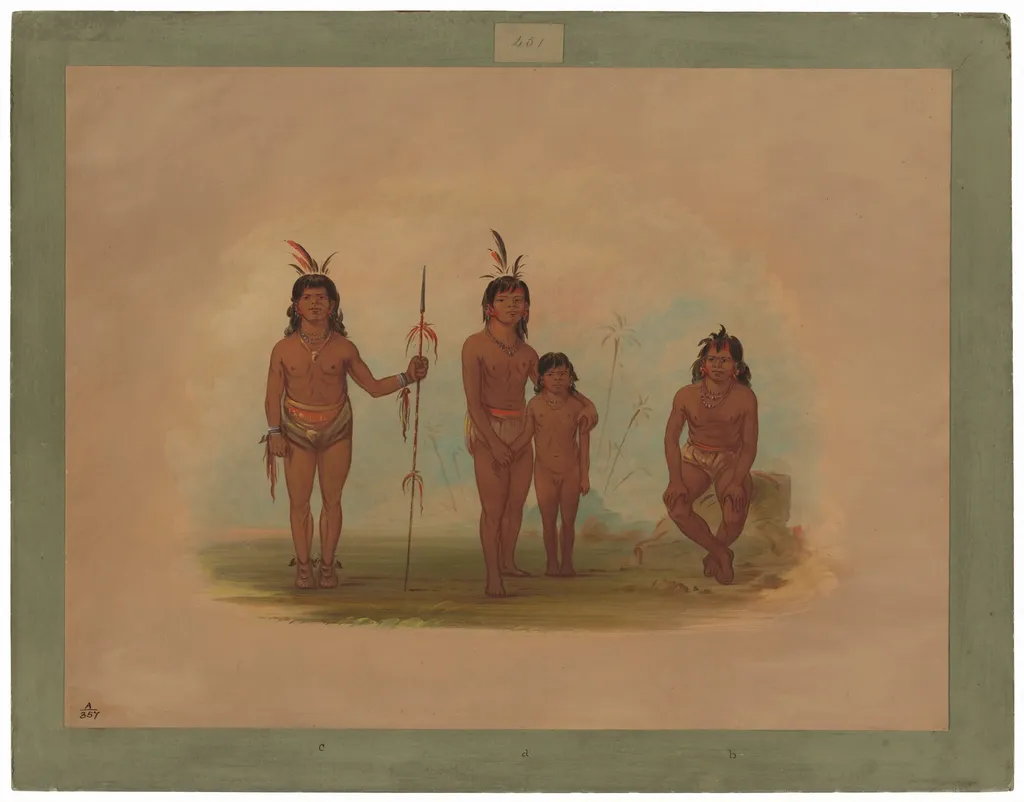
Four Goo-a-give Indians is an oil painting by the American Folk Art artist George Catlin. It dates from 1862 and is held in the collection of the National Gallery of Art.
About this work
Subject & Meaning
Four Goo-a-give Indians depicts members of the Ojibwe people, rendered as individual portrait subjects rather than generic figures.
Four Goo-a-give Indians depicts members of the Ojibwe people, rendered as individual portrait subjects rather than generic figures. The work emphasizes their distinct clothing and adornment, highlighting cultural specificity through visual details. Created by George Catlin in 1861, the painting reflects 19th-century ethnographic interest in documenting Indigenous peoples, though its interpretation is shaped by the artist's perspective and the era's attitudes toward Native communities.
The painting is housed at the National Gallery of Art in Washington, D.C., where it remains part of the permanent collection.
The subject’s identity and cultural context are central to understanding its meaning, as the figures are portrayed with attention to traditional dress and ceremonial elements. This focus on individual representation underscores a broader effort to capture Indigenous presence during a period of significant displacement and cultural change. The artwork’s legacy is tied to its provenance, moving from Catlin’s family to the American Museum of Natural History and eventually to the National Gallery of Art through a series of documented transactions.
The painting’s composition and details serve as both artistic and historical records, offering insight into 19th-century representations of Native peoples while inviting modern viewers to consider the complexities of such depictions. Its presence in a major institution highlights its significance within American art and cultural history.
Technique & Style
Executed in 1861, this portrait utilizes oil paint applied to a card support, which is subsequently mounted onto paperboard. The work measures 45.5 cm in height and 62.2 cm in width. As a painting by George Catlin, the piece functions within the genre of portraiture, depicting four figures identified as Goo-a-give Indians.
The specific handling of the oil medium on the card substrate reflects the artist's materials during this late period of his career.
History & Provenance
The work was painted by George Catlin in 1861. It descended by family inheritance to his daughters, Clara Gregory Catlin, Louise Catlin Kinney, and Elizabeth Wing Catlin, before being sold in 1912 to the American Museum of Natural History by Elizabeth Wing Catlin.
In 1959 it was acquired through Kennedy Galleries, New York, by Paul Mellon and subsequently given to the National Gallery of Art, Washington, D.C., in 1965.
Four Goo-a-give Indians is an 1861 oil on card mounted on paperboard portrait held in the collection of the National Gallery of Art in Washington, D.C. The work entered the museum's collection through a 1965 gift from Paul Mellon, following its acquisition in 1959 from Kennedy Galleries, New York, and prior provenance tracing back to George Catlin's descendants and a 1912 purchase by the American Museum of Natural History.
Context
George Catlin's 1861 oil on card painting Four Goo-a-give Indians entered the National Gallery of Art collection through the 1965 gift of Paul Mellon, having previously been held by the American Museum of Natural History and sold by Kennedy Galleries in 1959. The work remains part of the National Gallery of Art's permanent holdings in Washington, D.C.
Scholarly attention to Catlin's subjects has focused on his documentation of Indigenous peoples, though Four Goo-a-give Indians has received comparatively little targeted analysis within broader assessments of his oeuvre. The painting is cataloged in the National Gallery of Art's collection and has been referenced in studies of 19th-century portraiture and ethnographic art, situating it within Catlin's documented practice of portraying Native American subjects during his travels in the 1830s-1860s.
Legacy
The painting's presence in the National Gallery of Art's collection and its documented provenance from the artist's descendants through major transactions underscore its established significance within American art history. Its inclusion in the museum's holdings since 1965, following acquisition from a prominent New York gallery, reflects its recognized historical and artistic value. The work's legacy is further affirmed by its continued display and study within a major national institution, cementing its place as an important example of 19th-century portraiture.
Overview
Created in 1862, this oil painting on card, later mounted on paperboard, depicts four Native American men and a young boy arranged in a loose semi‑circle. The figures are nude above the waist, wearing loincloths, feathered hair ornaments and neck jewelry, set against a grassy foreground and a cloudy sky. The work is held by the National Gallery of Art in Washington, D.C.
Own this work as a print
Artist & collection

Artist
George Catlin ( KAT-lin; July 26, 1796 – December 23, 1872) was an American lawyer, painter, author, and traveler, who specialized in portraits of Native Americans in the American frontier.

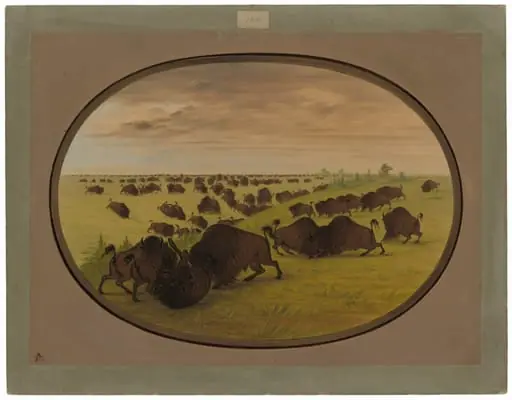 Bulls Fighting
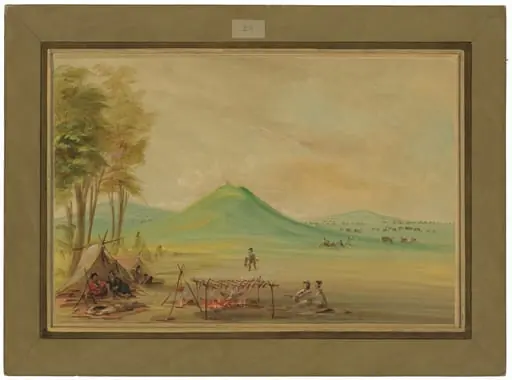 Expedition Encamped on a Texas Prairie. April 1686
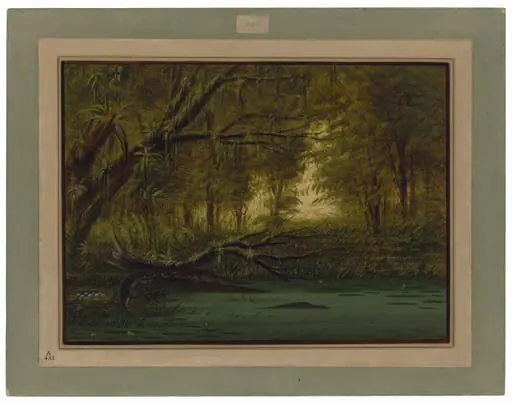 An Alligator's Nest
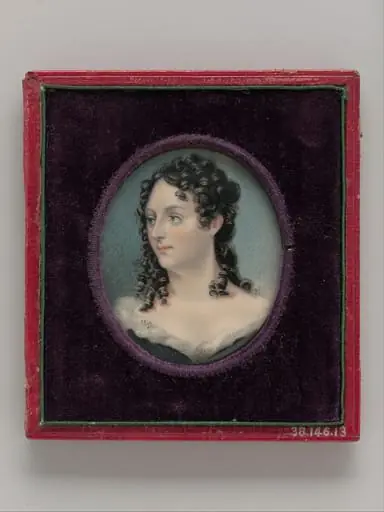 Mrs. George Catlin (Clara Bartlet Gregory)
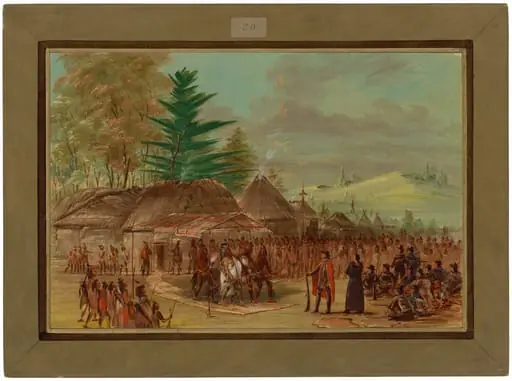 Chief of the Taensa Indians Receiving La Salle. March 20, 1682
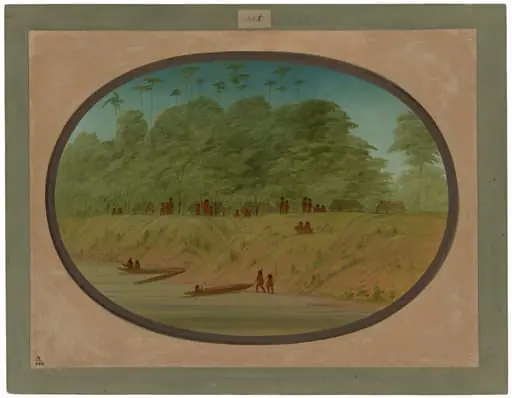 A Small Village - Payaguas Indians
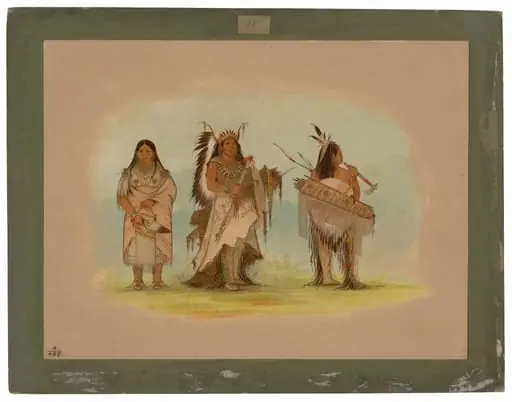 Omaha Chief, His Wife, and a Warrior
 Father Hennepin Leaving the Mississippi to Join La Salle. May 8, 1680