Artwork
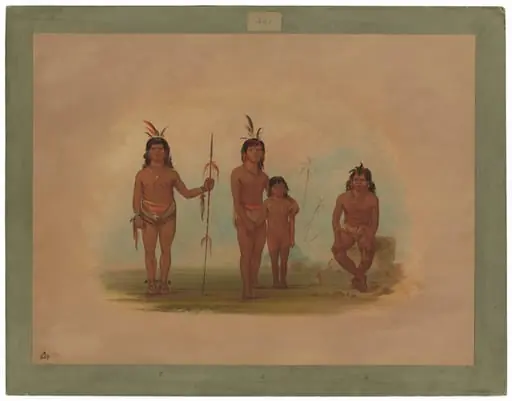
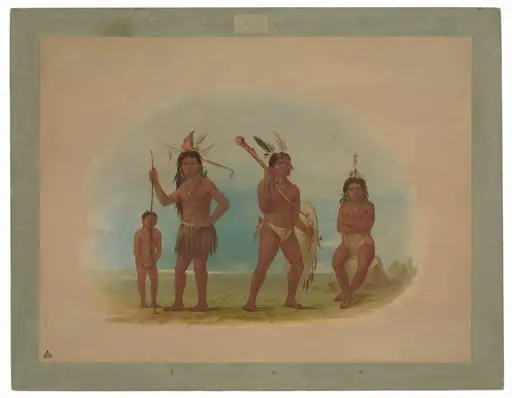
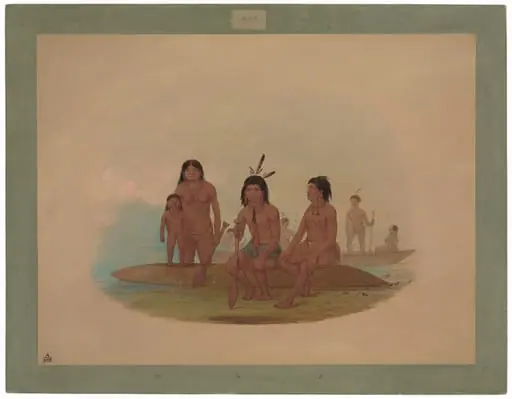
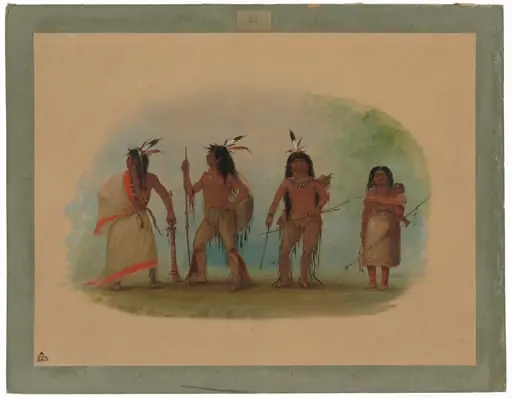
Four Fuegian Indians
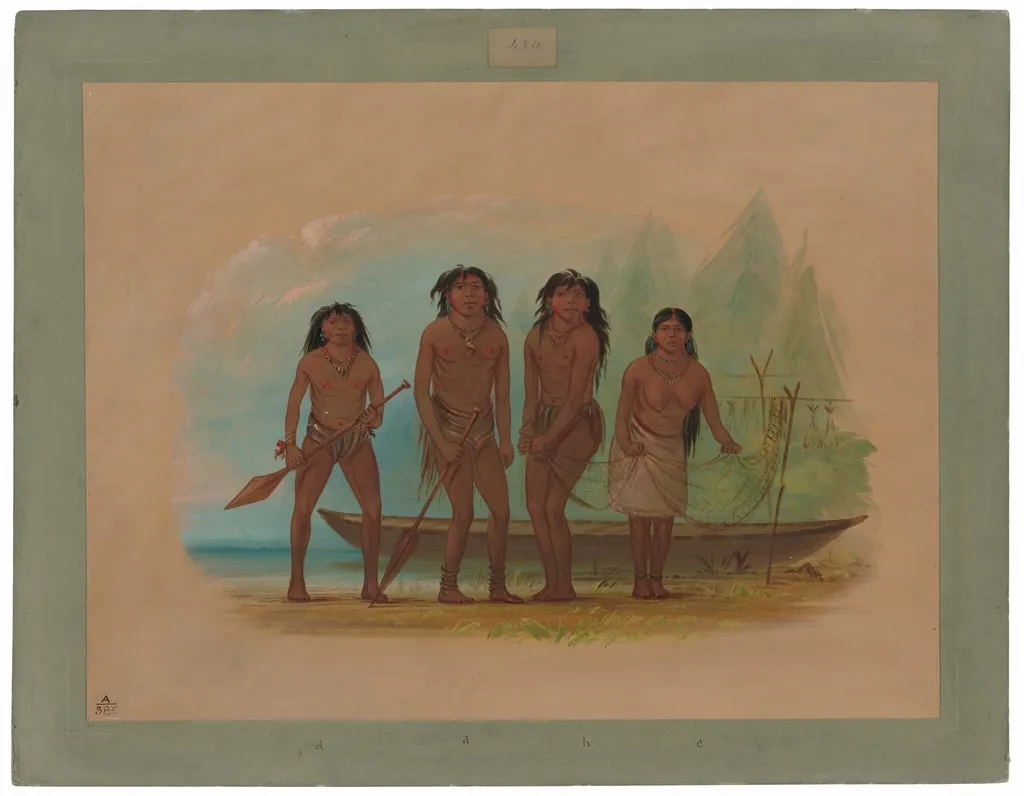
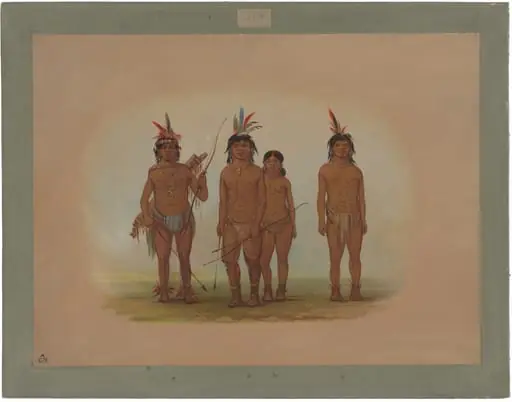
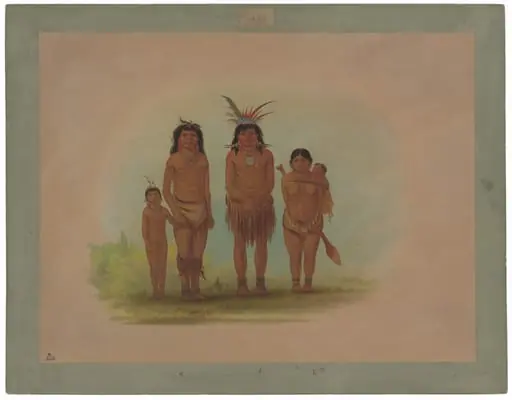
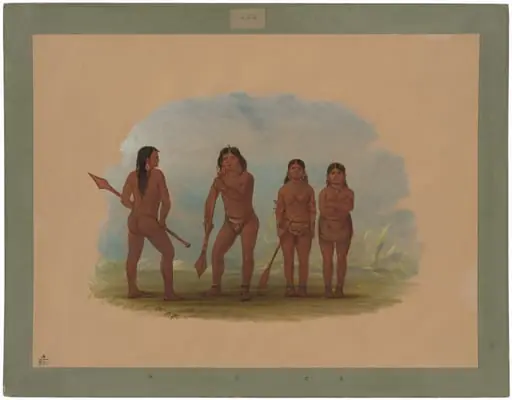
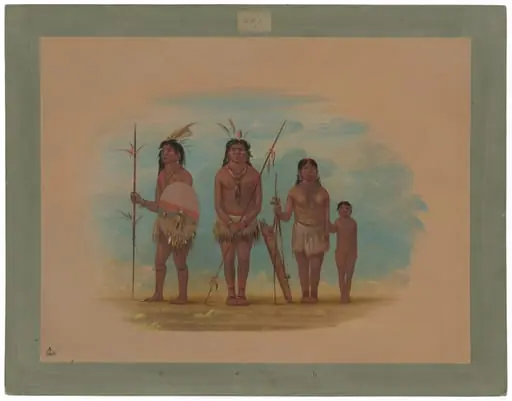
Four Fuegian Indians is an oil painting by the American Folk Art artist George Catlin. It dates from 1862 and is held in the collection of the National Gallery of Art.
About this work
Technique & Style
Four Fuegian Indians is an oil painting applied to a rigid support of card mounted on paperboard, a technique used in mid‑nineteenth‑century portraiture.
Four Fuegian Indians is an oil painting applied to a rigid support of card mounted on paperboard, a technique used in mid‑nineteenth‑century portraiture. The work measures 45.2 cm in height by 60.4 cm in width, giving the composition a balanced, rectangular format. The piece is classified as a portrait, and its material and formal attributes are documented in the object's provenance and cataloguing records.
History & Provenance
The painting Four Fuegian Indians was created by George Catlin in 1862. Following the artist's death in 1872, the work passed by descent to his daughters: Clara Gregory Catlin, Louise Catlin Kinney, and Elizabeth Wing Catlin. In 1912, the American Museum of Natural History purchased the piece from Elizabeth Wing Catlin.
The museum subsequently sold the painting in 1959 through Kennedy Galleries in New York to collector Paul Mellon of Upperville, Virginia. It entered the National Gallery of Art in Washington, D.C., as a gift from Mellon in 1965.
The painting is currently held in the collection of the National Gallery of Art in Washington, D.C. The provided sources do not contain a specific accession number or a record of the work's exhibition history.
Overview
George Catlin's painting, Four Fuegian Indians, created in 1862, is an oil on card mounted on paperboard. This work presents four Indigenous individuals from Tierra del Fuego, rendered with an observational approach characteristic of the artist. The composition places the figures within a natural environment, marked by the presence of a tree, reflecting Catlin's broader interest in documenting the lives and appearances of various Indigenous cultures.
Subject & Meaning
The painting portrays four Indigenous people from Tierra del Fuego, standing together near a tree. Their attire, depicted with attention to detail, offers insight into the traditional clothing of the Fuegian culture. The inclusion of a natural element like the tree serves to ground the figures within their environment, emphasizing Catlin's intent to provide a visual record of their appearance and cultural context. This detailed rendering underscores the artist's commitment to ethnographic documentation.
Context
Four Fuegian Indians aligns with George Catlin's extensive career dedicated to documenting Indigenous populations. Throughout the 1830s, Catlin journeyed across the American frontier, creating numerous portraits and written accounts of Plains Indian life. This later work from 1862 extends his consistent practice of producing detailed, observational depictions of Indigenous peoples, reflecting a sustained interest in preserving visual records of diverse cultures beyond the American West.
Own this work as a print
Artist & collection

Artist
George Catlin ( KAT-lin; July 26, 1796 – December 23, 1872) was an American lawyer, painter, author, and traveler, who specialized in portraits of Native Americans in the American frontier.

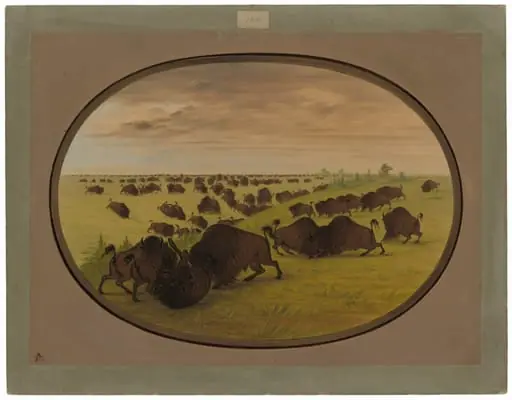 Bulls Fighting
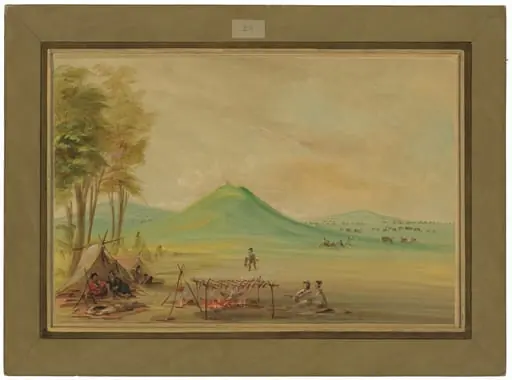 Expedition Encamped on a Texas Prairie. April 1686
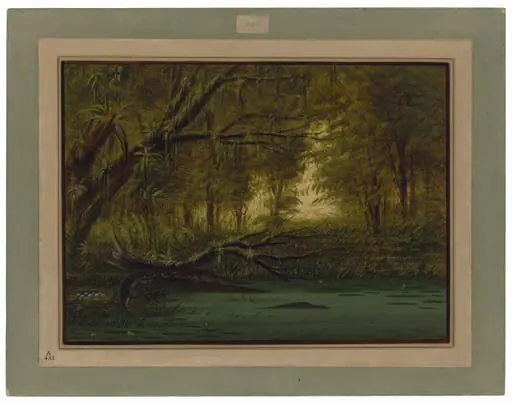 An Alligator's Nest
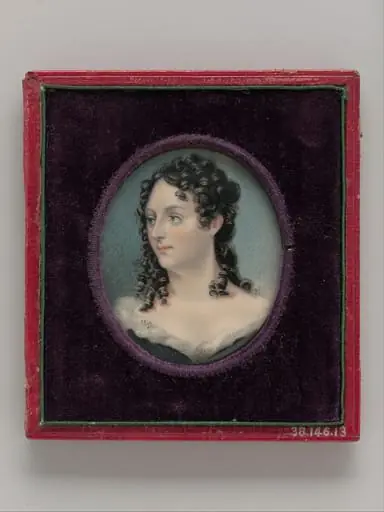 Mrs. George Catlin (Clara Bartlet Gregory)
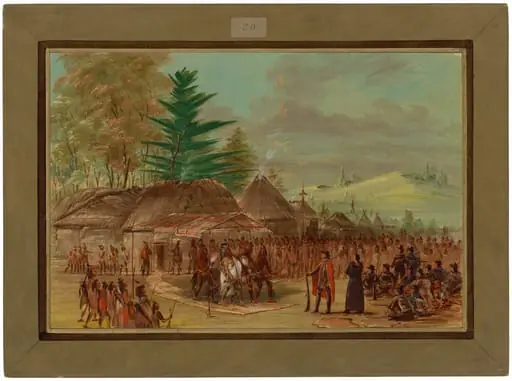 Chief of the Taensa Indians Receiving La Salle. March 20, 1682
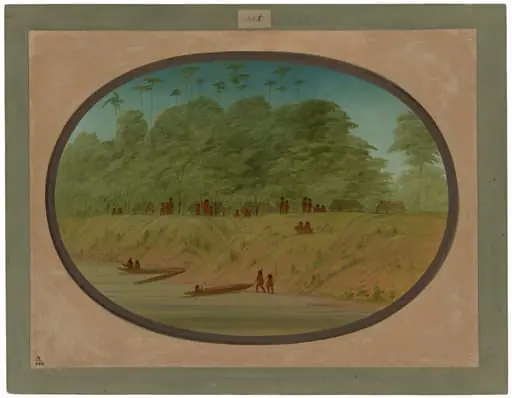 A Small Village - Payaguas Indians
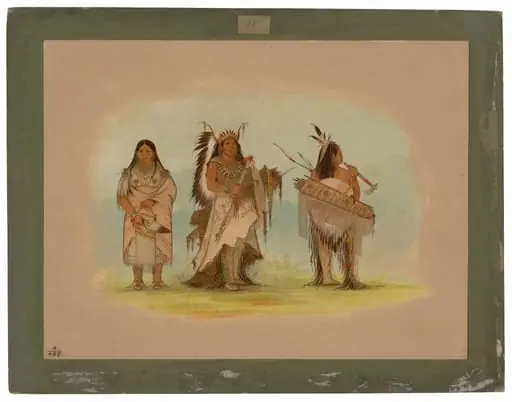 Omaha Chief, His Wife, and a Warrior
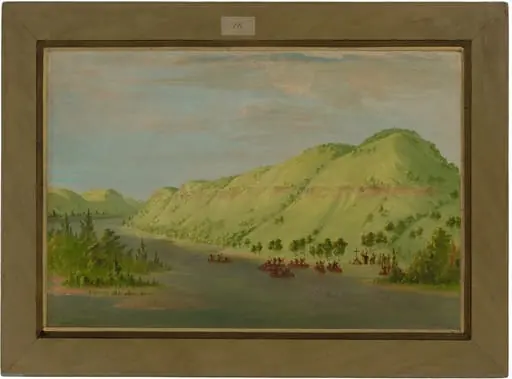 Father Hennepin Leaving the Mississippi to Join La Salle. May 8, 1680