Artwork
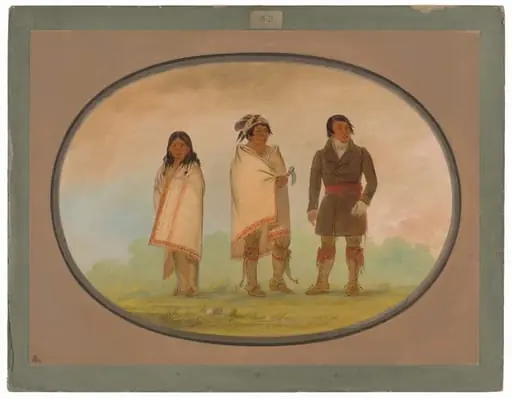
Kaskaskia Chief, His Mother, and Son
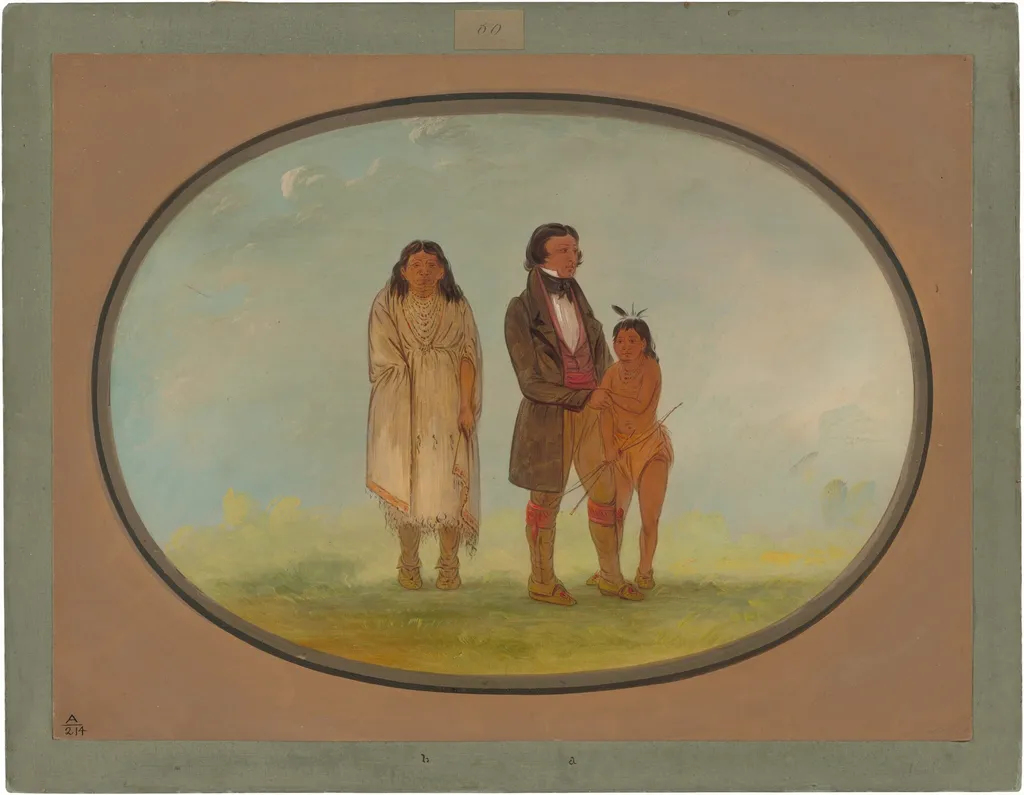
Kaskaskia Chief, His Mother, and Son is an oil painting by the American Folk Art artist George Catlin. It dates from 1865 and is held in the collection of the National Gallery of Art.
About this work
Technique & Style
The composition balances individual characterization against a flat, decorative background, characteristic of 19th-century American portraiture.
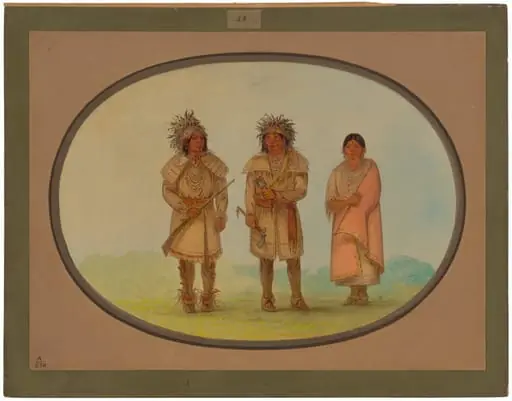
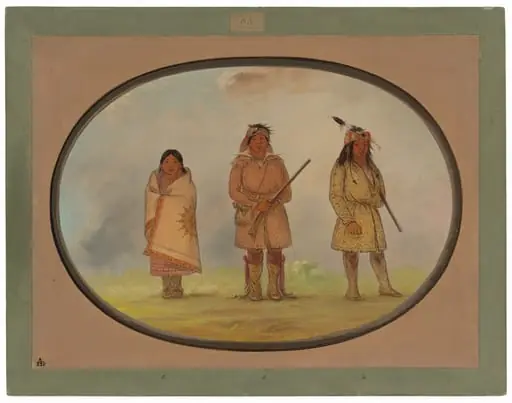
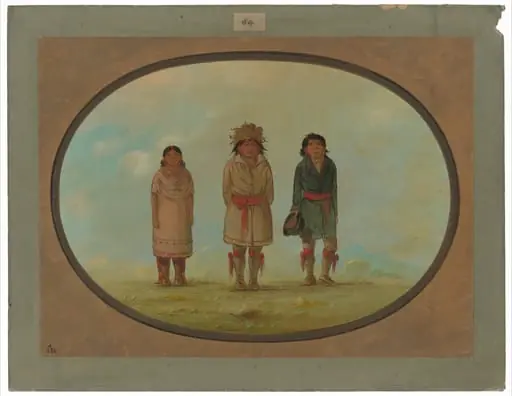
Oil on card mounted on paperboard, measuring 47.7 cm by 63.8 cm, depicts Kaskaskia Chief, His Mother, and Son. Executed in 1861 by George Catlin, the work belongs to the portrait genre within the National Gallery of Art's collection in Washington, D.C. The painting shows a chief in profile with his mother and son, rendered with precise brushwork that emphasizes facial detail and ceremonial attire, reflecting Catlin's interest in documenting Native American subjects with ethnographic accuracy. The composition balances individual characterization against a flat, decorative background, characteristic of 19th-century American portraiture.
History & Provenance
George Catlin created the oil painting Kaskaskia Chief, His Mother, and Son in 1861. The work was executed in oil on card mounted on paperboard. Following the artist's death in 1872, the painting passed by descent to his daughters: Clara Gregory Catlin, Louise Catlin Kinney, and Elizabeth Wing Catlin.
In 1912, the American Museum of Natural History purchased the piece from Elizabeth Wing Catlin. The museum later sold the work in 1959 through Kennedy Galleries in New York to Paul Mellon of Upperville, Virginia. Mellon subsequently gifted the painting to the National Gallery of Art in Washington, D.C., in 1965, where it remains part of the collection.
The painting entered the collection of the American Museum of Natural History in 1912 following its purchase from Elizabeth Wing Catlin, one of the artist's daughters. The museum deaccessioned the work in 1959, selling it through Kennedy Galleries in New York to Paul Mellon of Upperville, Virginia. Mellon subsequently donated the piece to the National Gallery of Art in Washington, D.C., in 1965, where it remains part of the permanent collection.
Context
George Catlin painted Kaskaskia Chief, His Mother, and Son in 1861, depicting a Missouri River delegation he encountered during his documented travels along the Upper Missouri in the 1830s. The work entered the National Gallery of Art's collection in 1965 after passing through the hands of Paul Mellon, who received it via Kennedy Galleries in 1959. Scholars have analyzed Catlin's ethnographic approach within the broader context of 19th-century American expansionism, situating this piece alongside his documented series portraying Native American delegations.
The painting's provenance reflects a direct lineage from the artist's descendants to major institutional acquisition, affirming its significance within Catlin's documented oeuvre.
The work measures 47.7 cm by 63.8 cm and remains held at the National Gallery of Art in Washington, D.C.
Overview
George Catlin’s 1865 oil painting, titled Kaskaskia Chief, His Mother, and Son, depicts three figures positioned in an open landscape. The central male figure, dressed in a brown coat, holds the hand of a young boy who wears only a loincloth and a feathered headpiece, while a woman in a white dress stands to the left. The composition is oval, with a plain background that directs attention to the subjects.
Subject & Meaning
The work presents a familial grouping from the Kaskaskia tribe, emphasizing intergenerational ties. The mother’s white garment contrasts with the modest attire of the father and child, perhaps suggesting differing roles or status within the group. The simple setting underscores the personal nature of the portrait rather than a broader narrative.
Own this work as a print
Artist & collection

Artist
George Catlin ( KAT-lin; July 26, 1796 – December 23, 1872) was an American lawyer, painter, author, and traveler, who specialized in portraits of Native Americans in the American frontier.

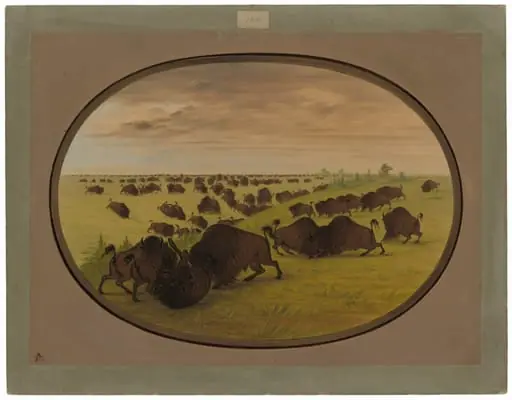 Bulls Fighting
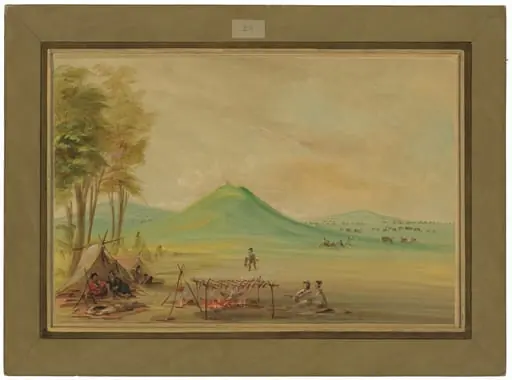 Expedition Encamped on a Texas Prairie. April 1686
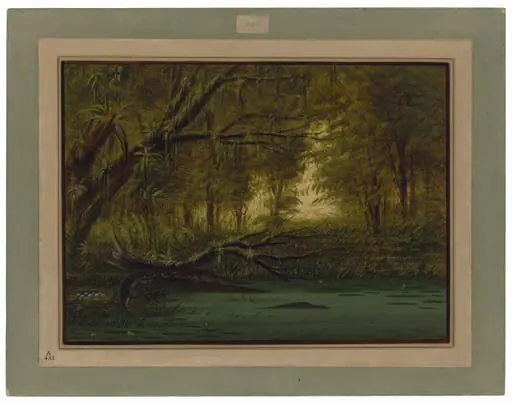 An Alligator's Nest
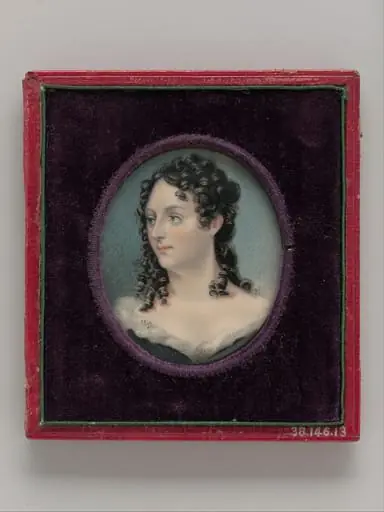 Mrs. George Catlin (Clara Bartlet Gregory)
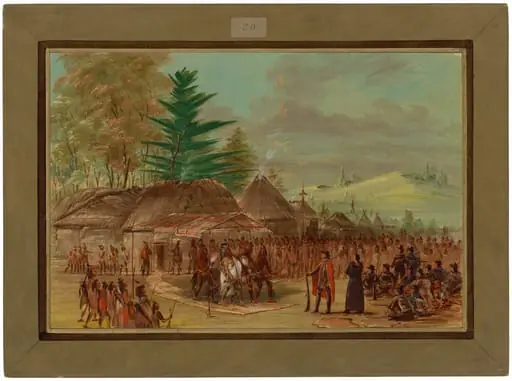 Chief of the Taensa Indians Receiving La Salle. March 20, 1682
 A Small Village - Payaguas Indians
 Omaha Chief, His Wife, and a Warrior
 Father Hennepin Leaving the Mississippi to Join La Salle. May 8, 1680