Artwork
Members of the Botocudo Tribe
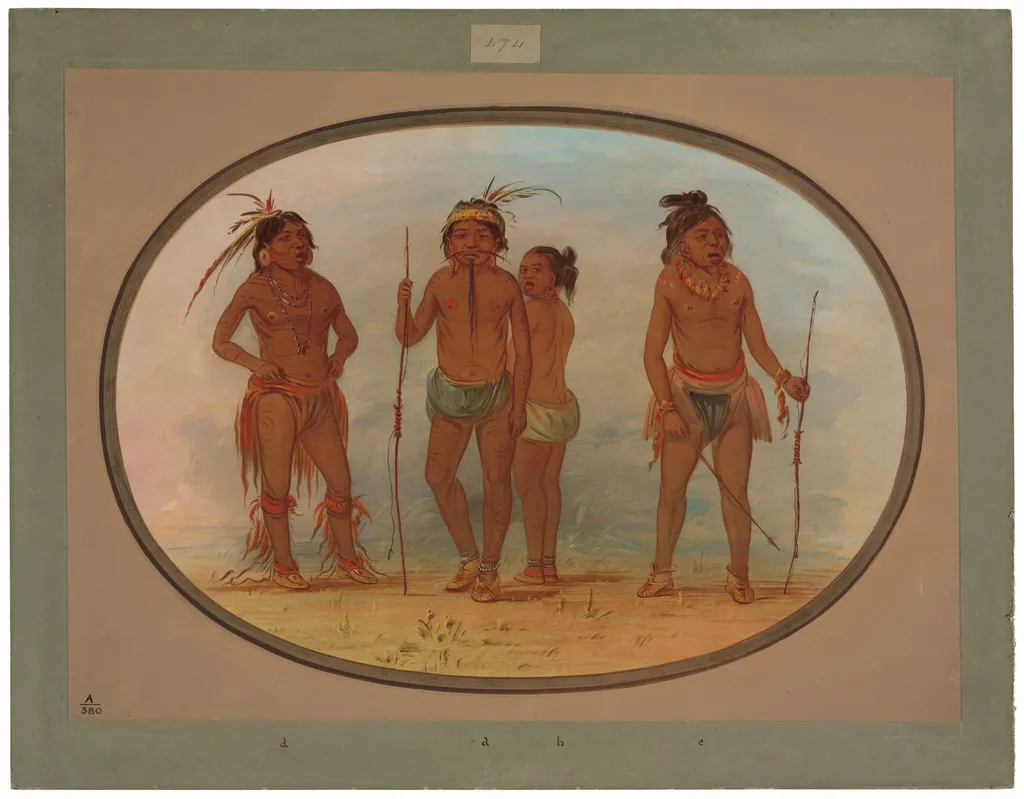
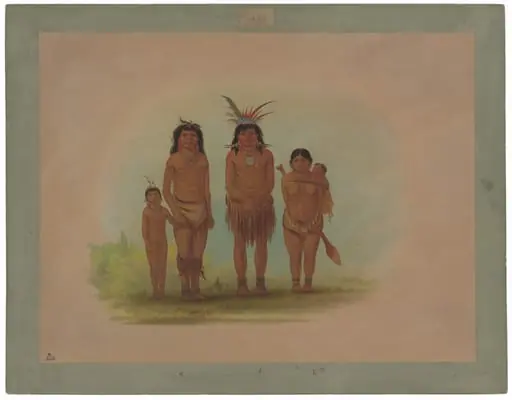
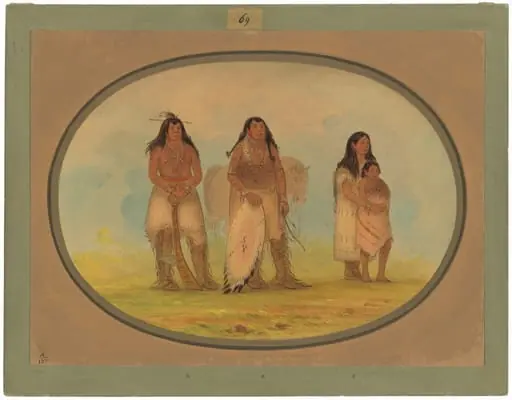
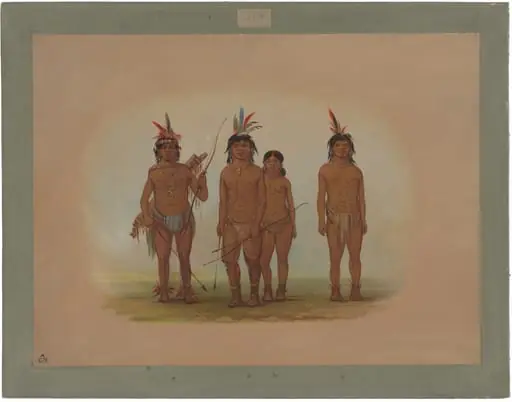
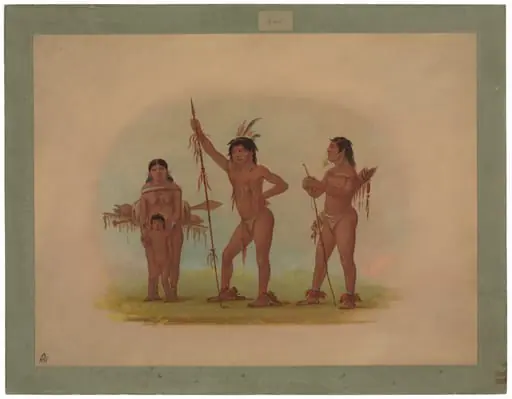
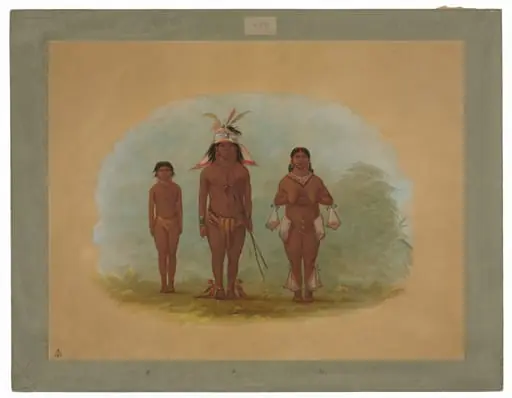
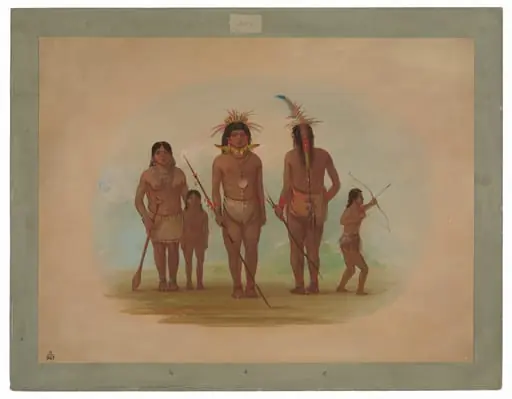
Members of the Botocudo Tribe is an oil painting by the American Folk Art artist George Catlin. It dates from 1862 and is held in the collection of the National Gallery of Art.
About this work
Subject & Meaning
Rendered in profile, the figures are shown with their lips stretched by wooden plugs, a cultural practice noted by Catlin.
The painting depicts three seated individuals identified as members of the Botocudo, an Indigenous people of Brazil. Rendered in profile, the figures are shown with their lips stretched by wooden plugs, a cultural practice noted by Catlin. The subjects are portrayed with neutral expressions, emphasizing their physical presence rather than narrative context.
Catlin's work reflects the 19th-century European and American fascination with documenting Indigenous peoples, often framing them as ethnographic specimens rather than individuals. The painting's inclusion in Catlin's broader project of recording Native American life underscores its role as a visual ethnography, prioritizing cultural documentation over personal identity.
Technique & Style
The work is painted in oil on a card support that has been mounted onto paperboard, a method suited to portable ethnographic portraiture. The handling is smooth and linear, with careful modeling of faces and costumes to render individual physiognomies and attire. Stylistically, the composition aligns with Catlin's documentary approach, arranging sitters in a row to emphasize ethnographic comparison rather than dramatic interaction.
The work measures 46 cm in height by 62.7 cm in width, and its condition is not described in the cited sources.
History & Provenance
The painting was created in 1862 by George Catlin. It descended through his daughters Clara Gregory Catlin, Louise Catlin Kinney, and Elizabeth Wing Catlin. In 1912 it was purchased from Elizabeth Wing Catlin by the American Museum of Natural History.
The work was later sold in 1959 through Kennedy Galleries in New York to Paul Mellon of Upperville, Virginia. It was gifted to the National Gallery of Art in 1965.
The painting Members of the Botocudo Tribe is held in the National Gallery of Art in Washington, D.C., where it has been part of the collection since 1965. It was originally created by George Catlin in 1862 as an oil on card mounted on paperboard. Its provenance traces from Catlin to his daughters, then to Elizabeth Wing Catlin, who sold it in 1912 to the American Museum of Natural History; it was later sold in 1959 through Kennedy Galleries to Paul Mellon, who gifted it to the National Gallery of Art in 1965.
Legacy
The painting has influenced discussions of indigenous representation in art history and remains part of the National Gallery of Art's permanent collection in Washington, D.C., where it is studied for its role in 19th-century depictions of Brazilian peoples. Its provenance reflects a documented chain of ownership from the artist to the Catlin family, then to the American Museum of Natural History, and finally to the National Gallery of Art through the philanthropy of Paul Mellon in 1965.
Overview
Created in 1862, Members of the Botocudo Tribe is an oil painting executed on card that has been mounted on paperboard. The work presents four individuals from the Botocudo people standing side by side against an unadorned backdrop. Their attire consists of simple leather or cloth garments, accented with necklaces and headpieces, while two figures hold staffs. The palette is dominated by earthy browns and reds, with a muted blue sky suggesting depth.
Context
Catlin’s Botocudo portrait belongs to a larger series of visual records intended to preserve the appearance and customs of peoples he feared were disappearing under colonial expansion. The piece aligns with contemporary scientific illustration and the Romantic fascination with the “exotic” other, yet it maintains a documentary tone that distinguishes it from purely decorative portraiture of the period.
Own this work as a print
Artist & collection

Artist
George Catlin ( KAT-lin; July 26, 1796 – December 23, 1872) was an American lawyer, painter, author, and traveler, who specialized in portraits of Native Americans in the American frontier.

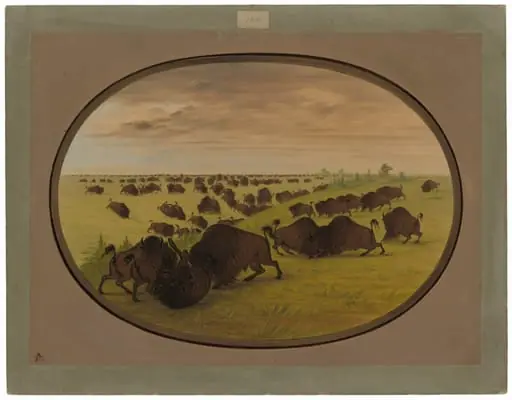 Bulls Fighting
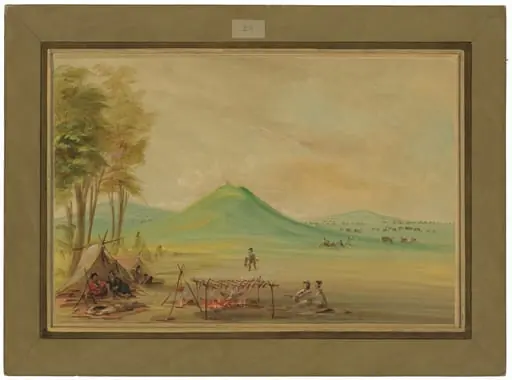 Expedition Encamped on a Texas Prairie. April 1686
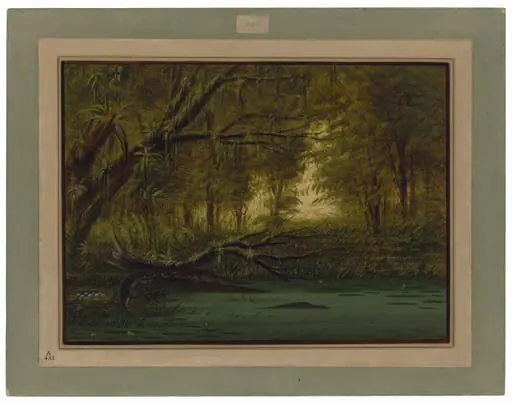 An Alligator's Nest
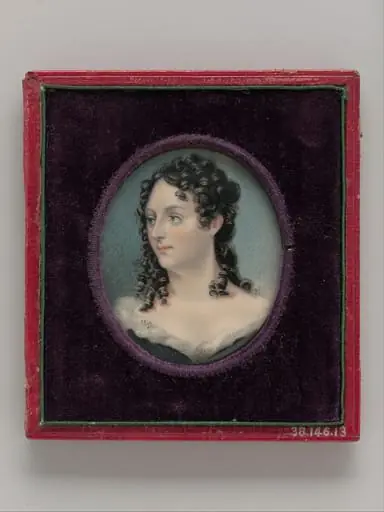 Mrs. George Catlin (Clara Bartlet Gregory)
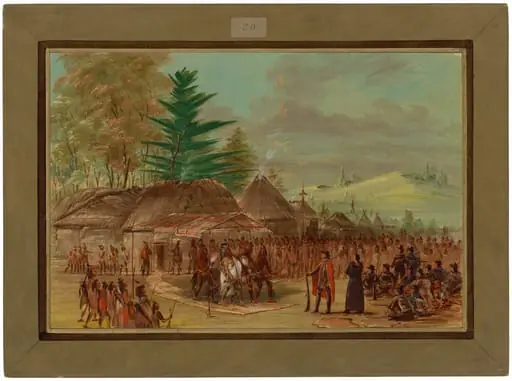 Chief of the Taensa Indians Receiving La Salle. March 20, 1682
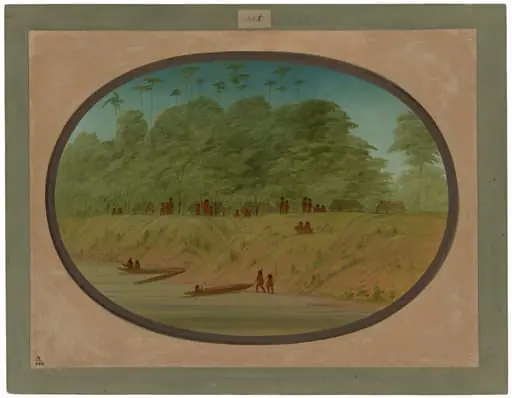 A Small Village - Payaguas Indians
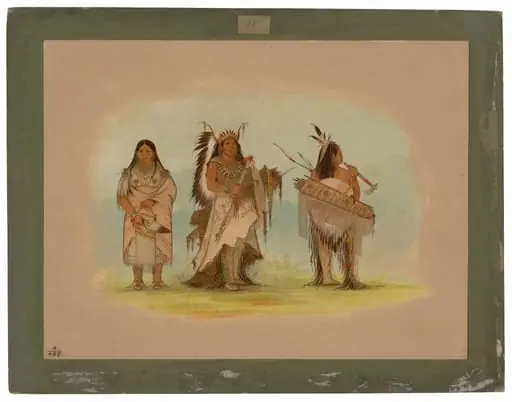 Omaha Chief, His Wife, and a Warrior
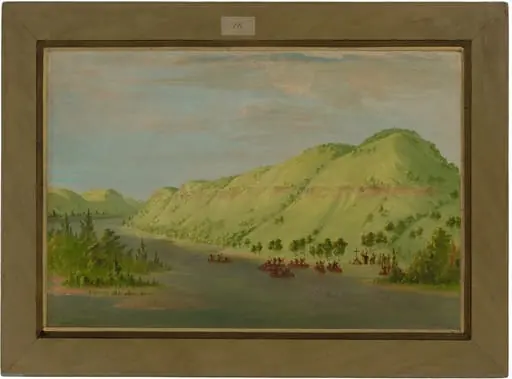 Father Hennepin Leaving the Mississippi to Join La Salle. May 8, 1680