Artwork
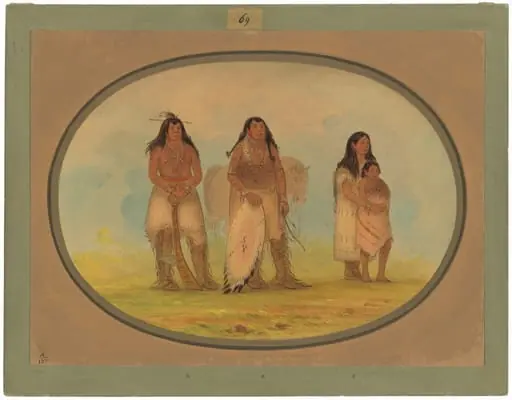
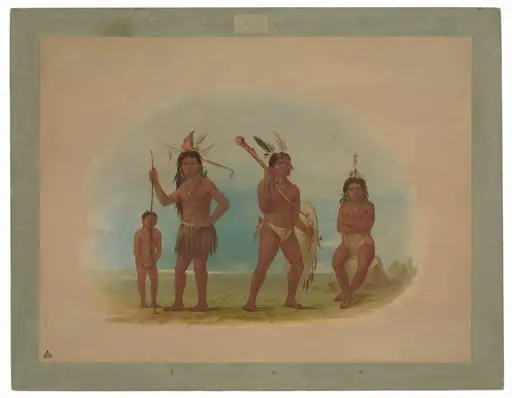
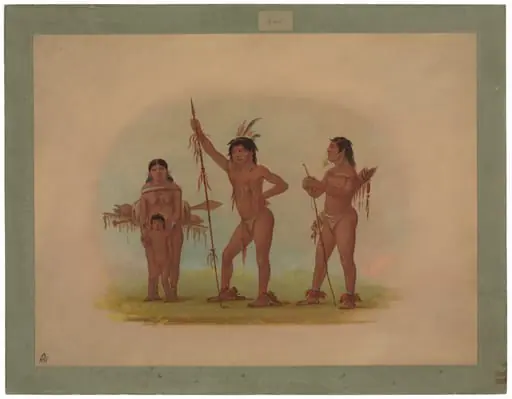
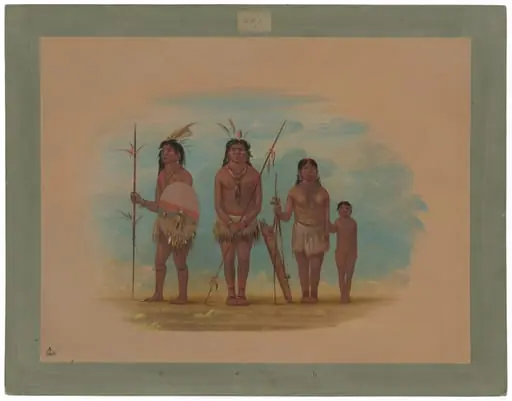
Five Maya Indians
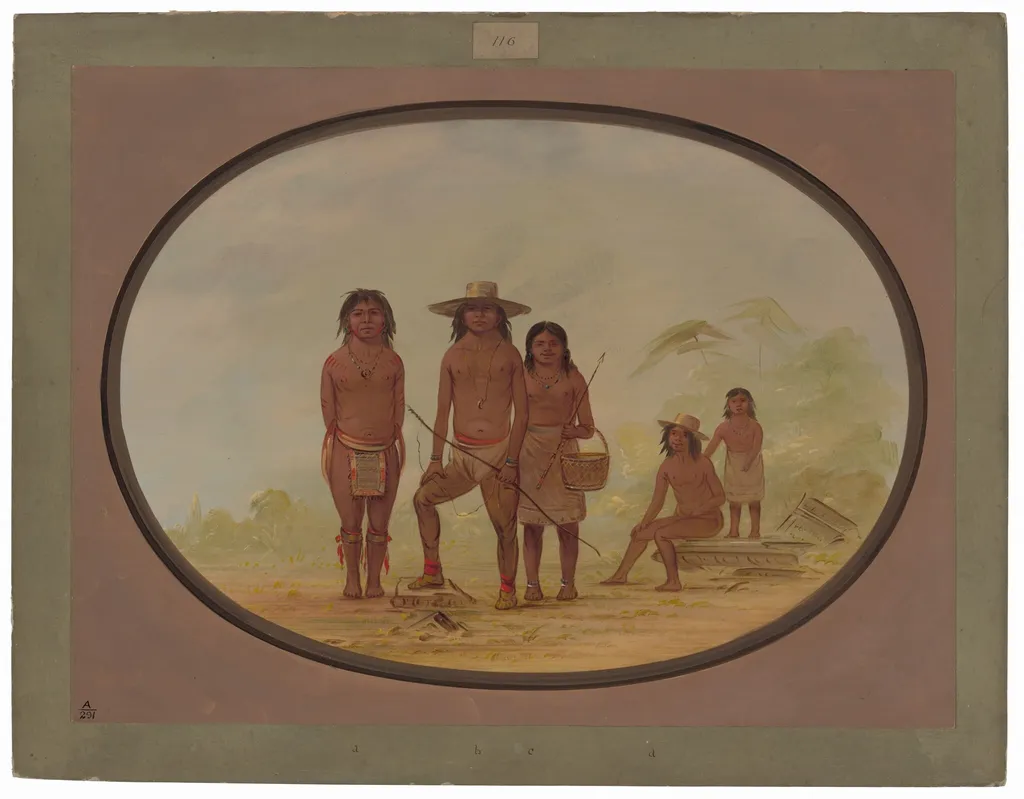
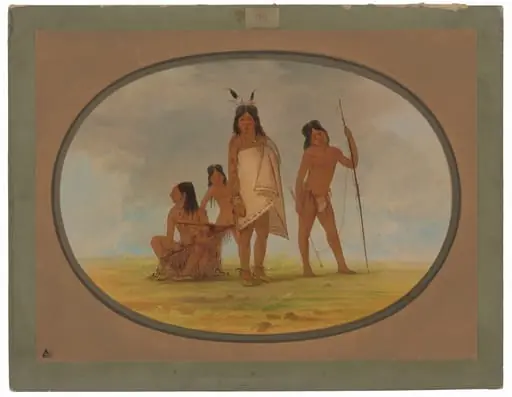
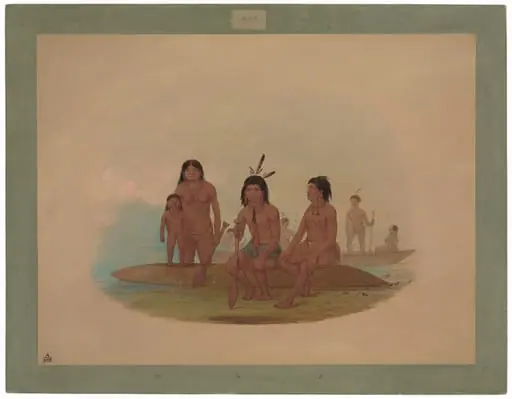
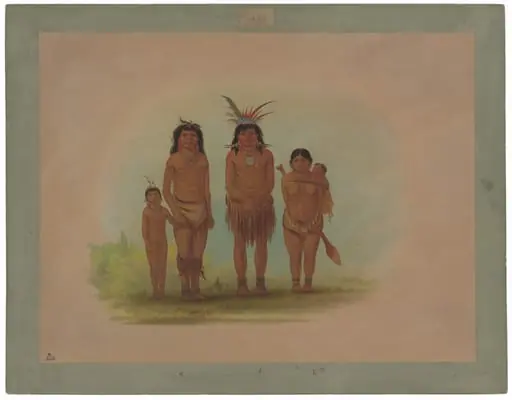
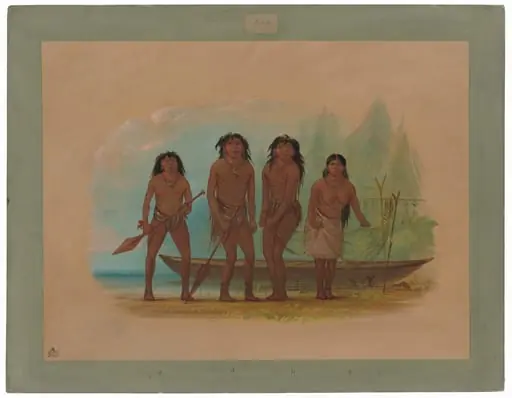
Five Maya Indians is an oil painting by the American Folk Art artist George Catlin. It dates from 1862 and is held in the collection of the National Gallery of Art.
About this work
Subject & Meaning
Classified within the portrait genre, the painting emphasizes Catlin's documentary record of his sitters rather than allegorical or symbolic content.
Five Maya Indians depicts a group of five Maya figures arranged across the foreground, with a single tree behind them; the tree is the only element specifically recorded in the work's iconography. Painted by George Catlin as part of his ethnographic project documenting Indigenous peoples of the Americas, the work is rendered in oil on card mounted on paperboard and measures 46.5 by 62.4 cm. It is held in the National Gallery of Art's collection in Washington, D.C. Classified within the portrait genre, the painting emphasizes Catlin's documentary record of his sitters rather than allegorical or symbolic content.
Technique & Style
Five Maya Indians is a small-scale oil painting executed on card that has been mounted onto paperboard, a support choice consistent with Catlin's portable field-portrait practice. The composition measures 46.5 by 62.4 cm in a horizontal format, allowing the five figures to be arranged across the foreground with a tree behind them. Classified as a portrait, the work is rendered in oil, a medium that permitted Catlin to build up the flesh tones and textile details of his sitters while retaining the rapid handling needed for on-site production.
The mounted card support and modest dimensions reflect the work's function as part of a traveling visual record rather than a large studio piece.
The painting's stylistic character derives from Catlin's documentary approach, with the figures grouped before a single tree, the only element specifically identified in the depicted iconography. The oil-on-card technique, combined with the paperboard mount, gives the surface a relatively smooth, matte quality that suits the ethnographic portraiture for which Catlin is known.
History & Provenance
Five Maya Indians was painted by George Catlin in 1862. Following Catlin's death in 1872, the work descended to his daughters Clara Gregory Catlin, Louise Catlin Kinney, and Elizabeth Wing Catlin. In 1912, the American Museum of Natural History purchased the painting from Elizabeth Wing Catlin.
The museum sold it in 1959 through Kennedy Galleries in New York to Mr. Paul Mellon of Upperville, Virginia. Mellon subsequently gave the work to the National Gallery of Art in 1965, where it is held under accession number 1965.1.44. No exhibition history is recorded in the provided sources.
Legacy
Five Maya Indians entered the National Gallery of Art's collection through the 1965 gift of Paul Mellon, a trajectory documented in its provenance. Its presence in the museum's collection signals a sustained reputation as an example of George Catlin's ethnographic portraiture, providing a basis for continued scholarly attention to the work.
Overview
George Catlin, an American artist who transitioned from a legal career to painting, created Five Maya Indians in 1862. This oil painting on card, subsequently mounted on paperboard, exemplifies his enduring interest in Indigenous cultures. The work features five individuals depicted in traditional attire, positioned near a tree, reflecting Catlin's broader artistic mission to document Native peoples.
Context
Catlin dedicated much of his artistic career to documenting the lives of Native Americans. During the 1830s, he extensively traveled the American West, producing numerous paintings and written accounts that chronicled the Plains Indian cultures. Although created later in his career, Five Maya Indians continues this established focus, demonstrating his sustained commitment to portraying Indigenous subjects from various regions.
Own this work as a print
Artist & collection

Artist
George Catlin ( KAT-lin; July 26, 1796 – December 23, 1872) was an American lawyer, painter, author, and traveler, who specialized in portraits of Native Americans in the American frontier.

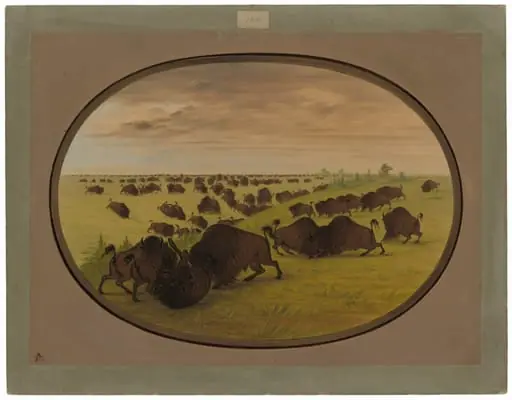 Bulls Fighting
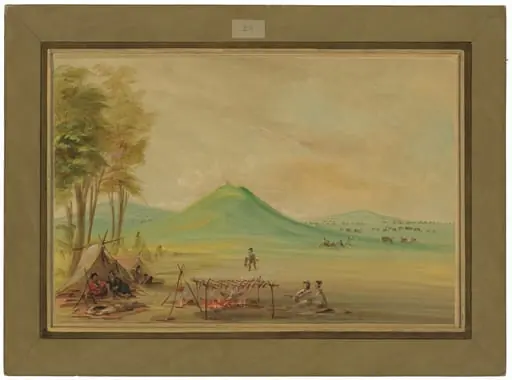 Expedition Encamped on a Texas Prairie. April 1686
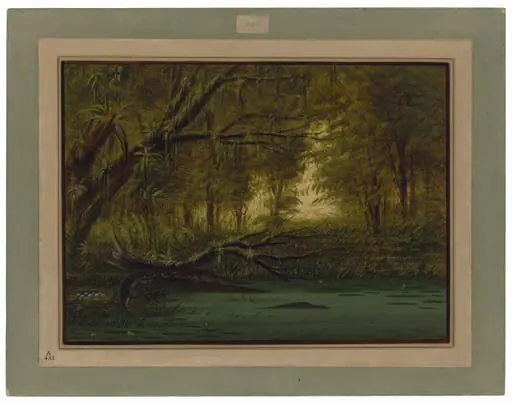 An Alligator's Nest
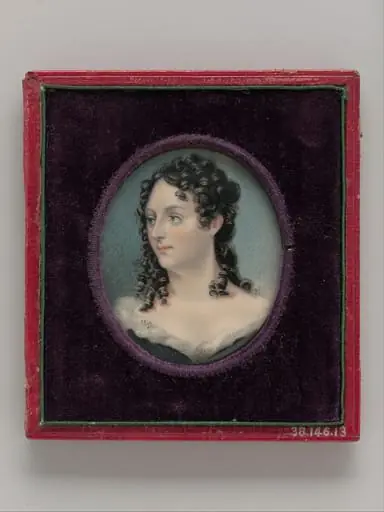 Mrs. George Catlin (Clara Bartlet Gregory)
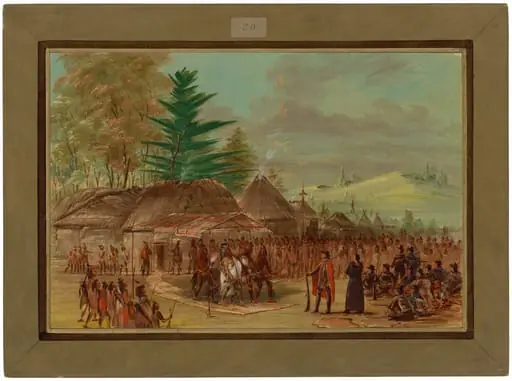 Chief of the Taensa Indians Receiving La Salle. March 20, 1682
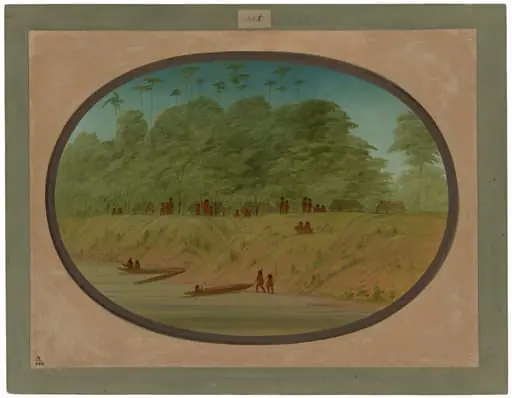 A Small Village - Payaguas Indians
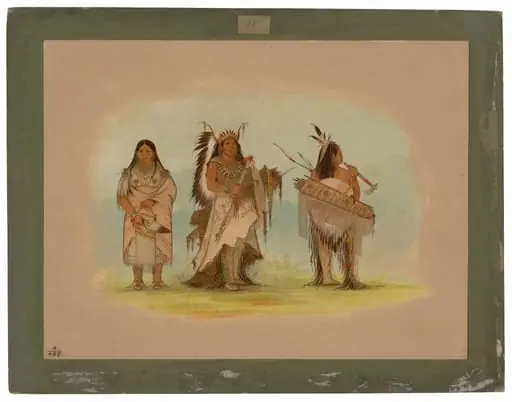 Omaha Chief, His Wife, and a Warrior
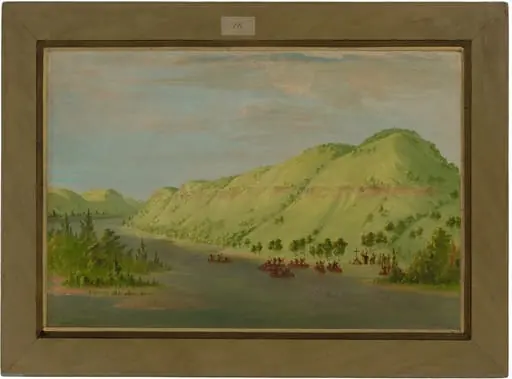 Father Hennepin Leaving the Mississippi to Join La Salle. May 8, 1680