Artwork
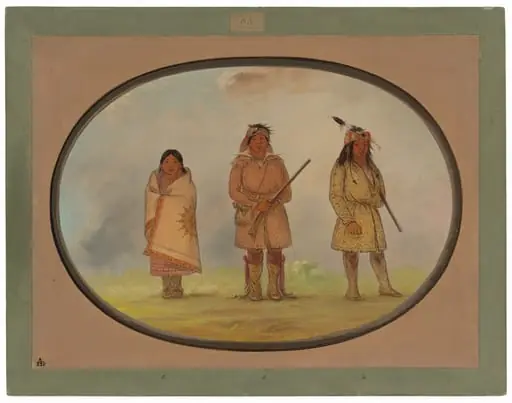
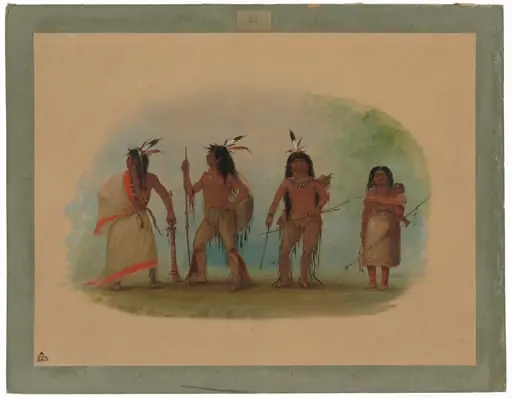
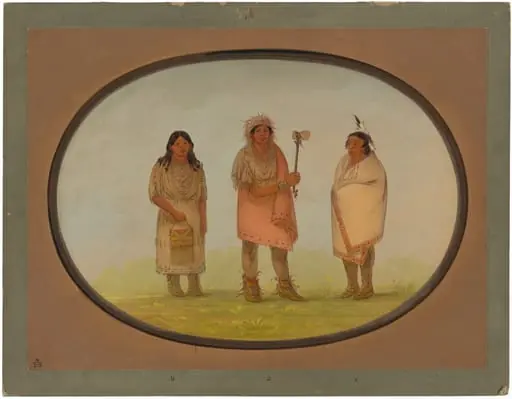
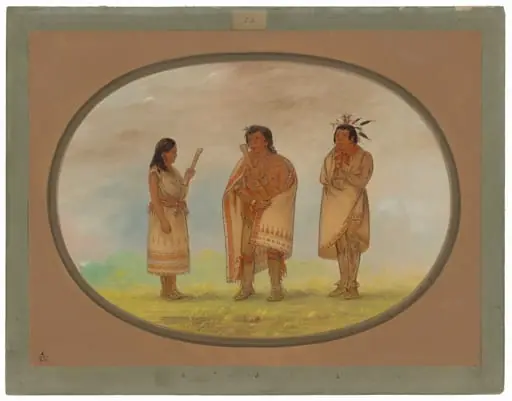
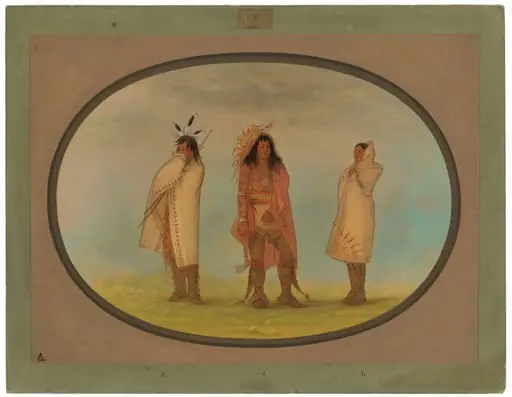
Four Flathead Indians
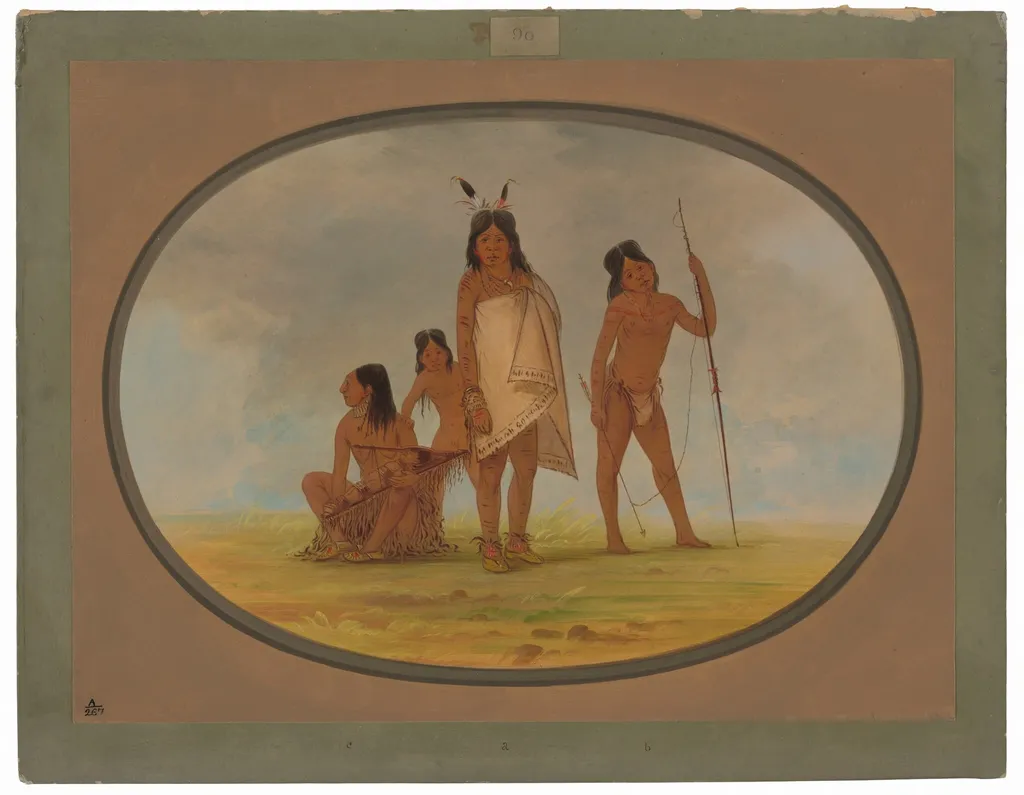
Four Flathead Indians is an oil painting by the Impressionist artist George Catlin. It dates from 1862 and is held in the collection of the National Gallery of Art.
About this work
Subject & Meaning
Catlin presents them in traditional attire, emphasizing ceremonial beadwork and feathered headdresses that signify tribal affiliation and social status.
The painting depicts four Flathead (Salish) individuals rendered as a formal group portrait, reflecting 19th‑century ethnographic interest in Native American physiognomy and dress. Catlin presents them in traditional attire, emphasizing ceremonial beadwork and feathered headdresses that signify tribal affiliation and social status. The composition underscores themes of cultural identity and the artist’s intent to document indigenous peoples before perceived cultural change.
Technique & Style
The work is an oil painting on a thin card support that was later mounted onto a paperboard, measuring 47 cm in height and 62.8 cm in width. Executed in 1869, the handling reflects Catlin’s characteristic linear precision and restrained modeling, typical of his later portraiture. Stylistically, the composition presents four figures in a frontal arrangement, emphasizing individual physiognomy while maintaining a flattened, almost emblematic clarity that aligns with his ethnographic portraiture tradition. The palette is subdued, relying on earthy tones to articulate form without dramatic chiaroscuro.
History & Provenance
George Catlin executed this oil on card portrait in 1869. Following the artist's death in 1872, the work passed by descent to his daughters: Clara Gregory Catlin, Louise Catlin Kinney, and Elizabeth Wing Catlin. In 1912, the American Museum of Natural History purchased the piece directly from Elizabeth Wing Catlin.
The museum retained the painting until 1959, when it was sold through Kennedy Galleries of New York to Paul Mellon of Upperville, Virginia. Mellon subsequently donated the work to the National Gallery of Art in Washington, D.C., in 1965.
Four Flathead Indians has been held by the National Gallery of Art in Washington, D.C., since 1965, when it was given by Mr. Paul Mellon of Upperville, Virginia. Mellon had acquired the painting in 1959 through Kennedy Galleries in New York, which sold it on behalf of the American Museum of Natural History. The museum itself had purchased the work in 1912 from Elizabeth Wing Catlin, one of George Catlin's three daughters, who had inherited it from the artist along with her sisters Clara Gregory Catlin and Louise Catlin Kinney.
The painting, dated 1869, is catalogued within the National Gallery of Art's collection of George Catlin's portraits.
Legacy
The painting later entered the National Gallery of Art's collection in Washington, D.C., where it remains on public view, and its scholarly significance was reinforced by inclusion in major exhibitions and publications that highlighted Catlin's role in documenting Native American cultures, ensuring continued academic interest in the work.
Overview
Created in 1862, Four Flathead Indians is an oil painting executed on card that has been mounted on paperboard. The work presents a small group of Native individuals positioned in an open field under a clear sky, rendered in a calm, naturalistic manner.
Context
The work belongs to a broader series of portraits created by Catlin to accompany his ethnographic studies. During the mid‑nineteenth century, such images served both as scientific documentation and as a means to inform eastern audiences about the peoples of the expanding frontier.
Own this work as a print
Artist & collection

Artist
George Catlin ( KAT-lin; July 26, 1796 – December 23, 1872) was an American lawyer, painter, author, and traveler, who specialized in portraits of Native Americans in the American frontier.

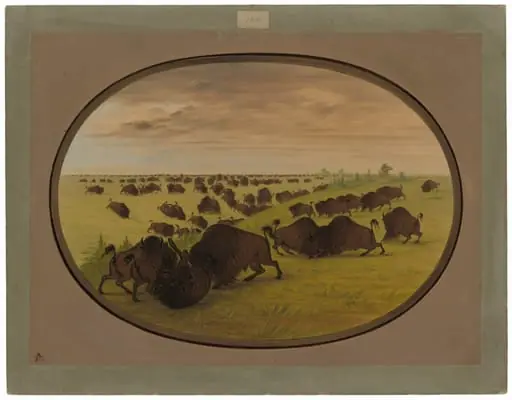 Bulls Fighting
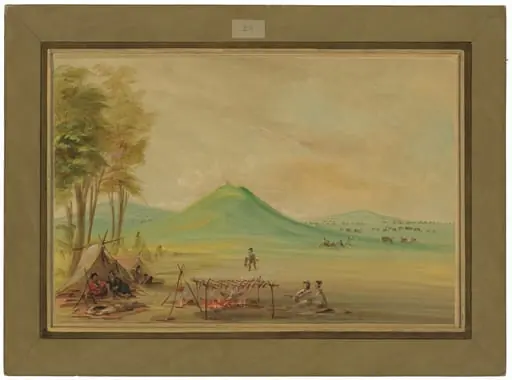 Expedition Encamped on a Texas Prairie. April 1686
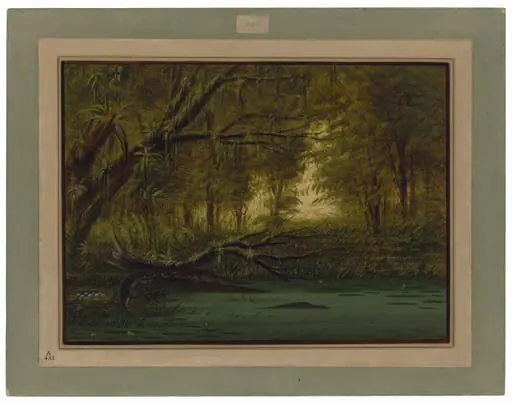 An Alligator's Nest
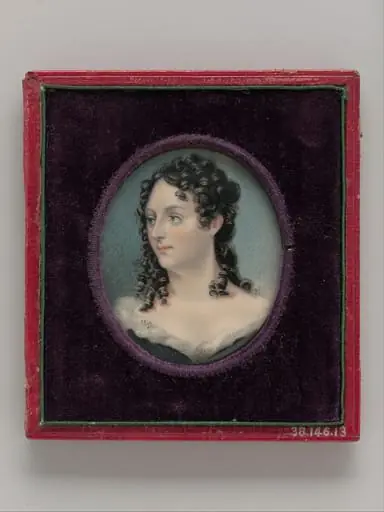 Mrs. George Catlin (Clara Bartlet Gregory)
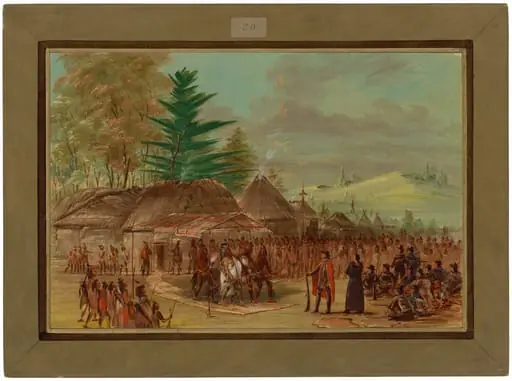 Chief of the Taensa Indians Receiving La Salle. March 20, 1682
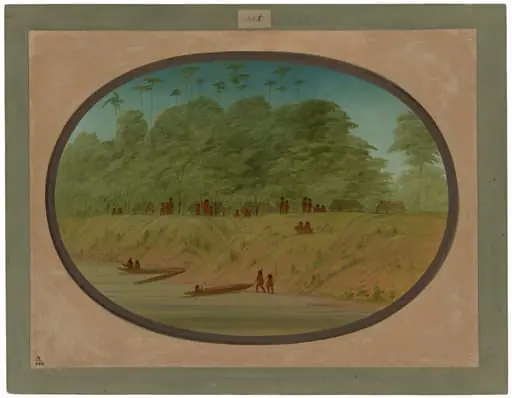 A Small Village - Payaguas Indians
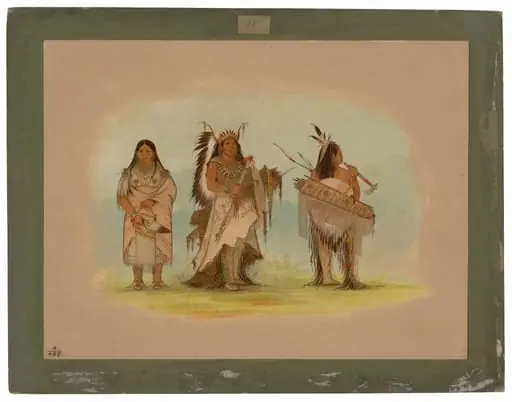 Omaha Chief, His Wife, and a Warrior
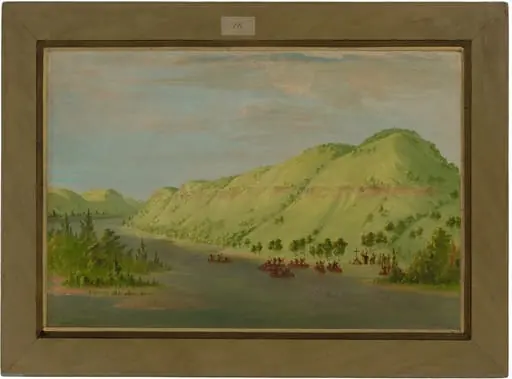 Father Hennepin Leaving the Mississippi to Join La Salle. May 8, 1680