Artwork
Osage Indians
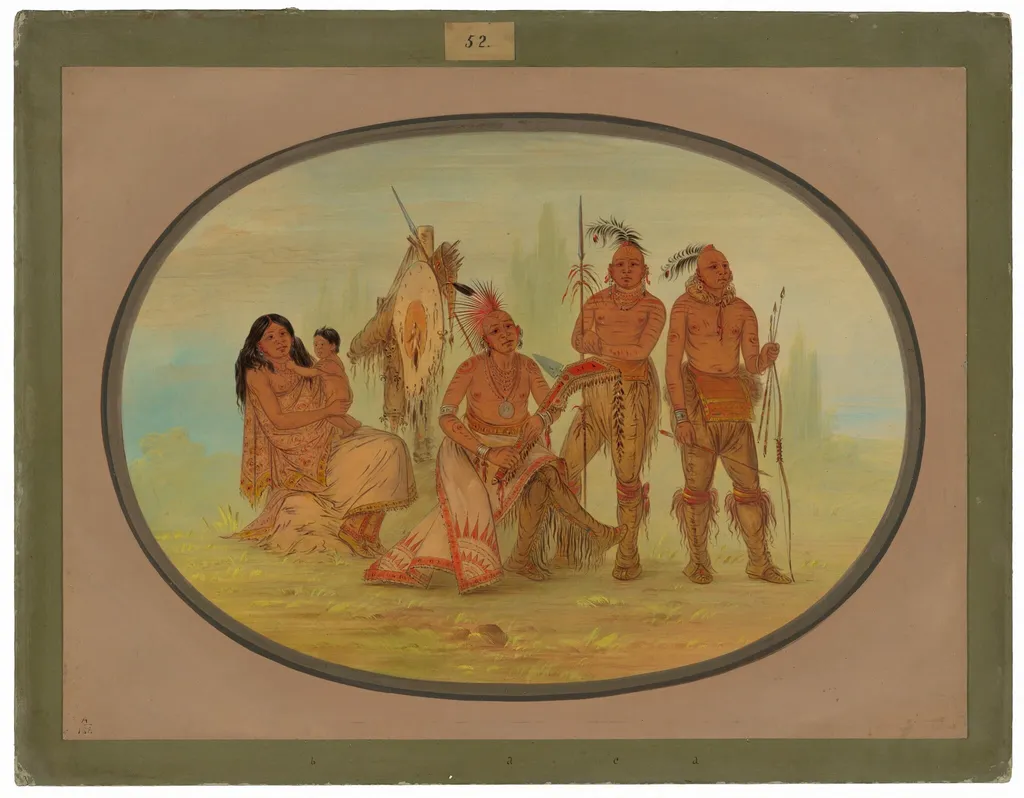
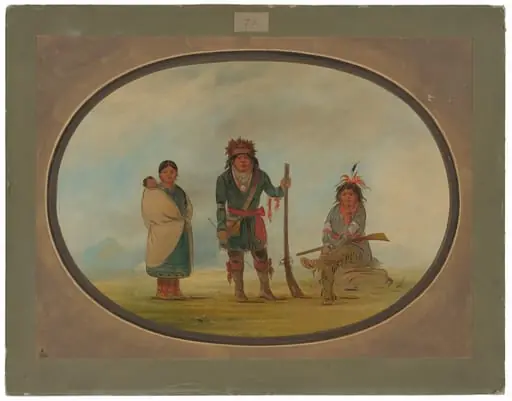
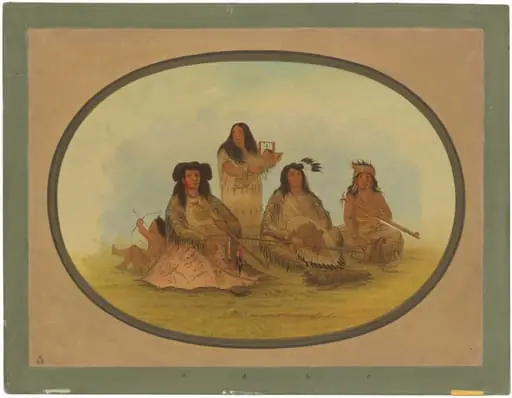
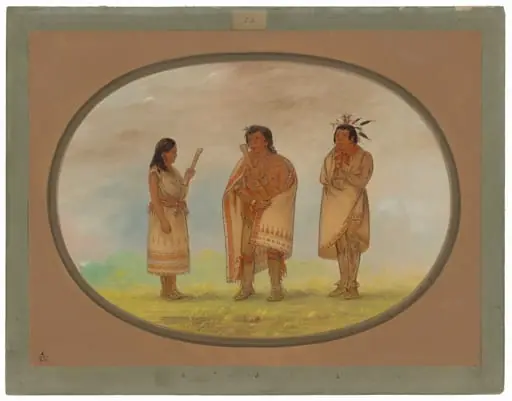
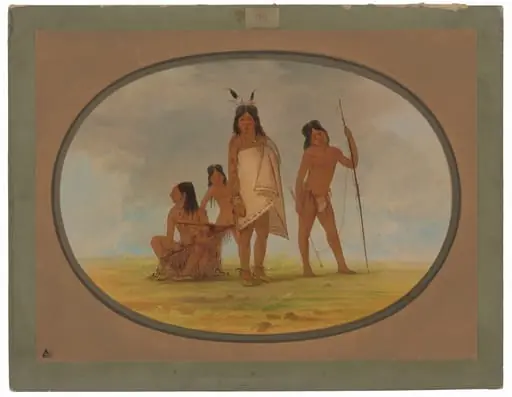
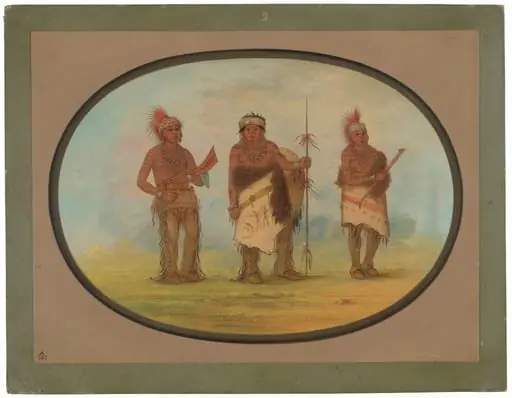
Osage Indians is an oil painting by the American Folk Art artist George Catlin. It dates from 1865 and is held in the collection of the National Gallery of Art.
About this work
Technique & Style
As a painted portrait, the piece represents the artist's handling of oil media on a composite support structure typical of the period's portable works.
George Catlin's Osage Indians, executed in 1861, is an oil painting applied to a card support that has been mounted on paperboard. The work measures 46.2 cm in height and 62.2 cm in width, classifying it within the portrait genre. As a painted portrait, the piece represents the artist's handling of oil media on a composite support structure typical of the period's portable works.
The physical object remains in the collection of the National Gallery of Art in Washington, D.C., having been gifted there in 1965 after passing through private ownership.
History & Provenance
George Catlin painted Osage Indians in 1861 in oil on card mounted on paperboard. The work descended within the Catlin family from the artist to his daughters Clara Gregory Catlin, Louise Catlin Kinney, and Elizabeth Wing Catlin. In 1912, the American Museum of Natural History purchased the painting from Elizabeth Wing Catlin.
The museum later sold it in 1959 through Kennedy Galleries in New York to Paul Mellon of Upperville, Virginia. Mellon gave the painting to the National Gallery of Art in 1965, where it remains in the collection.
The painting Osage Indians by George Catlin is held in the collection of the National Gallery of Art in Washington, D.C. Its provenance traces from the artist to his daughters, with Elizabeth Wing Catlin selling the work in 1912 to the American Museum of Natural History. The museum sold the piece in 1959 through Kennedy Galleries in New York to Paul Mellon of Upperville, Virginia, who subsequently gifted it to the National Gallery of Art in 1965.
Context
The painting Osage Indians (1861) by George Catlin has been interpreted as a significant portrait within 19th-century ethnographic art, reflecting contemporary anthropological interest. Its provenance from George Catlin to the American Museum of Natural History and later acquisition by the National Gallery of Art underscores its institutional recognition. Scholarship situates it within Catlin's broader mission to document Indigenous peoples, aligning with early American studies of Native cultures.
The work remains part of the National Gallery of Art's collection in Washington, D.C., as documented in its catalog records.
Legacy
The painting has shaped American visual culture by offering one of the earliest public depictions of Osage subjects, influencing later ethnographic art and museum displays of Indigenous peoples. Its presence in a major national collection helped legitimize Catlin's mission to document Native cultures, inspiring subsequent generations of artists and scholars to treat such works as both historical records and aesthetic objects. The legacy of the piece is tied to its role in the narrative of 19th‑century exploration and the evolving perception of Indigenous identity in American art history.
Overview
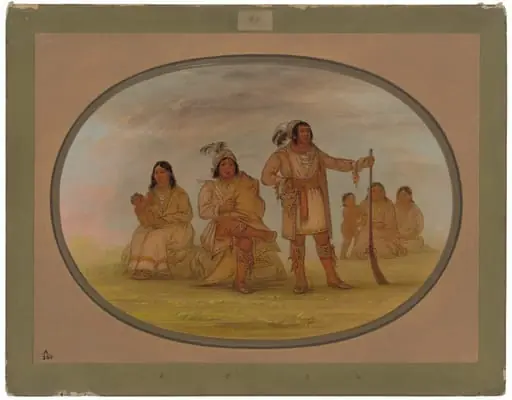
George Catlin’s 1865 work Osage Indians is an oil painting executed on card that has been mounted on paperboard. The composition presents five Osage individuals positioned outdoors, with two women seated in the foreground and three men standing behind them. The setting is a modest landscape of grass and sparse trees, rendered in a straightforward manner.
Subject & Meaning
The portrait captures a domestic scene among the Osage people, highlighting familial roles: one woman cradles an infant while another kneels nearby, and the men are distinguished by feathered headdresses and ceremonial staffs. The attire and accessories convey cultural identity and social status within the community.
Own this work as a print
Artist & collection

Artist
George Catlin ( KAT-lin; July 26, 1796 – December 23, 1872) was an American lawyer, painter, author, and traveler, who specialized in portraits of Native Americans in the American frontier.

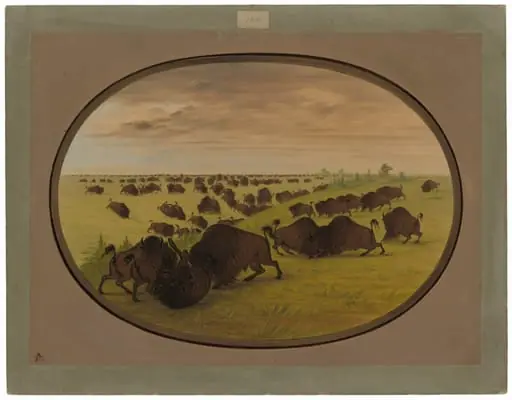 Bulls Fighting
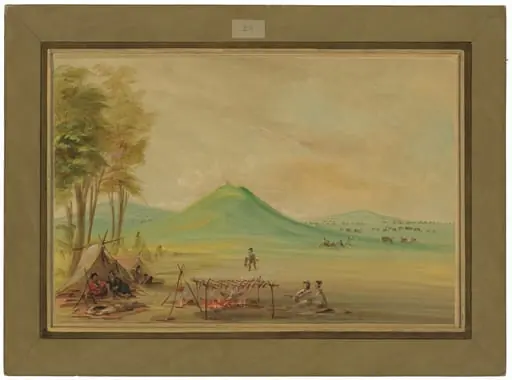 Expedition Encamped on a Texas Prairie. April 1686
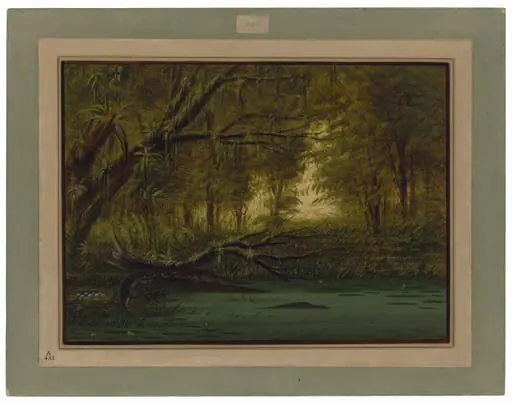 An Alligator's Nest
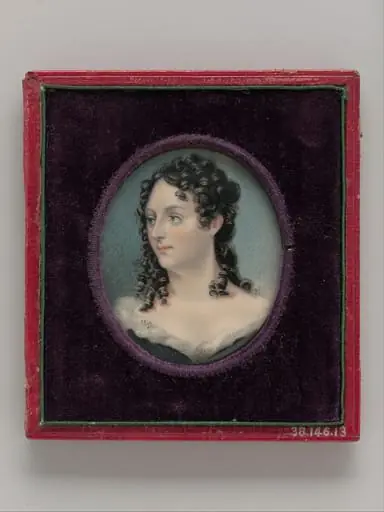 Mrs. George Catlin (Clara Bartlet Gregory)
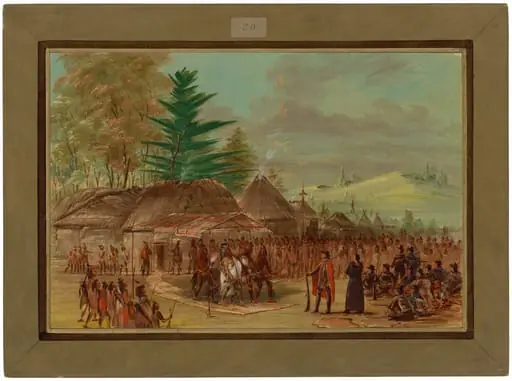 Chief of the Taensa Indians Receiving La Salle. March 20, 1682
 A Small Village - Payaguas Indians
 Omaha Chief, His Wife, and a Warrior
 Father Hennepin Leaving the Mississippi to Join La Salle. May 8, 1680