Artwork
Pont de Palmiers and Tiger Shooting
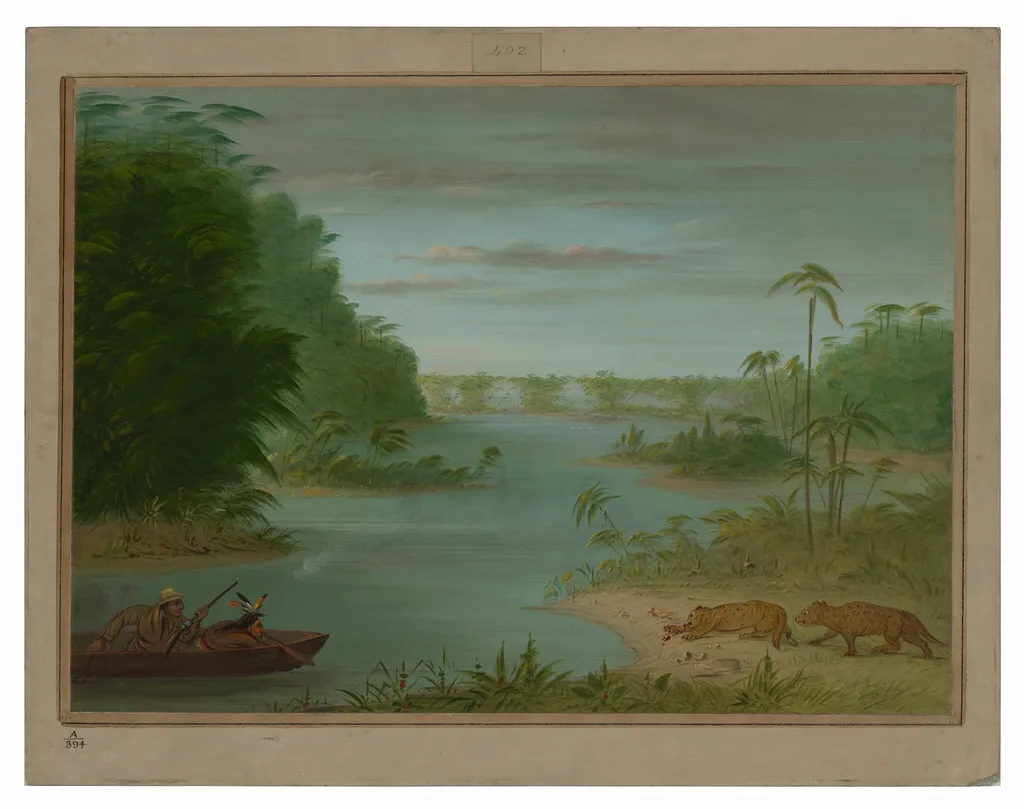
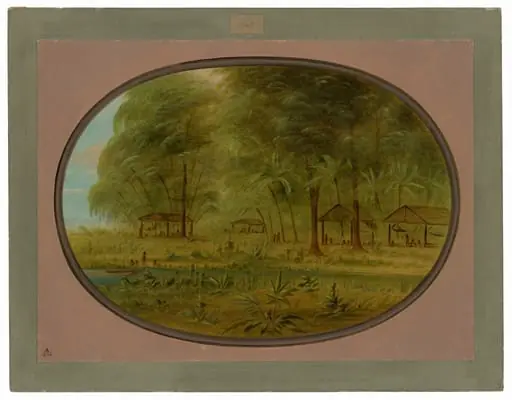
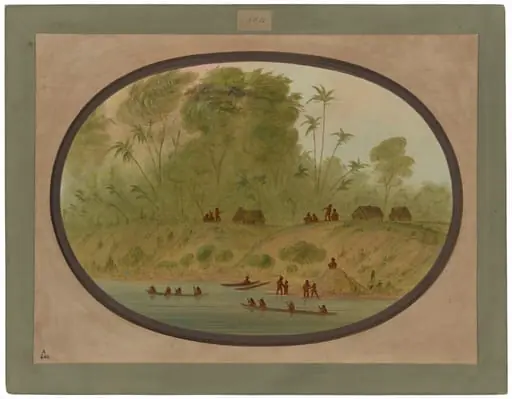
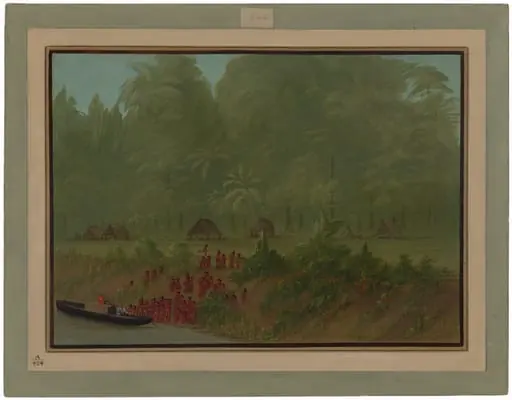
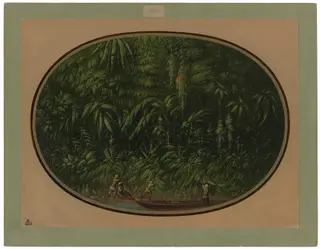
Pont de Palmiers and Tiger Shooting is an oil painting by the Impressionist artist George Catlin. It dates from 1862 and is held in the collection of the National Gallery of Art.
About this work
Technique & Style
The work is an oil painting executed on a rigid card that has been mounted on a paperboard support, a technique documented in the artist’s catalogue.
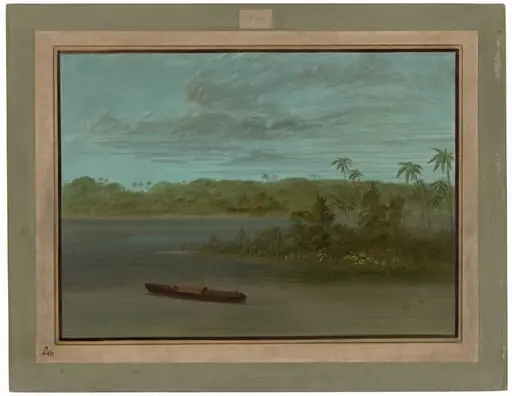
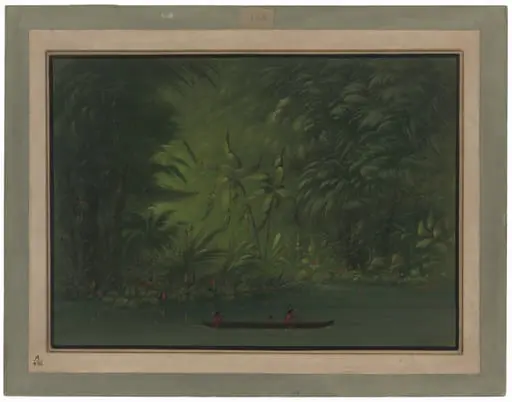
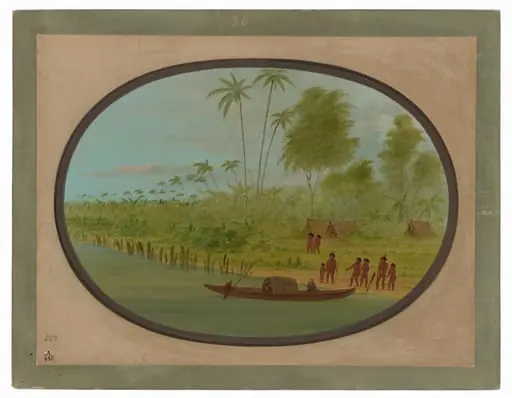
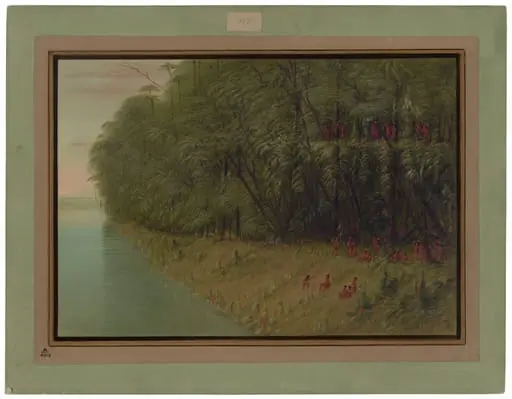
The work is an oil painting executed on a rigid card that has been mounted on a paperboard support, a technique documented in the artist’s catalogue. Its dimensions measure 45.2 cm in height by 63.7 cm in width, placing it within the landscape genre. The composition portrays a river bridge alongside a solitary tree and a boat, elements identified in the descriptive catalog.
As a landscape, the piece combines naturalistic rendering of topography with a narrative focus on a tiger in pursuit, reflecting Catlin’s interest in frontier scenes. The oil medium allows layered translucency, while the stiff support provides stability for detailed brushwork.
History & Provenance
Pont de Palmiers and Tiger Shooting, an oil on card mounted on paperboard painted by George Catlin in 1861, entered the artist’s family after his death and remained in his possession until his daughters inherited it. It passed to Clara Gregory Catlin, Louise Catlin Kinney, and Elizabeth Wing Catlin, from whom the American Museum of Natural History acquired it in 1912. The work was resold in 1959 via Kennedy Galleries to Paul Mellon, who later gifted it to the National Gallery of Art in 1965, where it remains in the collection today.
Pont de Palmiers and Tiger Shooting, painted by George Catlin in 1861, has been held by the National Gallery of Art in Washington, D.C., since 1965, when it was given by Mr. Paul Mellon of Upperville, Virginia. Its provenance traces from Catlin himself to his daughters Clara Gregory Catlin, Louise Catlin Kinney, and Elizabeth Wing Catlin by descent. In 1912, the American Museum of Natural History purchased the work from Elizabeth Wing Catlin.
It was sold in 1959 through Kennedy Galleries in New York to Paul Mellon before entering the NGA's collection two years later as a gift.
Overview
George Catlin, an American artist, completed Pont de Palmiers and Tiger Shooting in 1862. This oil painting, executed on card and mounted on paperboard, is categorized as a landscape. The composition features a boat alongside a tree, illustrating Catlin's engagement with natural environments. While known for his earlier ethnographic portraits, this work exemplifies his later exploration of diverse scenic subjects.
Subject & Meaning
The painting depicts a tree leaning prominently over a body of water, with a boat secured to its trunk. This arrangement creates a sense of suspended animation, suggesting a moment of stillness preceding an event. The scene reflects Catlin's ongoing interest in natural settings, moving beyond his well-known portrayals of Plains Indian life to capture the subtle narratives embedded within landscapes.
Context
George Catlin, initially trained as a lawyer, became a painter recognized for documenting Native American cultures on the American frontier. While his early career focused on portraits of Plains Indians, Pont de Palmiers and Tiger Shooting illustrates his later artistic breadth. This landscape, created in 1862, demonstrates his sustained interest in natural environments, expanding his repertoire beyond ethnographic subjects to include diverse scenic compositions.
Own this work as a print
Artist & collection

Artist
George Catlin ( KAT-lin; July 26, 1796 – December 23, 1872) was an American lawyer, painter, author, and traveler, who specialized in portraits of Native Americans in the American frontier.

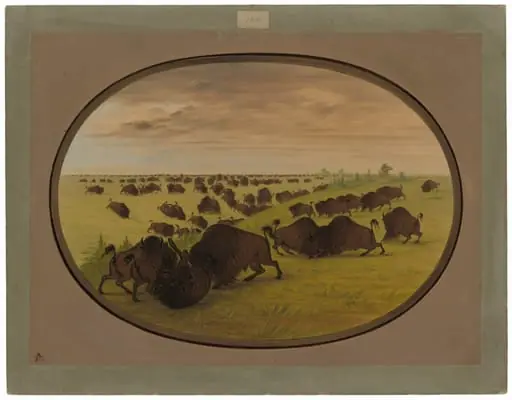 Bulls Fighting
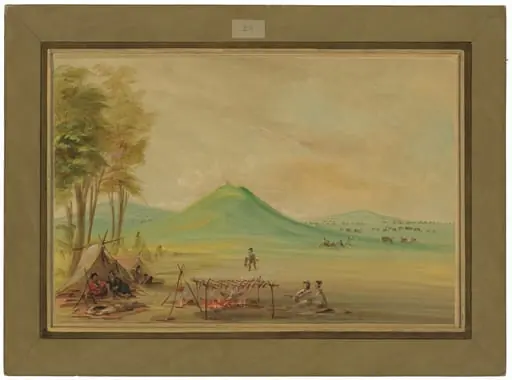 Expedition Encamped on a Texas Prairie. April 1686
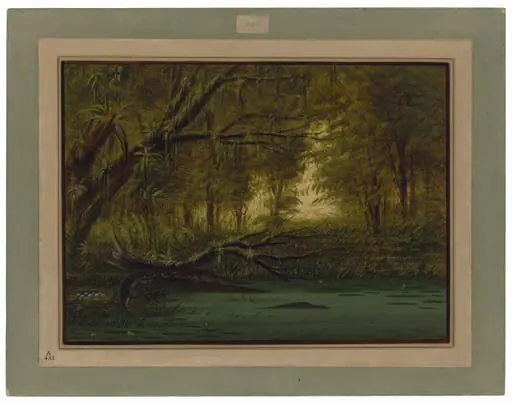 An Alligator's Nest
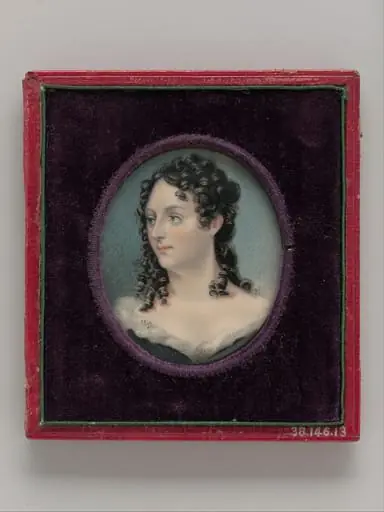 Mrs. George Catlin (Clara Bartlet Gregory)
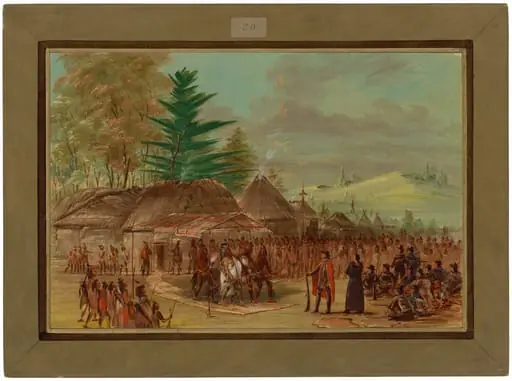 Chief of the Taensa Indians Receiving La Salle. March 20, 1682
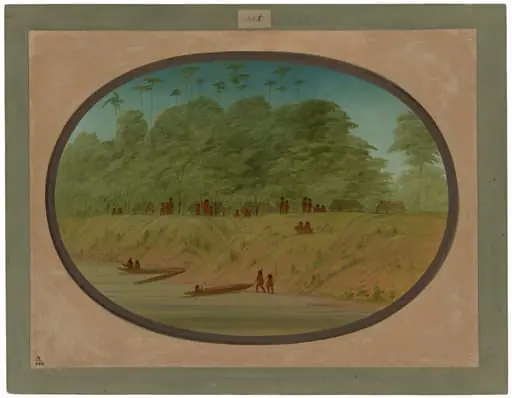 A Small Village - Payaguas Indians
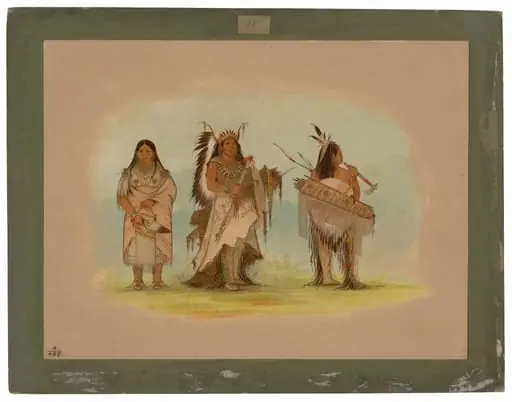 Omaha Chief, His Wife, and a Warrior
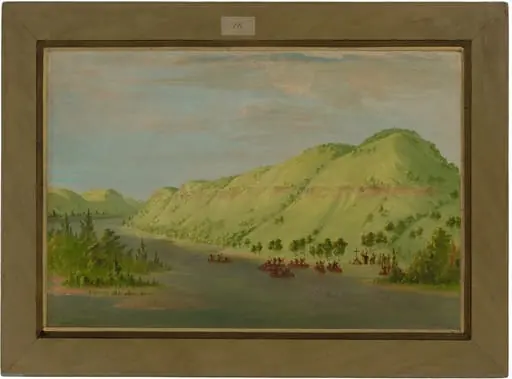 Father Hennepin Leaving the Mississippi to Join La Salle. May 8, 1680