Artwork
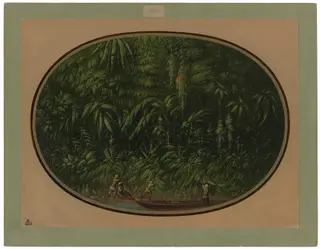
Shore of the Essequibo
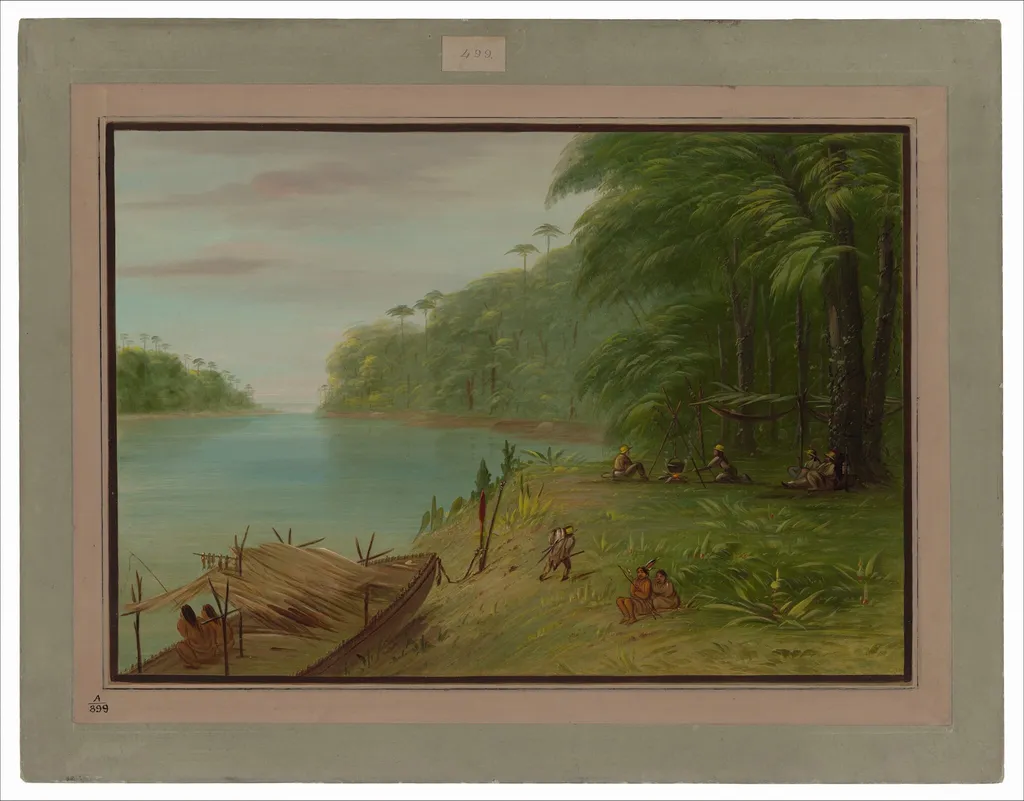
Shore of the Essequibo is an oil painting by the Impressionist artist George Catlin. It dates from 1862 and is held in the collection of the National Gallery of Art.
About this work
Subject & Meaning
The work functions as a geographical representation of the location, focusing on the physical presence of the vessel and the surrounding vegetation.
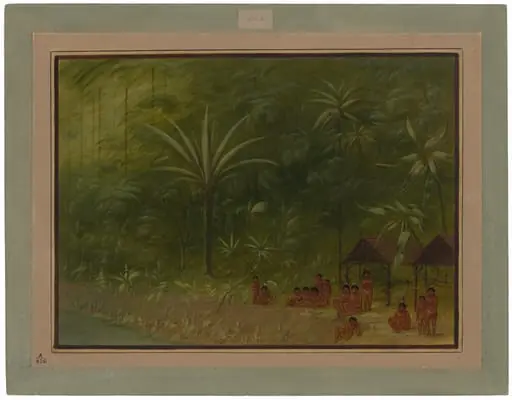
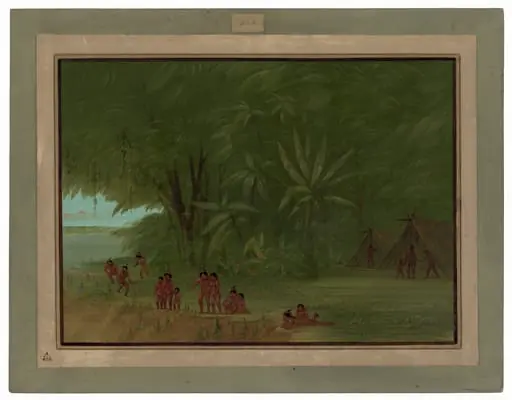
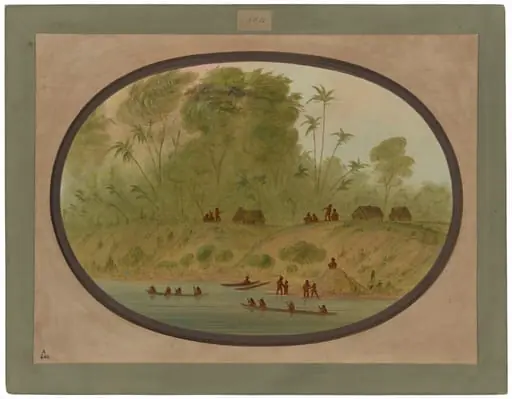
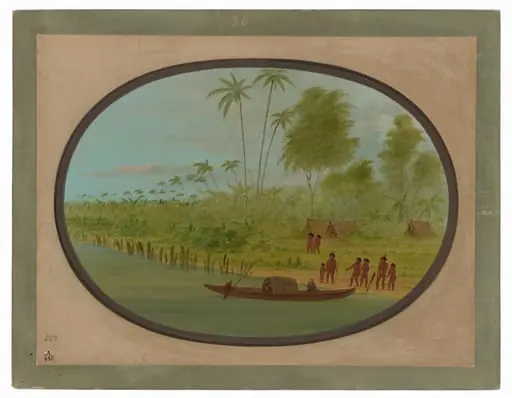
Shore of the Essequibo is a landscape painting that depicts a natural scene along the Essequibo River. The composition features specific elements including a boat and trees, which constitute the primary subject matter of the work. Created in 1864, the piece presents a direct visual record of the riverbank environment without additional symbolic or narrative layers described in the available records.
The work functions as a geographical representation of the location, focusing on the physical presence of the vessel and the surrounding vegetation.
Technique & Style
Executed in oil on card mounted to paperboard, the work measures 46 cm in height and 63 cm in width. The handling is precise and linear, with careful attention to the delineation of foliage and boats. The composition balances broad horizontal bands of water and sky against vertical accents of trees and masts, producing a controlled, illustrative clarity.
The palette is restrained, relying on muted greens, blues, and earth tones to convey the humid equatorial light.
The surface appears stable, with no evidence in the source record of significant condition issues or conservation interventions.
History & Provenance
Shore of the Essequibo was painted in 1864 by George Catlin, as indicated by the work’s inception date. There is no recorded commission; the painting appears to have been produced during Catlin’s travels in British Guiana. After remaining in the artist’s possession, it passed by descent to his three daughters, Clara Gregory Catlin, Louise Catlin Kinney, and Elizabeth Wing Catlin.
In 1912 Elizabeth Wing Catlin sold the picture to the American Museum of Natural History. The work changed hands again in 1959 when it was sold through Kennedy Galleries in New York to collector Paul Mellon, who subsequently donated it to the National Gallery of Art in 1965, where it remains.
Shore of the Essequibo is currently held by the National Gallery of Art in Washington, D.C. The work entered the gallery's collection in 1965 as a gift from Paul Mellon, following its sale by Kennedy Galleries in 1959. Prior to Mellon's ownership, the painting was acquired in 1912 by the American Museum of Natural History from the artist's daughter, Elizabeth Wing Catlin. The museum originally obtained the piece through descent from George Catlin's estate. No specific accession number or exhibition history is provided in the available sources.
Context
Shore of the Essequibo, painted by George Catlin in 1864, exemplifies his later landscape output, a genre he pursued alongside his more famous portrayals of Indigenous peoples and frontier scenes. Executed in oil on card mounted on paperboard, the work measures 46 cm by 63 cm and features a boat and a tree, motifs that recur in his depictions of riverine environments. The painting entered the National Gallery of Art’s collection in 1965 through a gift from Paul Mellon, underscoring its recognized importance within Catlin’s oeuvre and the broader narrative of 19th‑century American landscape art.
Legacy
Shore of the Essequibo entered the National Gallery of Art’s collection in 1965 after a series of ownership changes that began with its creation by George Catlin in 1864. The work’s inclusion in the museum’s 19th‑century American landscape wing reflects its recognized value as a rare example of Catlin’s tropical subject matter, a focus that later scholars have linked to his broader influence on American depictions of the Caribbean. Its provenance, documented from Catlin’s descendants to the American Museum of Natural History and finally to the National Gallery, highlights the painting’s sustained significance within the artist’s legacy.
Overview
Shore of the Essequibo is an oil painting from 1862 by American artist George Catlin, executed on card and mounted on paperboard. This landscape depicts a small boat nestled on a riverbank beneath a large, leaning tree, capturing a tranquil natural scene. While Catlin is widely recognized for his portraits of Native American life, this work exemplifies his sustained interest in depicting natural environments throughout his career.
Own this work as a print
Artist & collection

Artist
George Catlin ( KAT-lin; July 26, 1796 – December 23, 1872) was an American lawyer, painter, author, and traveler, who specialized in portraits of Native Americans in the American frontier.

 Bulls Fighting
 Expedition Encamped on a Texas Prairie. April 1686
 An Alligator's Nest
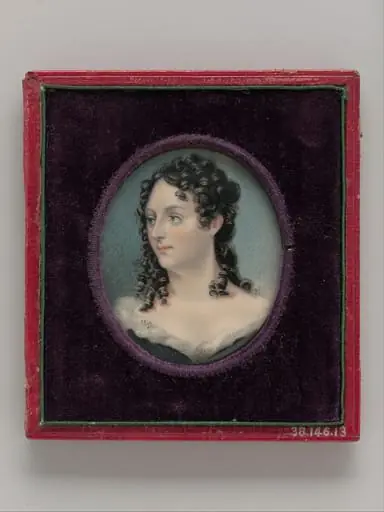 Mrs. George Catlin (Clara Bartlet Gregory)
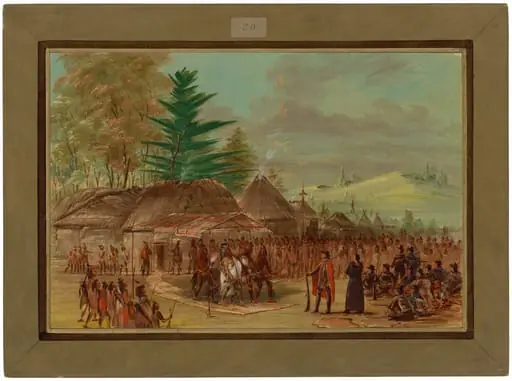 Chief of the Taensa Indians Receiving La Salle. March 20, 1682
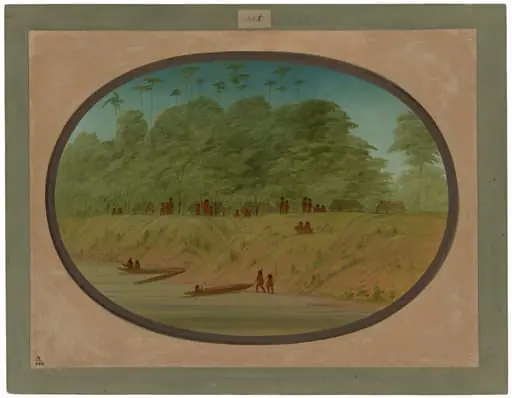 A Small Village - Payaguas Indians
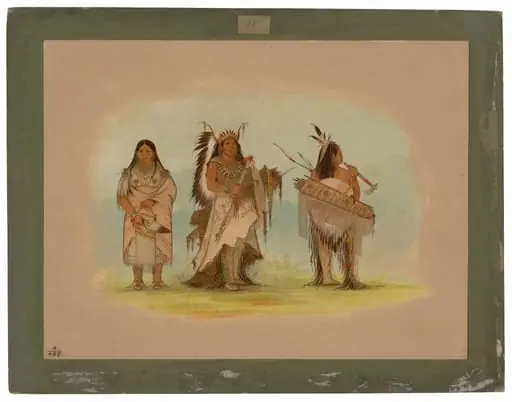 Omaha Chief, His Wife, and a Warrior
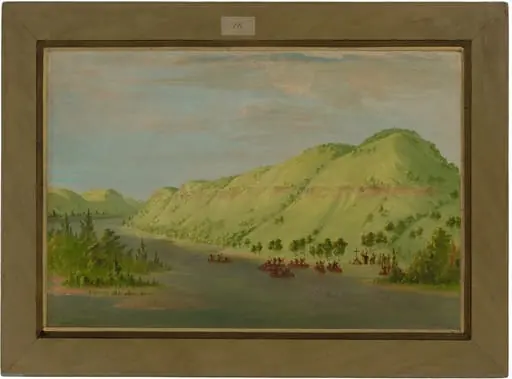 Father Hennepin Leaving the Mississippi to Join La Salle. May 8, 1680