Artwork
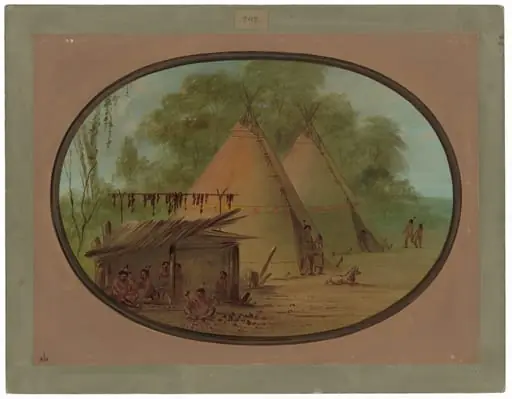
Tapuya Encampment
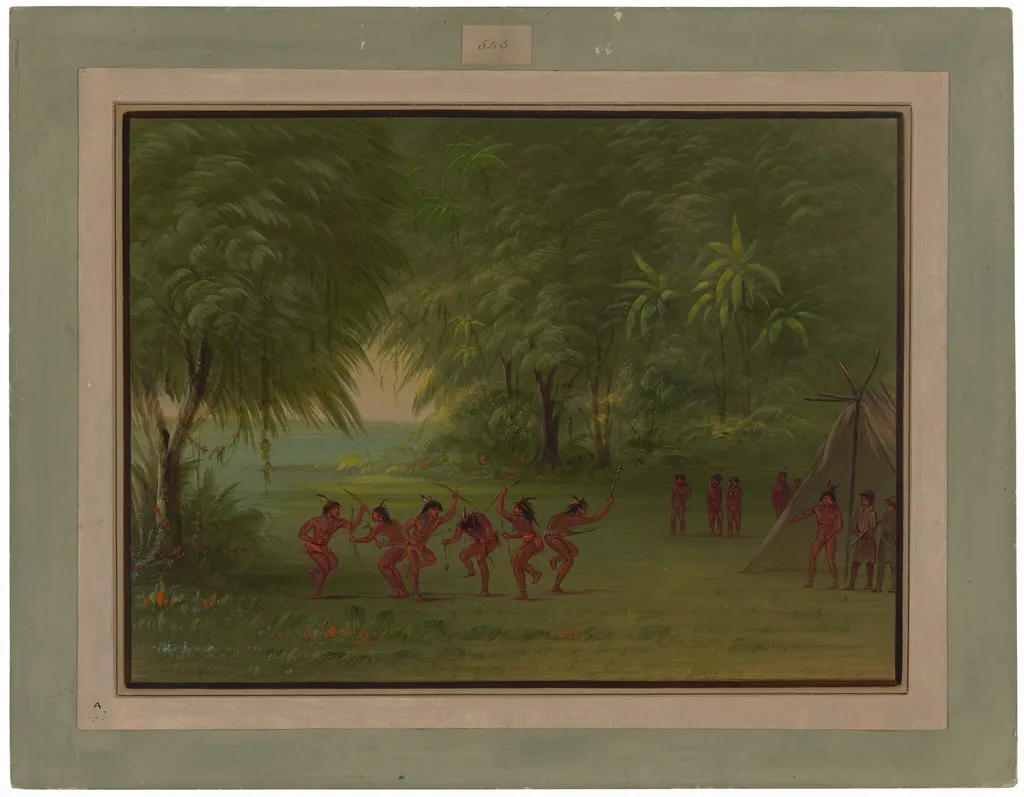
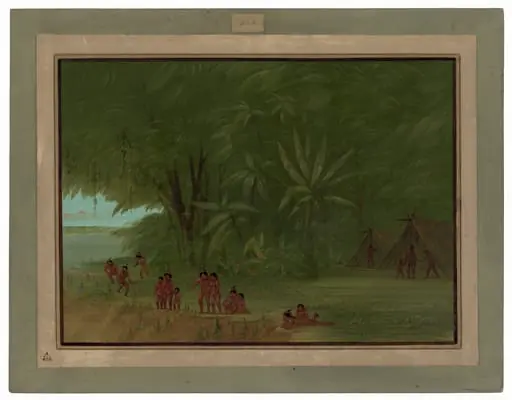
Tapuya Encampment is an oil painting by the Impressionist artist George Catlin. It dates from 1862 and is held in the collection of the National Gallery of Art.
About this work
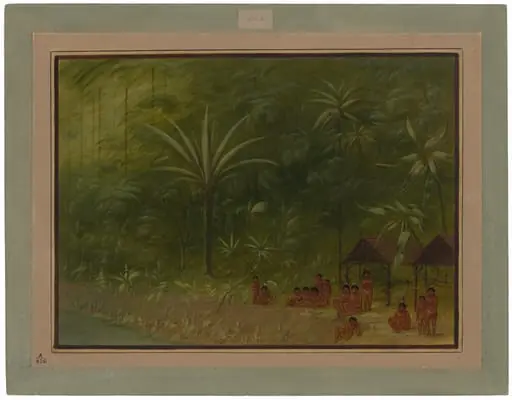
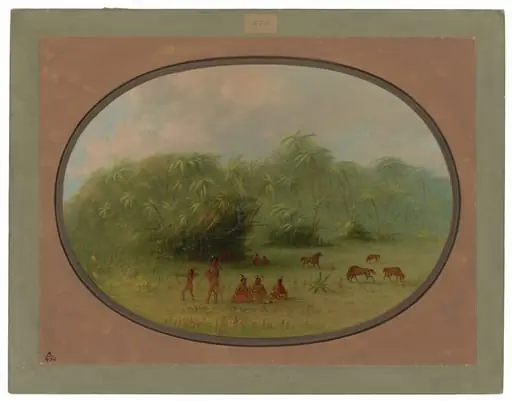
This painting shows a Tapuya family’s camp in Brazil. Two huts stand under tall trees. A woman tends a fire. A man rests nearby. Colorful cloth hangs from a branch.
Catlin painted this in 1854 using oil on card. He never visited Brazil but drew from stories and other artists’ sketches. His work mixes fact and imagination.
See this at the National Gallery of Art, Washington.
Subject & Meaning
Its depiction reflects Catlin's broader interest in documenting the American wilderness as both a physical and symbolic space.
The painting shows a solitary tree standing in an open landscape, a motif that Catlin used to symbolize the resilience and enduring presence of nature amid expanding American frontiers. The tree functions as a visual anchor, inviting contemplation of the relationship between the natural world and the encroaching cultural forces of the 19th century. Its depiction reflects Catlin's broader interest in documenting the American wilderness as both a physical and symbolic space.
The work is housed in the National Gallery of Art in Washington, D.C., where it remains part of the museum's permanent collection.
Technique & Style
Created in 1862, this work is executed in oil on card that has been mounted onto a paperboard support. The painting functions as a landscape composition, featuring a tree as a primary depicted element within the scene. The physical dimensions of the piece are recorded as 46.4 cm in height and 61.1 cm in width.
While the specific surface condition or distinct handling marks are not detailed in the available records, the material construction combines the flexibility of card with the rigidity of paperboard. The stylistic approach aligns with the landscape genre, utilizing oil paint to render the encampment setting.
History & Provenance
Painted in 1862, Tapuya Encampment is one of George Catlin’s late works depicting a scene from his travels in Brazil.
The painting descended from the artist to his three daughters, Clara Gregory Catlin, Louise Catlin Kinney, and Elizabeth Wing Catlin, before being sold in 1912 to the American Museum of Natural History. In 1959 it was acquired through Kennedy Galleries, New York, by Paul Mellon, who donated it to the National Gallery of Art, Washington, in 1965.
The painting Tapuya Encampment by George Catlin is currently held in the collection of the National Gallery of Art in Washington, D.C. The work entered the gallery's holdings in 1965 as a gift from Paul Mellon, following his purchase of the piece in 1959 from Elizabeth Wing Catlin via Kennedy Galleries in New York. Prior to Mellon's acquisition, the American Museum of Natural History owned the work after purchasing it from Catlin's daughters in 1912. The provided sources do not list specific accession numbers or document any exhibition history for this artwork.
Context
The painting was created in 1862 by George Catlin and depicts a tree, situating it within the artist's exploration of frontier landscapes and his documentation of North American subjects. Its provenance traces from the artist's family to the American Museum of Natural History, then to Paul Mellon, and finally to the National Gallery of Art in Washington, D.C., reflecting a documented journey through major institutions and private collecting. The work is held in the collection of the National Gallery of Art, where it remains on view as part of their American art holdings.
Scholarly attention to the piece contributes to broader understandings of 19th-century American landscape painting and Catlin's role in shaping early environmental narratives in art.
Legacy
The painting later entered the National Gallery of Art's collection through a 1965 gift, ensuring its preservation and public access. Its depiction of a solitary tree resonated with American landscape traditions and influenced subsequent artists exploring natural subjects. The work remains on view at the National Gallery of Art in Washington, D.C.
Overview
Tapuya Encampment is an oil painting on card, later mounted on paperboard, created by George Catlin in 1854. The work portrays a small indigenous settlement in Brazil, featuring two thatched huts beneath towering trees, a woman tending a fire, a resting man, and vivid cloth draped from a branch. The piece is part of the National Gallery of Art’s collection in Washington, D.C.
Own this work as a print
Artist & collection

Artist
George Catlin ( KAT-lin; July 26, 1796 – December 23, 1872) was an American lawyer, painter, author, and traveler, who specialized in portraits of Native Americans in the American frontier.

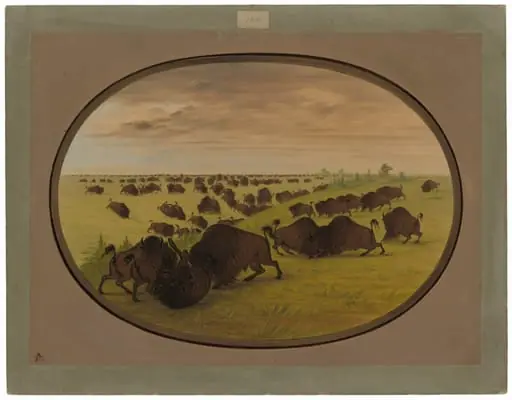 Bulls Fighting
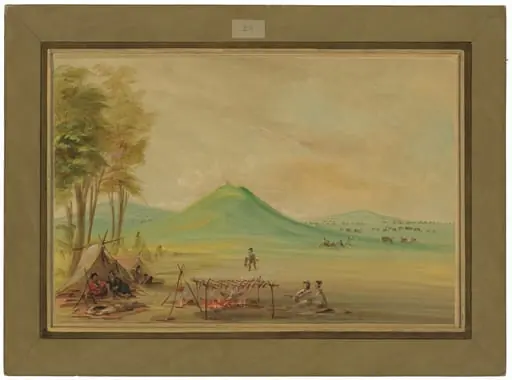 Expedition Encamped on a Texas Prairie. April 1686
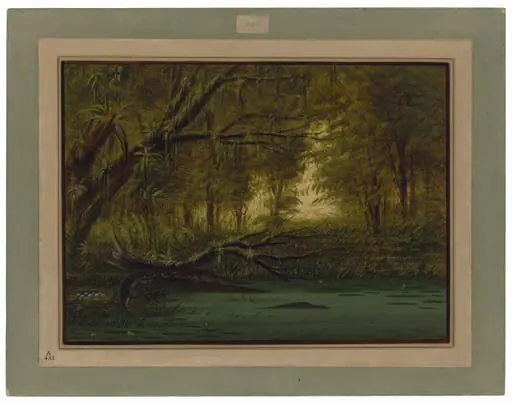 An Alligator's Nest
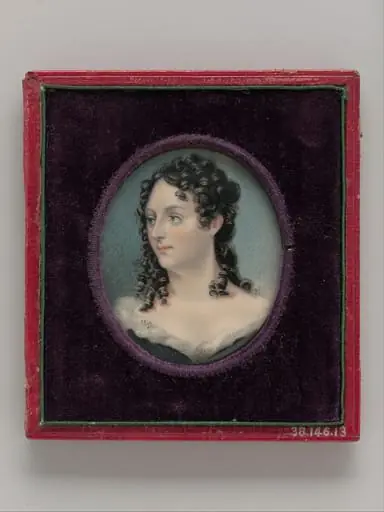 Mrs. George Catlin (Clara Bartlet Gregory)
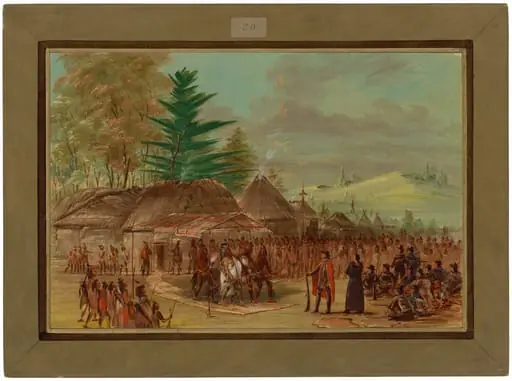 Chief of the Taensa Indians Receiving La Salle. March 20, 1682
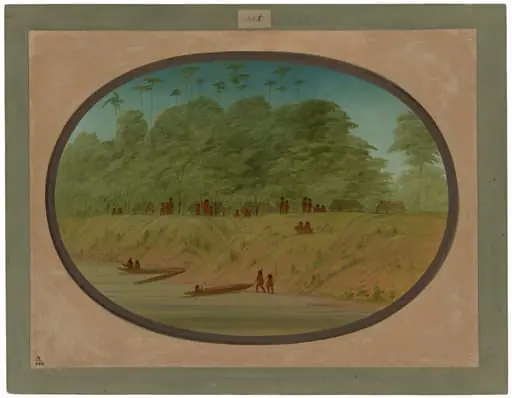 A Small Village - Payaguas Indians
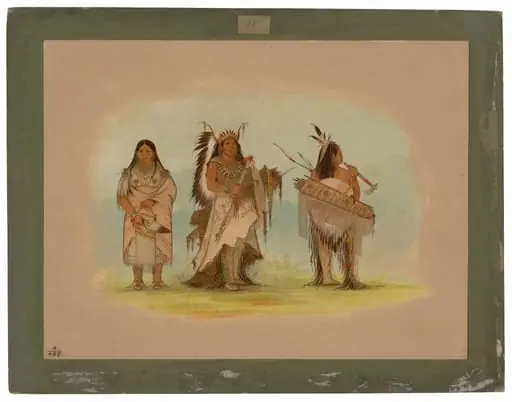 Omaha Chief, His Wife, and a Warrior
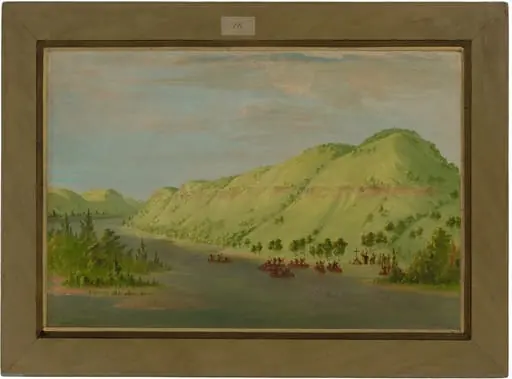 Father Hennepin Leaving the Mississippi to Join La Salle. May 8, 1680