Artwork
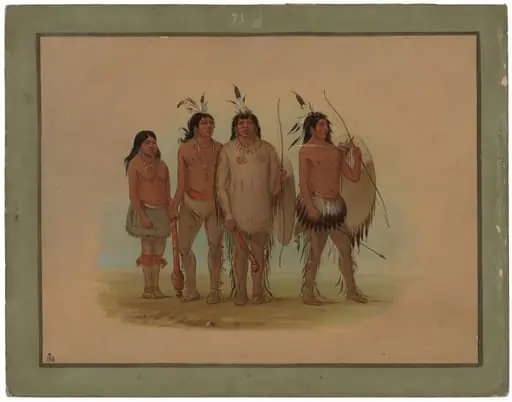
Two Sioux Chiefs, a Medicine Man, and a Woman with a Child
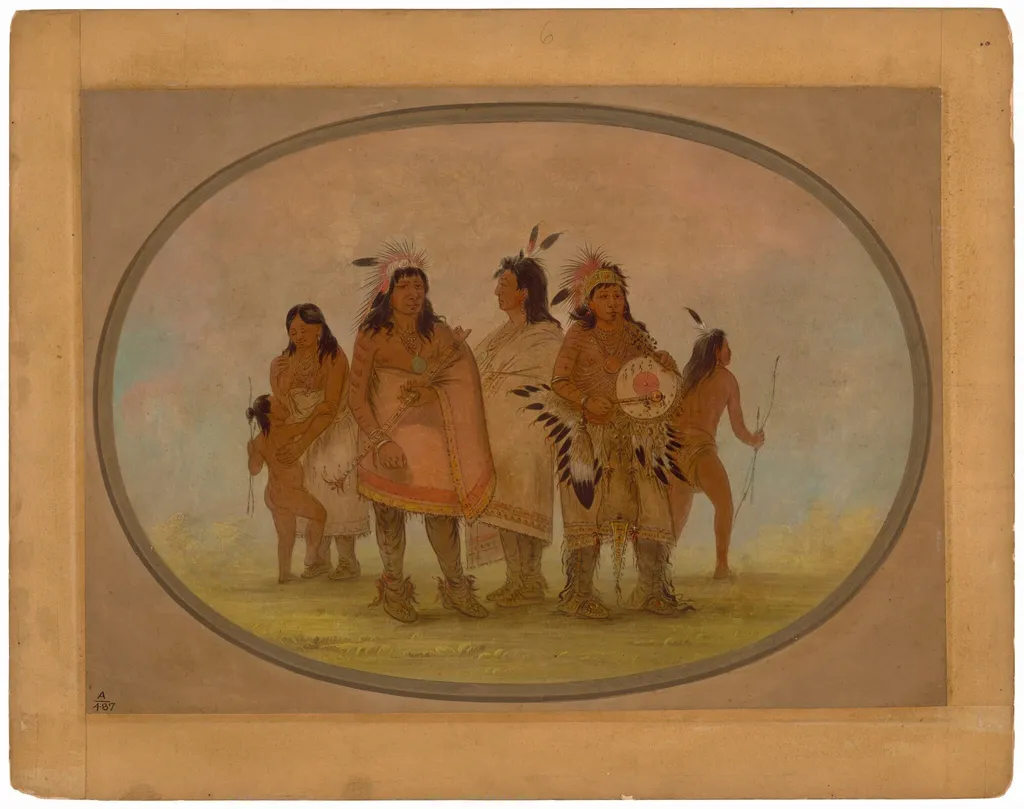
Two Sioux Chiefs, a Medicine Man, and a Woman with a Child is an oil painting by the American Folk Art artist George Catlin. It dates from 1865 and is held in the collection of the National Gallery of Art. Created in 1865, this oil painting on card mounted to paperboard presents a small group from the Sioux nation.
- Inscription
- Inscribed:lower left on card: A/487; upper center on board in graphite: 6
About this work
Technique & Style
The painting is executed in oil on card that is mounted on paperboard, classifying it as an oil painting on a rigid support.
The painting is executed in oil on card that is mounted on paperboard, classifying it as an oil painting on a rigid support. Its dimensions measure 44.2 cm in height by 61 cm in width, reflecting a formal scale typical of 19th‑century portraiture. The work depicts Two Sioux Chiefs, a Medicine Man, and a Woman with a Child, rendered with Catlin’s characteristic attention to detail and ethnographic interest, producing a composition that balances individual portraiture with group dynamics.
The handling of pigment emphasizes texture on the card surface, contributing to a vivid yet controlled visual presence that underscores the formal stylistic qualities of the piece.
History & Provenance
Painted in 1865 by George Catlin, this work entered the artist's family after its creation and remained in his daughters' possession until 1912. It was then acquired by the American Museum of Natural History from Elizabeth Wing Catlin. The painting subsequently passed through Kennedy Galleries in New York before being purchased by Paul Mellon in 1959.
In 1965, Mellon gifted the piece to the National Gallery of Art, where it remains in the collection.
The painting is part of the National Gallery of Art collection in Washington, D.C. It was acquired in 1965 as a gift from Paul Mellon, following its purchase from Kennedy Galleries in 1959 by Paul Mellon. Prior to this, it had descended through George Catlin’s family and was sold in 1912 to the American Museum of Natural History. The work is cataloged with an accession number in the museum’s records, though the specific identifier is not detailed here. Its exhibition history includes display within the National Gallery of Art’s permanent collection galleries.
Context
George Catlin painted Two Sioux Chiefs, a Medicine Man, and a Woman with a Child in 1865, depicting Indigenous leaders and family members with ethnographic precision. The work entered the National Gallery of Art through a documented chain of descent and sale, reflecting early 20th-century acquisition practices for American art. Its inclusion in the NGA collection underscores the institution’s early engagement with Catlin’s oeuvre and the broader scholarly reassessment of his contributions to both art and anthropology.
Overview
Created in 1865, this oil painting on card mounted to paperboard presents a small group from the Sioux nation. Four figures stand beside a woman who cradles a child, each adorned with feathered headdresses and traditional regalia. The composition emphasizes the collective presence of the individuals rather than a single portrait.
Subject & Meaning
The work portrays a woman with her infant, accompanied by two chiefs and a medicine man, reflecting roles within Sioux society. By grouping these figures together, the artist suggests a snapshot of communal life, highlighting familial bonds and the ceremonial importance of leadership and healing within the tribe.
Own this work as a print
Artist & collection

Artist
George Catlin ( KAT-lin; July 26, 1796 – December 23, 1872) was an American lawyer, painter, author, and traveler, who specialized in portraits of Native Americans in the American frontier.

 Bulls Fighting
 Expedition Encamped on a Texas Prairie. April 1686
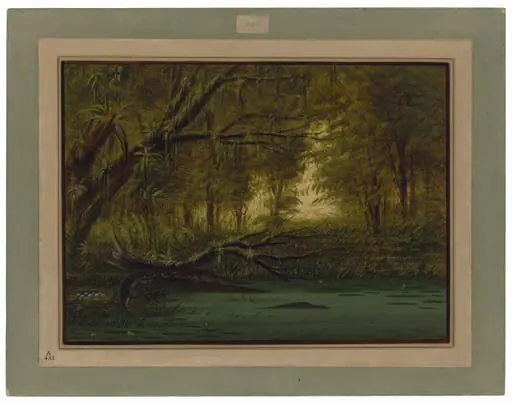 An Alligator's Nest
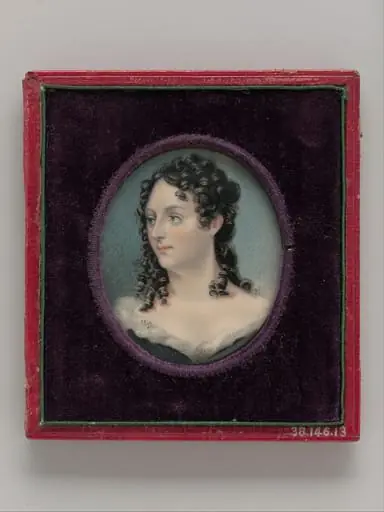 Mrs. George Catlin (Clara Bartlet Gregory)
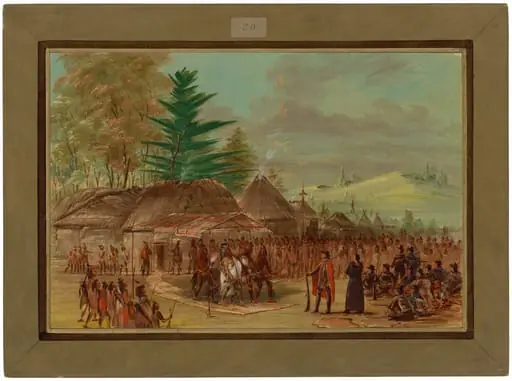 Chief of the Taensa Indians Receiving La Salle. March 20, 1682
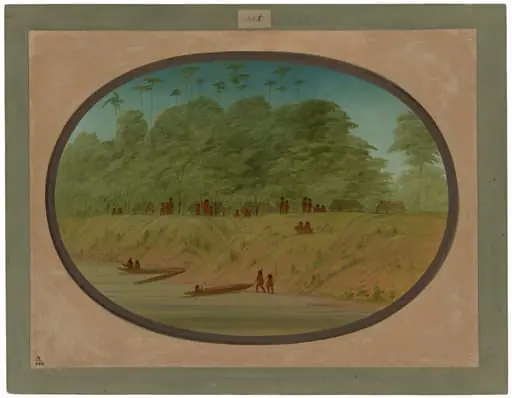 A Small Village - Payaguas Indians
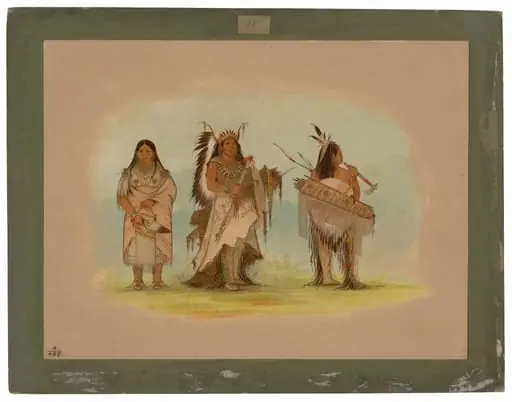 Omaha Chief, His Wife, and a Warrior
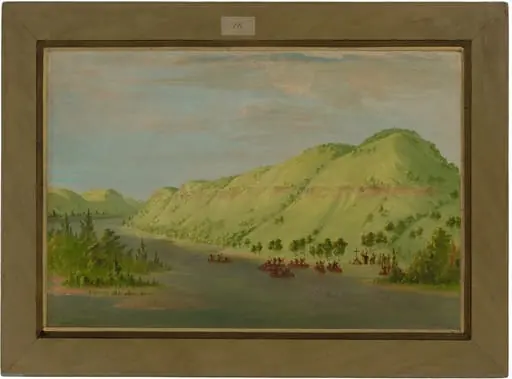 Father Hennepin Leaving the Mississippi to Join La Salle. May 8, 1680
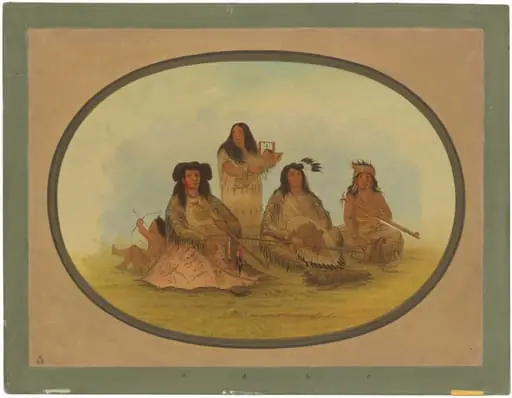 The Sioux Chief with Several Indians
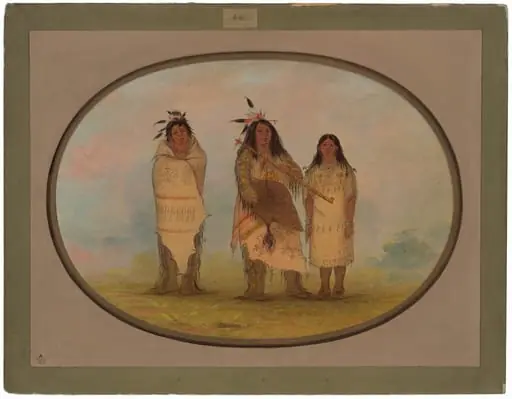 A Cheyenne Chief, His Wife, and a Medicine Man
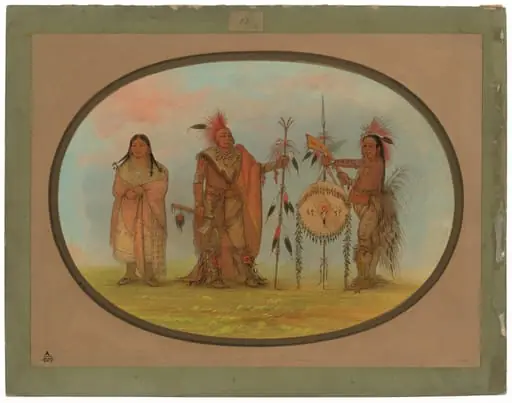 Two Saukie Chiefs and a Woman
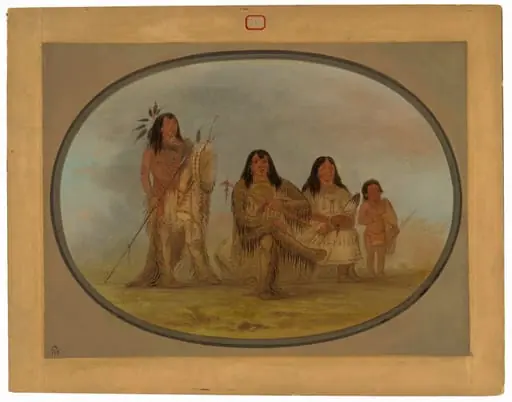 A Blackfoot Chief, His Wife, and a Medicine Man
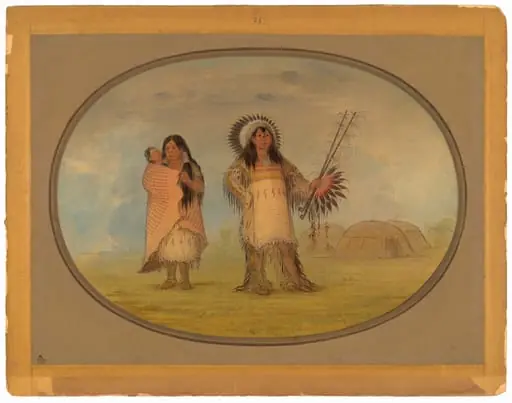 Mandan Civil Chief, His Wife, and Child
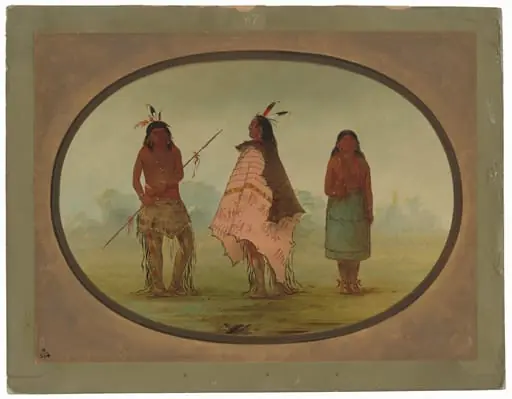 Two Apachee Warriors and a Woman
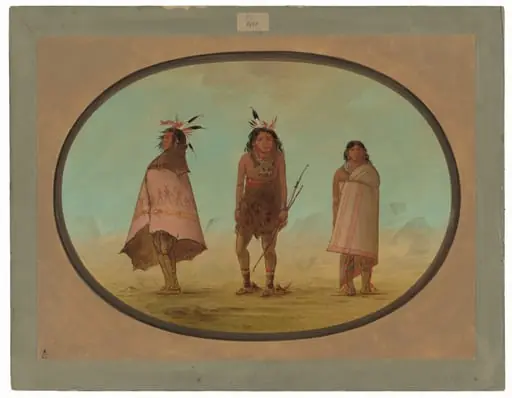 Yntah Medicine Man, a Warrior, and a Woman
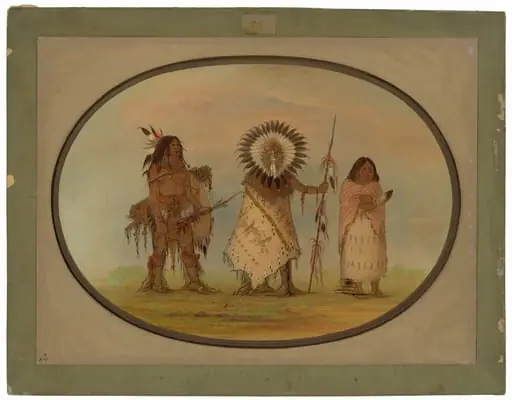 Crow Chief, His Wife, and a Warrior
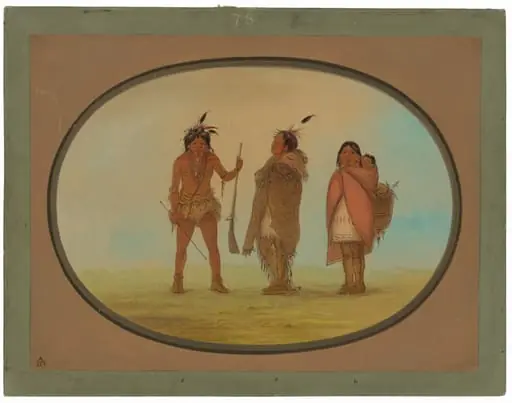 Arapaho Chief, His Wife, and a Warrior
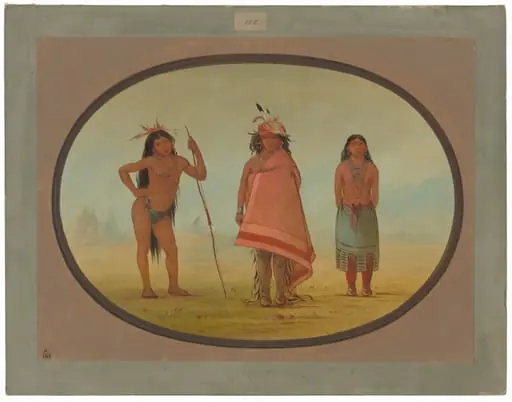 Cochimtee Chief, His Wife, and a Warrior
 Kiowa Chief, His Wife, and Two Warriors