Artwork
Madame Cézanne in Blue
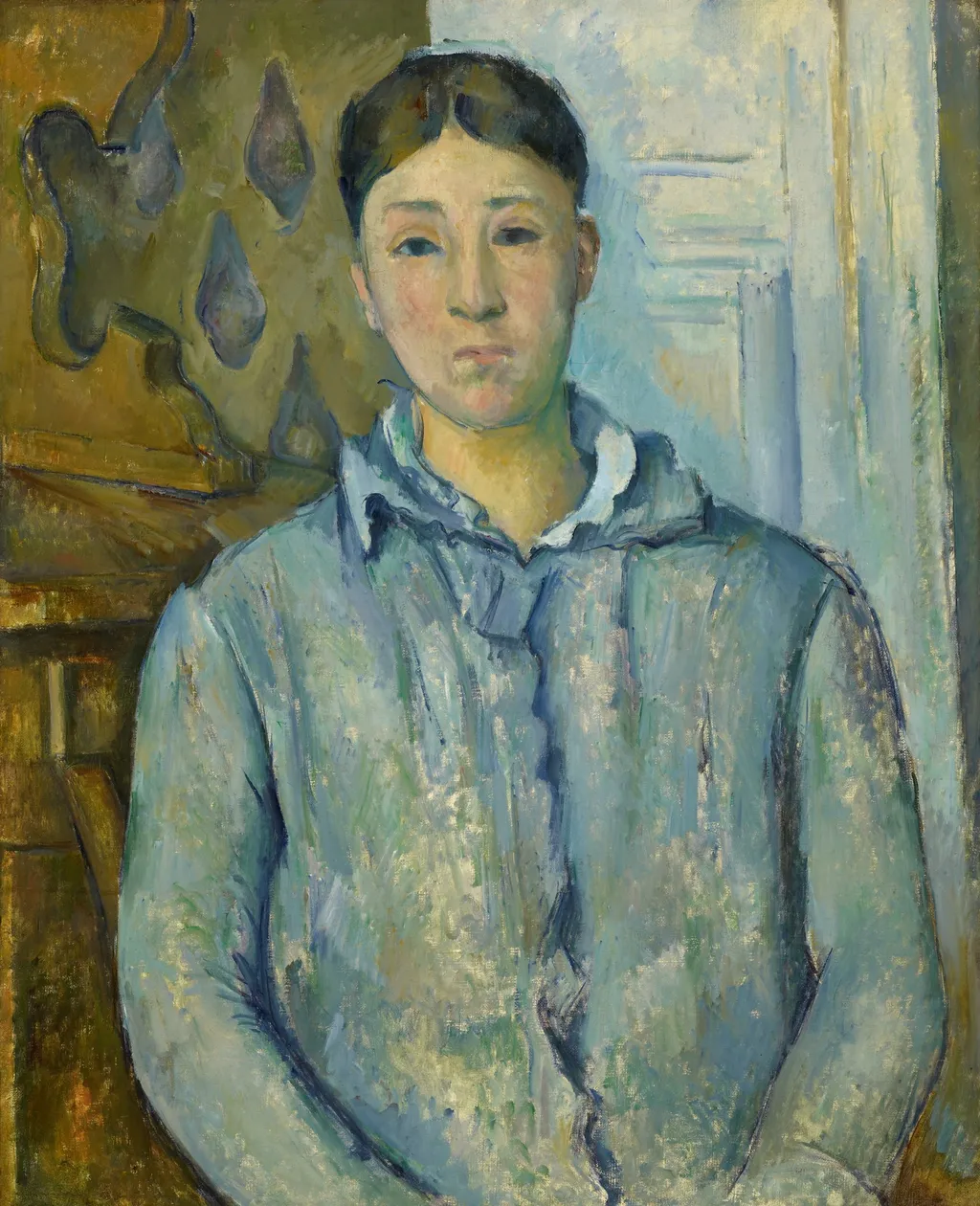
Madame Cézanne in Blue is an oil painting by the Post-Impressionist artist Paul Cézanne. It dates from 1896 and is held in the collection of the Museum of Fine Arts, Houston.
About this work
Overview
The painting is part of the Museum of Fine Arts, Houston’s permanent collection and represents one of many portraits he made of his wife over two decades.
Painted in 1896, Madame Cézanne in Blue is an oil portrait of the artist’s wife, Marie-Hortense Fiquet. Executed during Cézanne’s mature period, the work exemplifies his shift away from Impressionist spontaneity toward a more deliberate structuring of form. The painting is part of the Museum of Fine Arts, Houston’s permanent collection and represents one of many portraits he made of his wife over two decades.
Subject & Meaning
Marie-Hortense Fiquet is depicted seated, dressed in a blue garment, with her dark hair drawn tightly back. Her gaze is direct and unsmiling, conveying a quiet stillness. Cézanne’s focus was not on idealized beauty but on presence and psychological gravity.
The portrait reflects his interest in capturing the inner character of his subject through posture and expression rather than narrative or sentiment.
Technique & Style
Cézanne applied paint in deliberate, modulated strokes, building form through planes of color rather than linear definition. The background, composed of muted browns and whites, suggests furniture without detailing it. Brushwork remains visible, emphasizing the materiality of paint. Color areas are carefully balanced to create spatial depth, revealing his systematic approach to composition and structure.
History & Provenance
The painting was completed in 1896 during Cézanne’s time in Aix-en-Provence, where he lived with his family. It remained in the artist’s possession until his death in 1906, after which it passed through private collections before entering the Museum of Fine Arts, Houston. Its provenance reflects its status as a personal work that gained recognition only gradually in the early 20th century.
Context
Cézanne painted over 25 portraits of his wife between 1869 and 1896, often in private settings. These works emerged as he sought to reconcile observational realism with formal abstraction, influencing later modernists like Picasso and Braque. Unlike contemporaries who favored fleeting effects, Cézanne pursued enduring structure, aligning his portraiture with broader experiments in pictorial logic.
Legacy
This portrait exemplifies Cézanne’s role in transitioning from 19th-century naturalism to 20th-century abstraction. His method of constructing form through color and brushstroke became foundational for Cubism and modernist painting. Though not widely celebrated in his lifetime, works like this one later informed generations of artists seeking to represent reality through structural integrity rather than illusion.
Own this work as a print
Artist & collection

Artist
Paul Cézanne ( say-ZAN, UK also siz-AN, US also say-ZAHN; French: ; Occitan: Pau Cesana; 19 January 1839 – 22 October 1906) was a French Post-Impressionist painter whose work introduced new modes of representation,…

 Harlequin
 The Card Players
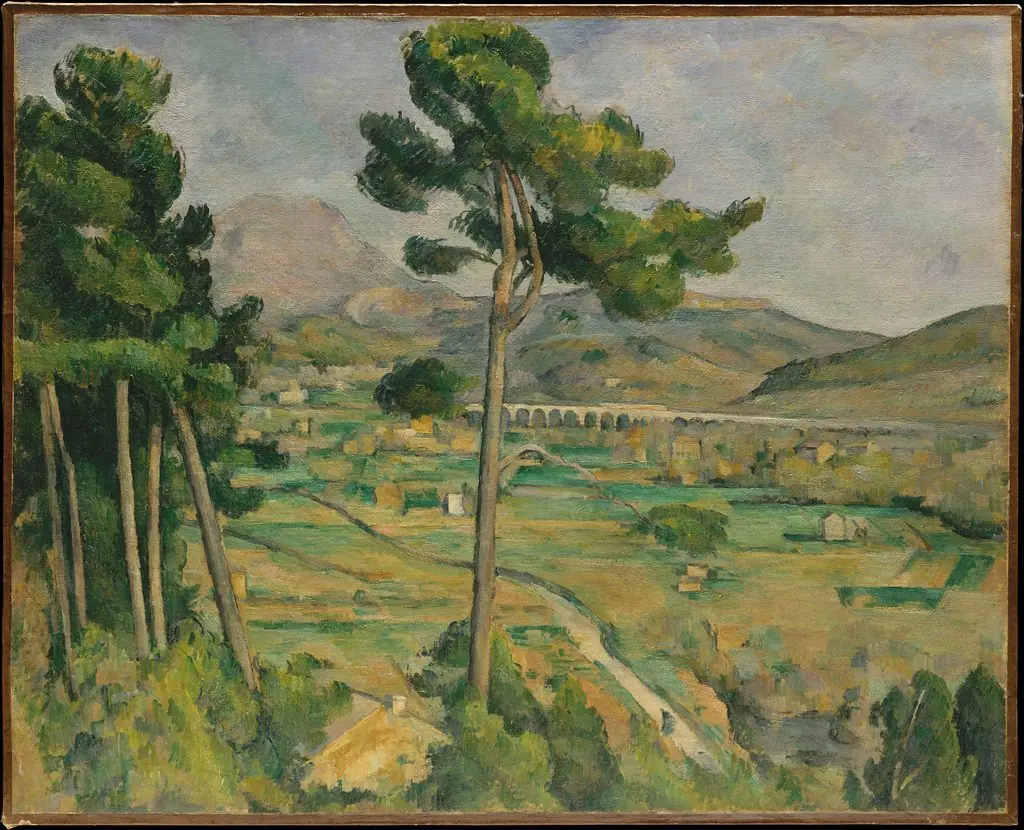 Mont Sainte-Victoire and the Viaduct of the Arc River Valley
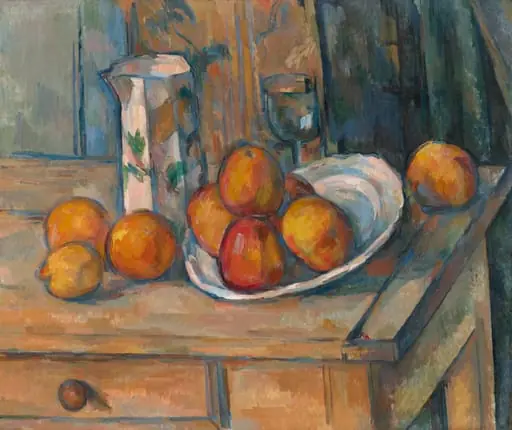 Still Life with Milk Jug and Fruit
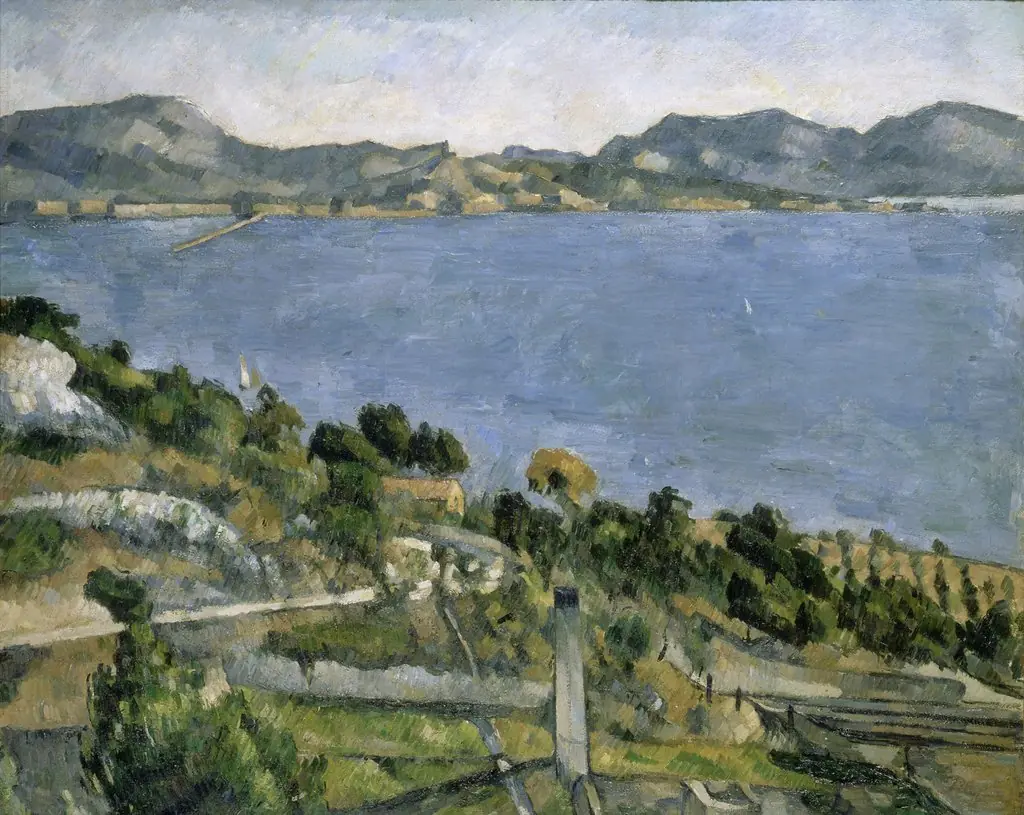 Le Golfe de Marseille vu de l'Estaque (The Gulf of Marseille Seen from L'Estaque)
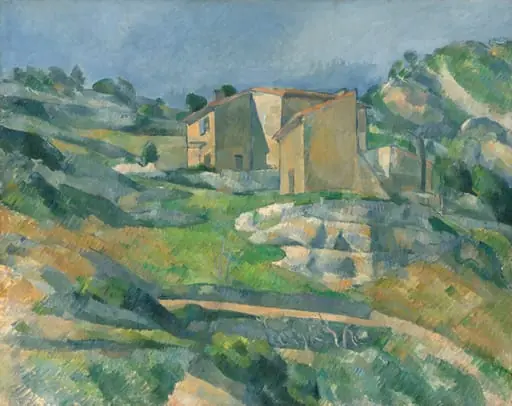 Houses in Provence: The Riaux Valley near L'Estaque
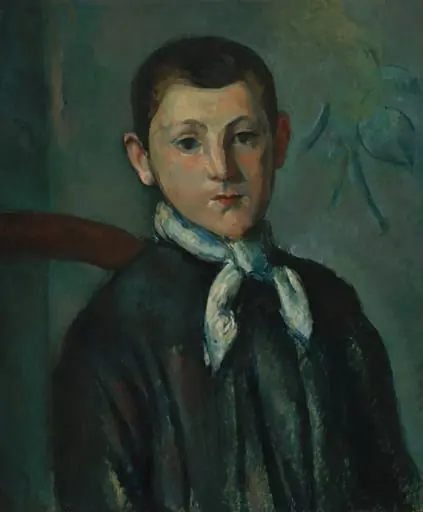 Louis Guillaume
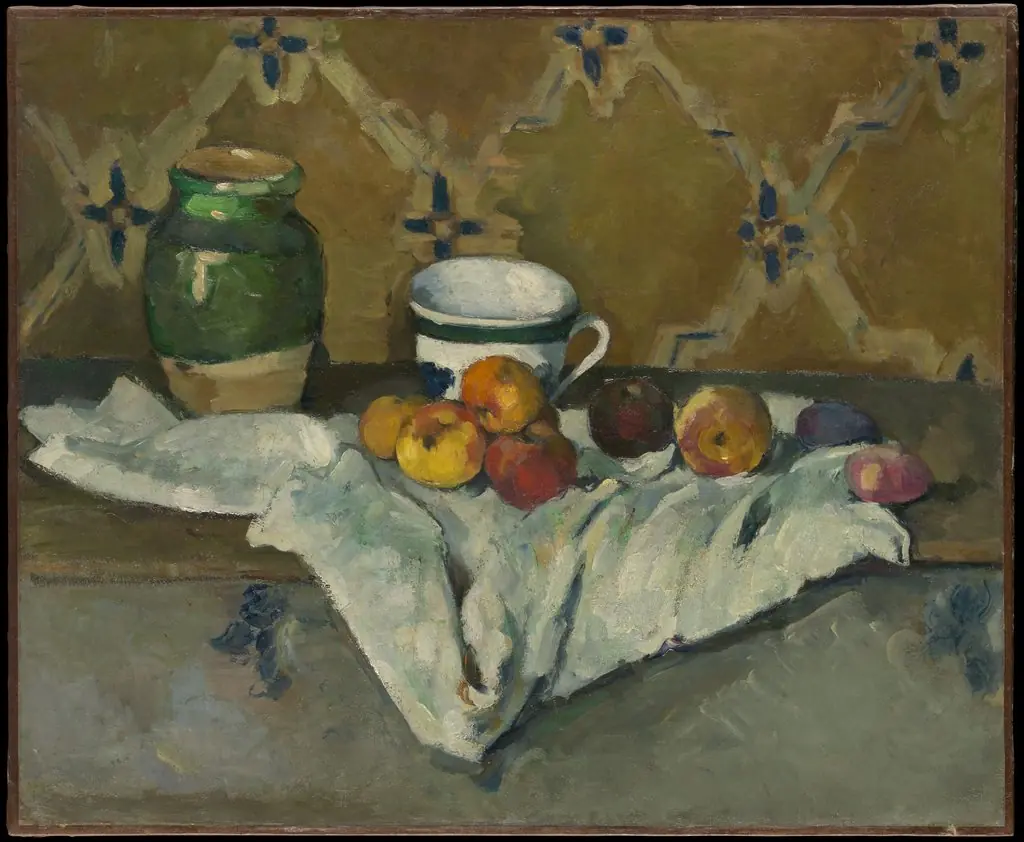 Still Life with Jar, Cup, and Apples
- Portrait of Madame Cézanne
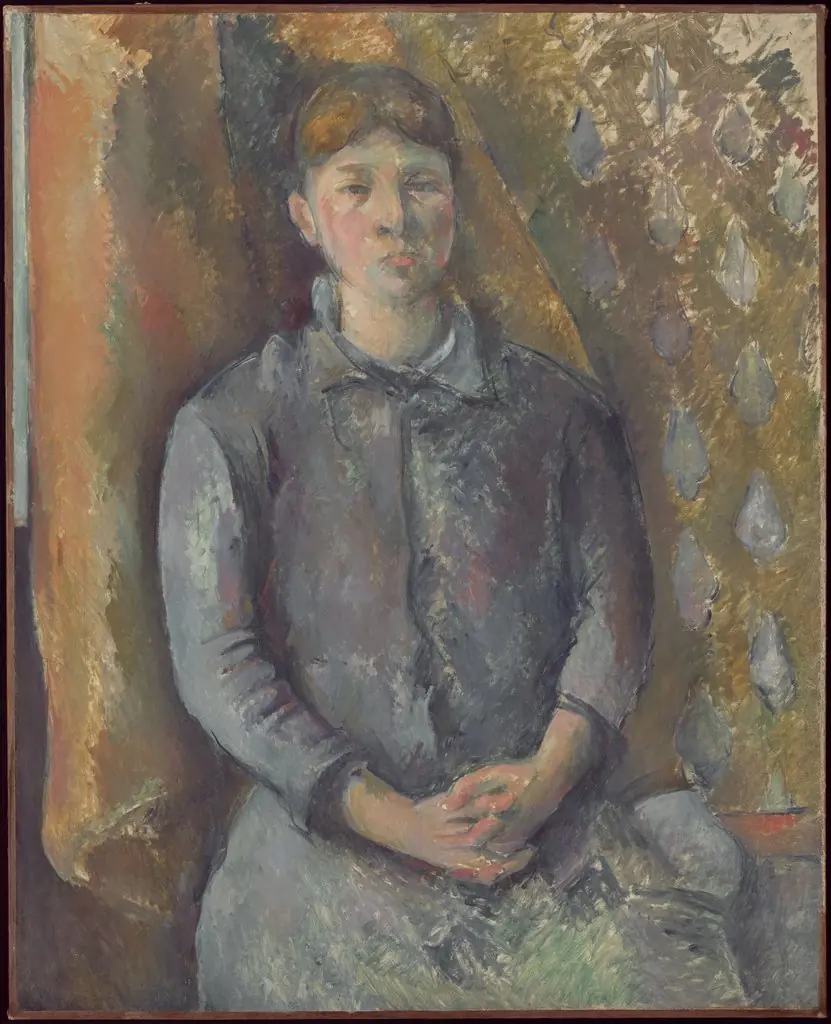 Portrait de madame Cézanne
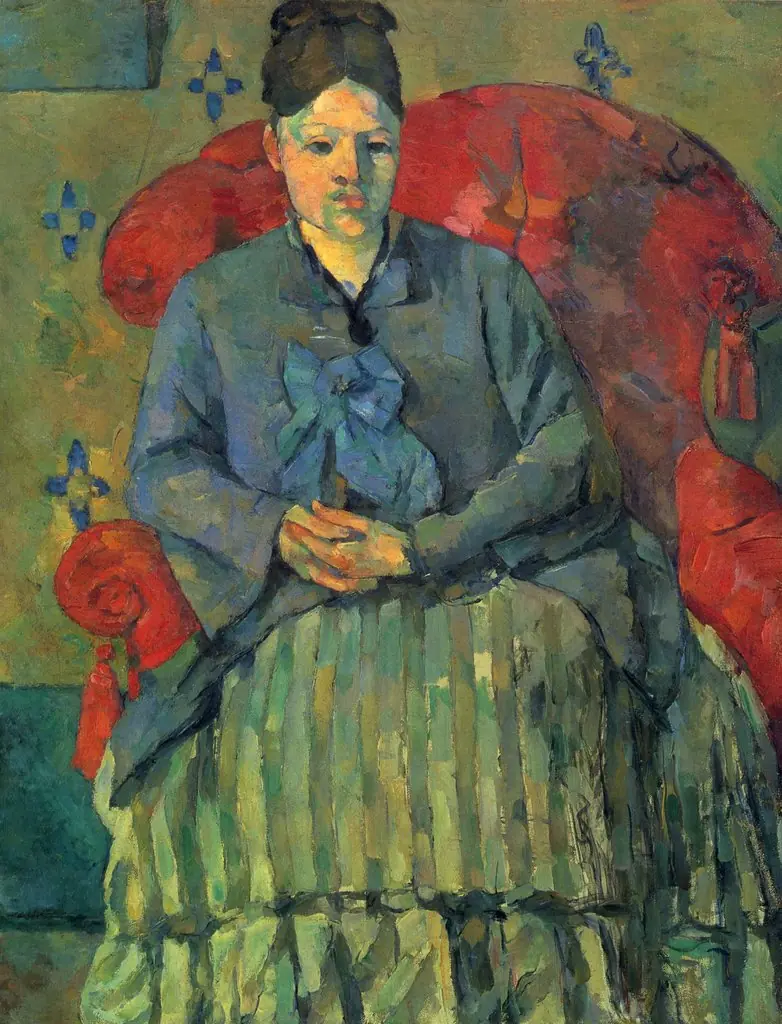 Madame Cézanne à la jupe rayée (Madame Cézanne in a Red Armchair)
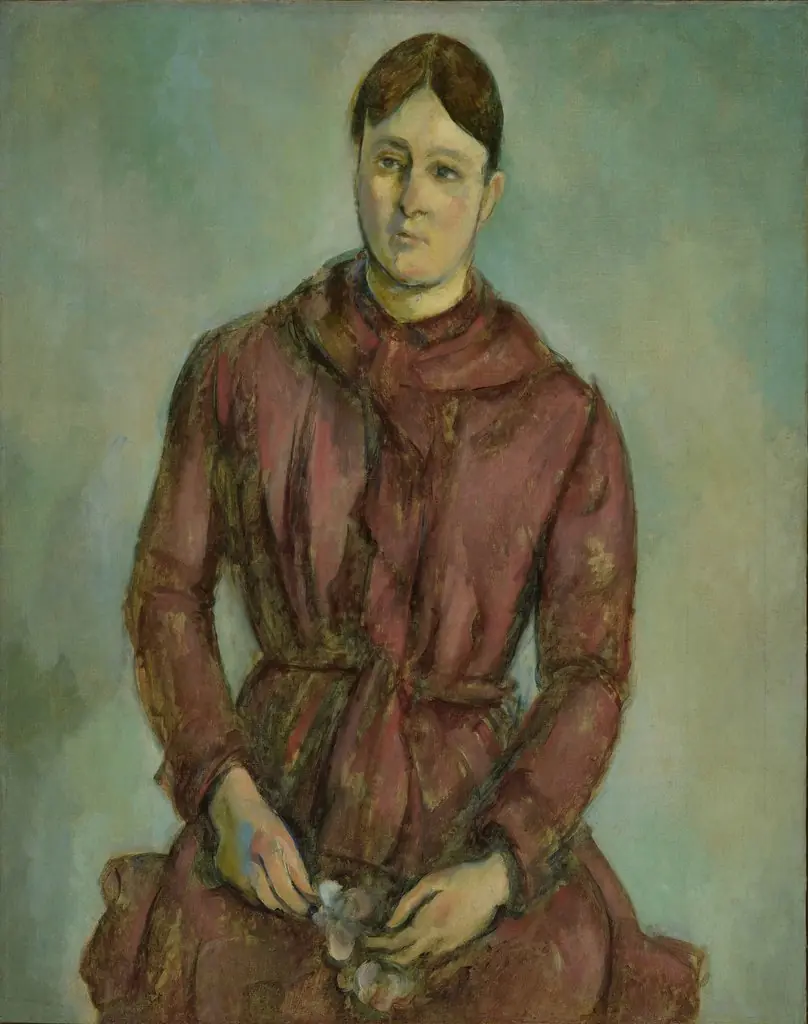 Madame Cézanne in a Red Dress
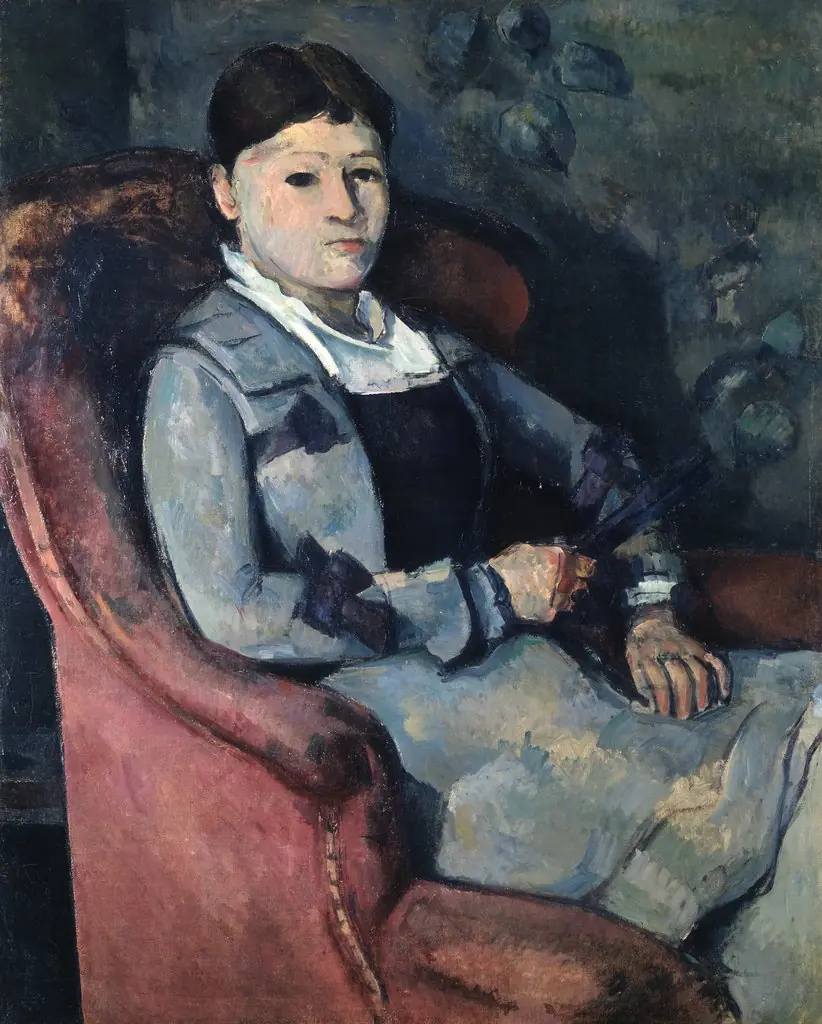 Portrait of Mme. Cézanne
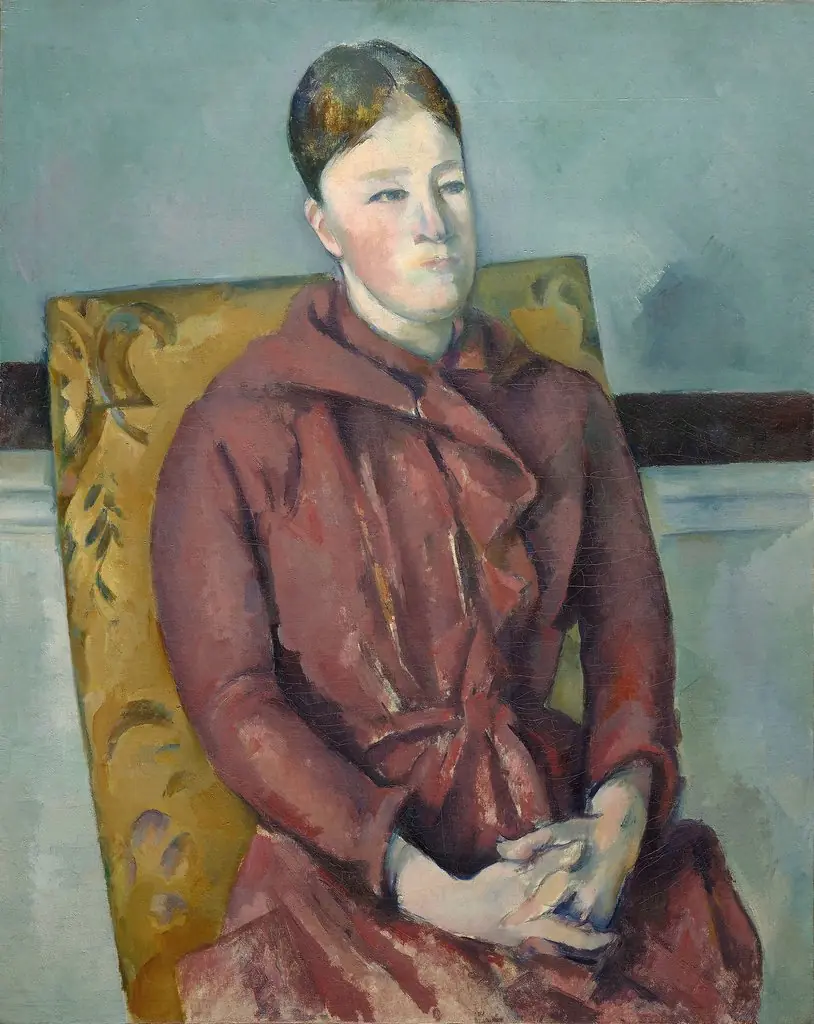 Madame Cézanne in a Yellow Chair
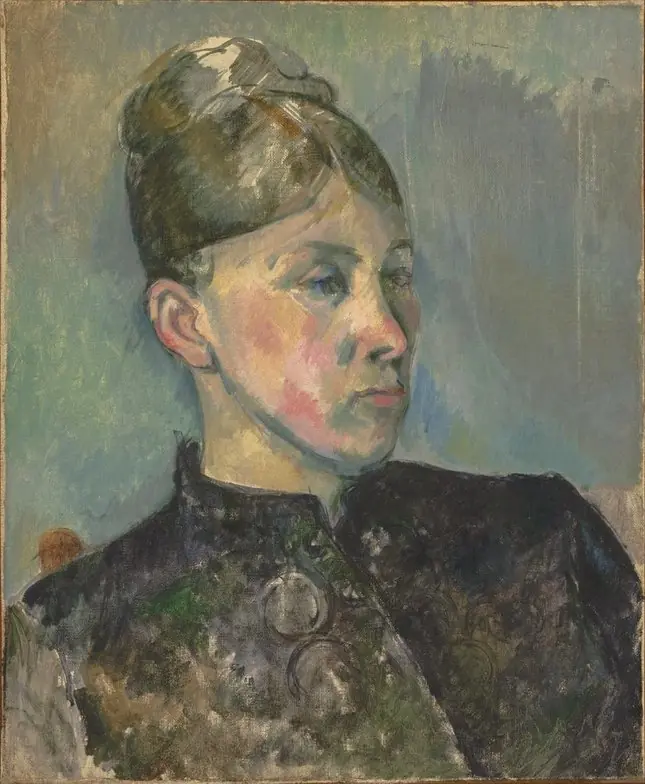 Portrait of Madame Cézanne
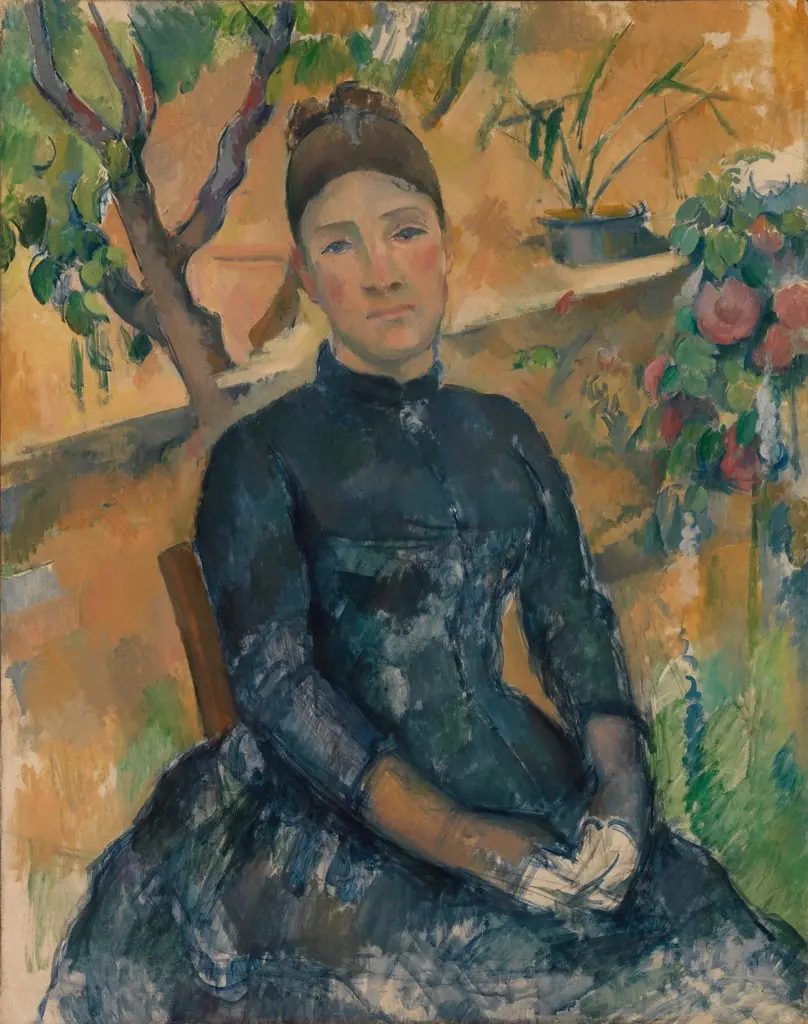 Madame Cézanne (Hortense Fiquet, 1850–1922) in the Conservatory
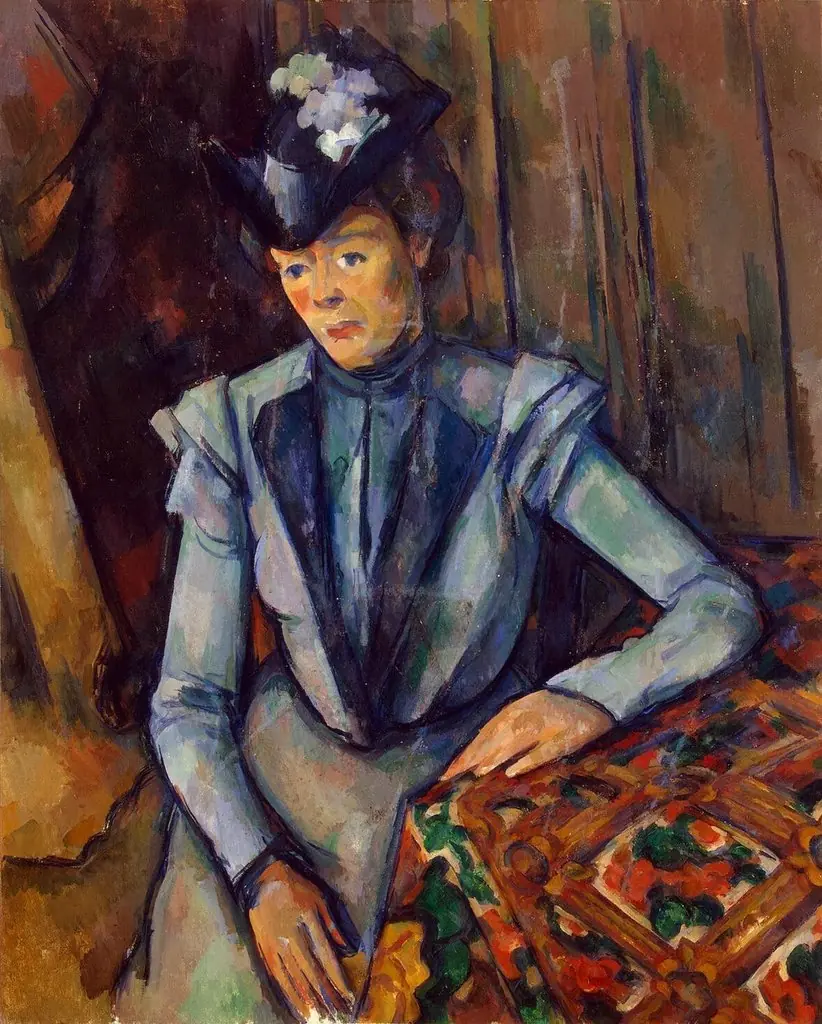 Lady in Blue
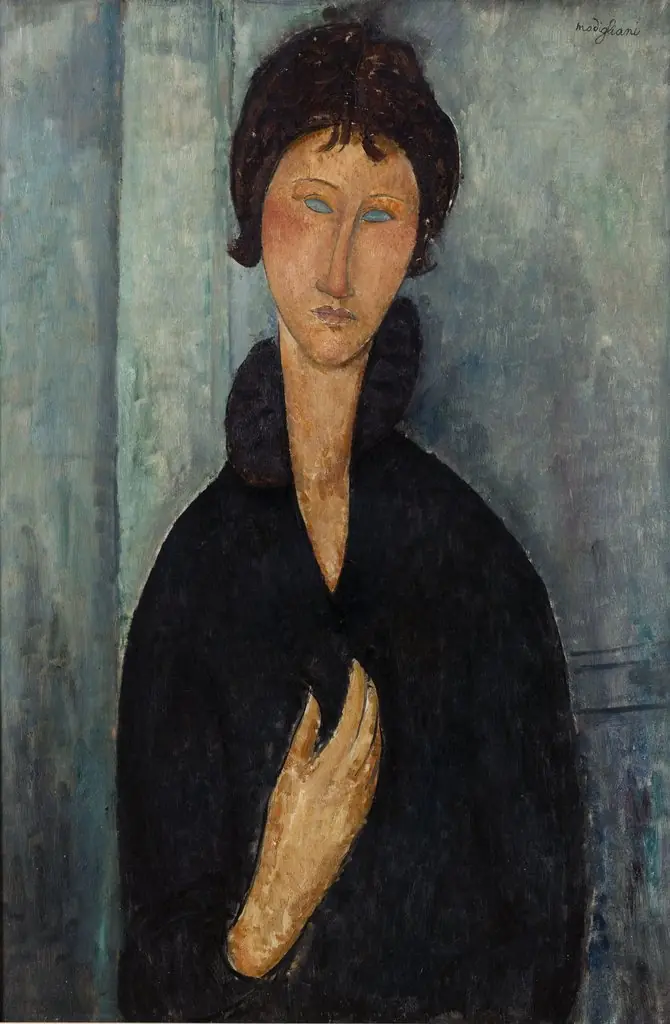 Woman with Blue Eyes