Artwork
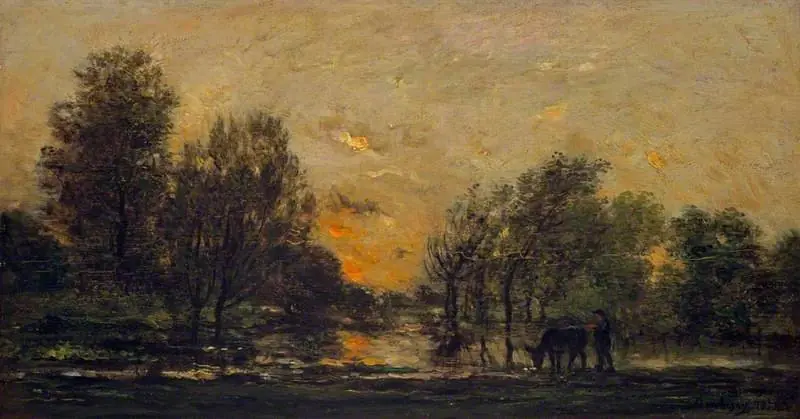
Evening at Bas Meudon
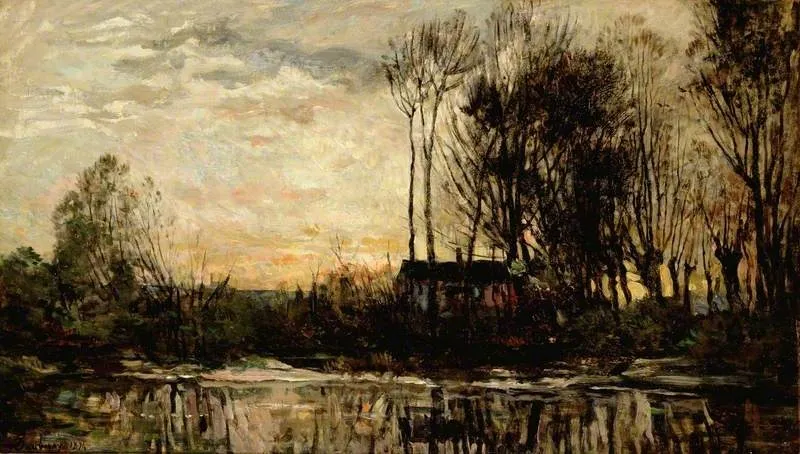
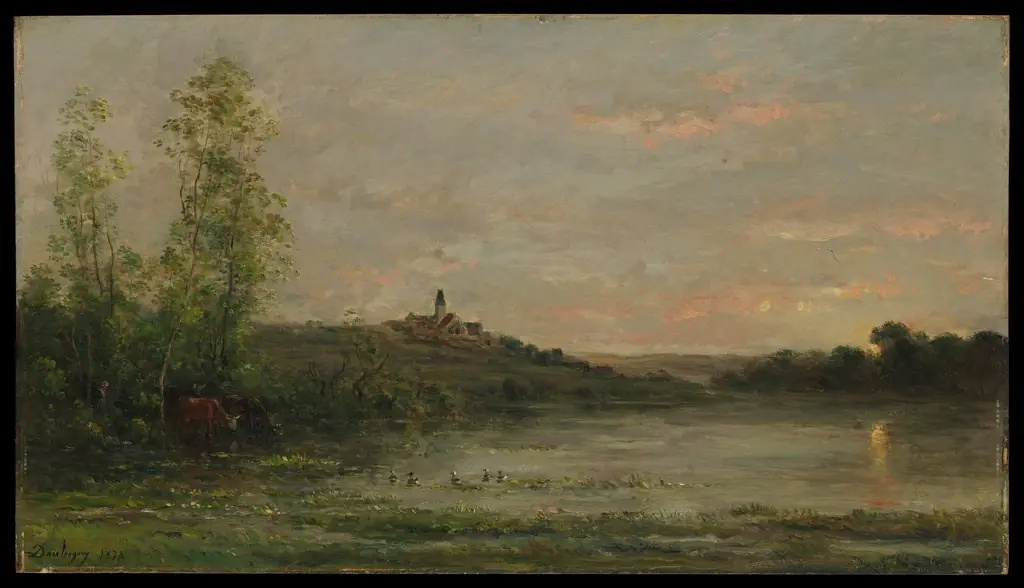
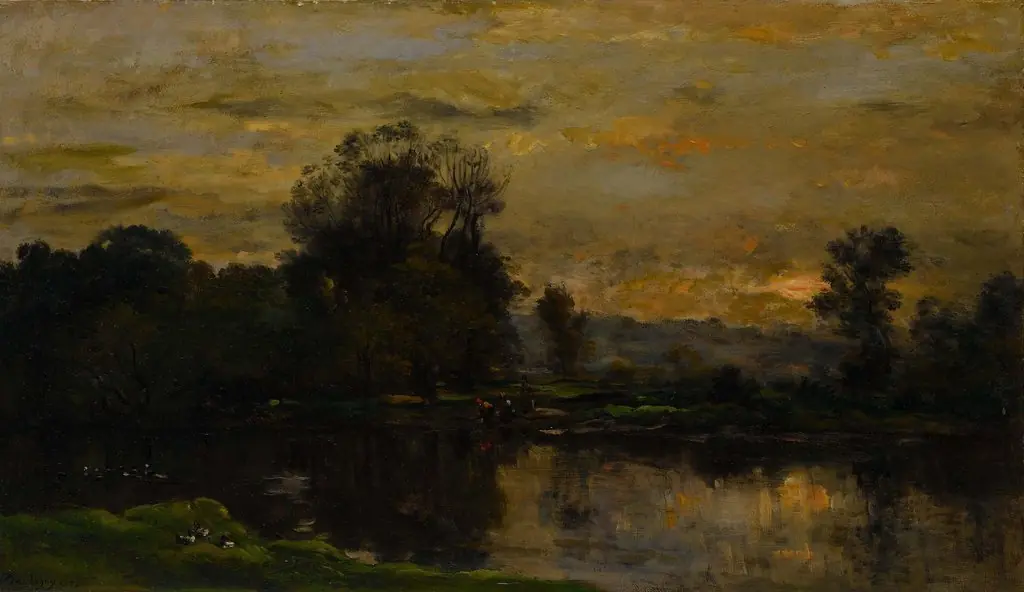
Evening at Bas Meudon is an oil painting by the Plein Air artist Charles François Daubigny. It dates from 1874 and is held in the collection of the Ashmolean Museum.
About this work
Overview
Charles François Daubigny completed Evening at Bas Meudon in 1874 as an oil-on-canvas landscape.
Charles François Daubigny completed Evening at Bas Meudon in 1874 as an oil-on-canvas landscape. Painted outdoors near Paris, it reflects his commitment to direct observation of nature. A central figure in the Barbizon school, Daubigny’s approach emphasized natural light and atmospheric conditions, laying groundwork for later movements that prioritized transient effects over idealized composition.
Subject & Meaning
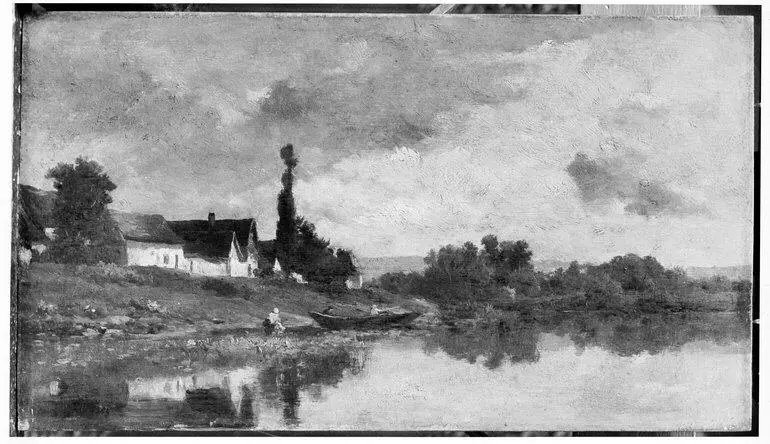
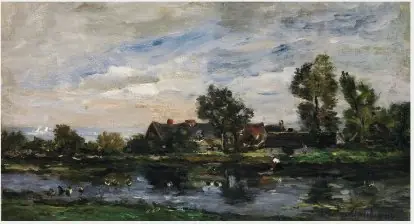
The scene captures a quiet riverside at dusk in Bas-Meudon, featuring a modest cottage nestled among trees beside still water. No human figures are present; the focus rests on the interplay of fading light and natural forms. The stillness suggests a moment of pause, neither celebratory nor melancholic, but quietly attentive to the rhythms of the rural environment as day yields to night.
Technique & Style
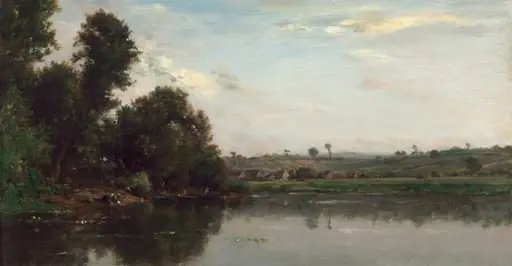
Daubigny employed loose, fluid brushwork to render sky, water, and foliage, avoiding sharp definition in favor of suggestive forms. Muted tones, soft greens, grays, and warm ochres, establish a subdued harmony. Reflections in the water mirror the trees and structure, deepening spatial depth. Light filters through clouds with subtle gradations, creating mood rather than dramatic contrast.
History & Provenance
Painted during the final years of Daubigny’s life, the work emerged from his sustained practice of painting en plein air along the Seine. He frequently returned to Meudon, drawn to its unspoiled riverbanks. The painting remained in private hands after his death, eventually entering a public collection, where it is now recognized as a representative example of his late style and evolving approach to landscape.
Context
In the 1870s, French landscape painting was shifting from academic conventions toward direct engagement with nature. Daubigny’s work stood apart from both historical idealism and emerging Impressionist fragmentation. His focus on ordinary rural scenes, painted with immediacy and sensitivity to light, positioned him as a bridge between Barbizon realism and the observational practices that followed.
Legacy
Daubigny’s emphasis on naturalism and plein air technique influenced younger artists, including Monet and Pissarro, who adopted his methods of working outdoors and capturing transient light. Though less celebrated than his successors, his quiet, consistent dedication to observing the everyday landscape helped redefine the possibilities of modern painting beyond studio conventions.
Artist & collection
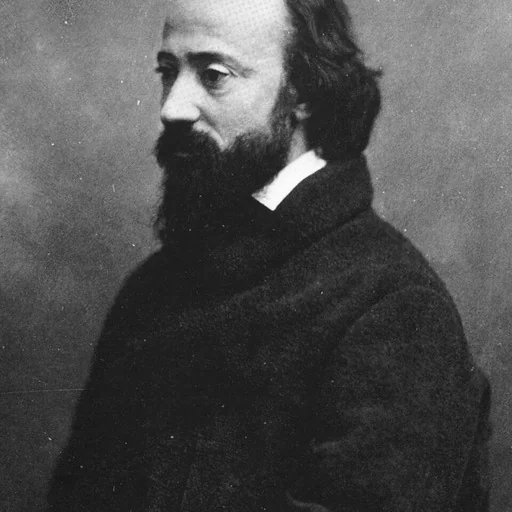
Artist
Charles-François Daubigny ( DOH-bin-yee, US: DOH-been-YEE, doh-BEEN-yee, French:; 15 February 1817 – 19 February 1878) was a French painter, one of the members of the Barbizon school, and is considered an important precursor of…