Artwork
The River Seine at Mantes
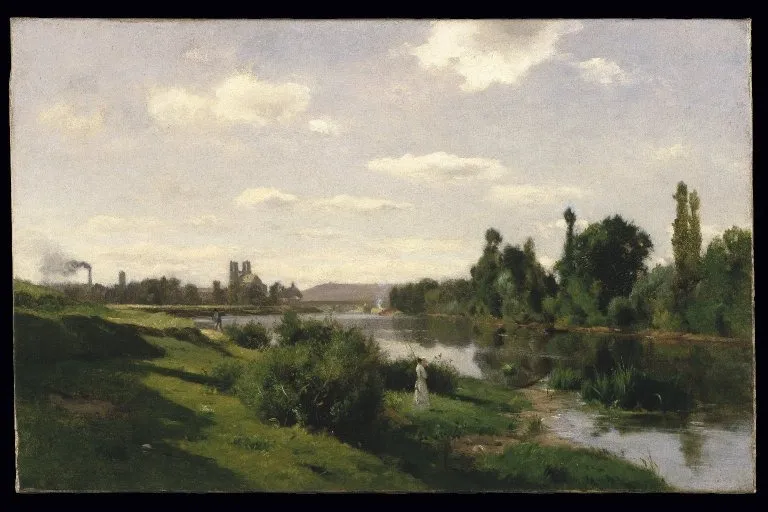
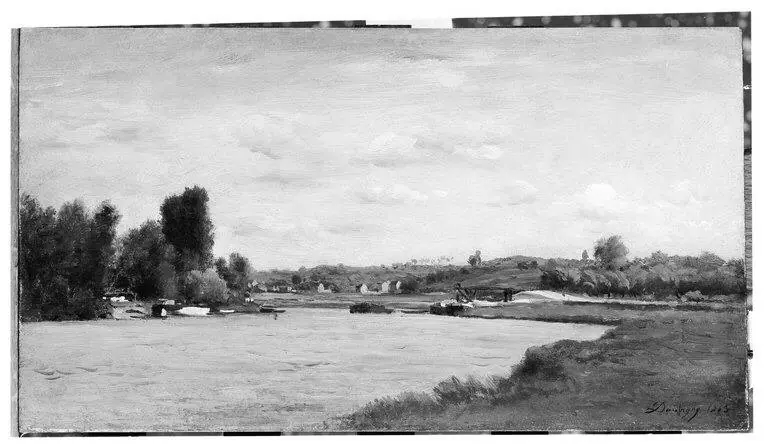
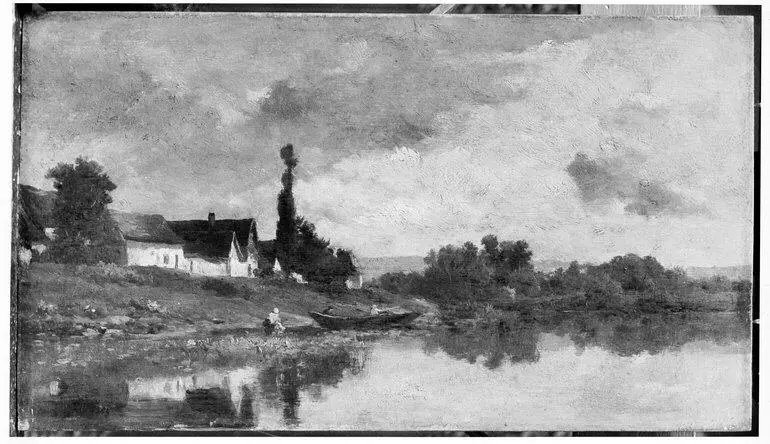
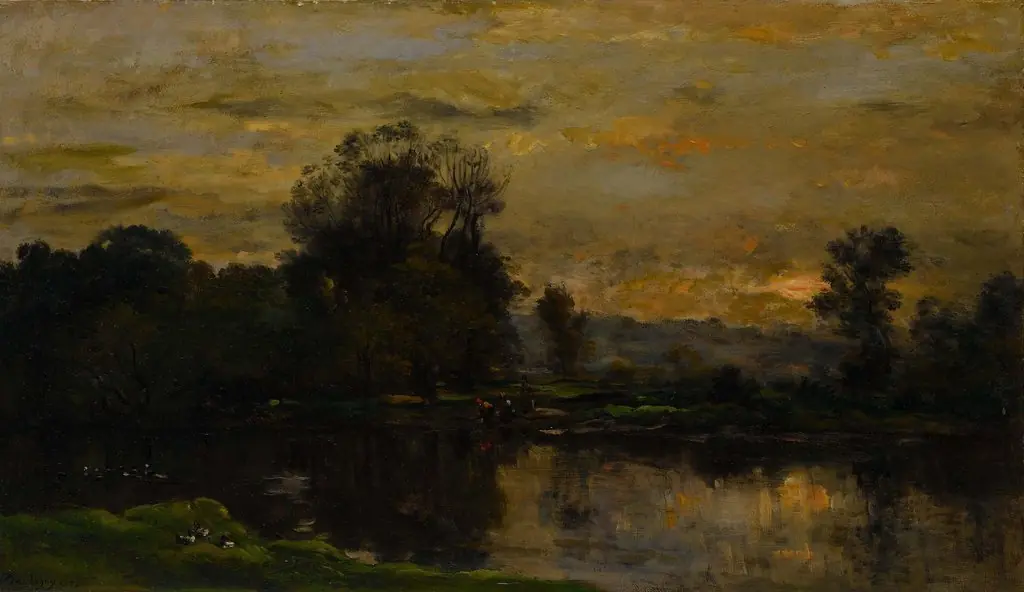
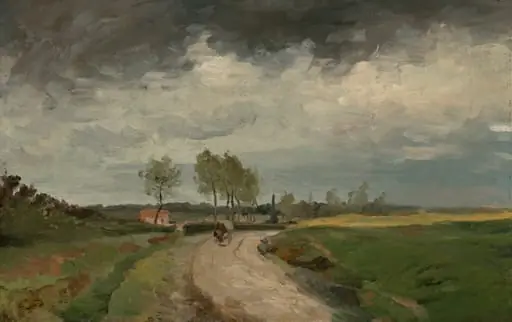
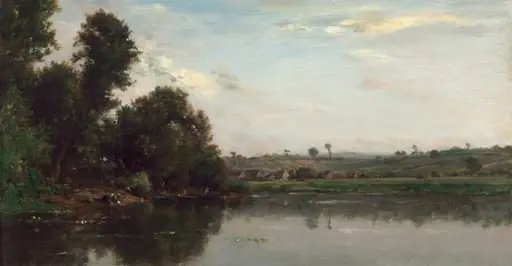
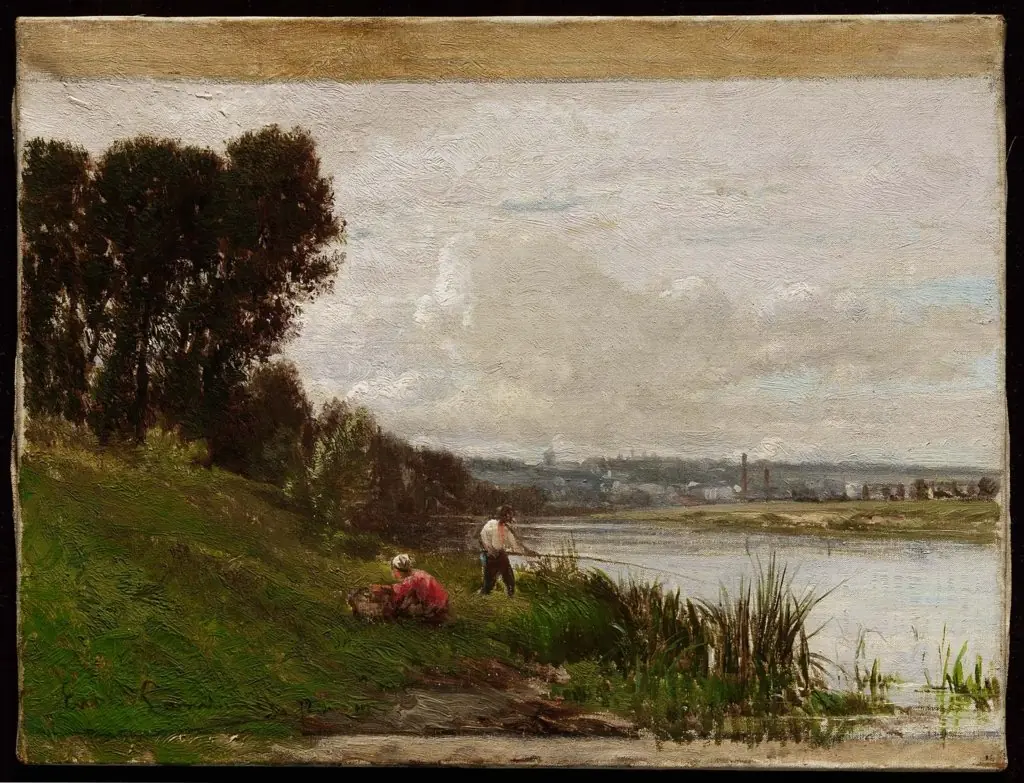
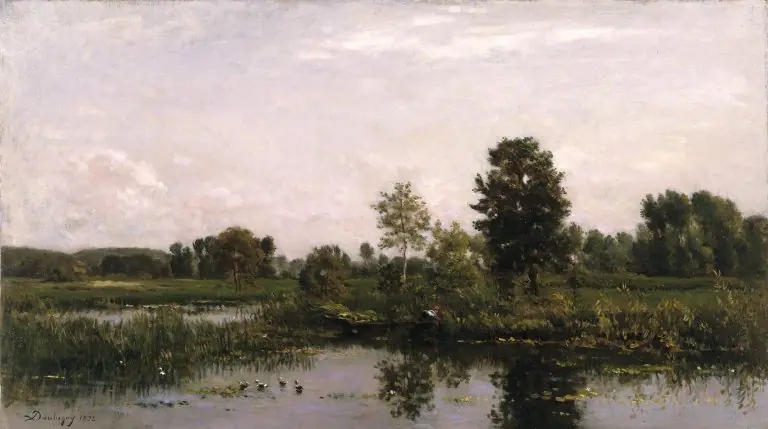
The River Seine at Mantes is an oil painting by the Barbizon school artist Charles François Daubigny. It dates from 1856 and is held in the collection of the Brooklyn Museum.
About this work
The painting is called The River Seine at Mantes. It was made by Charles François Daubigny in 1856. The artist created this work using oil paint, which was a common medium at the time, and it's now held at the Brooklyn Museum, where people can see it in person. You can learn more about the artist's style and other works by looking up Charles François Daubigny.
Overview
It captures a quiet stretch of the Seine near the town of Mantes, reflecting the artist’s dedication to observing nature directly.
Painted in 1856, The River Seine at Mantes is an oil-on-canvas landscape by French artist Charles-François Daubigny. It captures a quiet stretch of the Seine near the town of Mantes, reflecting the artist’s dedication to observing nature directly. Daubigny’s approach aligned with the Barbizon school’s emphasis on unidealized rural scenes, moving away from academic conventions toward a more immediate, sensory representation of the natural world.
Subject & Meaning
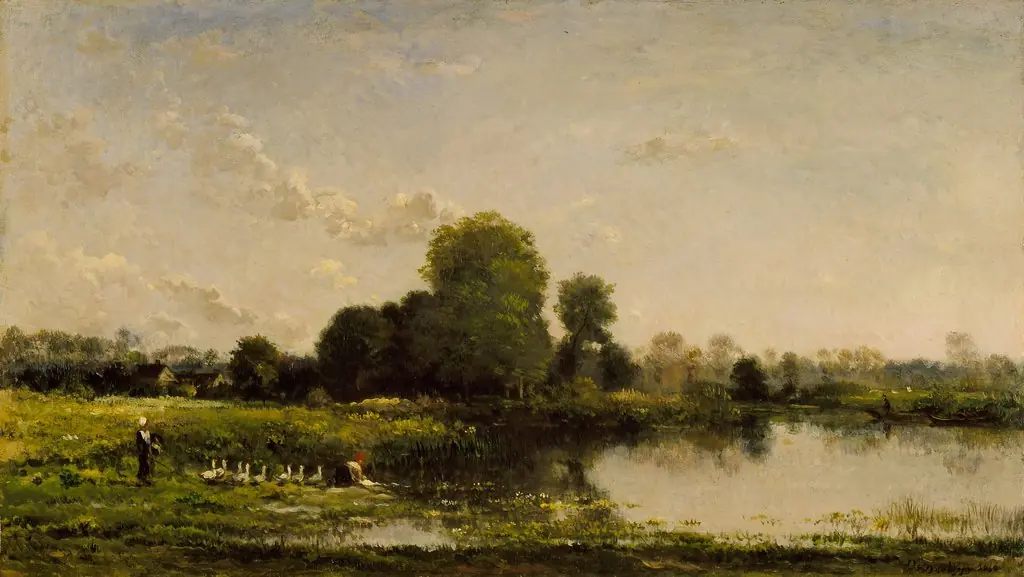
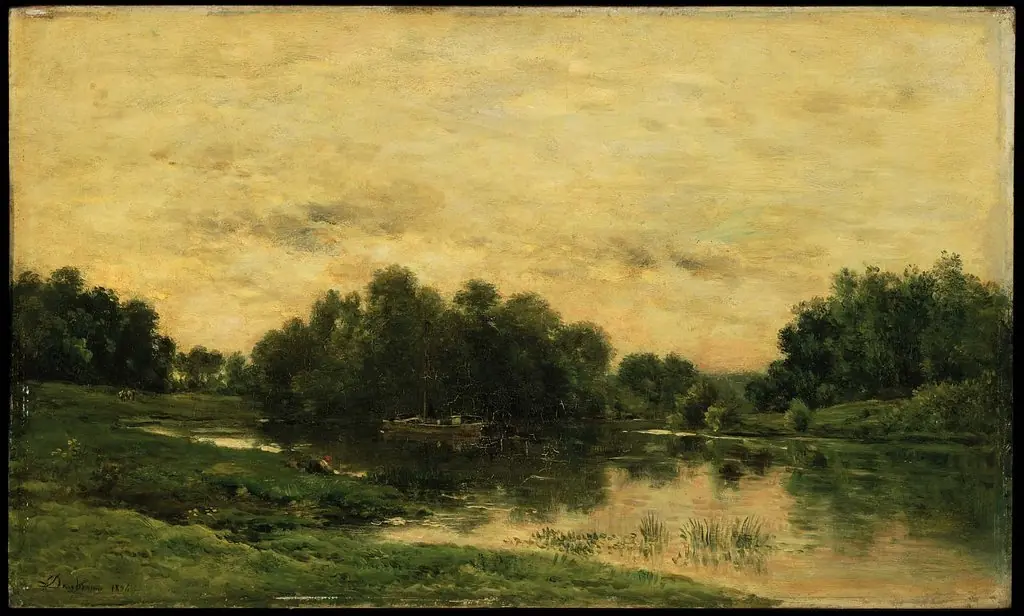
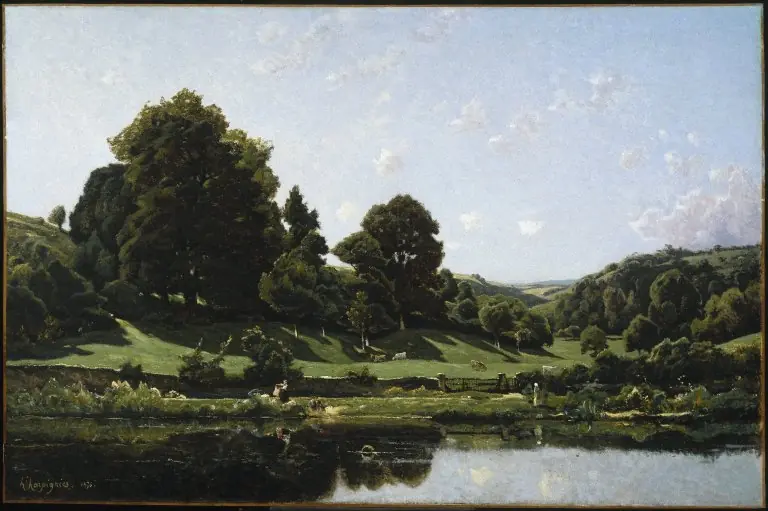
The painting presents a tranquil riverside view with gentle hills, scattered trees, and a calm water surface reflecting the sky. There are no human figures or dramatic events, only the quiet rhythm of the landscape. This focus on ordinary, unembellished nature reflects a philosophical shift in 19th-century French art: valuing the authenticity of everyday surroundings over mythological or historical narratives.
Technique & Style
Daubigny employed loose, fluid brushwork to convey the effects of light and atmosphere, using subtle tonal variations rather than sharp outlines. His handling of oil paint suggests a direct, on-site approach, with layers applied to capture shifting weather and the reflective quality of water. This technique anticipated the plein air practices of later Impressionists, though his palette remained restrained and earth-toned.
History & Provenance
Created during a period when Daubigny was deeply engaged with the Barbizon circle, the painting was likely made during one of his frequent travels along the Seine. It entered the Brooklyn Museum’s collection in the 20th century, where it remains part of its European paintings holdings. Its preservation reflects early American institutional interest in French realist landscapes.
Context
In mid-19th-century France, artists began rejecting studio-based historicism in favor of painting outdoors. Daubigny, alongside peers like Millet and Corot, helped pioneer this shift. The River Seine at Mantes exemplifies this movement’s core values: direct observation, modest subject matter, and emotional resonance drawn from the natural world rather than classical ideals.
Legacy
Though less widely known than his Impressionist successors, Daubigny’s emphasis on light, atmosphere, and direct observation influenced artists such as Monet and Pissarro. His practice of painting en plein air and his preference for river scenes helped lay the groundwork for the Impressionist revolution, making works like this a quiet but vital bridge between realism and modernism.
Artist & collection
Artist
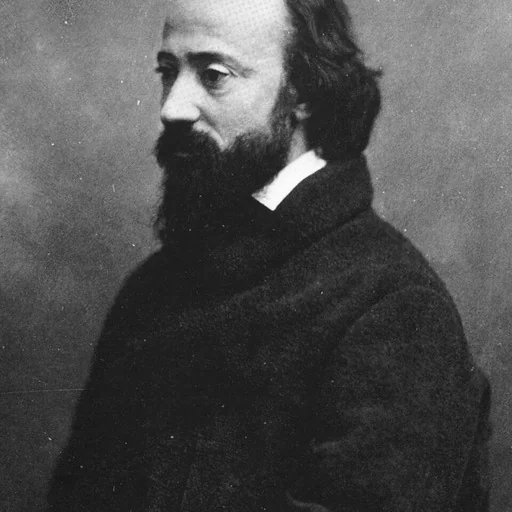
Charles-François Daubigny ( DOH-bin-yee, US: DOH-been-YEE, doh-BEEN-yee, French:; 15 February 1817 – 19 February 1878) was a French painter, one of the members of the Barbizon school, and is considered an important precursor of…