Artwork
A Bend in the River Oise
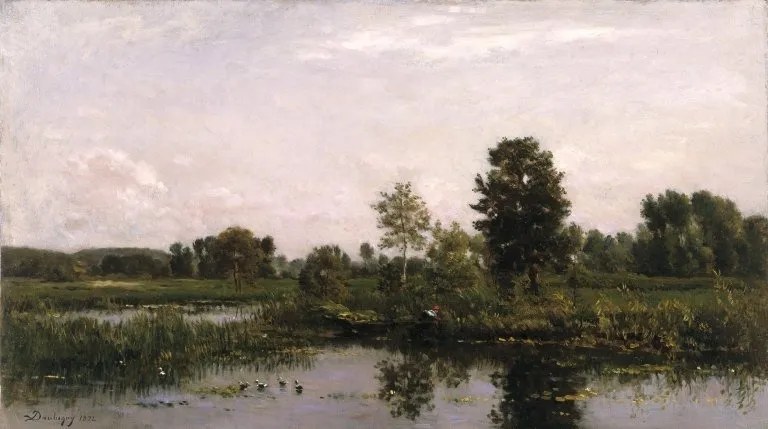
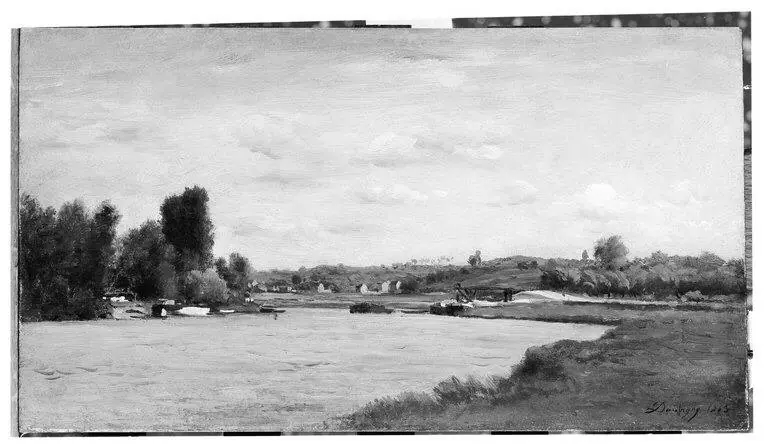
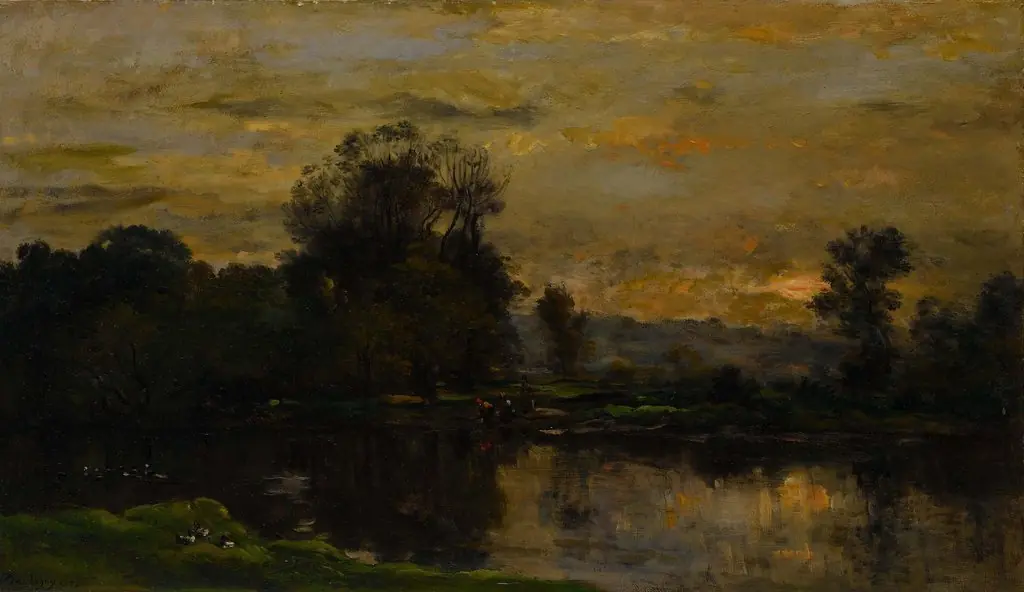
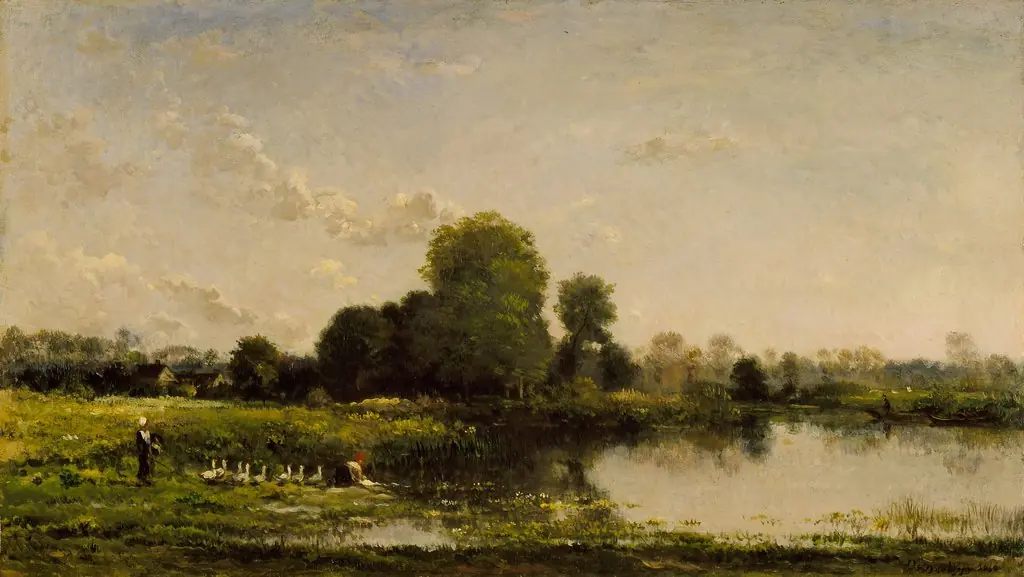
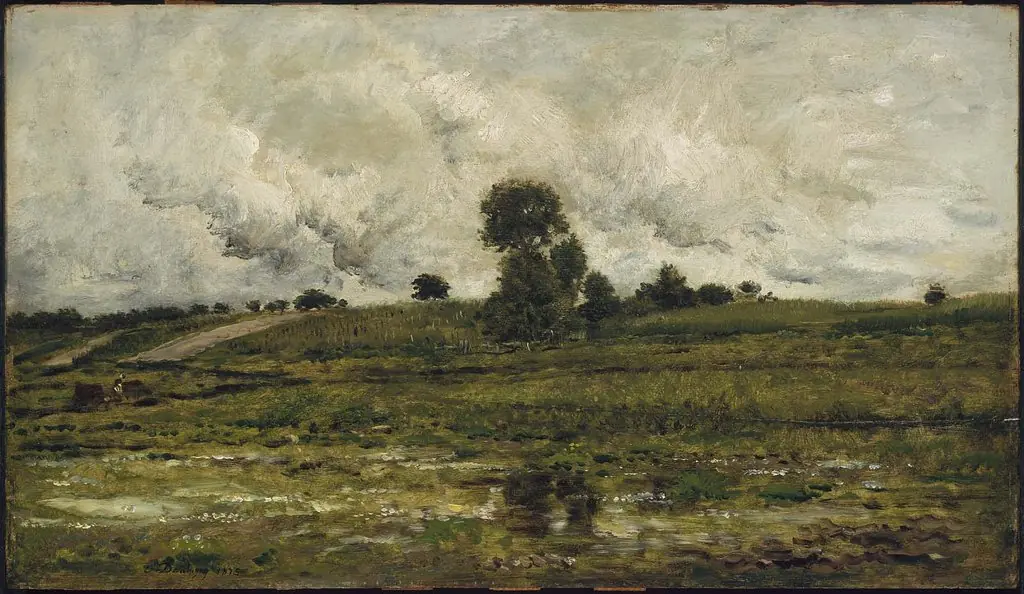
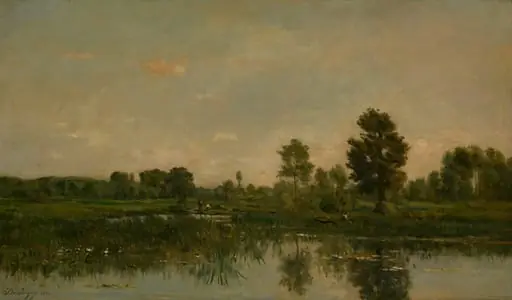
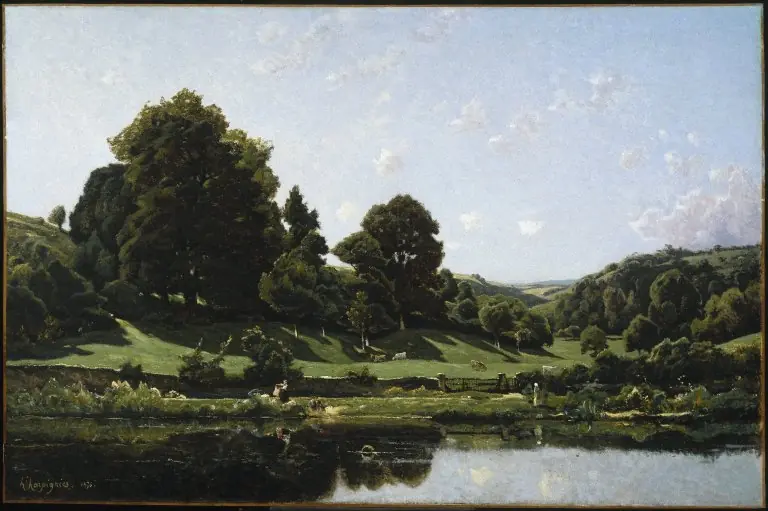
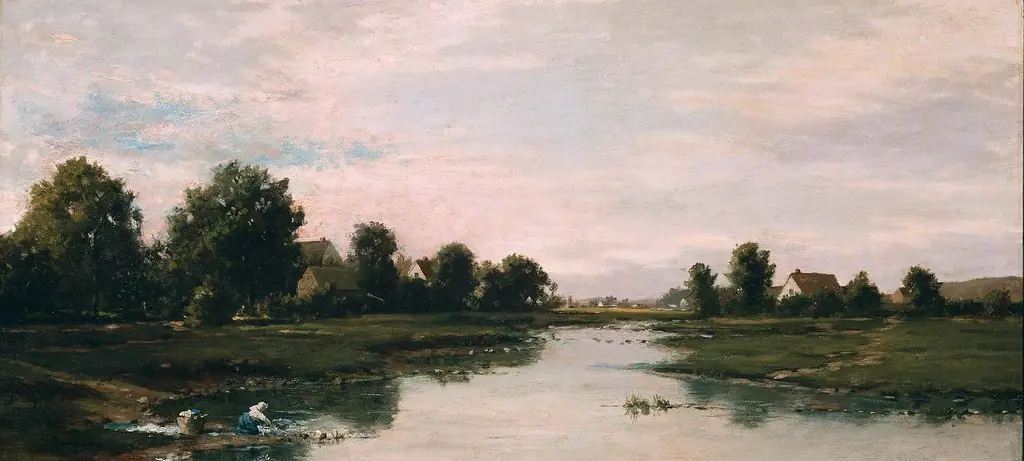
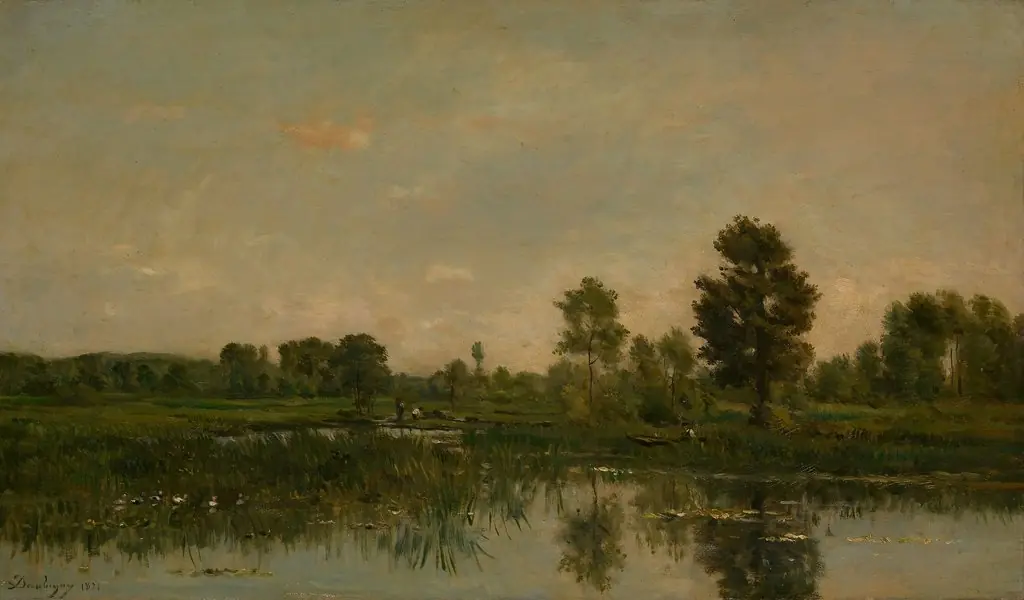
A Bend in the River Oise is an oil painting by the Plein Air artist Charles François Daubigny. It dates from 1872 and is held in the collection of the Brooklyn Museum.
About this work
Overview
Painted in 1872, A Bend in the River Oise is an oil-on-canvas landscape by Charles François Daubigny, a key figure in the Barbizon movement.
Painted in 1872, A Bend in the River Oise is an oil-on-canvas landscape by Charles François Daubigny, a key figure in the Barbizon movement. Executed outdoors, the work reflects his commitment to direct observation of nature. The composition captures a quiet stretch of the Oise River, emphasizing subtle shifts in light and weather rather than dramatic narrative. Daubigny’s approach here anticipates later Impressionist concerns with transient atmospheric conditions.
Subject & Meaning
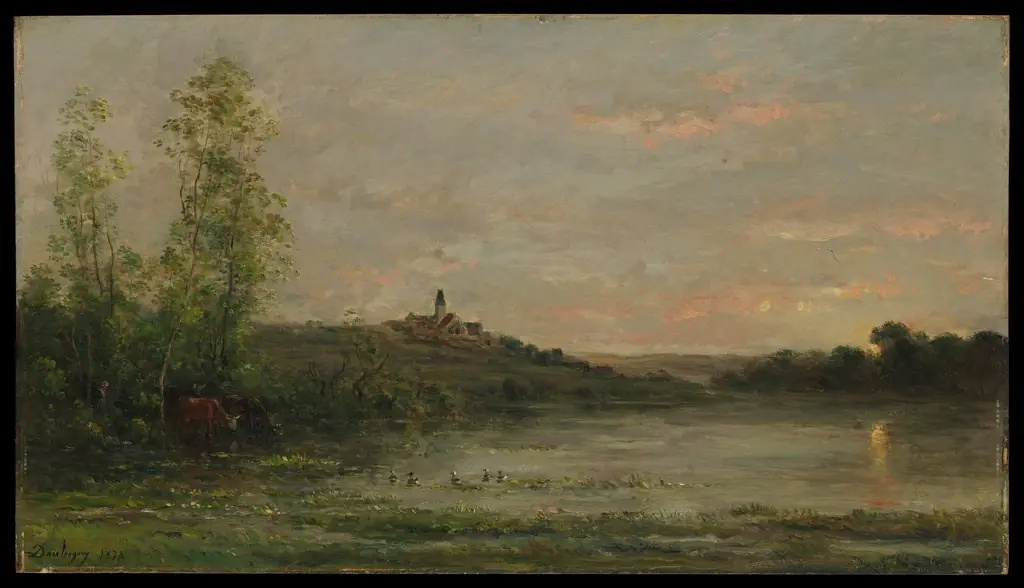
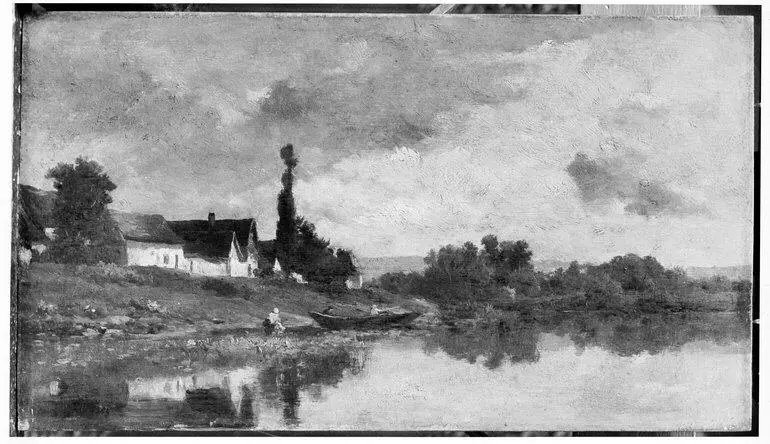
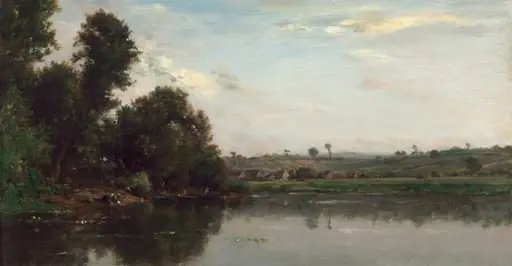
The painting presents an unidealized riverside scene: calm water, dense foliage, and a muted sky. Ducks glide near reeds in the foreground, adding quiet life without sentimentality. There is no human presence, reinforcing a sense of solitude and natural rhythm.
The subject is not a landmark or event but the ordinary, fleeting moment of a rural stream under overcast light, valued for its own quiet dignity.
Technique & Style
Daubigny applied oil paint with loose, responsive brushwork, building texture through layered strokes rather than fine detail. He used glazing to deepen the water’s reflections and soften transitions between sky and trees. His palette, dominated by muted greens, browns, and pale grays, mirrors the overcast conditions, enhancing the painting’s hushed mood. The technique prioritizes sensory impression over precision, aligning with his belief in painting directly from nature.
History & Provenance
Created during Daubigny’s later years, the work emerged from his sustained engagement with the Oise Valley, a region he frequently painted from a studio boat. He often returned to this stretch of river, refining his observations over multiple seasons. The painting’s early ownership is undocumented, but it entered public collections in the 20th century, reflecting growing recognition of Barbizon artists beyond their lifetime.
Context
In the 1870s, French landscape painting was shifting from academic idealism toward direct observation. Daubigny, though associated with Barbizon, operated independently, influencing younger artists like Monet through his plein air practice. His focus on everyday rural scenes and atmospheric effects challenged traditional historical or mythological subjects, helping pave the way for the Impressionist emphasis on light and momentary perception.
Legacy
Daubigny’s commitment to painting outdoors and his sensitivity to natural light contributed to the evolution of modern landscape painting. While not as widely known as his Impressionist successors, his methods, particularly his use of the studio boat and his tonal harmonies, were studied by contemporaries. A Bend in the River Oise stands as a quiet testament to his role in redefining how nature could be rendered with honesty and emotional resonance.
Artist & collection
Artist
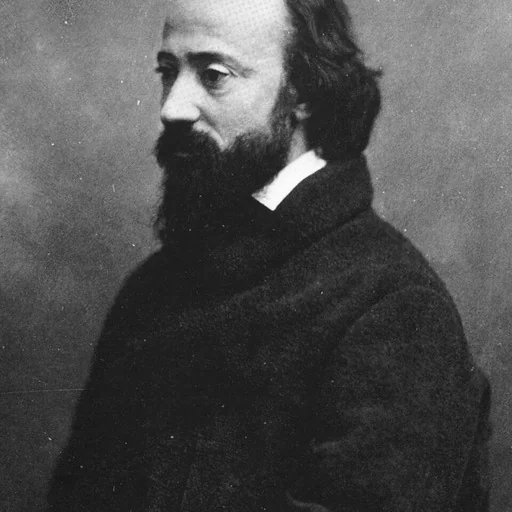
Charles-François Daubigny ( DOH-bin-yee, US: DOH-been-YEE, doh-BEEN-yee, French:; 15 February 1817 – 19 February 1878) was a French painter, one of the members of the Barbizon school, and is considered an important precursor of…