Artwork
Villerville Seen from Le Ratier
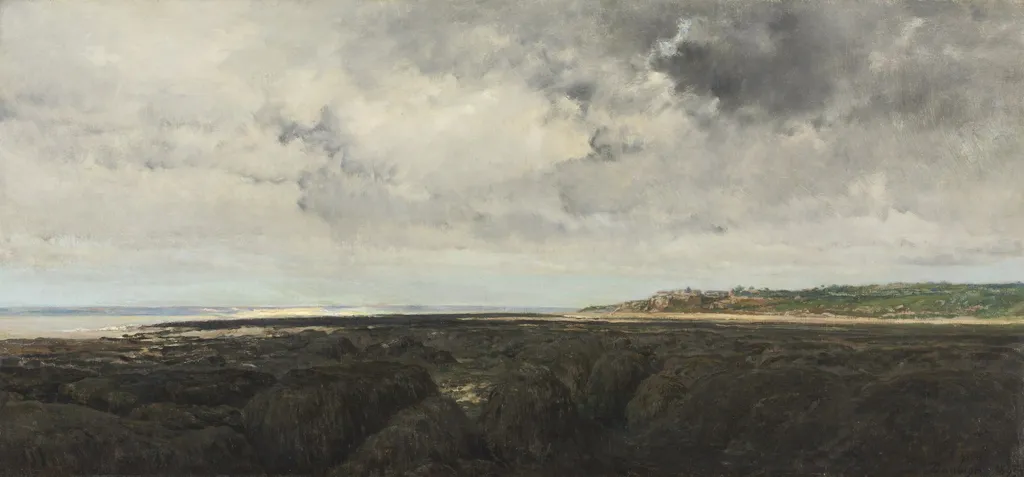
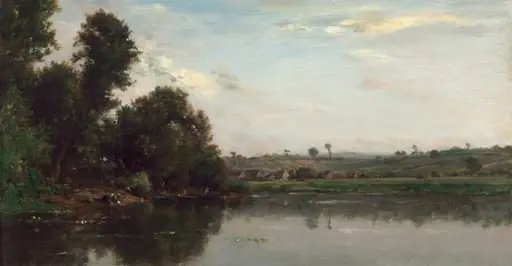
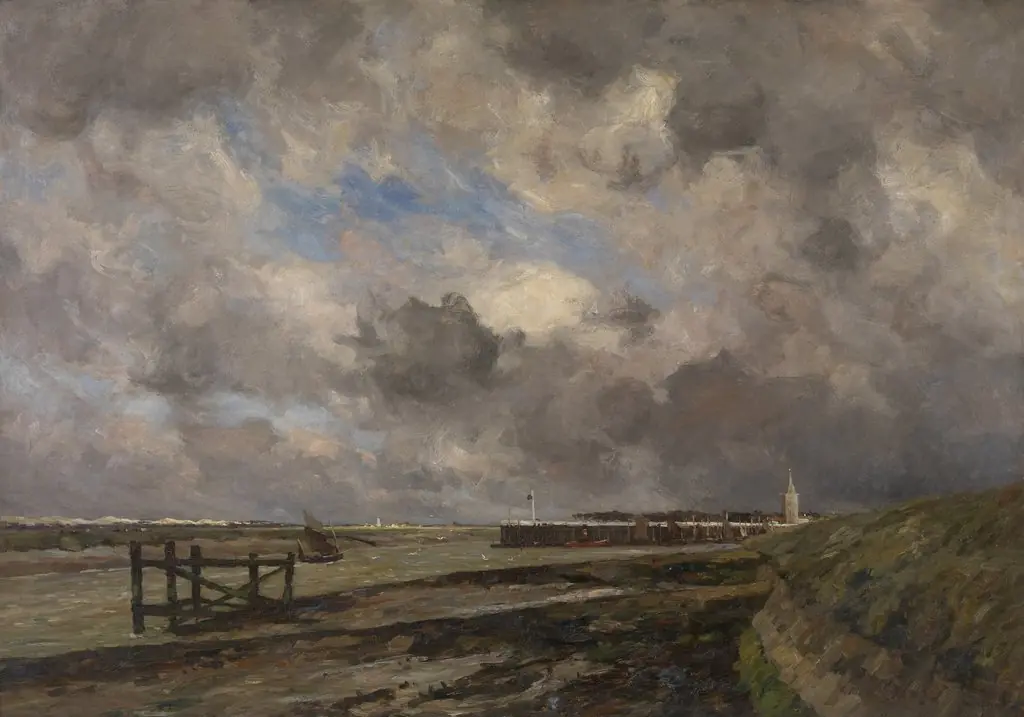
Villerville Seen from Le Ratier is an oil painting by the Barbizon school artist Charles François Daubigny. It dates from 1855 and is held in the collection of the Cleveland Museum of Art.
About this work
Technique & Style
The painting demonstrates a loose handling of brushwork and naturalistic tonal modulation, aligning with the tonal realism of the French Barbizon school.
The work is an oil painting executed on woven fabric support, reflecting the plein-air practice of Charles François Daubigny. Its dimensions measure 54.2 cm in height and 116.2 cm in width, characteristic of mid-19th century French landscape compositions. The painting demonstrates a loose handling of brushwork and naturalistic tonal modulation, aligning with the tonal realism of the French Barbizon school. Currently held by the Cleveland Museum of Art, it was created in France in 1855.
History & Provenance
Charles-François Daubigny created the oil painting Villerville Seen from Le Ratier in 1855. The work was executed in France on a woven fabric support. The Cleveland Museum of Art currently holds the painting within its collection, cataloged under the accession number 1951.323. The piece measures 54.2 cm in height and approximately 116.2 cm in width.
Charles-François Daubigny's 1855 oil painting Villerville Seen from Le Ratier is held in the collection of the Cleveland Museum of Art in Cleveland, Ohio. The work was accessioned into the museum's inventory under the number 1951.323. The painting, executed on woven fabric, measures 54.2 cm in height and approximately 116.2 cm in width.
Overview
Created in 1855, this oil painting by Charles‑François Daubigny presents a quiet coastal scene titled Villerville Seen from Le Ratier. The composition balances a broad, dark, rocky foreground with a modest village perched on a hillside, all under a soft, overcast sky. The overall effect is one of stillness, inviting the viewer to contemplate the subdued landscape.
Subject & Meaning
The work captures a tranquil moment in the Normandy coast, where the natural terrain dominates and human habitation blends into its surroundings. By emphasizing the muted tones of rock, sky, and foliage, Daubigny suggests a harmonious relationship between people and the environment, inviting reflection on the modest scale of rural life against a broader natural backdrop.
Artist & collection
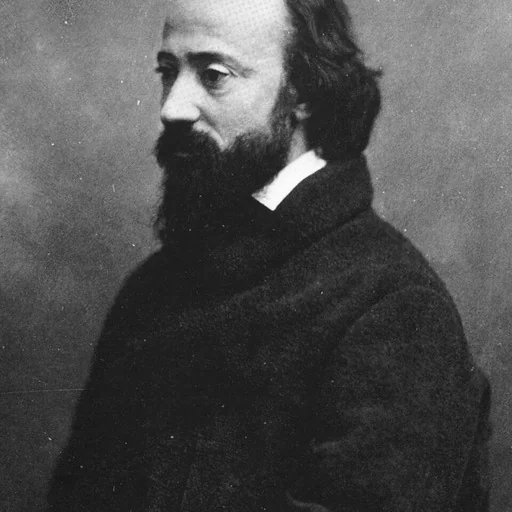
Artist
Charles-François Daubigny ( DOH-bin-yee, US: DOH-been-YEE, doh-BEEN-yee, French:; 15 February 1817 – 19 February 1878) was a French painter, one of the members of the Barbizon school, and is considered an important precursor of…