Artwork
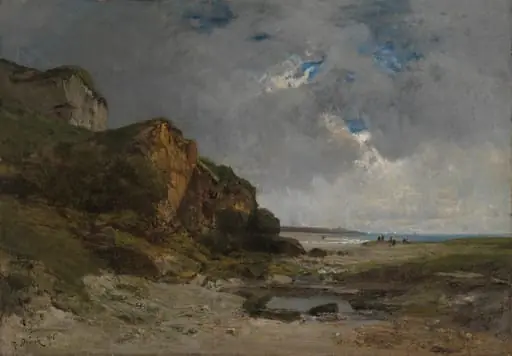
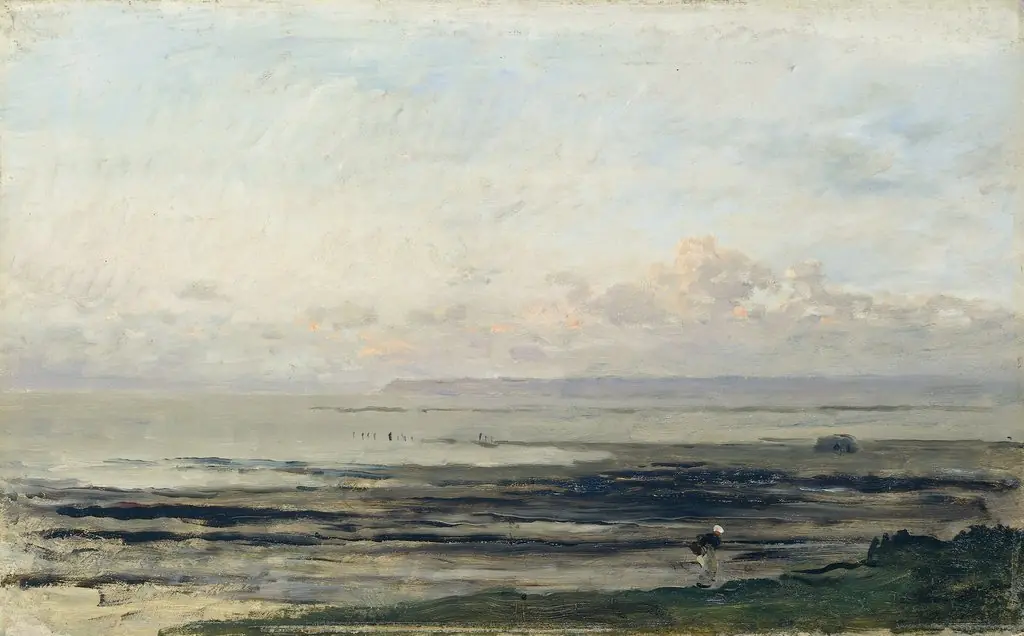
Villerville Seen from Le Ratier
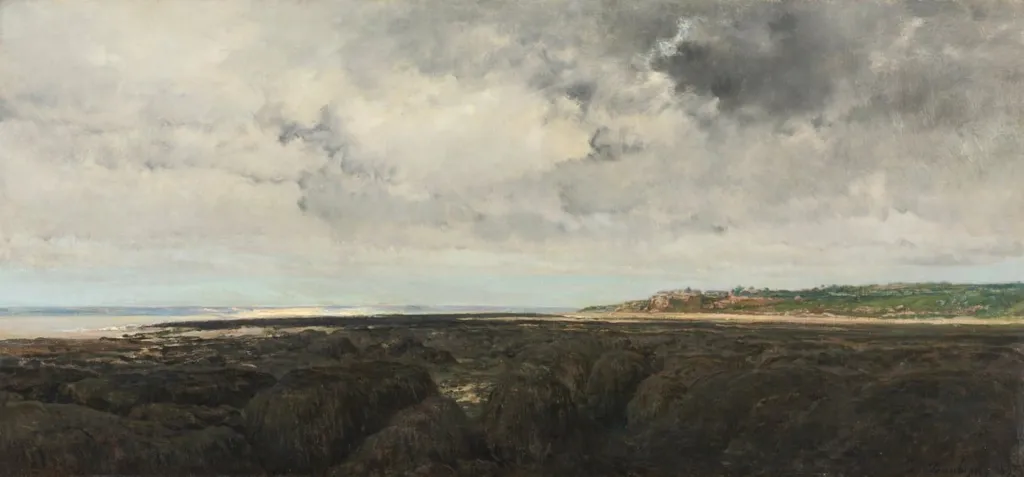
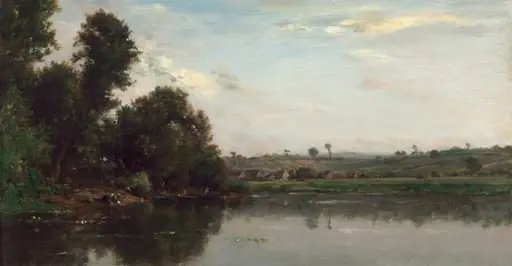
Villerville Seen from Le Ratier is an unspecified painting by the Barbizon school artist Charles François Daubigny. It dates from 1855 and is held in the collection of the Cleveland Museum of Art.
- Accession no.
- 1951.323
- Credit line
- Bequest of William G. Mather
About this work
You see a wide, misty view of the Normandy coast, rocks in the front, a little town tucked to the right, and a pale sky over water.
Daubigny painted this outside, not in a studio. He wanted the light and air to feel real, not polished. Those quick brushstrokes later helped shape how Monet and others worked.
Look up the subject “France, 19th century, mod euro” next.
Overview
The canvas presents a broad view of the Normandy shoreline, with a cluster of buildings identified as the town of Villerville positioned slightly right of centre. In the foreground, rugged rocks dominate the composition, while a pale sky stretches over the sea, its horizon marked by luminous bands that contrast with the darker shoreline.
Subject & Meaning
The work captures a specific coastal scene, emphasizing the interaction of light and atmosphere over the landscape. The bright streaks along the horizon suggest the fleeting quality of daylight, drawing attention to the natural environment rather than human activity, and reflecting a focus on the transient effects of weather on the sea and shore.
Technique & Style
Executed en plein air, the artist employed rapid brushwork to convey the immediacy of the observed light and air. The palette balances muted earth tones of the rocks with the luminous blues and whites of sky and water, while the loose handling of paint creates a sense of movement and atmospheric depth characteristic of early outdoor painting.
History & Provenance
Created by the French landscape painter who pioneered outdoor studies in the mid‑19th century, the painting reflects his role in shaping subsequent generations of artists. Though specific ownership details are not recorded here, the work remains a representative example of his contributions to the development of naturalistic landscape painting in France.
Artist & collection
Artist
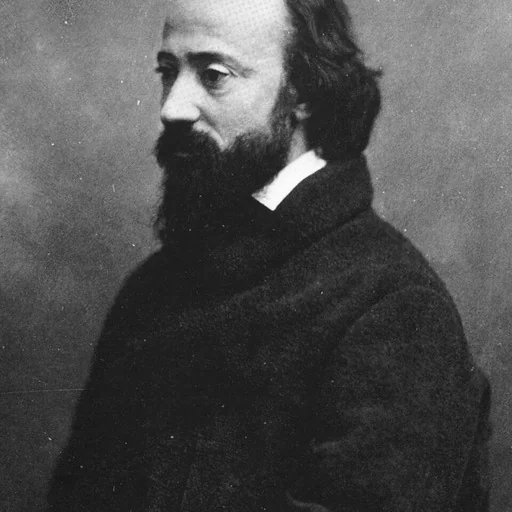
Charles-François Daubigny ( DOH-bin-yee, US: DOH-been-YEE, doh-BEEN-yee, French:; 15 February 1817 – 19 February 1878) was a French painter, one of the members of the Barbizon school, and is considered an important precursor of…