Artwork
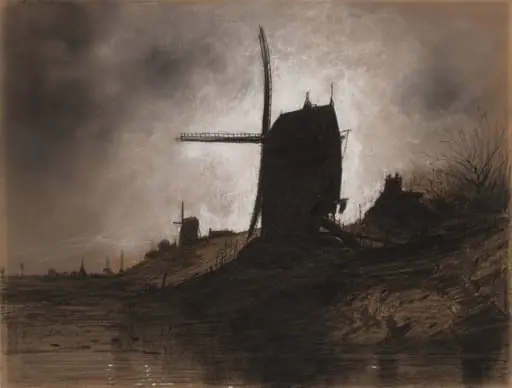
The Mill
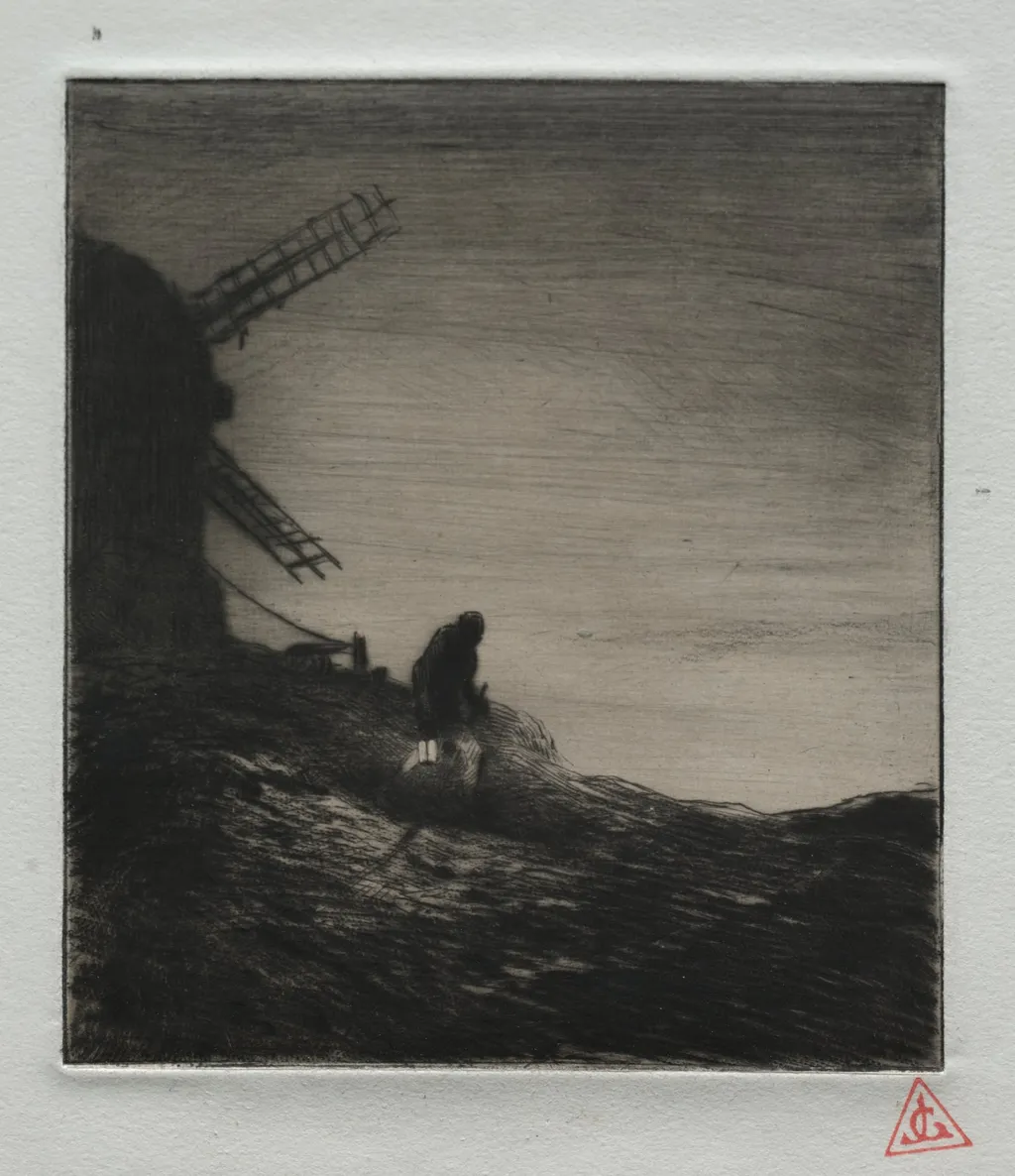
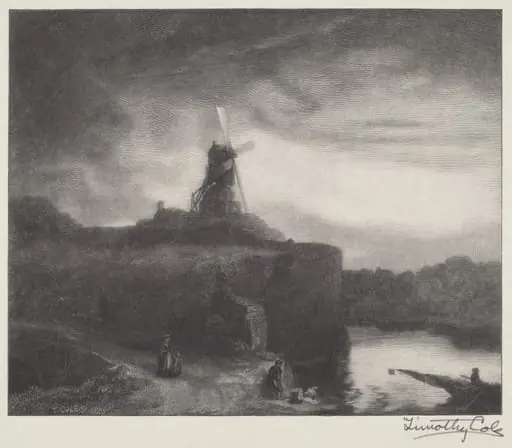
The Mill is a print by the Romanticist artist Charles-Émile Jacque. It dates from 1848 and is held in the collection of the Cleveland Museum of Art.
- Accession no.
- 1921.239
- Credit line
- Gift of Leonard C. Hanna Jr.
About this work
Overview
The Mill is a print by Charles-Émile Jacque, a French artist associated with the Barbizon School, created in 1848. It is a representative work of the artist's style and is held in the collection of the Cleveland Museum of Art.
Subject & Meaning
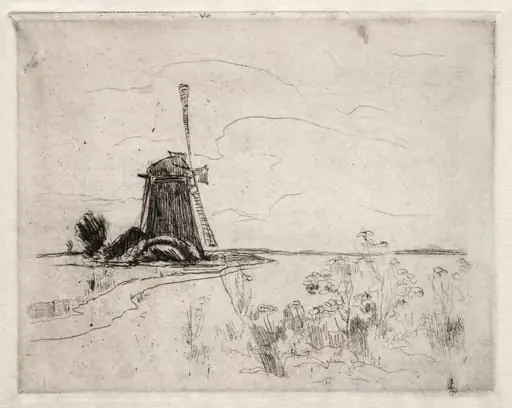
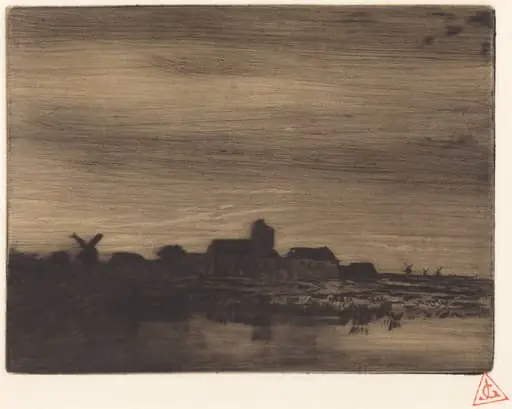
The print depicts a rural landscape centered on a windmill, with a person standing in the distance. The scene is characterized by a somber, introspective mood, with dark colors and shadows creating a sense of depth and atmosphere.
Technique & Style
Jacque's use of dark colors and shadows conveys a sense of scale and perspective. The work reflects the Barbizon School's focus on naturalistic, pastoral landscapes and is an example of Romanticism, a movement that emphasized emotion and imagination.
History & Provenance
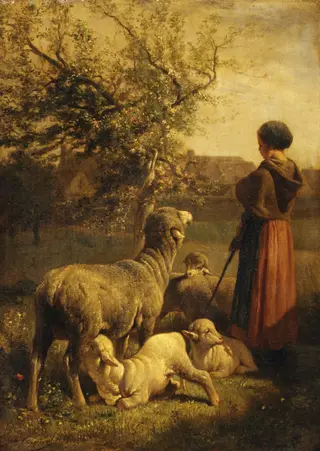
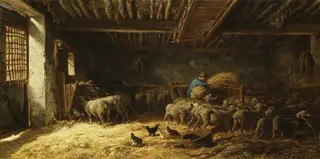
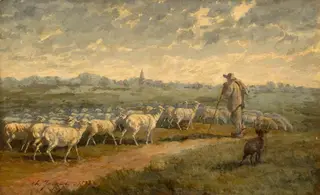
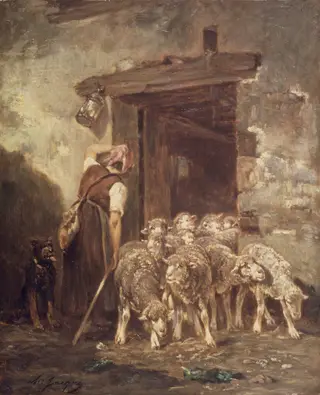
Charles-Émile Jacque was trained as a map engraver during his time in the French Army. He was a follower of Pastoralism, alongside Jean-François Millet, and his work is associated with the Barbizon School.
Own this work as a print
Artist & collection

Artist
Charles-Émile Jacque (23 May 1813 – 7 May 1894) was a French painter of Pastoralism and engraver who was, with Jean-François Millet, part of the Barbizon School. He first learned to engrave maps when he spent seven years in the French Army.