Artwork
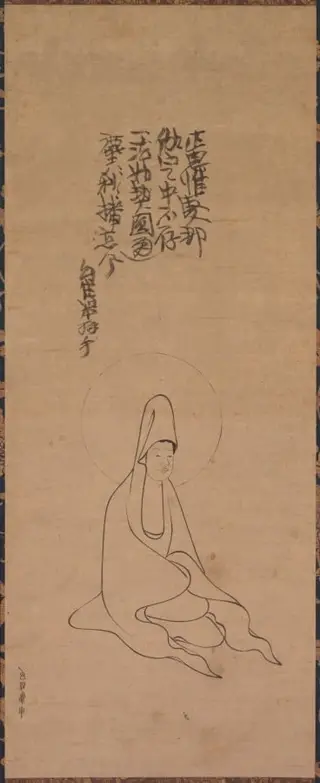
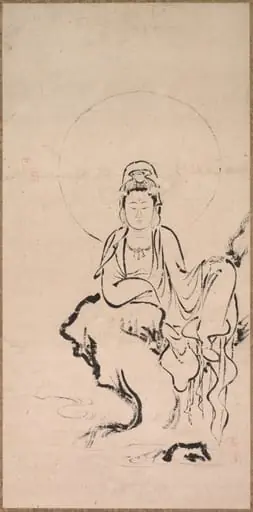
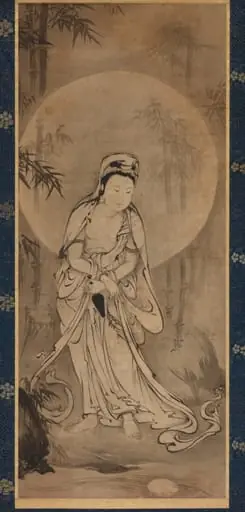
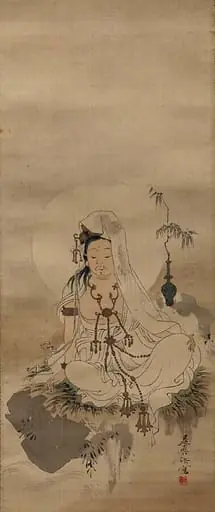
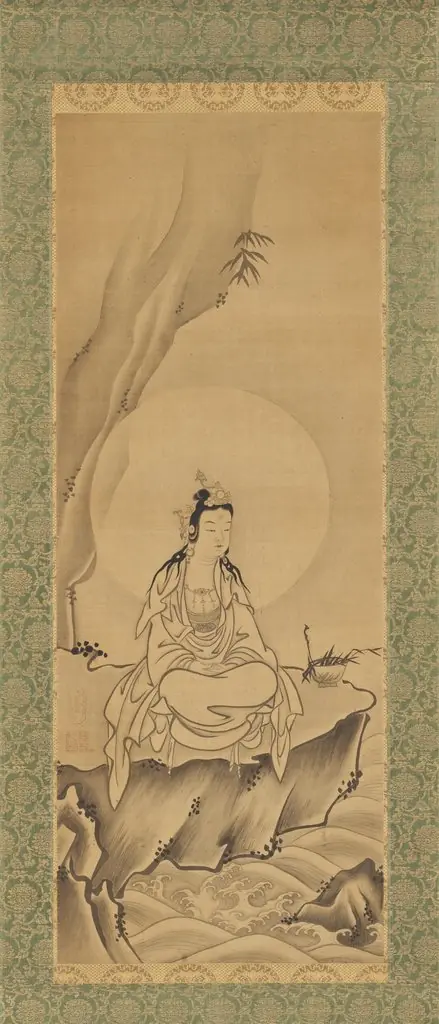
White-Robed Guanyin
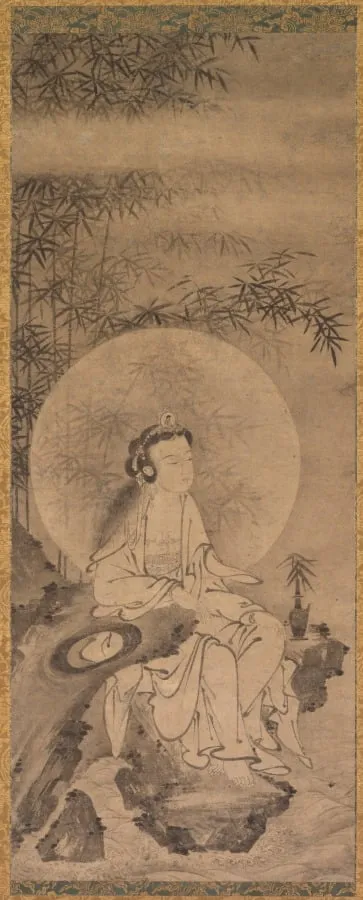
White-Robed Guanyin is an unspecified painting by the Song dynasty painting artist Zhang Yuehu. It dates from 1204 and is held in the collection of the Cleveland Museum of Art.
- Accession no.
- 1972.160
- Credit line
- Leonard C. Hanna Jr. Fund
About this work
This is Guanyin, the Buddhist figure of compassion, shown here as a woman, a rare choice in the 1200s.
A woman in a flowing white robe sits on a jagged rock, her hands resting gently. Behind her, a thin bamboo stalk curves through a pale halo. At her feet, a small vase holds a single green sprig.
This is Guanyin, the Buddhist figure of compassion, shown here as a woman, a rare choice in the 1200s. The bamboo piercing her halo suggests the world’s illusions seen through truth. The painting feels quiet, almost weightless, as if she’s floating just above the rock.
To see more works like this, look up china, southern song dynasty (1127-1279).
Overview
The painting portrays a serene figure seated on a rugged outcrop that symbolizes Potalaka, the legendary island abode of Avalokitesvara in the Southern Sea. She is dressed in a flowing white garment, her hands resting gently, while a slender bamboo stalk arches through a pale halo above her. At her feet a modest vase contains a single green sprig, adding a subtle focal point to the composition.
Subject & Meaning
The central figure is Guanyin, the bodhisattva of compassion, rendered here in her feminine, White‑Robed form. The bamboo piercing the halo signifies the ability to perceive the illusory nature of the world through Buddhist truth, while the vase of water represents the nectar of life. Together these elements convey a meditation on compassion, purity, and enlightenment.
Technique & Style
Executed in the refined brushwork characteristic of Southern Song painting, the work balances delicate line with muted washes of ink and light color. The rendering of the white robe and the translucent halo demonstrates a mastery of tonal gradation, while the crisp bamboo stalk provides a contrasting linear emphasis that guides the viewer’s eye across the composition.
History & Provenance
The image belongs to a tradition that emerged on Mount Tianzhu near Hangzhou, where the Upper Tianzhu Monastery was founded by the Wuyue ruler Qian Liu (852–932) to honor the White‑Robed Guanyin. Though the exact date of this particular panel is uncertain, its stylistic traits place it within the 12th‑century Southern Song period.
Context
During the Southern Song dynasty, the veneration of Guanyin in her female aspect gained prominence, especially within Chan Buddhist practice. The depiction of a woman as Guanyin was relatively uncommon in earlier centuries, reflecting a shift toward more accessible, compassionate imagery that resonated with lay devotion and monastic meditation alike.
Artist & collection