Artwork
Paintings after Ancient Masters: Rock, Old Tree, and Bamboo
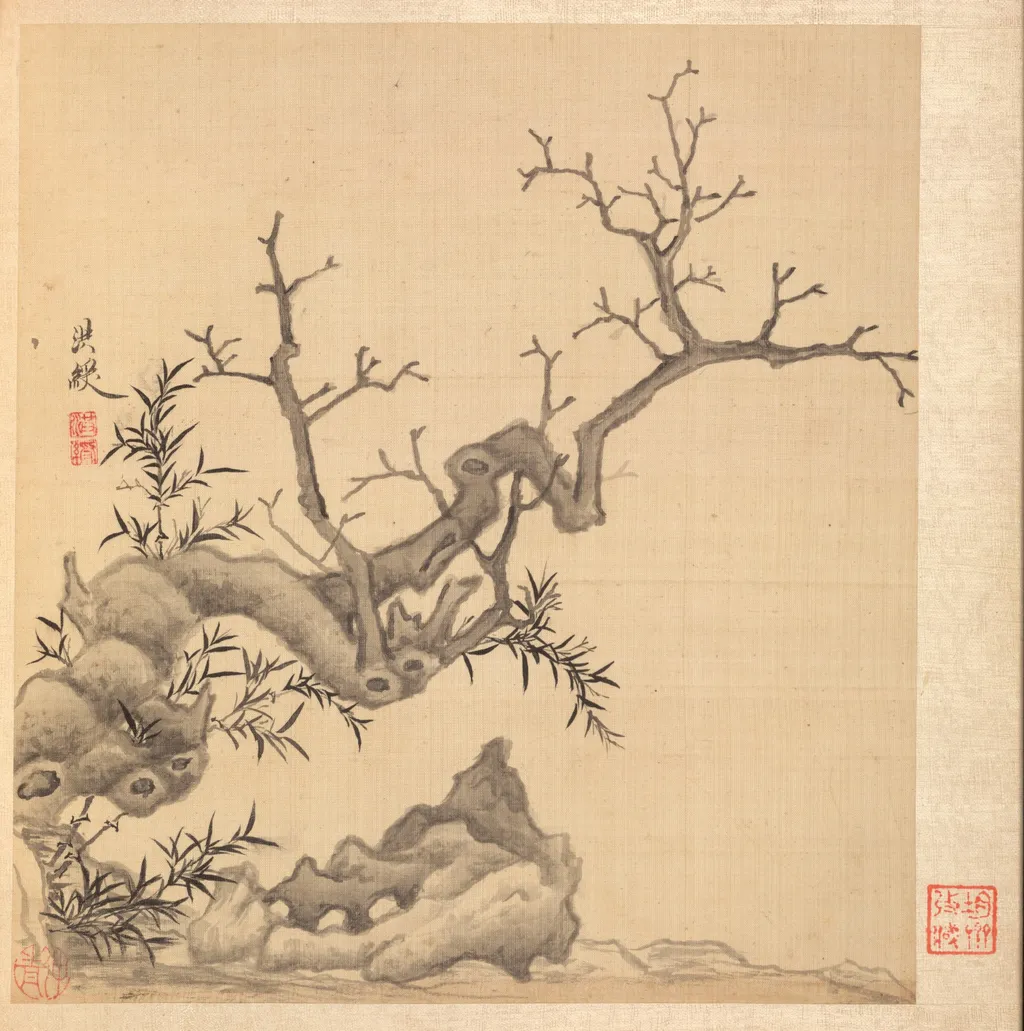
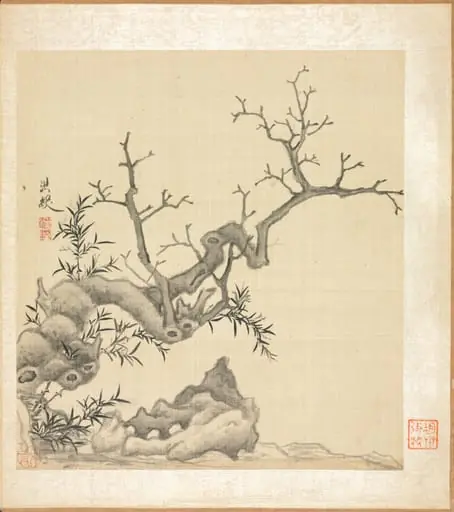
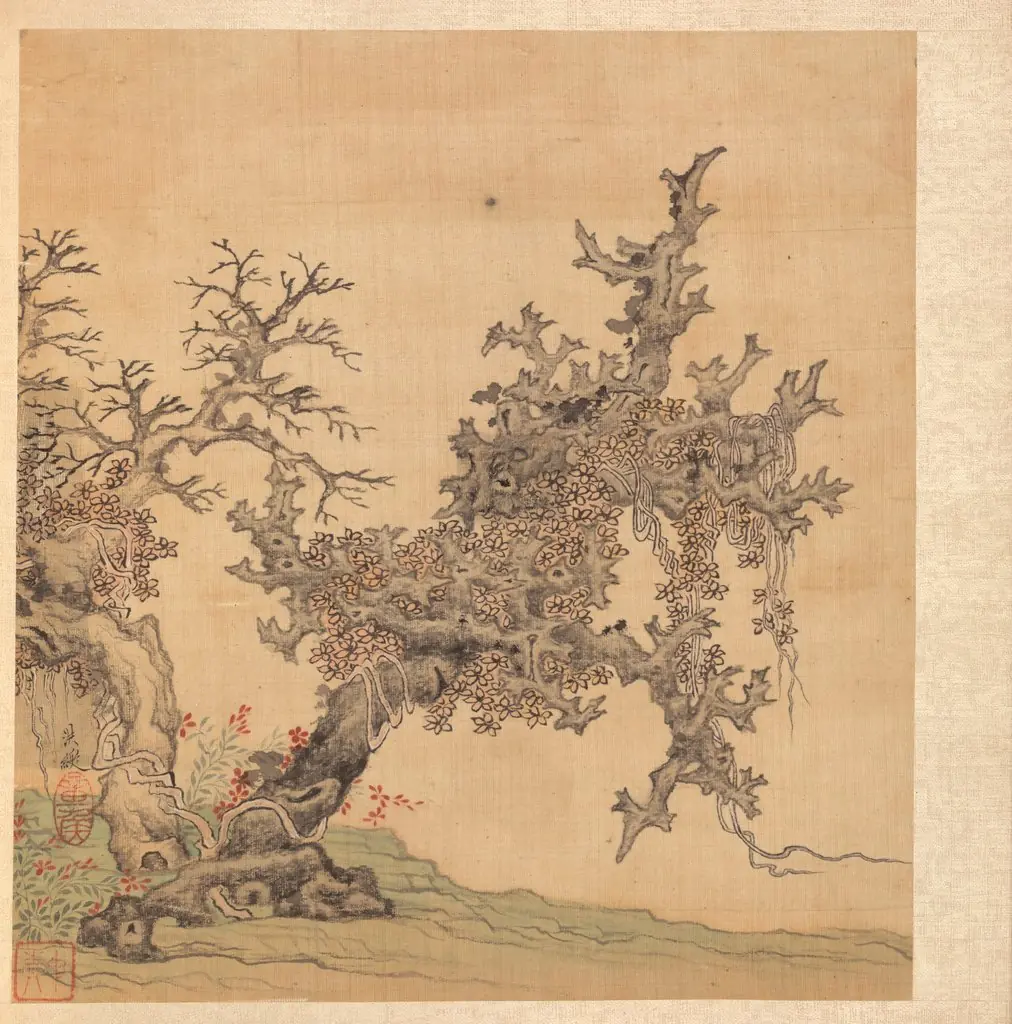
Paintings after Ancient Masters: Rock, Old Tree, and Bamboo is an unspecified painting by the Chinese Orthodox School artist Chen Hongshou. It dates from 1625 and is held in the collection of the Cleveland Museum of Art.
About this work
Overview
It stands as a significant example of early 17th-century Chinese painting, bridging the late Ming aesthetic with the emerging styles of the Qing dynasty.
Paintings after Ancient Masters: Rock, Old Tree, and Bamboo is a 1625 ink and color work by the late Ming dynasty master Chen Hongshou. The composition centers on a gnarled, ancient tree emerging from a rugged rock formation, its twisted branches rendered with deliberate, angular strokes characteristic of the artist's mature style. Sparse green shoots indicate resilience, while the background remains largely void, emphasizing the isolation and structural integrity of the foreground elements.
Chen employs simple ink washes to model the rough textures of the stone and the weathered bark, creating depth through tonal variation rather than atmospheric perspective. This piece exemplifies Chen's engagement with the tradition of emulating past masters, a common practice among literati painters, yet it displays his distinctive idiosyncratic distortion and expressive line work. Created during a period of political instability preceding the fall of the Ming, the work reflects the artist's interest in enduring natural forms and personal expression over strict realism.
It stands as a significant example of early 17th-century Chinese painting, bridging the late Ming aesthetic with the emerging styles of the Qing dynasty.
Subject & Meaning
The work presents a lone tree with twisted limbs and a few tender shoots, suggesting resilience amid a harsh landscape. The barren rocks and minimal background evoke a contemplative atmosphere, inviting reflection on the endurance of nature and the passage of time, themes common in literati painting.
Technique & Style
Chen employs restrained ink washes, allowing tonal gradations to suggest depth while emphasizing the stark outlines of the tree and stones. The brushwork is economical, focusing on the interplay of solid forms and empty space, a hallmark of the scholar-artist tradition that values suggestion over detailed representation.
History & Provenance
The painting has remained in private hands before entering the Cleveland Museum of Art, where it is displayed as part of the museum’s Asian art holdings. The red seals in the margins likely record the artist’s signature and subsequent collectors, providing a traceable line of ownership through the centuries.
Own this work as a print
Artist & collection
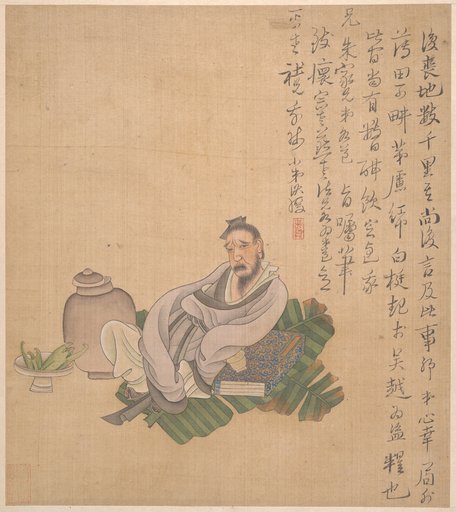

 明/清 陳洪綬、陳字 雜畫 冊|Figures, flowers, and landscapes
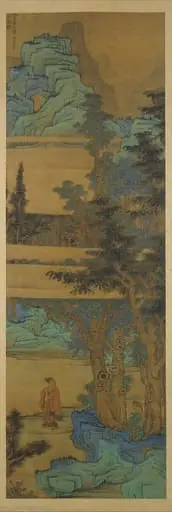 明 陳洪綬 樹下高士圖 軸|Scholar-recluse in blue-green landscape
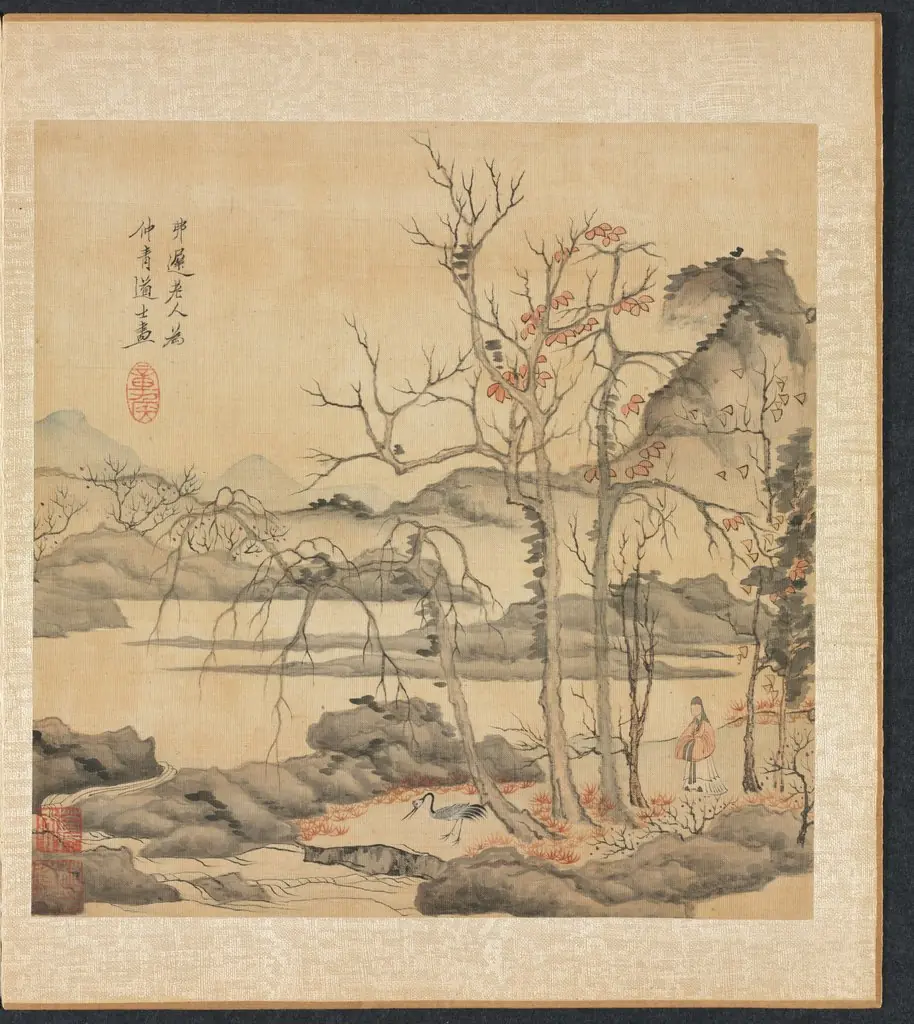 Paintings after Ancient Masters: Daoist and Crane in Autumn Landscape
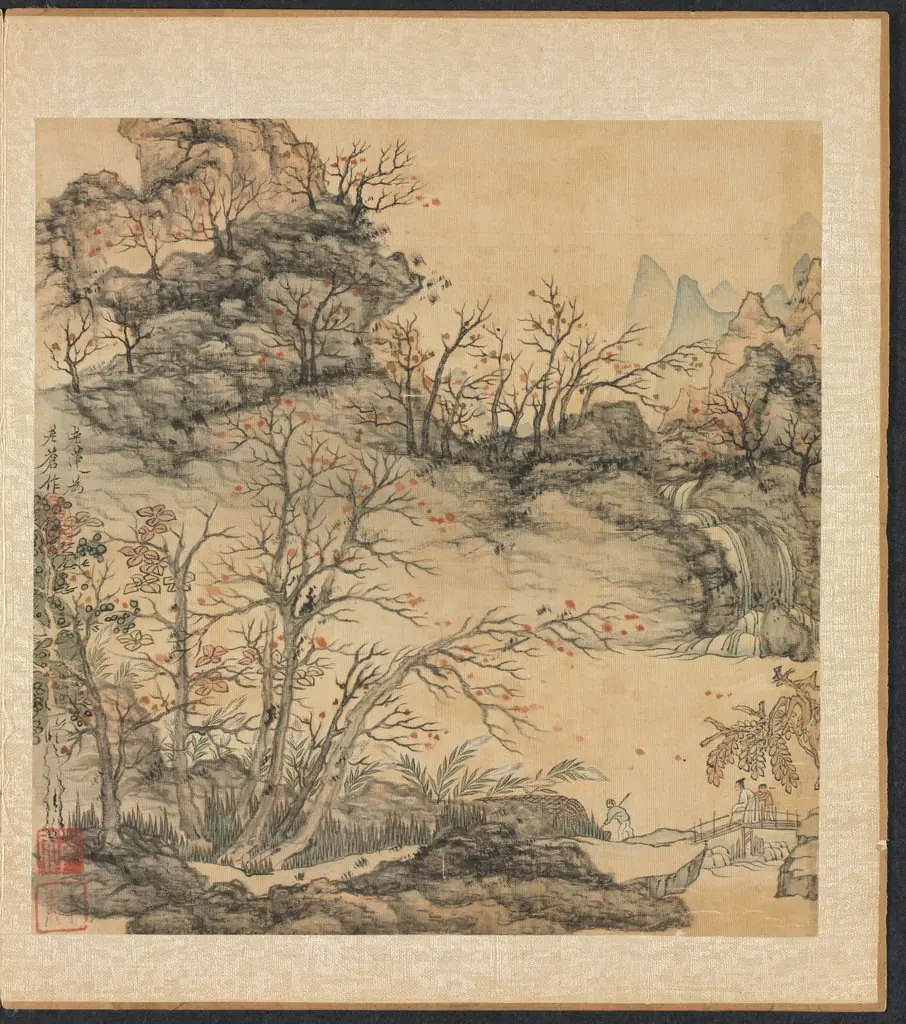 Paintings after Ancient Masters: Autumn Landscape
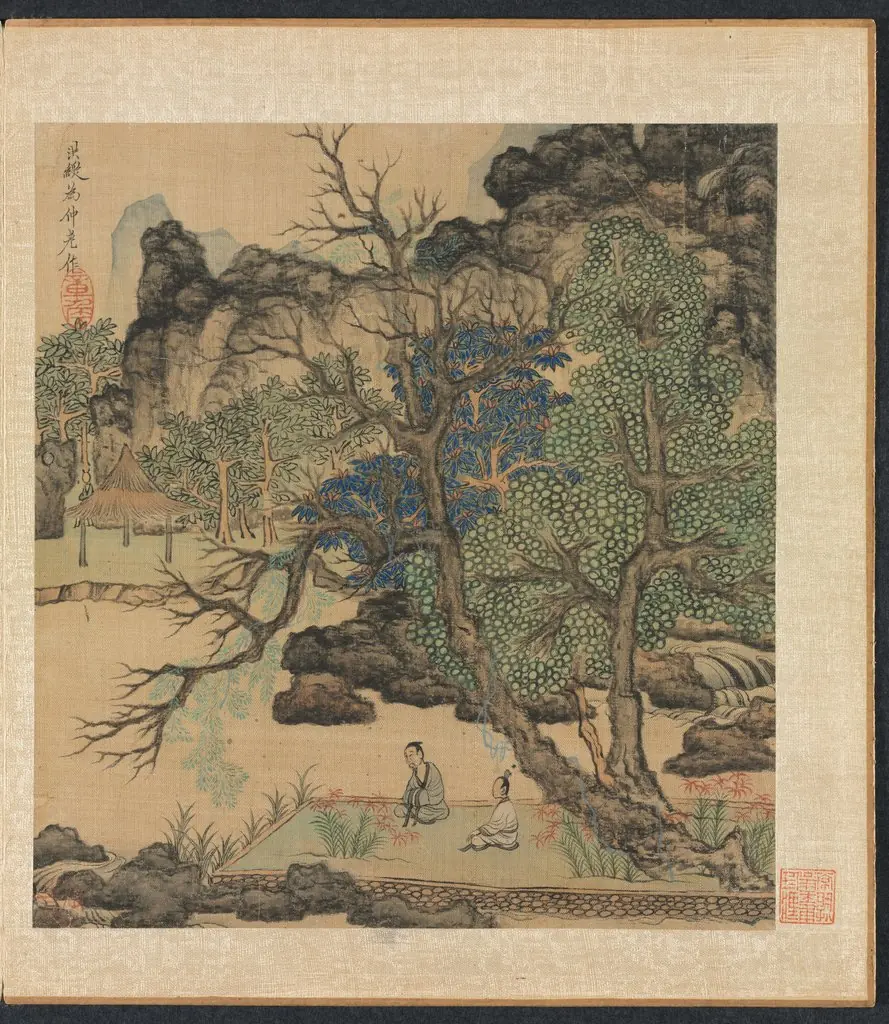 Paintings after Ancient Masters: Scholars in a Garden
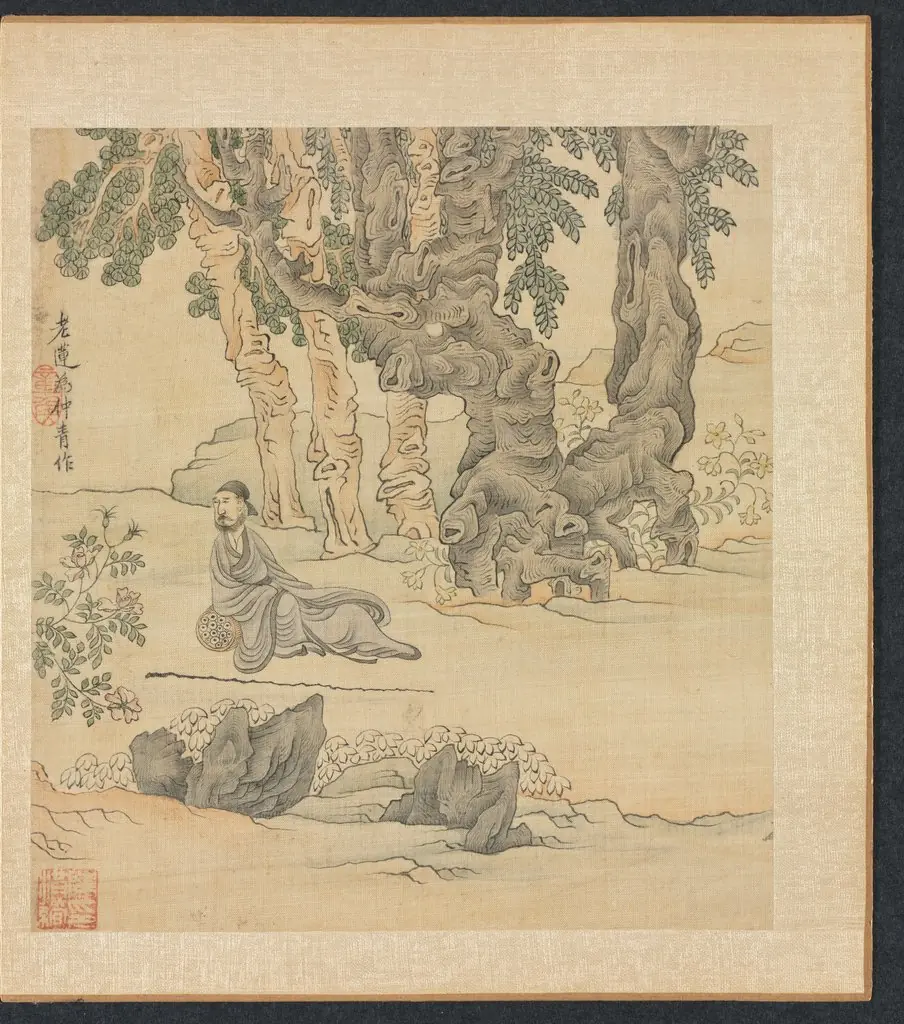 Paintings after Ancient Masters: Portrait of Zhongqing in a Landscape
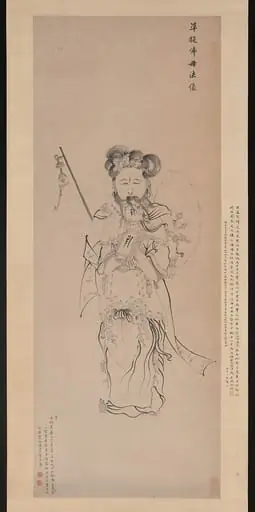 明 陳洪綬 準提佛母法像圖 軸|Bodhisattva Guanyin in the Form of the Buddha Mother
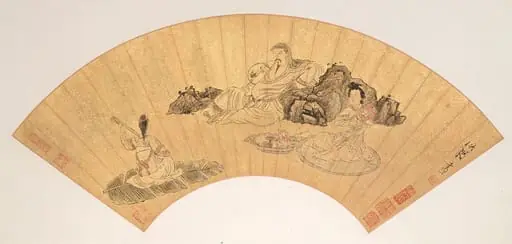 明 陳洪綬 山水花鳥人物圖 扇冊|Landscapes and Flowers