Artwork
Paintings after Ancient Masters: An Ancient Tree
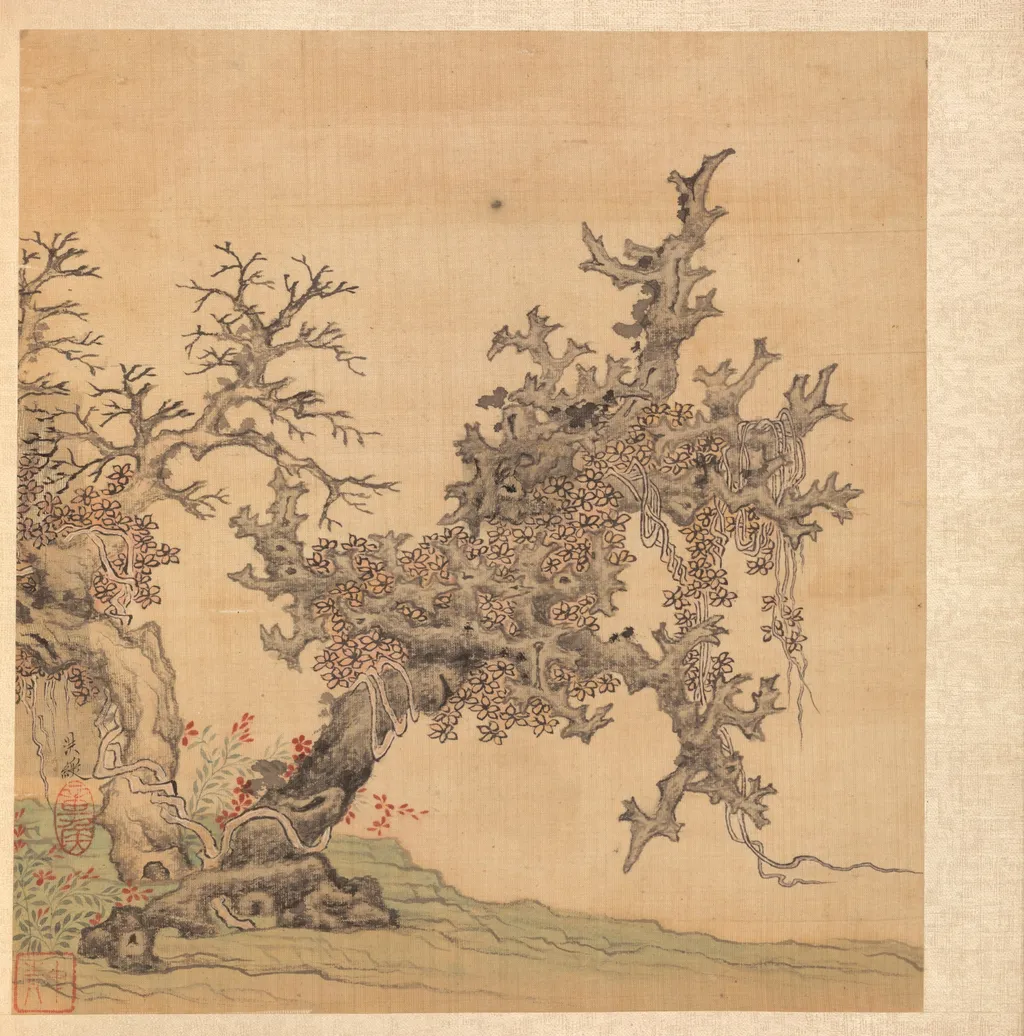
Paintings after Ancient Masters: An Ancient Tree is an unspecified painting by the Chinese Orthodox School artist Chen Hongshou. It dates from 1625 and is held in the collection of the Cleveland Museum of Art.
About this work
History & Provenance
The painting Paintings after Ancient Masters: An Ancient Tree by Chen Hongshou is held in the collection of the Cleveland Museum of Art in Cleveland.
The painting titled Paintings after Ancient Masters: An Ancient Tree was created in 1625 by the artist Chen Hongshou, also known as Chen Zi. Originating in China, the work dates specifically to January 1, 1625. It is currently held in the collection of the Cleveland Museum of Art, where it is cataloged under the accession number 1979.27.2.20. The piece represents a work from the artist's early career, produced during the Ming dynasty period.
The painting Paintings after Ancient Masters: An Ancient Tree by Chen Hongshou is held in the collection of the Cleveland Museum of Art in Cleveland. The work, created in 1625, is cataloged under the accession number 1979.27.2.20. This specific inventory designation identifies the piece within the museum's holdings of Chinese art.
Context
Chen Hongshou painted An Ancient Tree in 1625, creating a work that engages directly with the visual language of earlier masters while reflecting the expressive intensity of late Ming dynasty painting. The painting is housed in the Cleveland Museum of Art, which documents its provenance and physical details in its collection records. Scholarly attention to this piece highlights its role within a broader tradition of artistic dialogue with antiquity, a theme central to Chen's oeuvre and to the study of early modern Chinese art.
Legacy
Chen Hongshou's 1625 painting 'An Ancient Tree' emerged from his engagement with earlier masters, particularly evident in its compositional borrowing from Ming dynasty album leaf traditions. Though not widely celebrated during his lifetime, the work gained critical attention in the 20th century as scholars reevaluated his role in the transition from Ming to Qing visual culture, influencing later Chinese painters who sought to reinterpret classical precedents through a personal lens. The painting's presence in the Cleveland Museum of Art collection since 1979 has facilitated scholarly access and reinforced its reputation as a subtle yet significant example of artistic dialogue across historical periods.
Overview
Created in 1625 by the Chinese painter Chen Hongshou, this ink-and-wash work is part of the Cleveland Museum of Art’s collection. It presents a solitary, contorted tree set upon a low rise, its twisted trunk and barren limbs dominating the composition. A narrow river or path winds beneath the tree, while sparse foliage and a diminutive structure appear at its base.
Subject & Meaning
The painting centers on a lone tree, its gnarled bark and occasional red berries suggesting resilience amid desolation. The minimal landscape and empty background emphasize the tree’s isolation, inviting contemplation of nature’s endurance and the quietude typical of Chen’s contemplative scenes.
Technique & Style
Chen employs restrained brushwork, using thin lines and subtle shading to render the bark’s texture and the tree’s irregular form. The palette remains muted, browns, beiges, and soft greens, while the bright berries provide a restrained accent. The overall approach reflects the literati tradition of understated elegance and careful observation.
Own this work as a print
Artist & collection

 明/清 陳洪綬、陳字 雜畫 冊|Figures, flowers, and landscapes
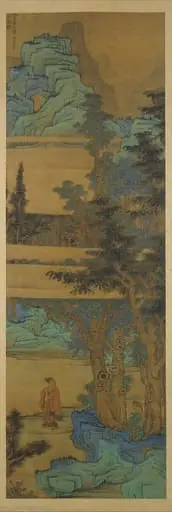 明 陳洪綬 樹下高士圖 軸|Scholar-recluse in blue-green landscape
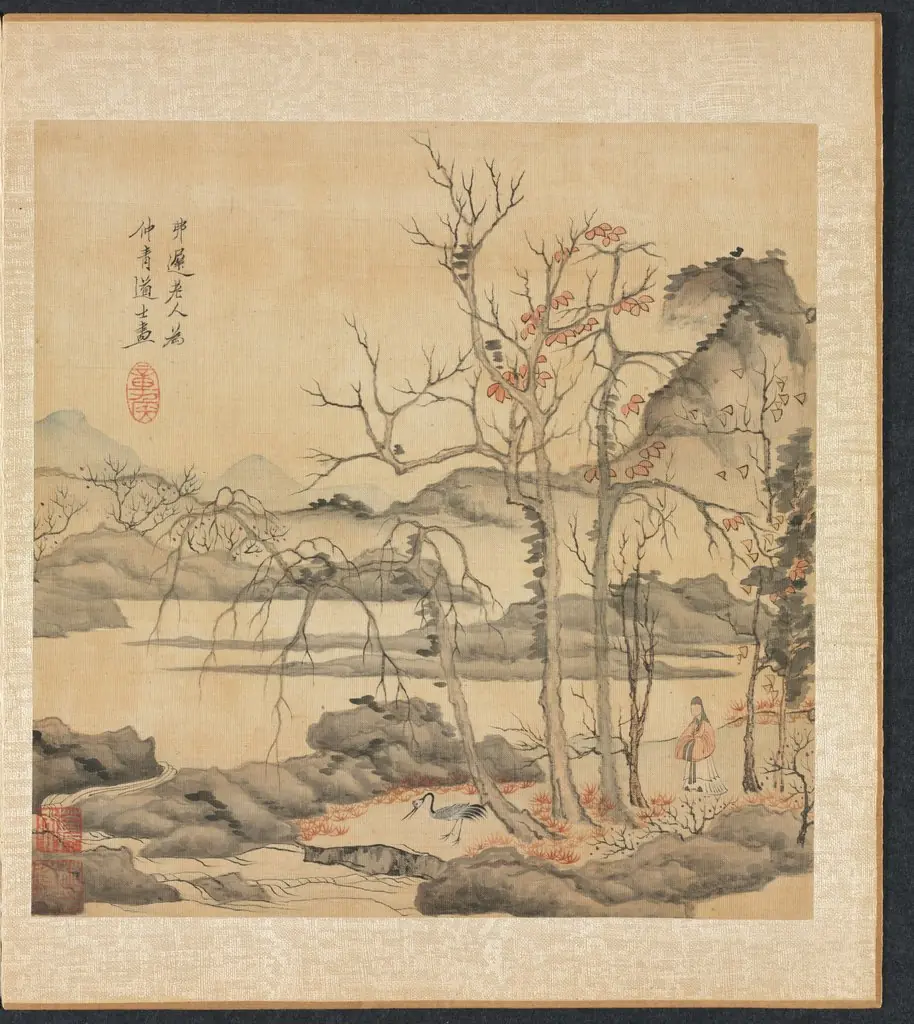 Paintings after Ancient Masters: Daoist and Crane in Autumn Landscape
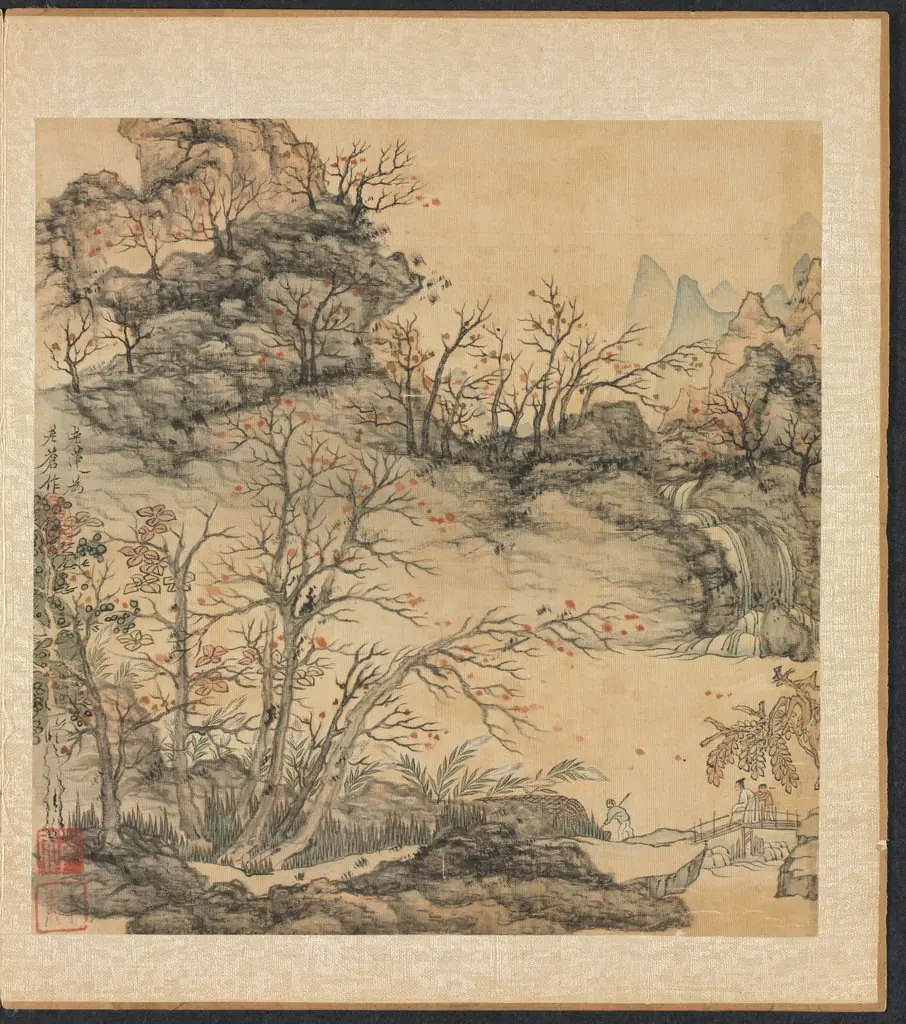 Paintings after Ancient Masters: Autumn Landscape
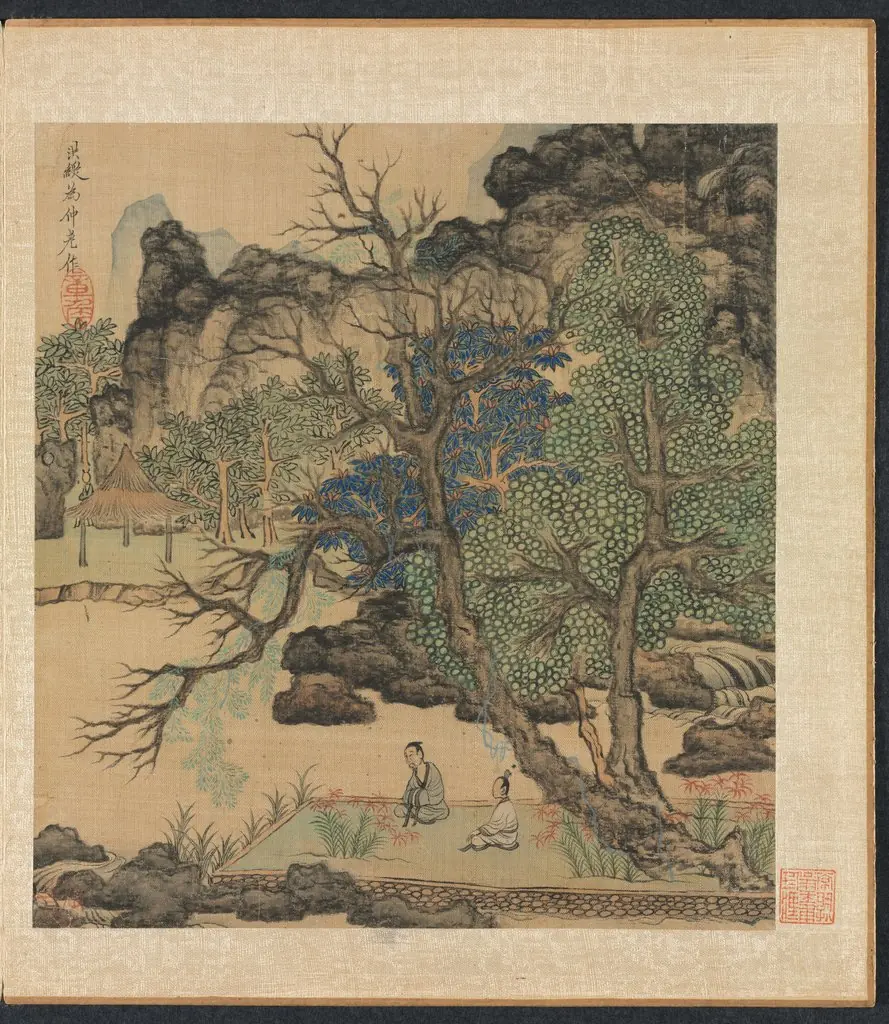 Paintings after Ancient Masters: Scholars in a Garden
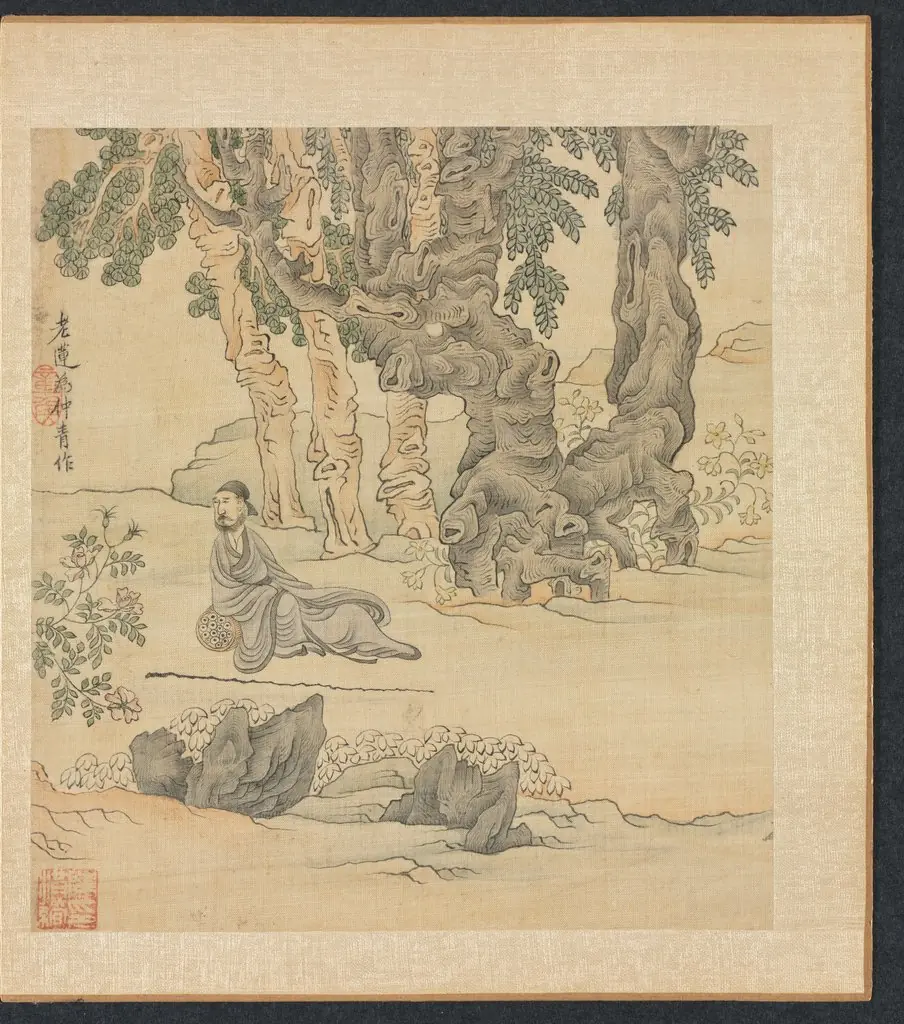 Paintings after Ancient Masters: Portrait of Zhongqing in a Landscape
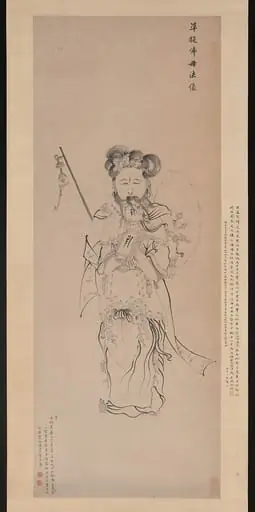 明 陳洪綬 準提佛母法像圖 軸|Bodhisattva Guanyin in the Form of the Buddha Mother
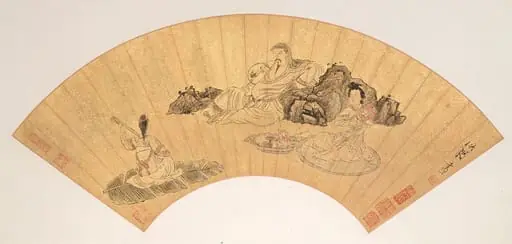 明 陳洪綬 山水花鳥人物圖 扇冊|Landscapes and Flowers
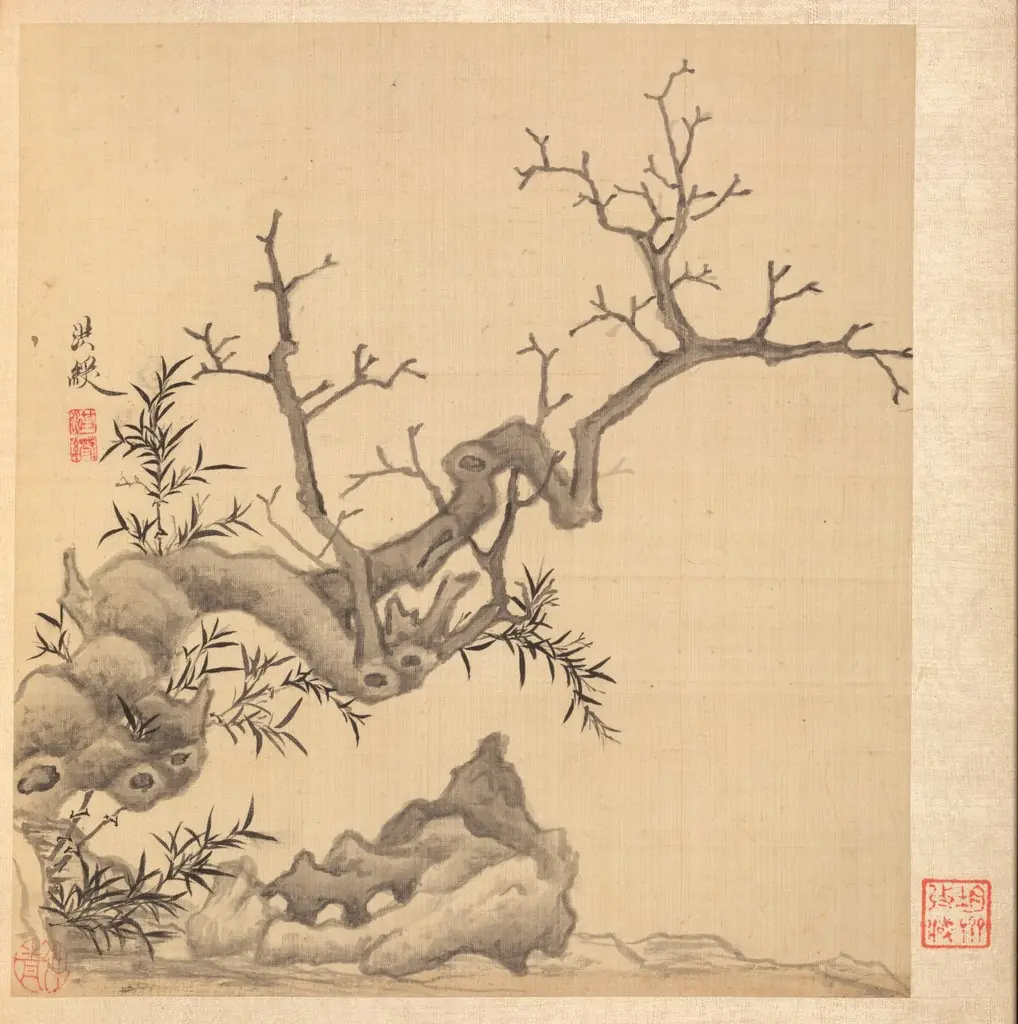
- Paintings after Ancient Masters: Rock, Old Tree, and Bamboo
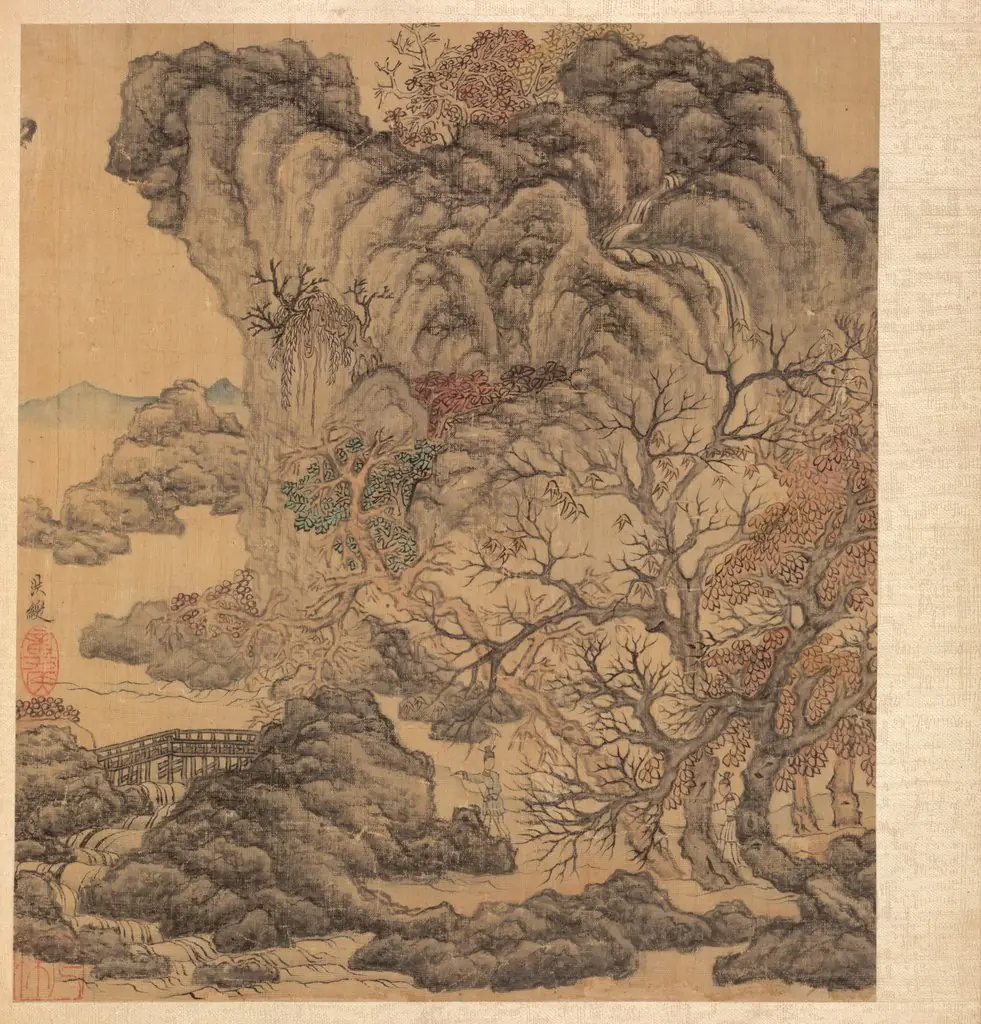 Paintings after Ancient Masters:Travelers in an Autumn Landscape
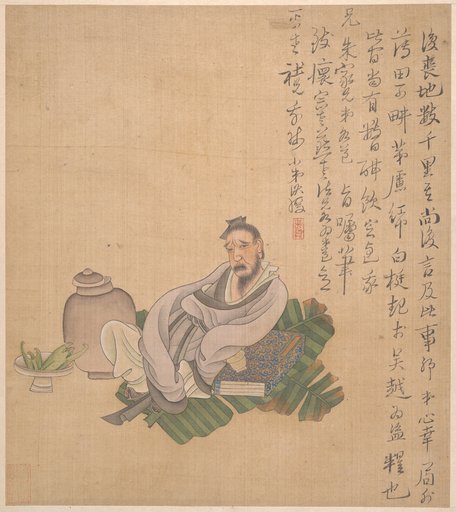
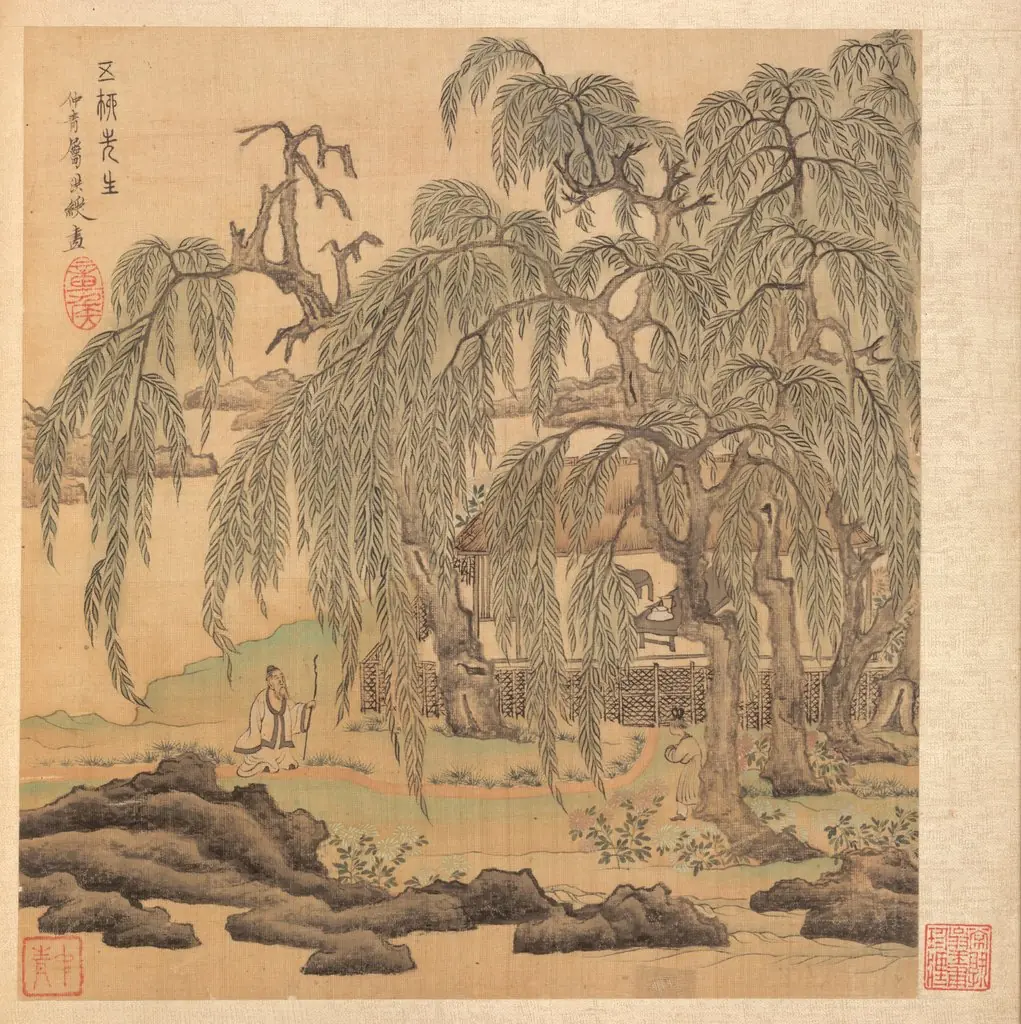 Paintings after Ancient Masters: Mr. Five Willows (Wuliu), Tao Yuanming
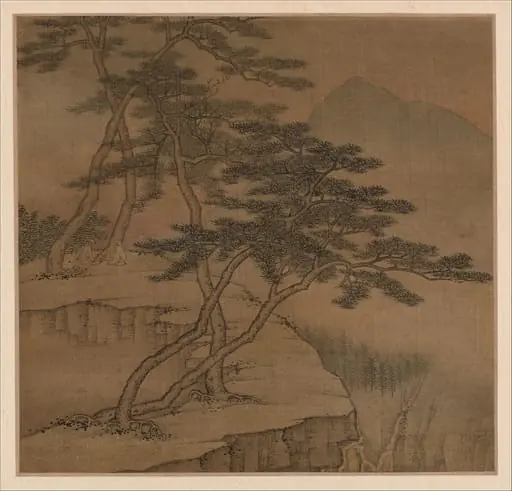 清 高岑 擬古山水圖 冊 絹本|Landscapes in the styles of old masters
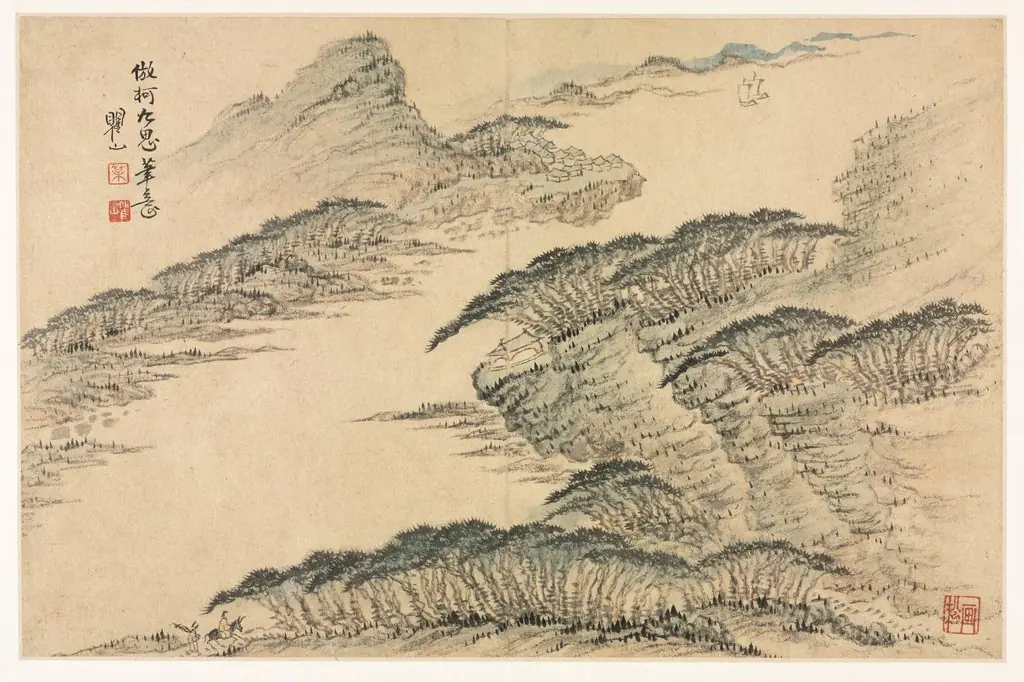 Landscapes in Various Styles after Old Masters
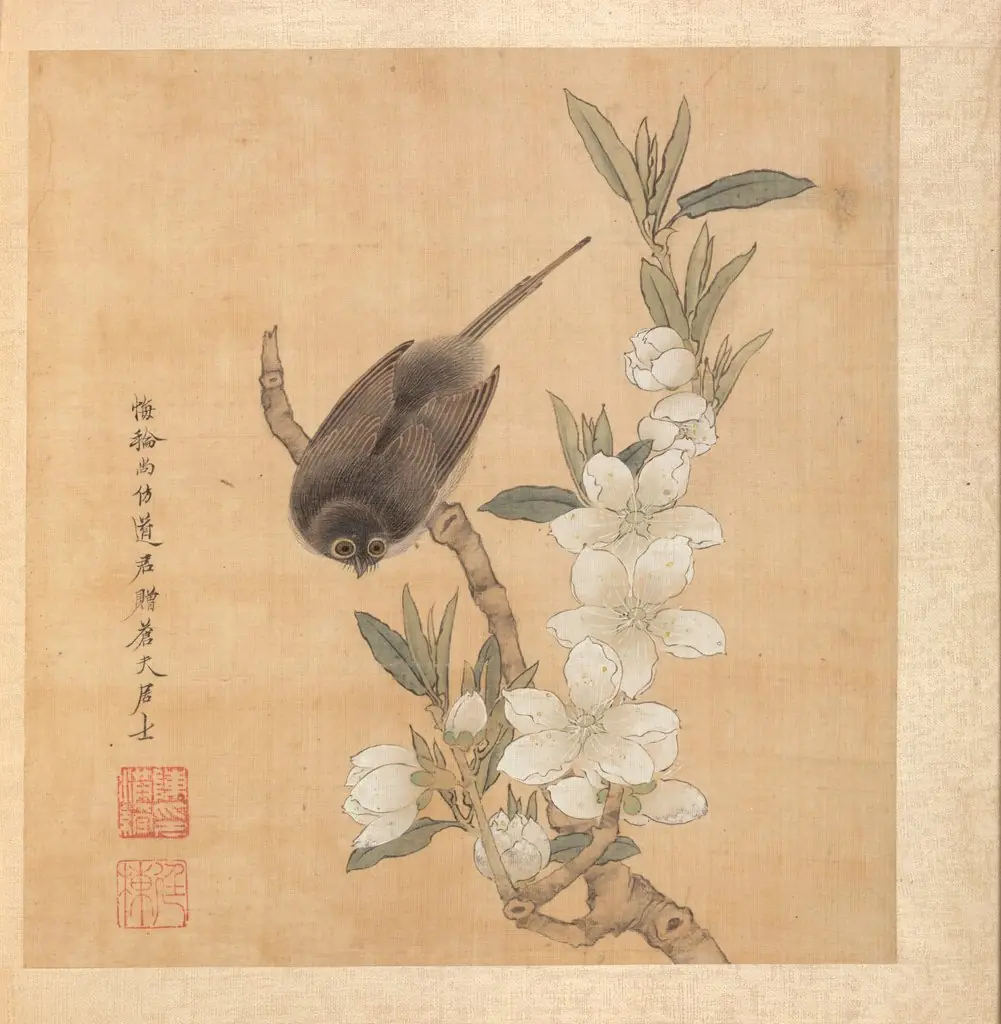 Paintings after Ancient Masters: A Bird and Peach-Blossom Branch