Artwork
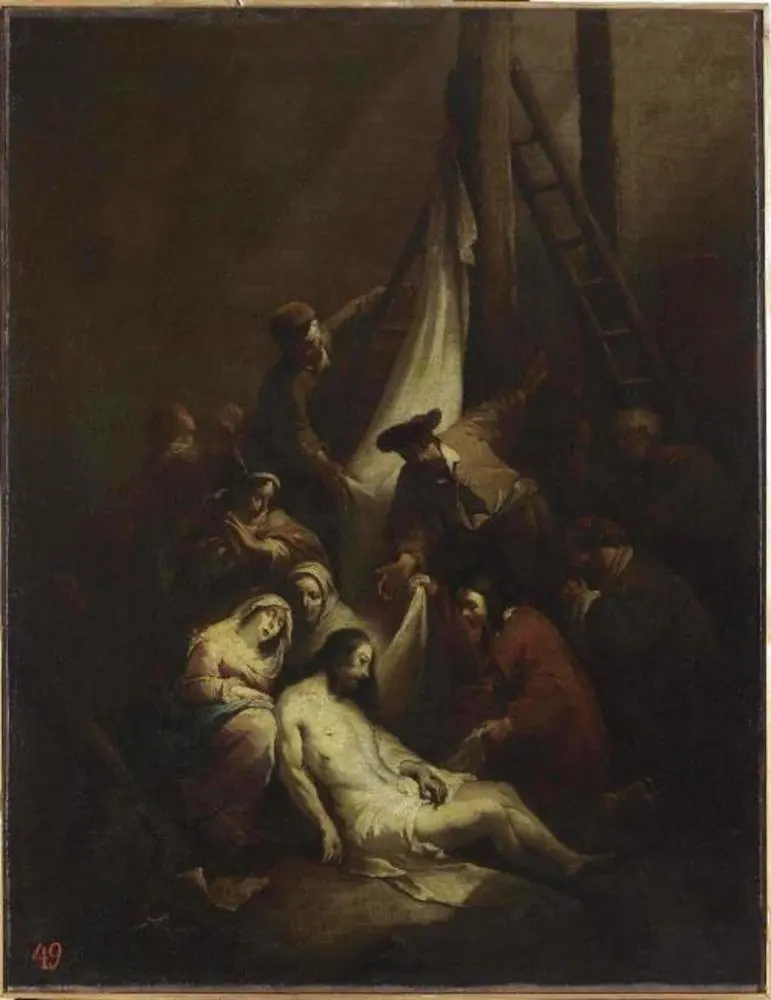
The Entombment
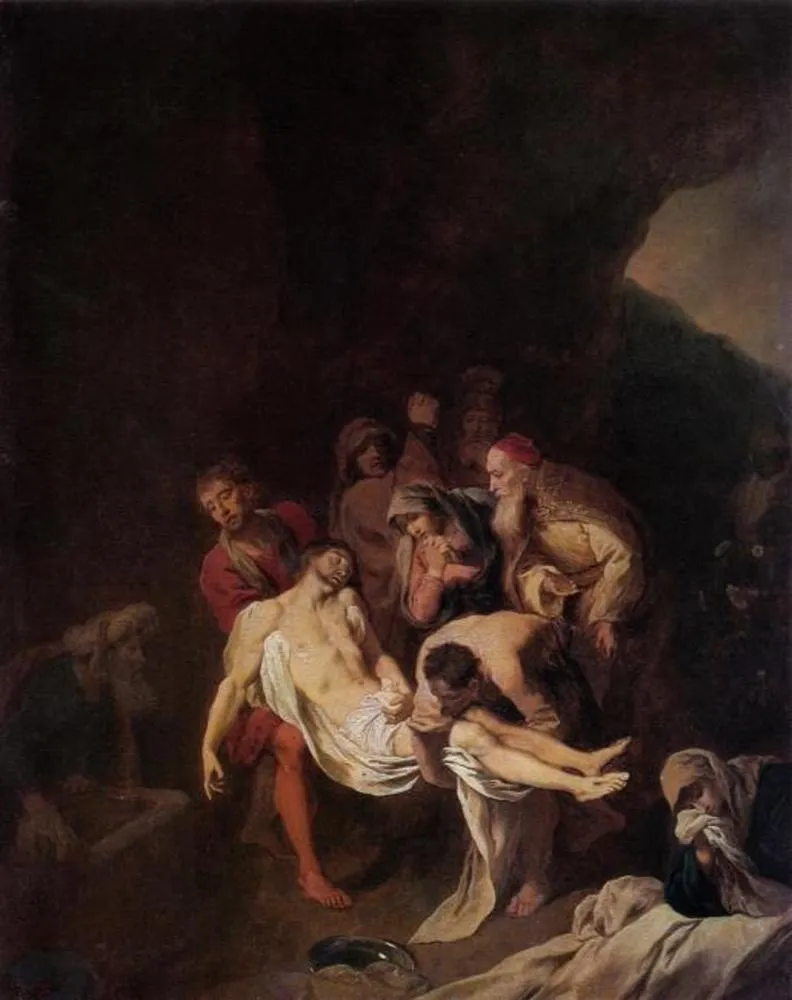
The Entombment is an oil painting by the Rococo painting artist Christian Wilhelm Ernst Dietrich. It dates from 1759 and is held in the collection of the Hermitage Museum.
About this work
Overview
The painting depicts the entombment of Jesus Christ, a subject Dietrich approached within the eighteenth-century tradition of historical revivalism.
The Entombment is a religious painting created by the German artist Christian Wilhelm Ernst Dietrich in 1759. Executed in oil paint on a panel support, the artwork measures 28 by 35 centimeters and was produced in Germany. The painting depicts the entombment of Jesus Christ, a subject Dietrich approached within the eighteenth-century tradition of historical revivalism. The work is currently held in the collection of the Hermitage Museum.
Subject & Meaning
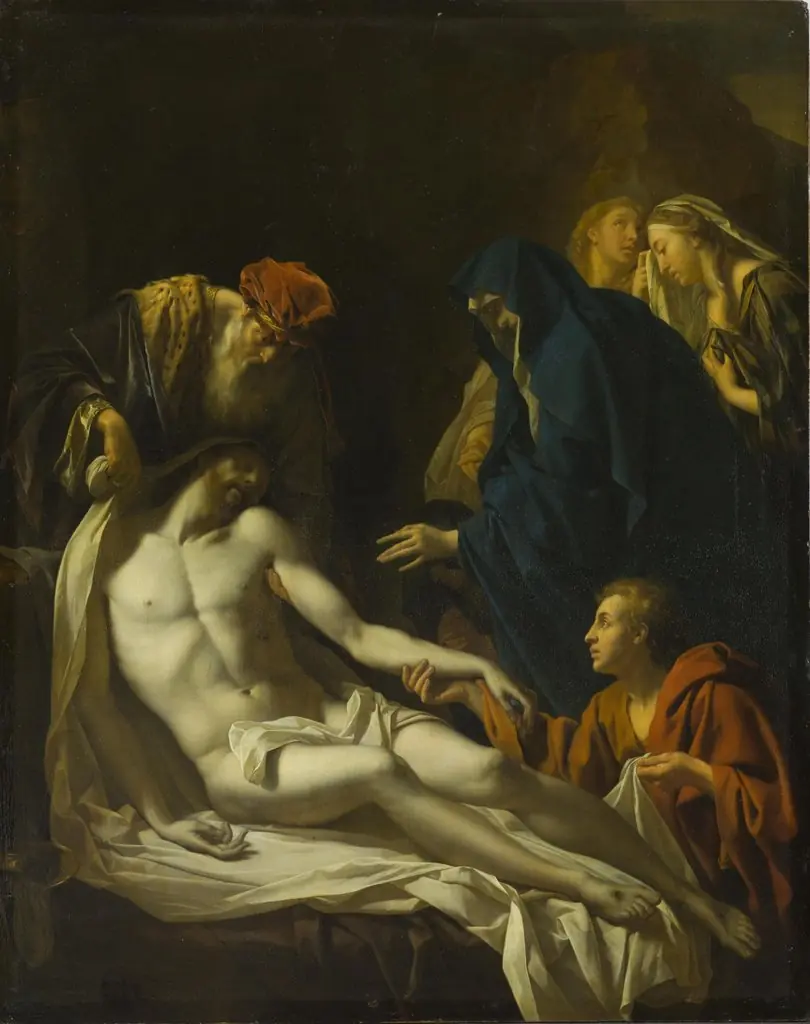
The artwork illustrates the biblical episode of Christ being laid to rest following his crucifixion. The composition centers on a group of figures carrying a pale, lifeless male body wrapped in a white cloth. A bearded older man in golden robes and a red cap bends forward near the right, while a younger figure in red garments supports the body from the left. A muscular bare-chested man bends beneath the body's legs, and a woman in the lower right corner buries her face in cloth, seated near a stone slab. A metal dish rests on the ground near the bottom center, completing the funerary iconography and emphasizing the sorrow and physical weight of the mourning scene.
Technique & Style
Dietrich executed the work in oil on a wooden panel, employing a palette dominated by earthy browns, muted reds, and creamy whites. The painting demonstrates strong chiaroscuro effects, illuminating the central figures against deep brown and black background tones, with a lighter area in the upper right suggesting sky or a distant landscape. The brushwork features smooth rendering of flesh and drapery, contrasted by thicker texture in the darker areas. The overall finish is polished, with careful attention to anatomical detail and the folds of fabric. This stylistic approach aligns with Dietrich's broader practice of imitating earlier seventeenth-century masters, particularly Rembrandt, whose influence is evident in the dramatic lighting and somber tonality of this panel.
History & Provenance
Christian Wilhelm Ernst Dietrich painted The Entombment in 1759 during his tenure in Dresden, where he had been appointed court painter to Augustus III in 1741. His position required the production of four cabinet pictures a year, a condition that likely accounts for the creation of this small-scale panel. The artwork eventually entered the collection of the Hermitage Museum, where it remains today. The precise chain of ownership linking the Saxon court or the artist's estate to the Russian imperial collection is not documented in the available sources.
Context
Christian Wilhelm Ernst Dietrich was a prominent German painter and art administrator active in Dresden. After early training under Johann Alexander Thiele, his talent attracted the attention of Augustus II, who funded his studies in Italy and the Netherlands. There, Dietrich developed a reputation for his remarkable versatility in copying and imitating earlier masters, leading Johann Joachim Winckelmann to call him the Raphael of landscape. Although highly popular and prolific, Dietrich was often criticized for never developing an independent style, instead successfully adopting the manners of artists like Rembrandt, Salvator Rosa, and Allaert van Everdingen. Recent scholarship, however, argues for a reevaluation of his work, suggesting that his paintings reflect a unique emotional depth and an eighteenth-century artistic revival rather than mere imitation.
Artist & collection
Artist
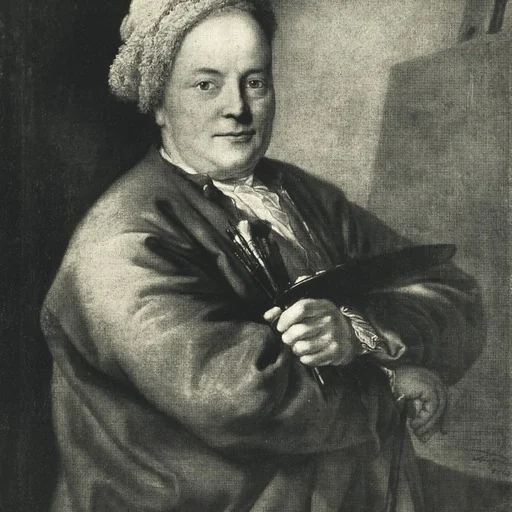
Christian Wilhelm Ernst Dietrich
Christian Wilhelm Ernst Dietrich (30 October 1712 – 23 April 1774) was a German painter and art administrator. In his own works, he was adept at imitating many earlier artists, but never developed a style of his own.