Artwork
At Cap d'Antibes, Mistral wind
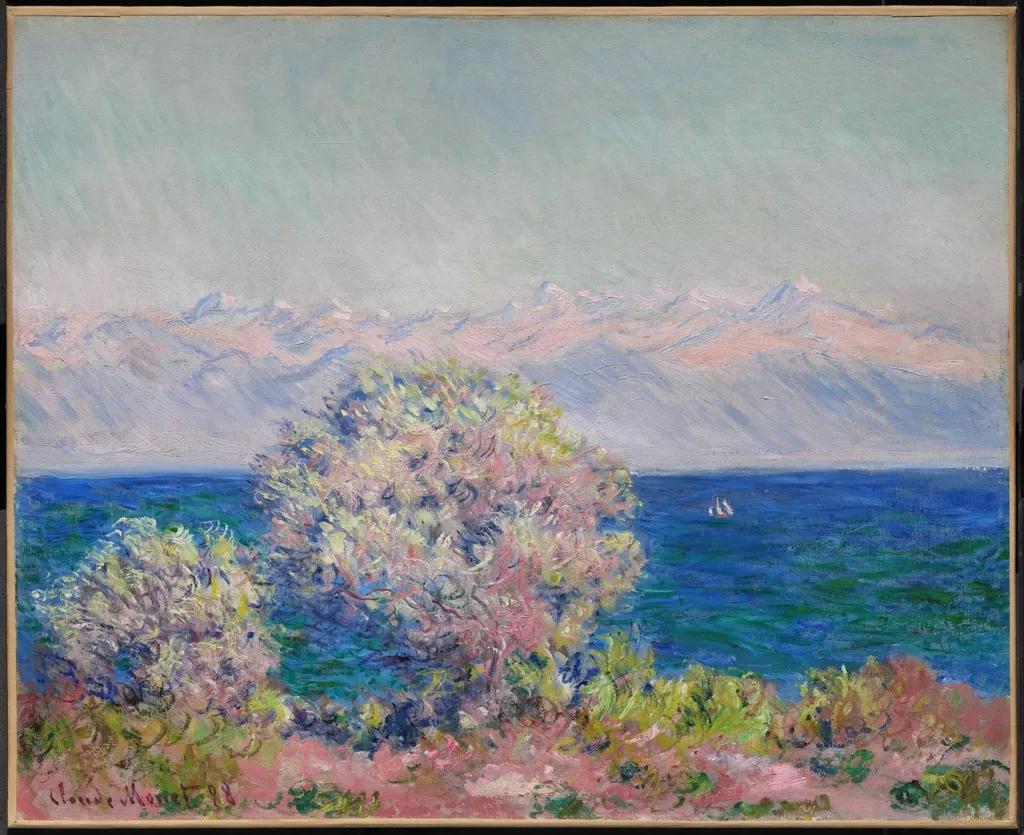
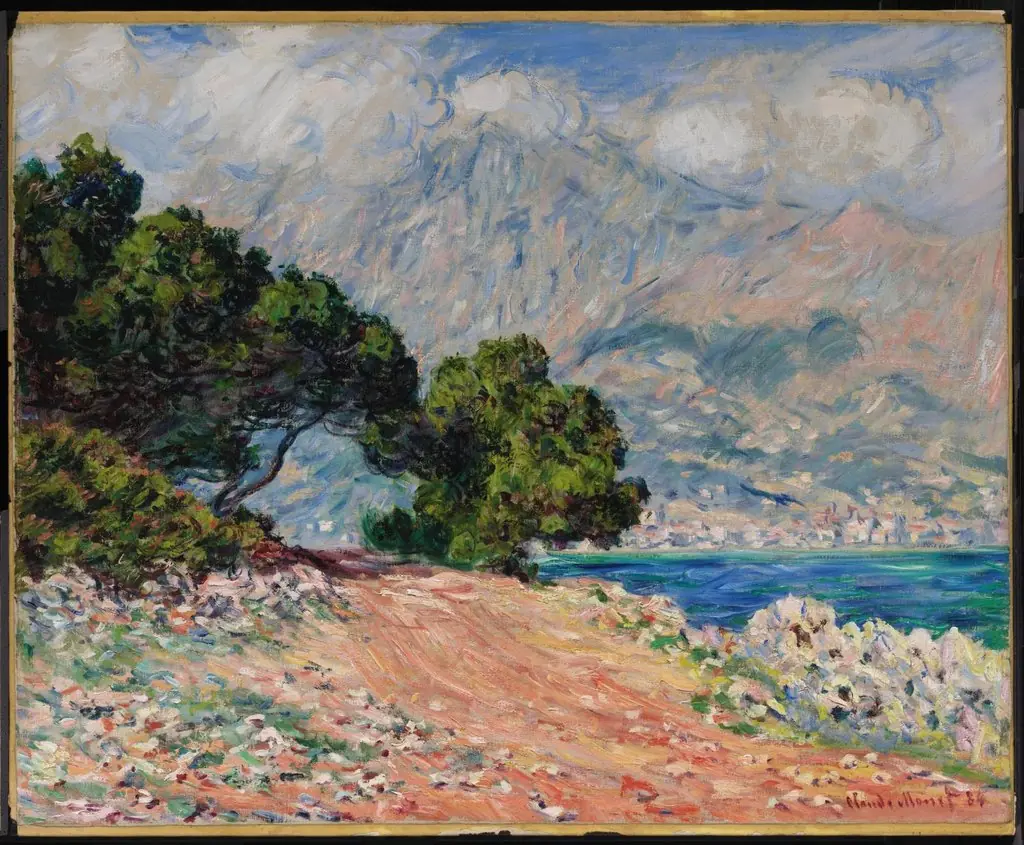
At Cap d'Antibes, Mistral wind is an oil painting by the Impressionist artist Claude Monet. It dates from 1894 and is held in the collection of the Museum of Fine Arts Boston.
About this work
Overview
Painted in 1894, At Cap d'Antibes, Mistral wind captures a specific atmospheric condition along the French Riviera during Monet's stay in Antibes.
Painted in 1894, At Cap d'Antibes, Mistral wind captures a specific atmospheric condition along the French Riviera during Monet's stay in Antibes. The composition is dominated by a foreground bush, likely a bougainvillea or similar coastal shrub, its pink and white blossoms and foliage violently bent by the strong Mistral wind. This dynamic element anchors the lower portion of the canvas, creating a diagonal thrust that contrasts with the horizontal bands of the deep blue Mediterranean Sea and the pale, hazy sky.
Monet employs his characteristic Impressionist technique, using rapid, distinct brushstrokes to render the movement of the wind and the shimmering light on the water. Distant boats and soft, rolling hills appear in the background, partially obscured by the atmospheric haze. This work belongs to a series of coastal scenes Monet produced in the south of France, where he sought to depict the intense light and specific meteorological forces of the region.
The painting demonstrates his continued exploration of light and weather effects in the late 19th century, moving beyond the calm waters of the Mediterranean to capture the raw energy of the wind-swept coast.
Subject & Meaning
The composition focuses on a shrub laden with pink and white blossoms, bent by the force of the Mistral, a regional wind. Beyond the flora, the sea extends in deep blue tones, punctuated by small boats, while hazy hills recede under a pale sky, suggesting the interplay of nature’s vigor and tranquility.
Technique & Style
Monet employs a vigorous impasto, applying thick layers of paint that convey the motion of wind across the scene. Rapid, textured brushstrokes render the flowers and leaves with a tactile roughness, while the broader washes of sea and sky retain a softer, atmospheric quality, enhancing the painting’s dynamic energy.
History & Provenance
Created in 1894 during Monet’s series of Mediterranean works, the painting eventually entered the Museum of Fine Arts, Boston. Its acquisition reflects the institution’s focus on Impressionist holdings and provides viewers with a rare example of Monet’s late‑period exploration of light and wind along the French coast.
Own this work as a print
Artist & collection
Artist
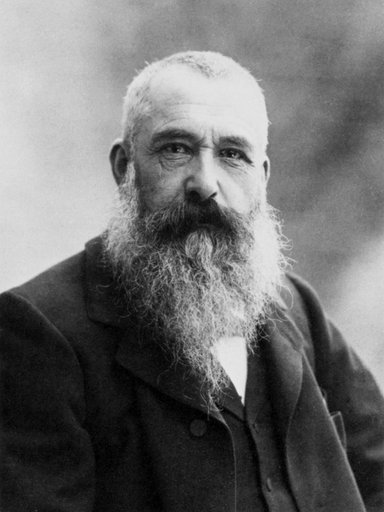
Oscar-Claude Monet was a French painter and founder of Impressionism who is seen as a key precursor to modernism, especially in his attempts to paint nature as he perceived it.