Artwork
The Parc Monceau
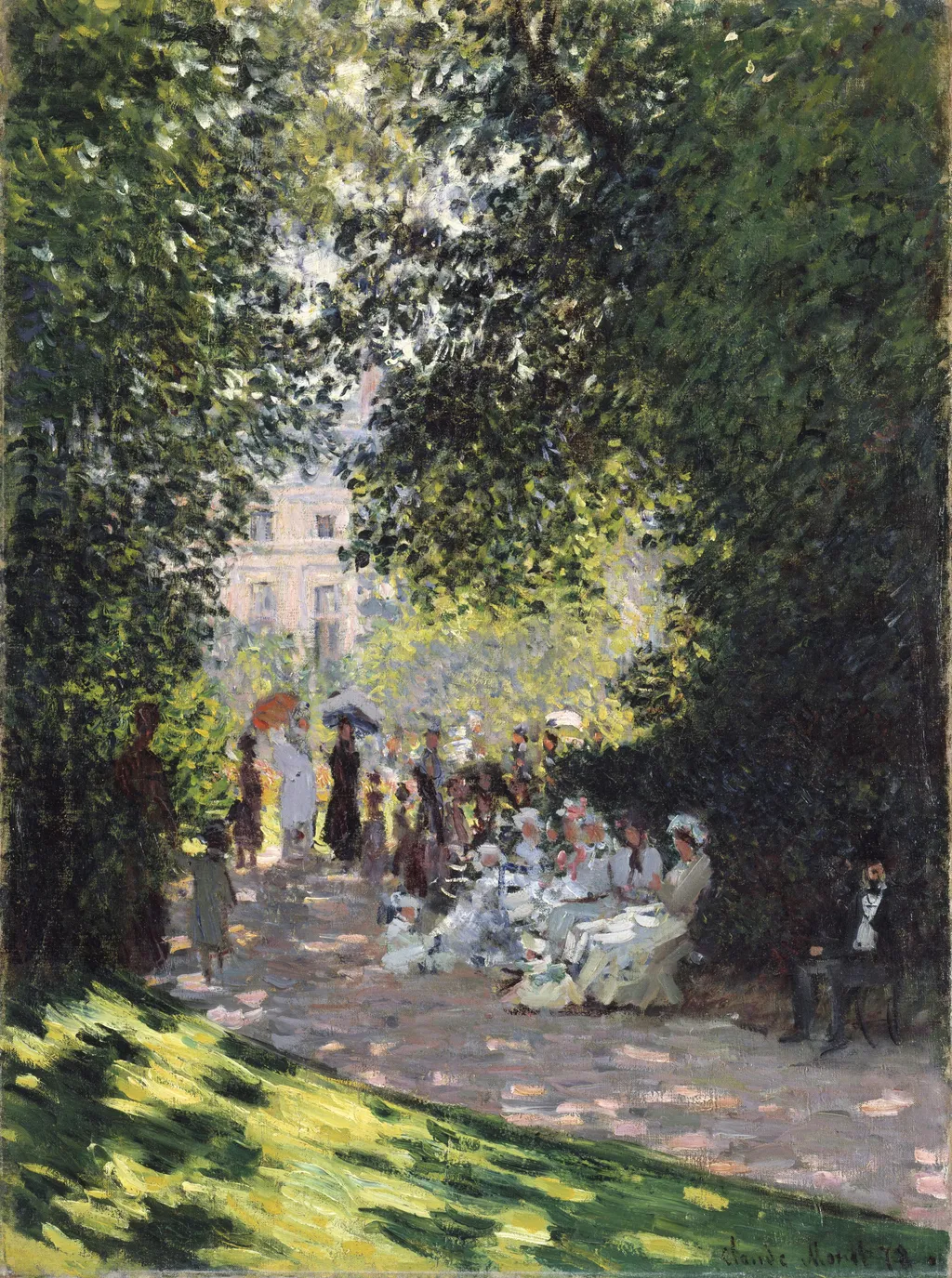
The Parc Monceau is an oil painting by the Impressionist artist Claude Monet. It dates from 1890 and is held in the collection of the Metropolitan Museum of Art.
About this work
Subject & Meaning
Having returned to Paris to escape creditors, Monet portrayed a stark contrast between his own financial distress and the leisure of the wealthy promenaders.
The painting depicts the Parc Monceau in Paris, specifically an alleyway populated by strolling figures, men, and women. While the subject is the public park opened in 1861 and bordered by private mansions, the work carries significant personal symbolism regarding the artist's circumstances in 1878. Having returned to Paris to escape creditors, Monet portrayed a stark contrast between his own financial distress and the leisure of the wealthy promenaders.
Stylistically, the human figures function less as individual portraits and more as colorful, integrated elements of the landscape. The composition emphasizes the interplay of sunlight filtering through the foliage, creating a strong two-dimensional effect through broad brushstrokes. This treatment aligns the figures with the natural environment, distinguishing the work from contemporaries like Renoir who often granted their subjects greater individual prominence.
Technique & Style
Monet painted The Parc Monceau in 1878 using oil on canvas, a standard support for his Impressionist practice (1,2). The work measures 72.7 × 54.3 cm and was executed in the loose brushwork characteristic of the movement, with broad strokes that render sunlight filtering through foliage and create a flattened, atmospheric surface (3,4). Human figures appear merely as colored accents within the landscape rather than detailed subjects (3).
The painting’s surface retains the thin, translucent handling typical of Monet’s 1870s canvases, and its condition has been preserved despite a wartime theft and subsequent restitution to the Lindon family (2,3). Stylistically, it exemplifies Impressionist concerns with light, color modulation, and an experimental approach to spatial depth (3,4).
History & Provenance
The Parc Monceau, an oil on canvas painted by Claude Monet in 1878, originated as one of three near‑identical views of the Paris park’s tree‑lined promenade created in early that year. Monet likely sold the work to dealer Collot in June 1878, after which it passed to collector Georges de Bellio and later to the dealer Paul Durand‑Ruel. It entered the collection of Georges Bernheim before 1930, then belonged to Alfred Lindon (later Lindon) in 1931, was seized by Nazi forces in 1940, recovered in 1946, bequeathed to Lindon’s wife in 1948, and finally left to their son Jacques Lindon in New York, who sold it to the Metropolitan Museum of Art in 1959. The painting is recorded in the Wildenstein catalogue as W466.
The painting is held by the Metropolitan Museum of Art, New York, accessioned as part of its permanent collection. It was first recorded in the museum’s holdings after 1959, when Jacques Lindon donated the work following its restitution to his family after World War II. The painting’s exhibition history includes a possible display at the Fourth Impressionist Exhibition in 1879, though no confirmed record of its inclusion survives.
Context
Painted in early 1878, The Parc Monceau belongs to a cluster of three closely related canvases (catalogued W466–W468 in Wildenstein's 1996 raisonné) that mark a moment of formal experimentation in Monet's Impressionist practice, with broad, high-contrast brushwork in the sun-dappled foreground producing a flattened, two-dimensional effect. The work is discussed in relation to Renoir's contemporary park scenes, such as The Swing, where filtered sunlight through foliage plays a comparable role, though Monet reduces his strollers to chromatic accents within the landscape. A parallel is also drawn with Gustave Caillebotte's later view of the same Parisian park, painted the following year; the two friends, both avid gardeners, exchanged works for their personal collections.
The painting was possibly shown at the Fourth Impressionist Exhibition in 1879 and has been treated in scholarship including Dayez, Hoog, and Moffett's 1975 centenary exhibition catalogue and Moffett's 1985 volume on the Met's Impressionist holdings.
Overview
Claude Monet's 1890 oil painting, The Parc Monceau, captures a tranquil scene within the eponymous Parisian park. This work exemplifies the Impressionist movement's focus on light and atmosphere, depicting a sunny day with soft hues. It is currently housed in The Metropolitan Museum of Art, representing a key period in the artist's career and his ongoing exploration of urban landscapes.
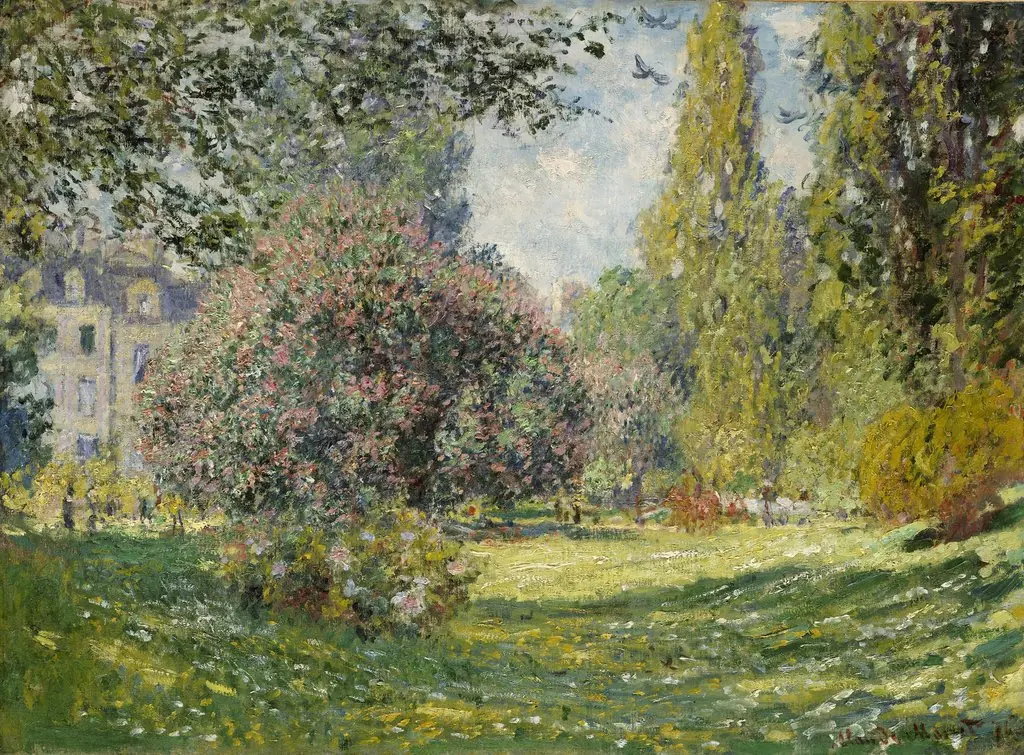
Own this work as a print
Artist & collection
Artist
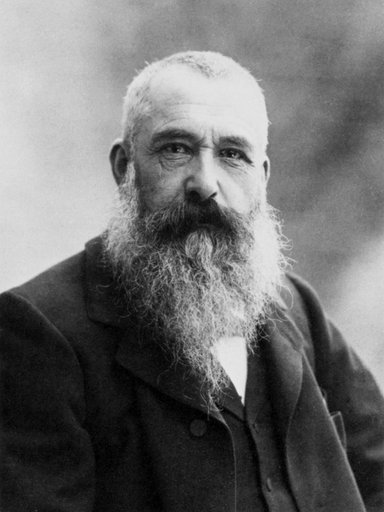
Oscar-Claude Monet was a French painter and founder of Impressionism who is seen as a key precursor to modernism, especially in his attempts to paint nature as he perceived it.

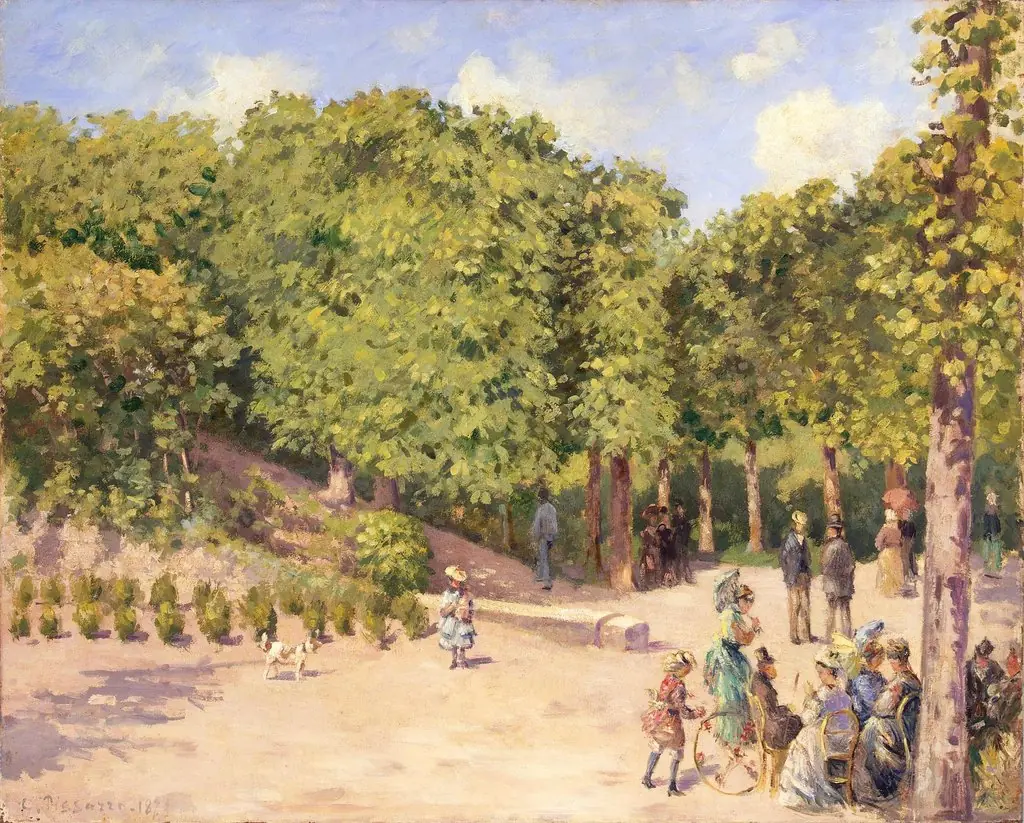 The Municipal Garden, Pontoise
 Springtime
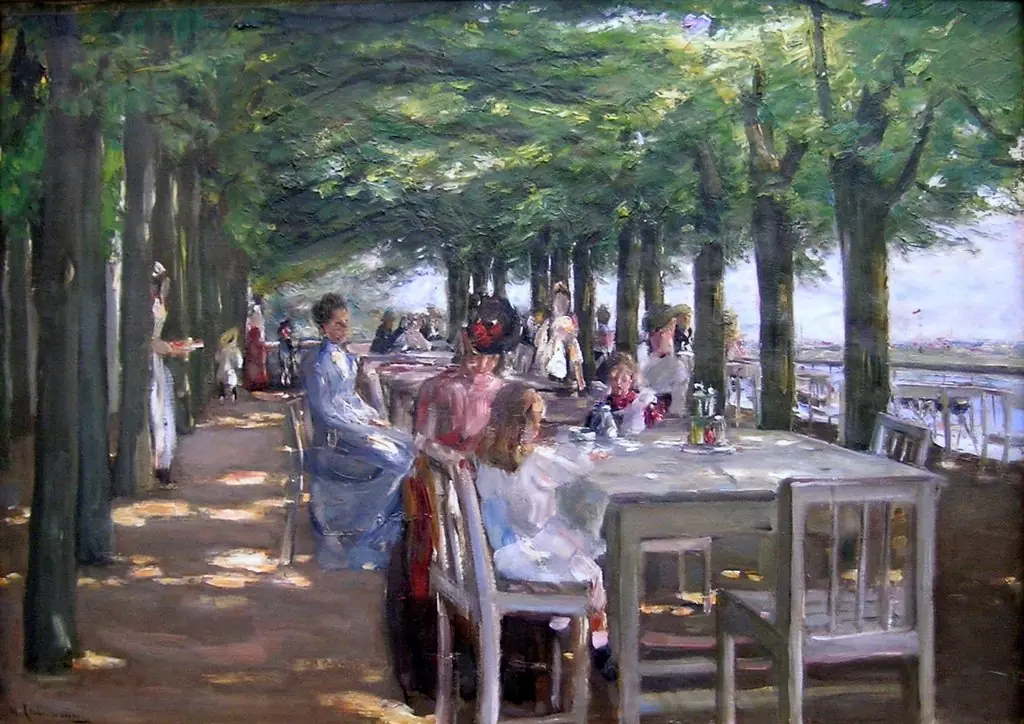 The Terrace at the Hotel Louis C. Jacob in Nienstedten on the Elbe
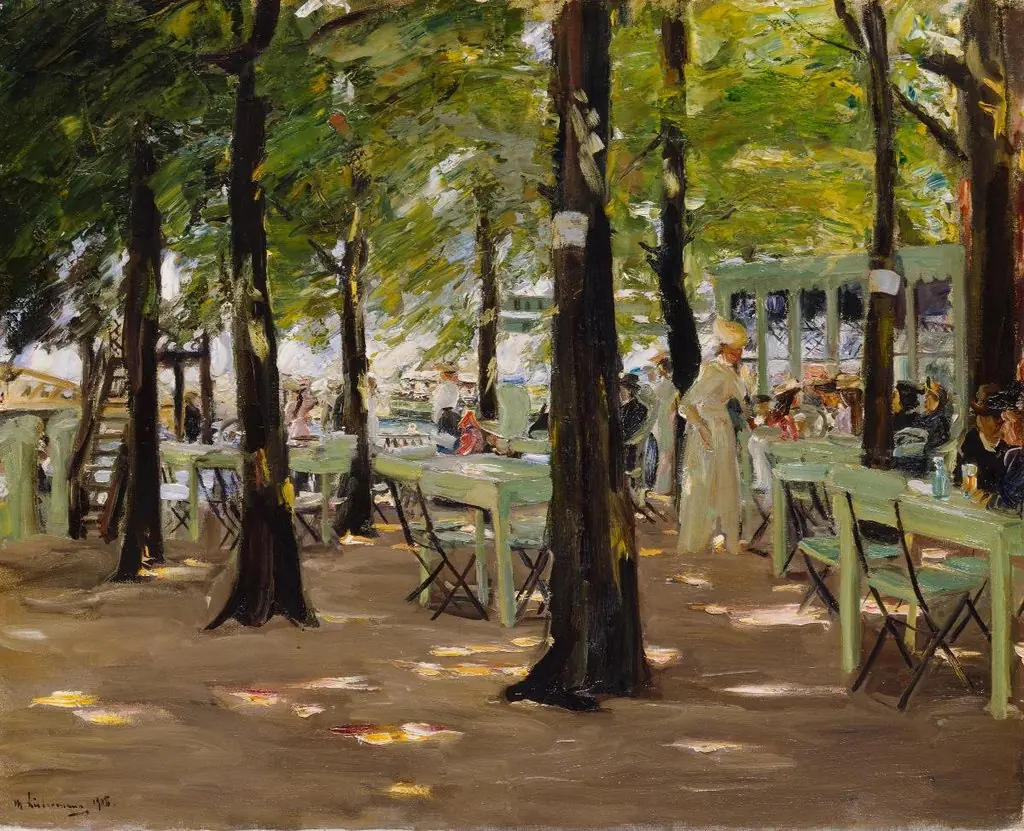 Biergarten «De Oude Vink» bei Leiden
 The Grands Boulevards
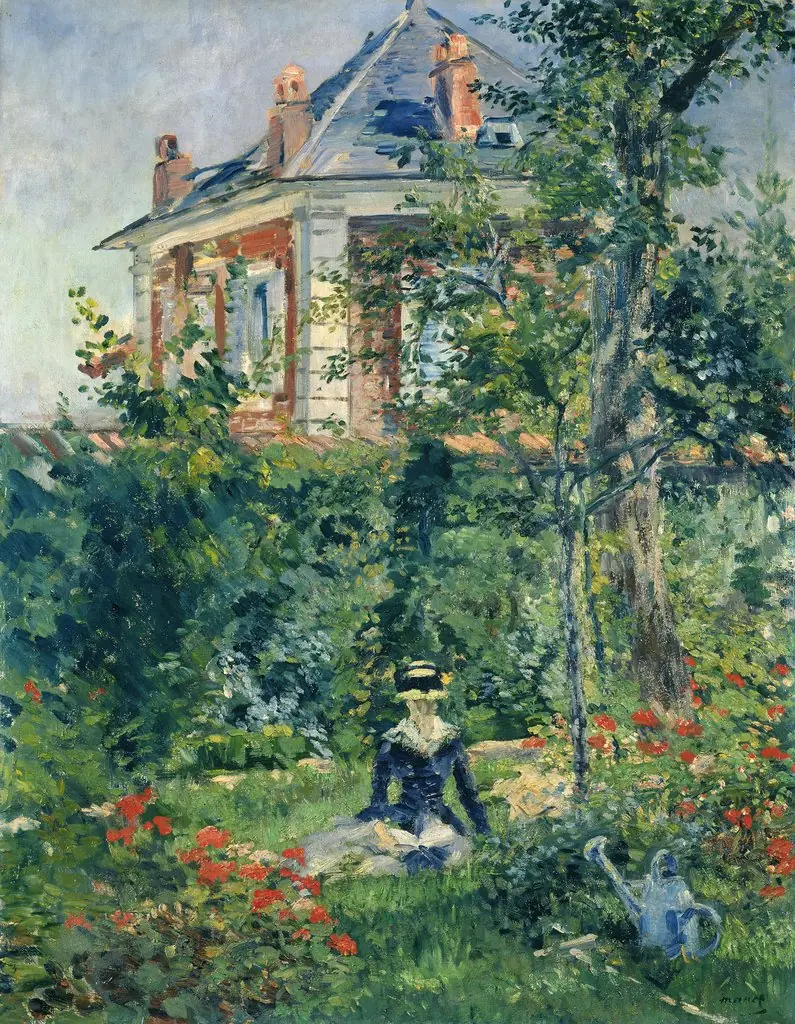 A Garden Nook at Bellevue
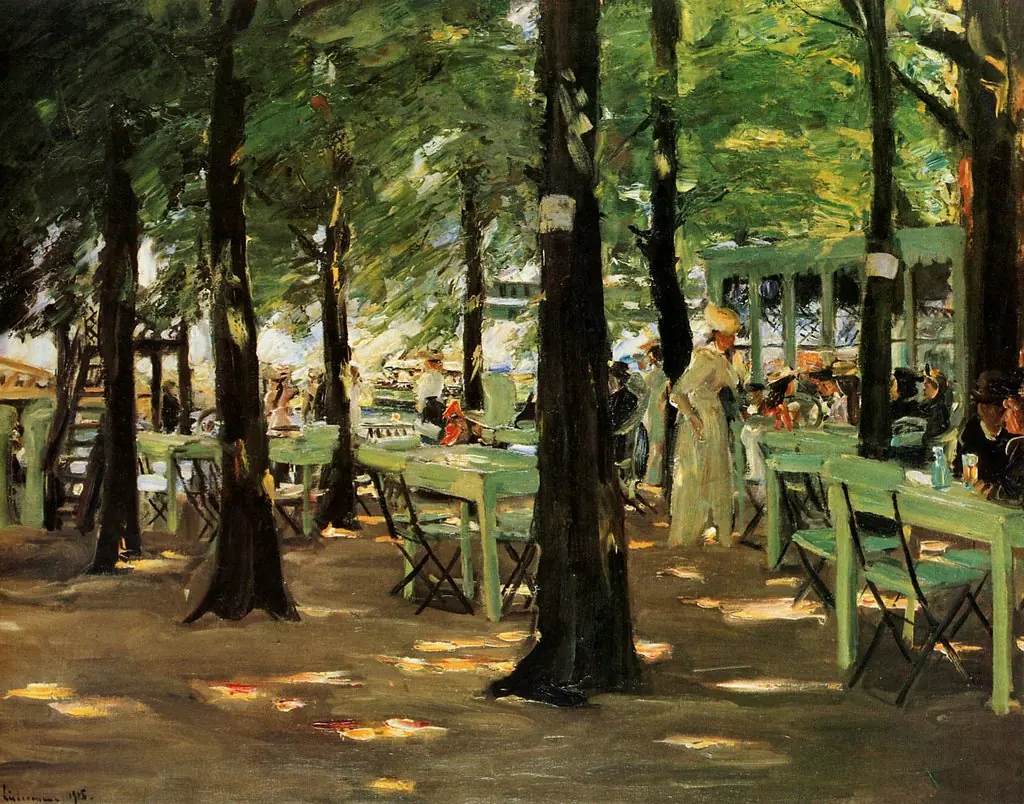 De Oude Vink Restaurant in Leiden
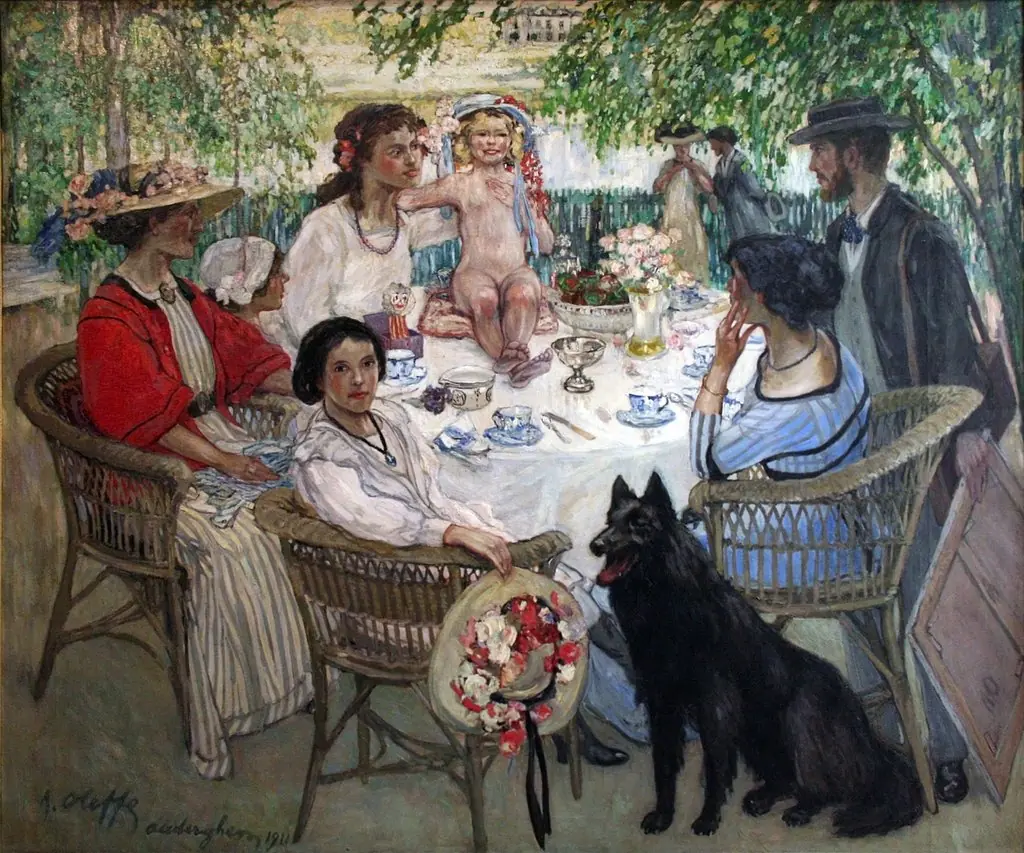 Spring
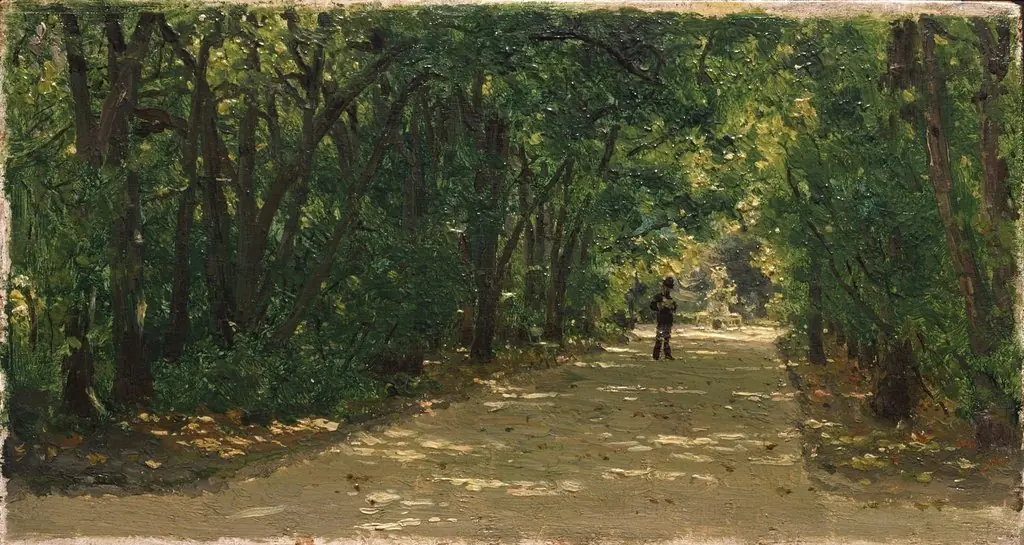 Álea no parque
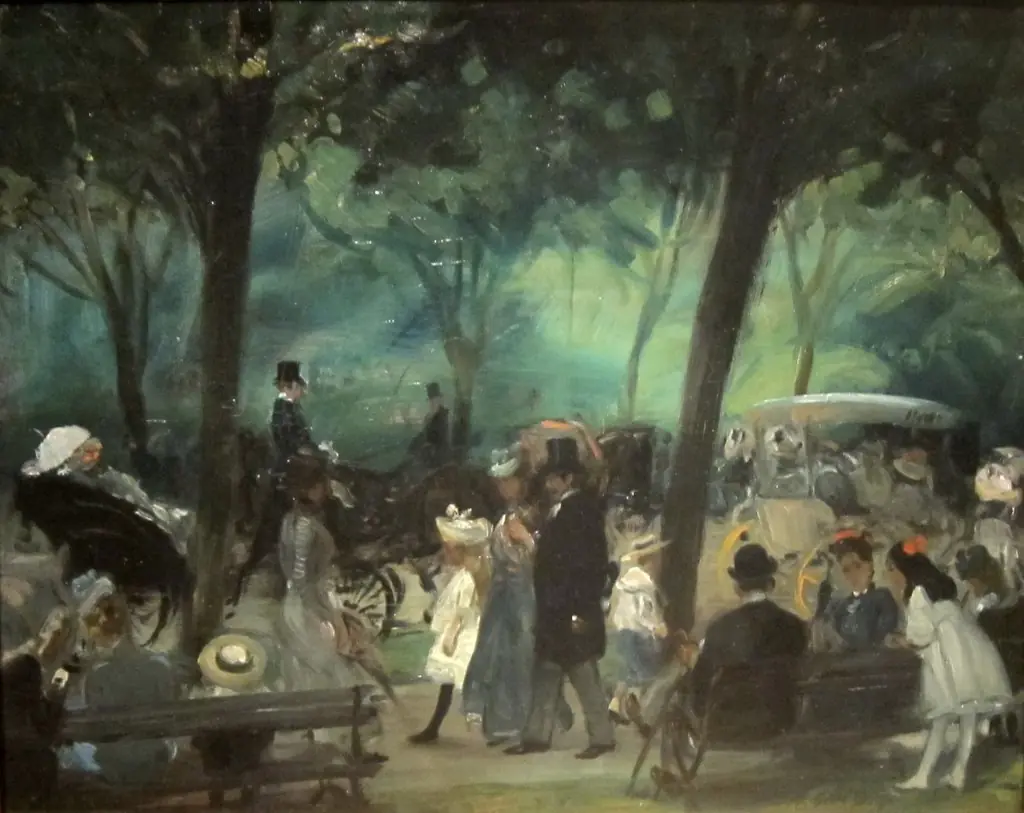 The Drive, Central Park
 Camille Monet (1847–1879) in the Garden at Argenteuil