Artwork
Ægir's Feast
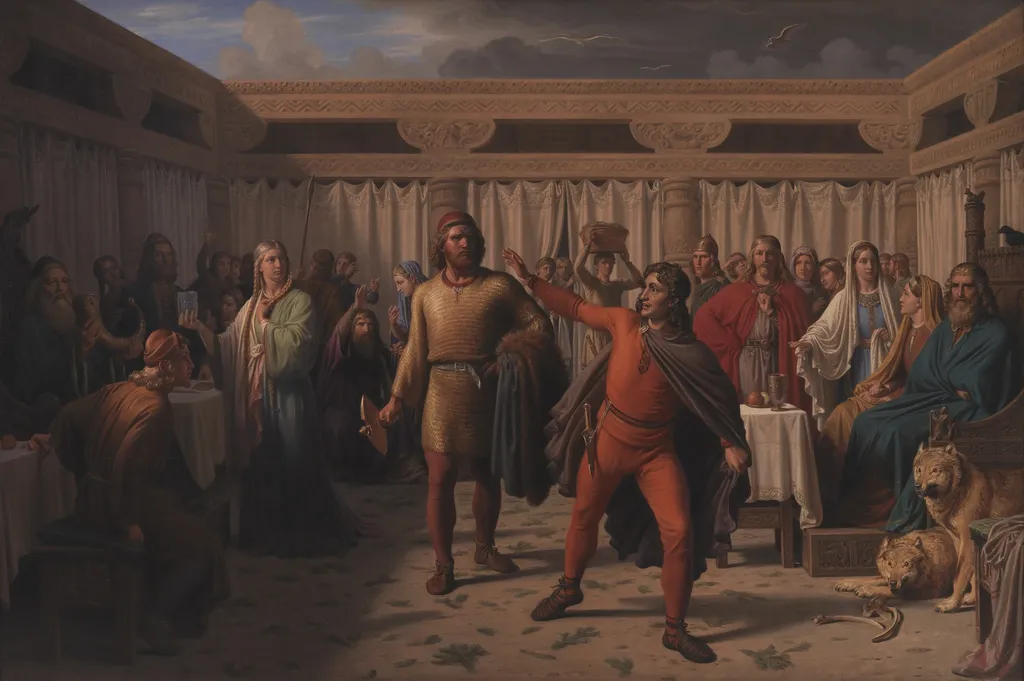
Ægir's Feast is an oil painting by Constantin Hansen. It dates from 1857 and is held in the collection of the Statens Museum for Kunst.
About this work
Overview
It illustrates a scene from Norse myth, reflecting Hansen’s broader effort to anchor Danish cultural identity in pre-Christian legends.
Painted in 1857 by Constantin Hansen, Ægir's Feast is an oil-on-canvas work rooted in Danish national romanticism. It illustrates a scene from Norse myth, reflecting Hansen’s broader effort to anchor Danish cultural identity in pre-Christian legends. The painting belongs to the collection of Statens Museum for Kunst in Copenhagen and stands as one of several mythological compositions Hansen produced during Denmark’s Golden Age of Painting.
Subject & Meaning
The painting portrays Ægir, a sea giant from Norse mythology, hosting a banquet for the gods in his underwater hall. Rather than depicting violence or divine conflict, Hansen emphasizes communal harmony, gods and spirits gathered in ritualized conviviality. The scene draws on Snorri Sturluson’s Edda, transforming myth into a dignified, earthly celebration that resonated with 19th-century Danish efforts to reclaim a distinct cultural heritage.
Technique & Style
Hansen employed meticulous detail in rendering textiles, architecture, and facial expressions, reflecting his academic training. The palette favors subdued earth tones, ochres, deep blues, and muted reds, creating a warm, intimate atmosphere despite the grand scale. The composition arranges figures around a central table, guided by classical spatial logic, while the high ceiling and columns evoke a sacred, ceremonial space rather than a fantastical realm.
History & Provenance
Commissioned during a period of heightened national self-reflection in Denmark, the painting was completed shortly after Hansen’s travels to Italy and his engagement with art historian Niels Laurits Høyen, who advocated for indigenous themes in Danish art. It entered the national collection of Statens Museum for Kunst soon after its completion and has remained there since, alongside Hansen’s other major works, including his political murals.
Context
Ægir's Feast emerged amid Denmark’s cultural movement to define a national identity separate from German and French influences. By turning to Norse sagas, Hansen aligned with contemporaries who sought to elevate native legends to the status of high art. This approach paralleled similar efforts in Germany and Scandinavia, where mythological subjects were used to foster historical continuity and civic pride in the wake of political upheaval.
Legacy
Though less widely known than his political murals, Ægir's Feast contributed to the legitimization of mythological painting in Danish art. It influenced later generations of artists who explored national folklore, and it remains a key example of how 19th-century Denmark used visual culture to articulate historical consciousness. The work is studied for its synthesis of academic technique and romantic nationalism.
Own this work as a print
Artist & collection
Artist
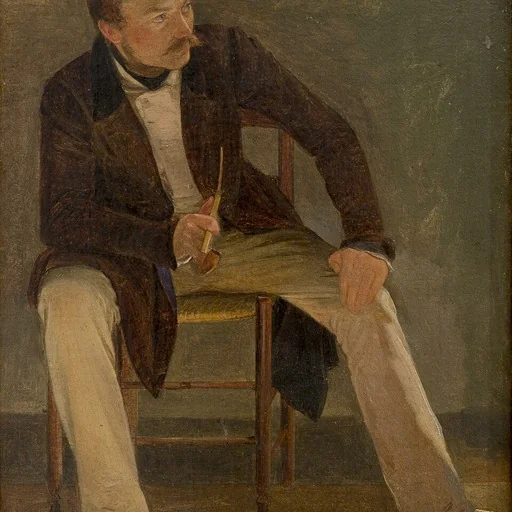
Carl Christian Constantin Hansen (Constantin Hansen) (3 November 1804 – 29 March 1880) was one of the painters associated with the Golden Age of Danish Painting.

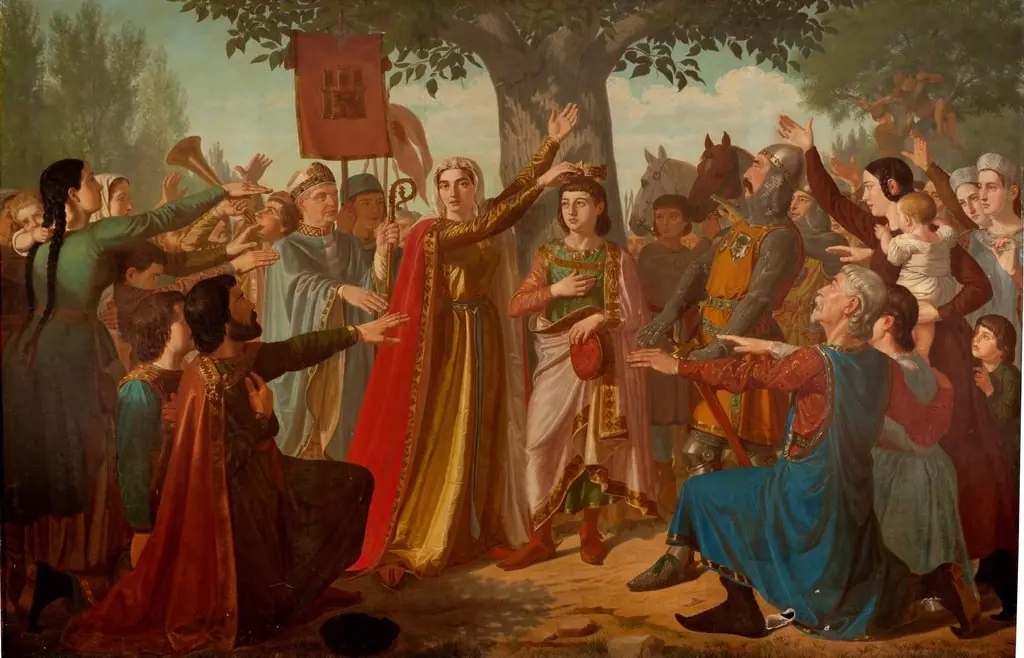 Doña Berenguela coronando a su hijo don Fernando
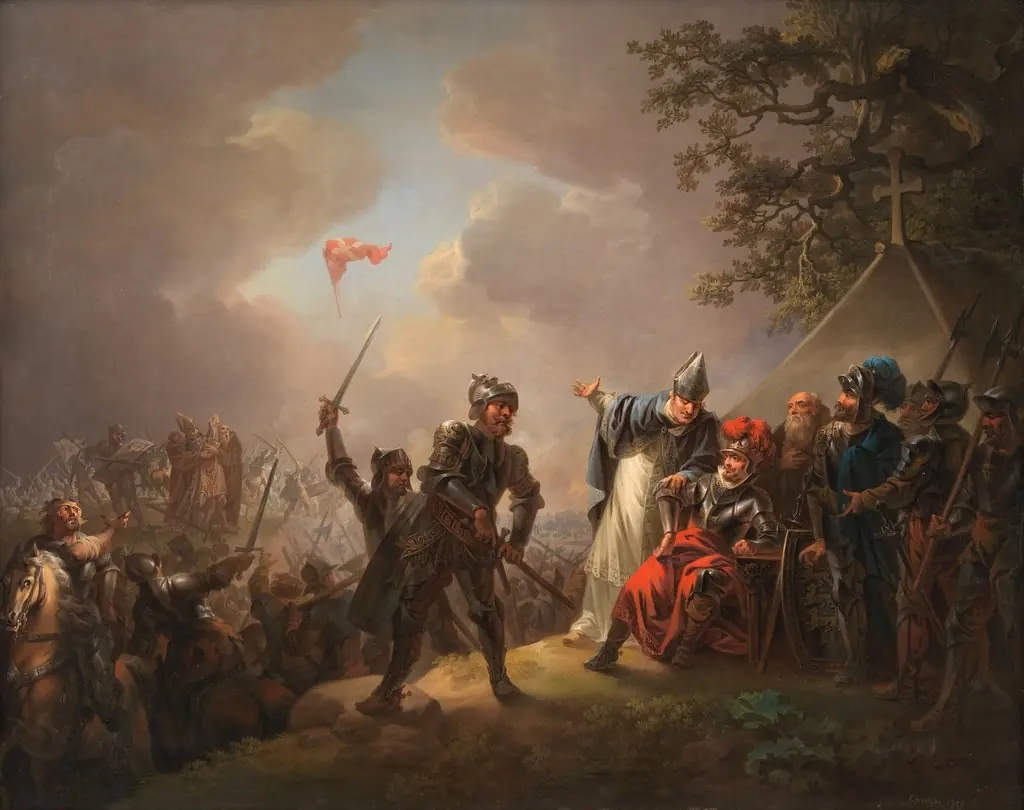 The Legend of the Danish Flag (the Dannebrog) Falling from the Heavens during the Battle of Lyndanise in Estonia in 1219
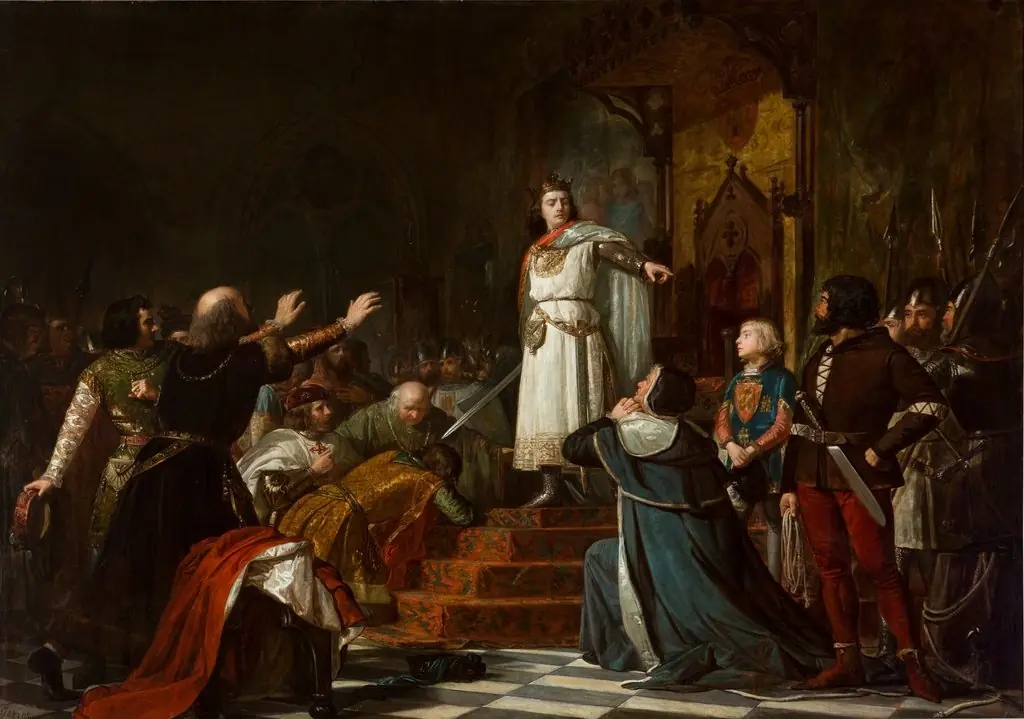 Episodio del reinado de don Enrique III de Castilla llamado el Doliente cuando al día siguiente de haber tenido que empeñar su gabán para comer corrige el orgullo y desmanes de los señores y ricoshomes de Castilla
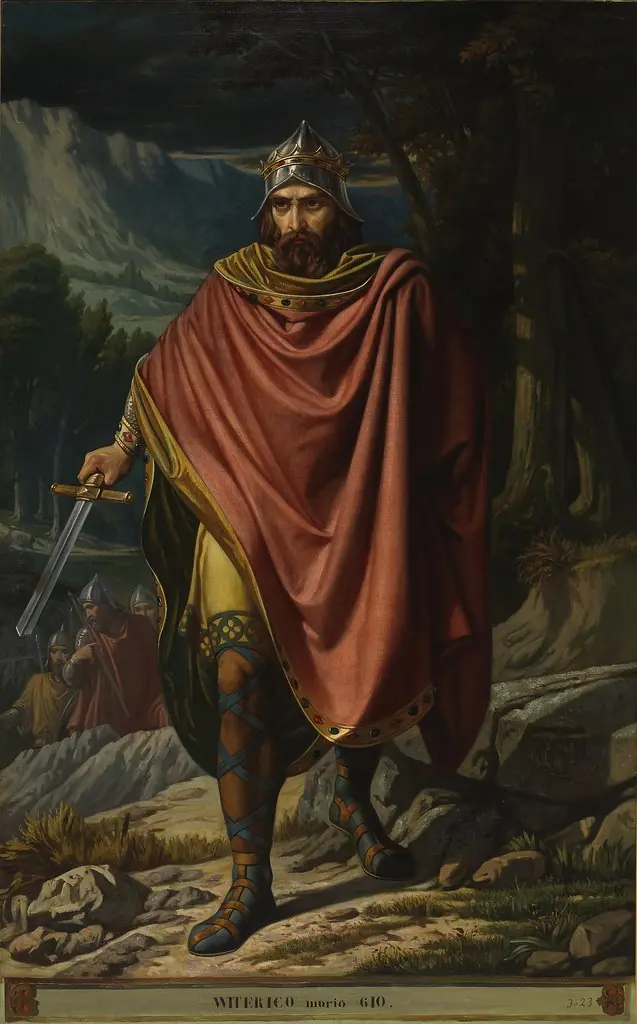 Witerico
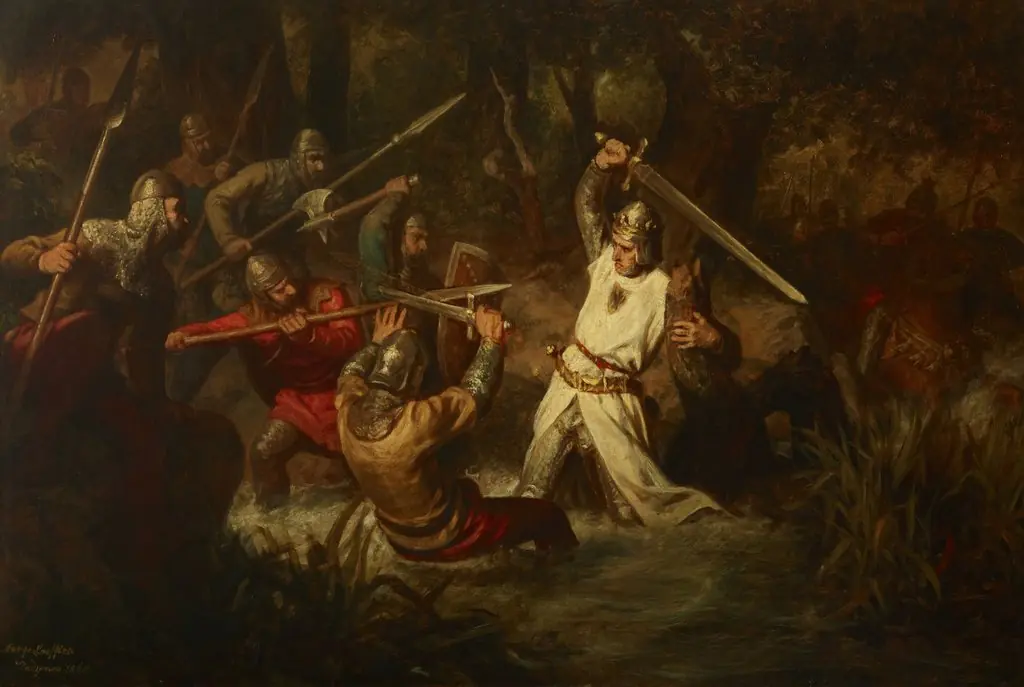 Emperor Rudolf I in the Battle of Marchfeld
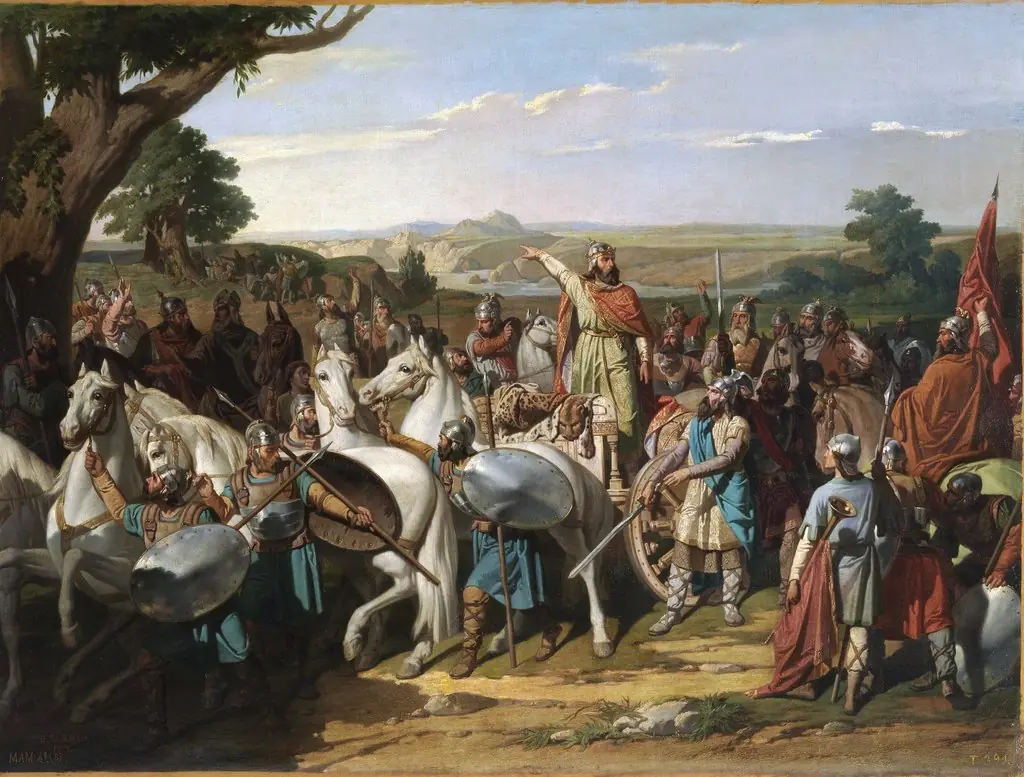 El rey don Rodrigo arengando a los jefes de su ejército antes de dar la batalla del Guadalete
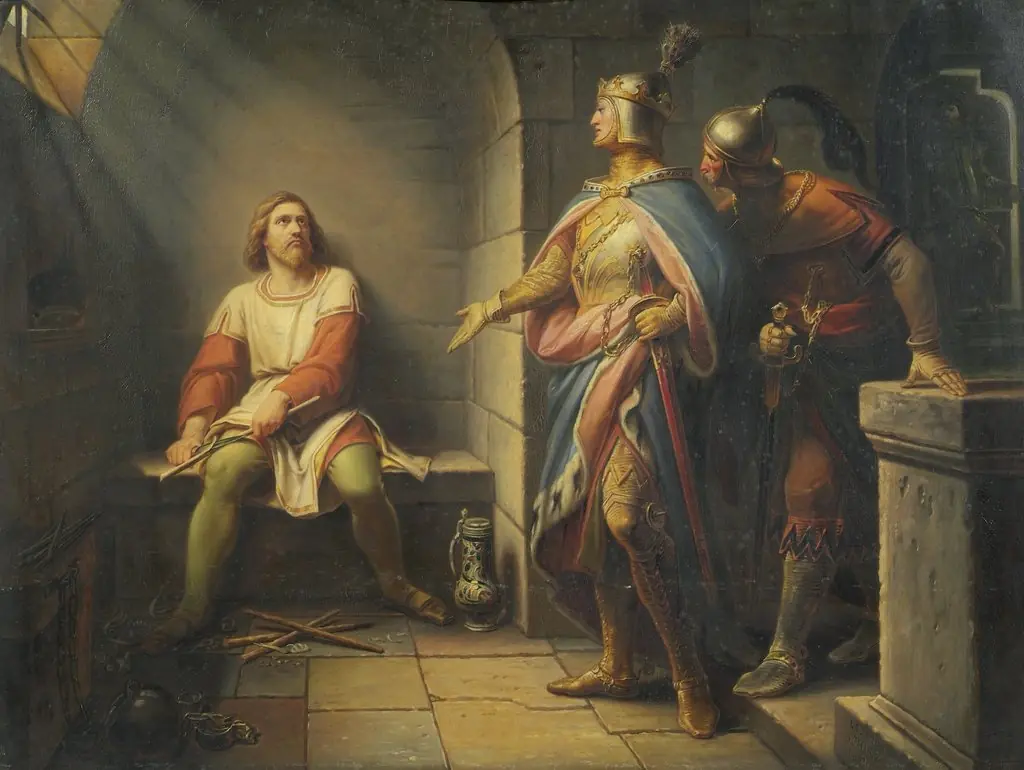 Ludwig der Bayer verkündet Friedrich dem Schönen 1314 seine Freilassung und bietet ihm die Mitregentschaft an
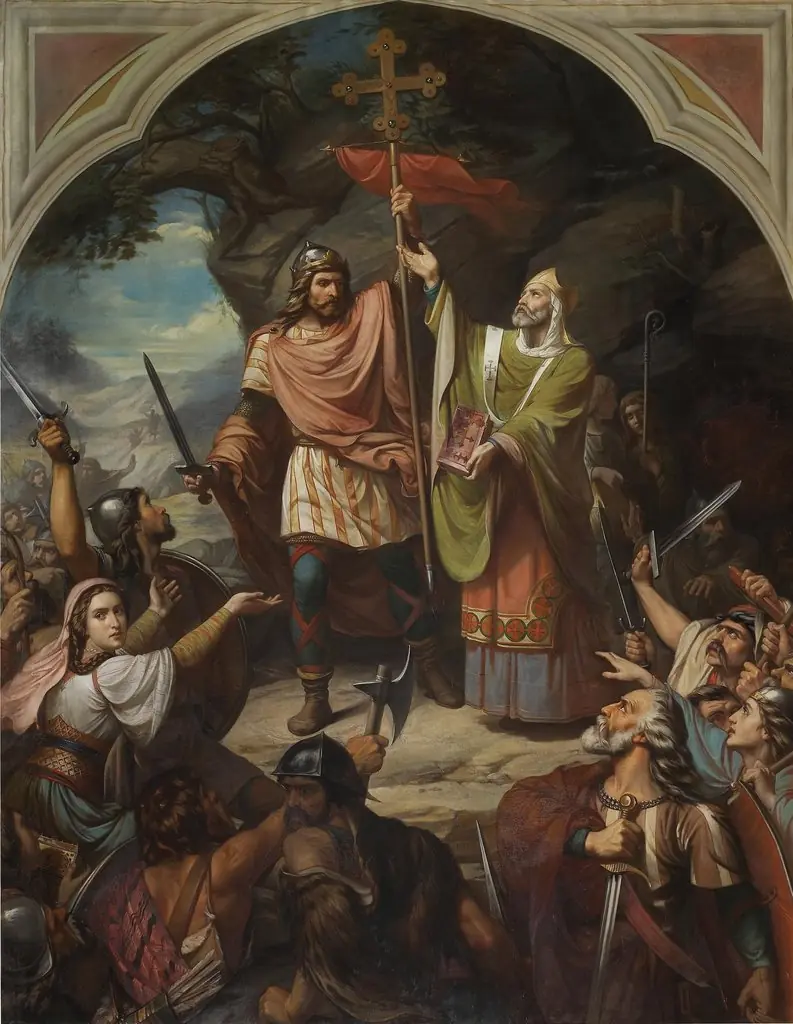 Don Pelayo en Covadonga
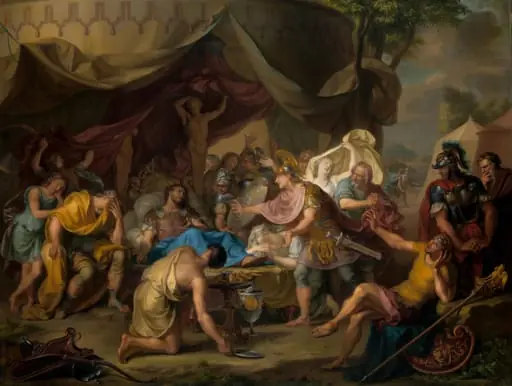 Het sterfbed van Epaminondas
 Péter Zrínyi and Kristóf Frangepán in Prison at Wiener Neustadt