Artwork
La Bretonnerie in the Department of Indre
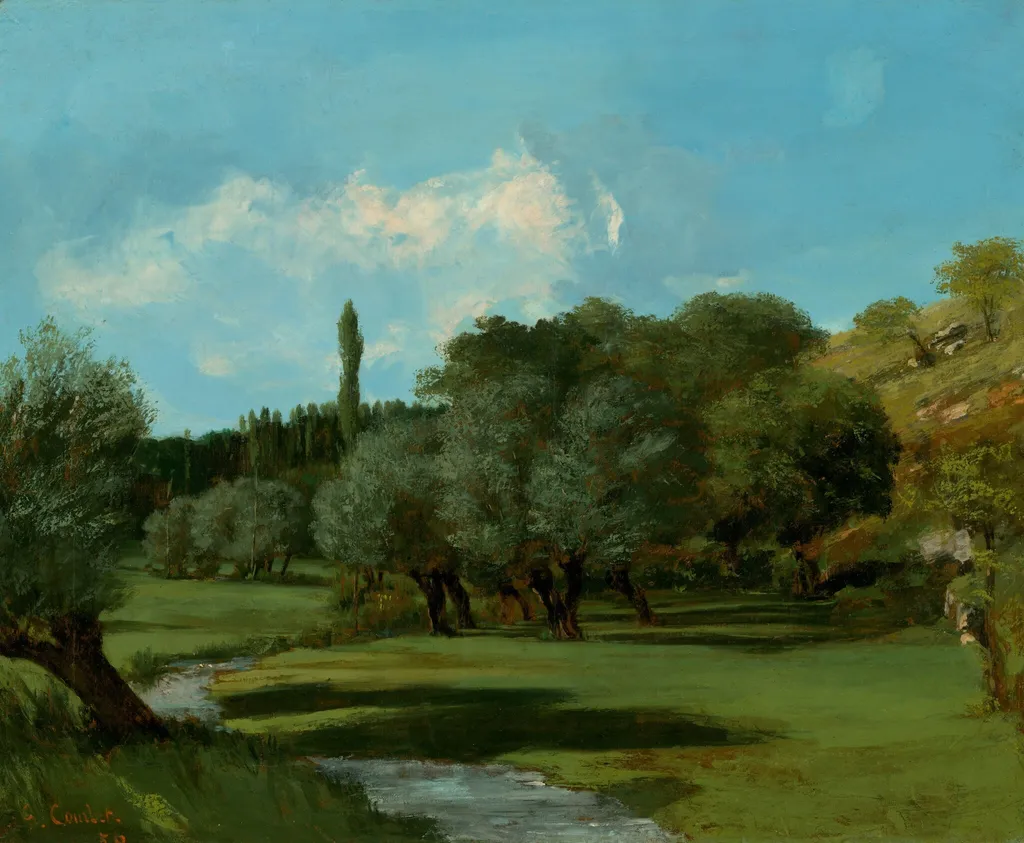
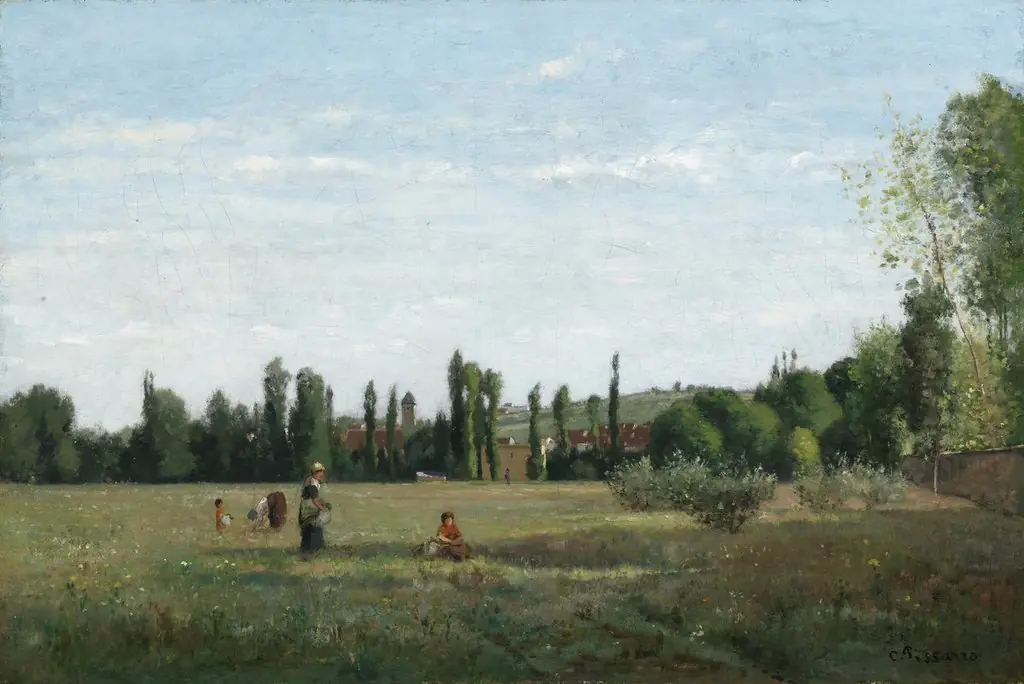
La Bretonnerie in the Department of Indre is an oil painting by the Impressionist artist Gustave Courbet. It dates from 1856 and is held in the collection of the National Gallery of Art.
- Inscription
- Inscribed:lower left: G.Courbet / 56
About this work
The ground slopes up around the trunk, covered in dry grass and rocks.
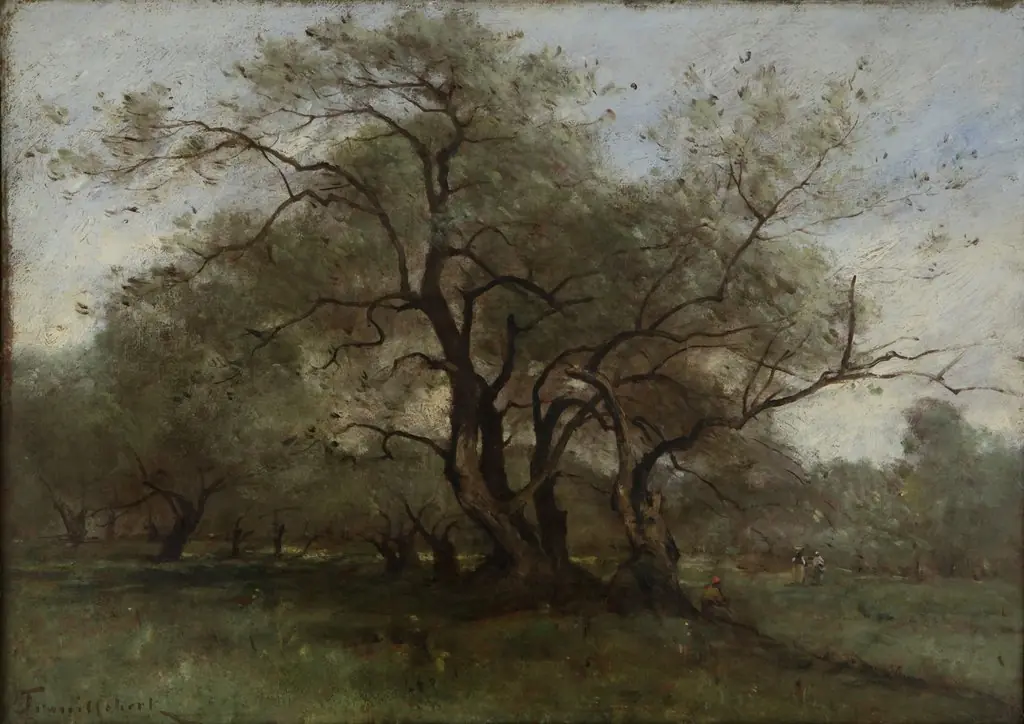
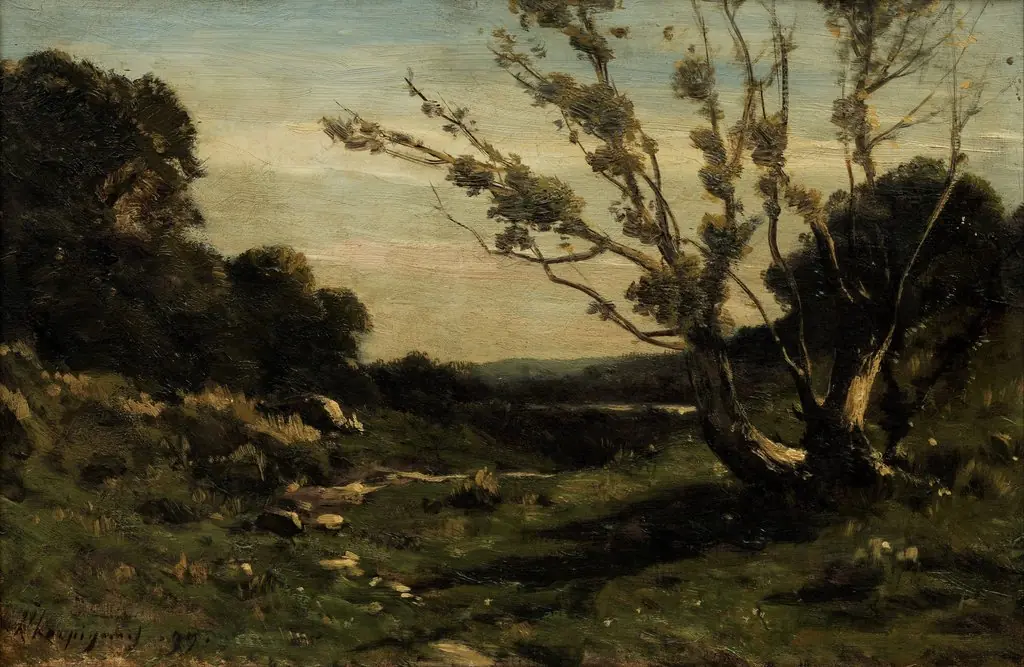
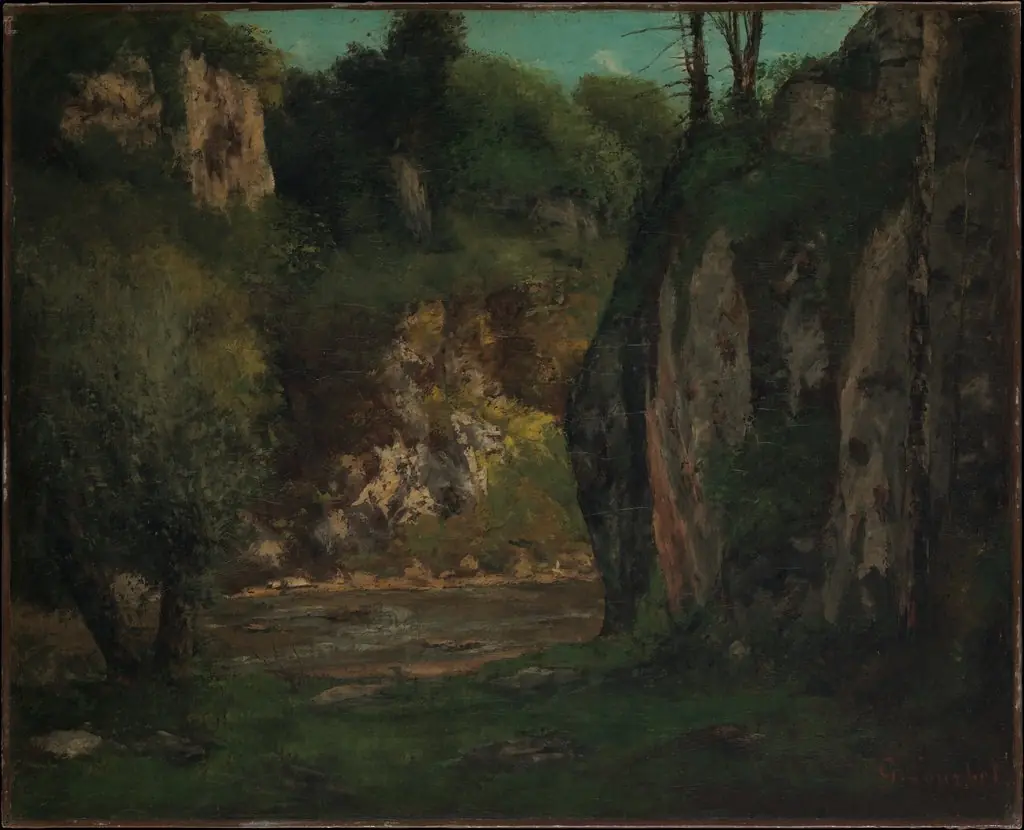
A lone oak tree stands against a cloudy sky. Its gnarled branches twist like fingers against the wind. The ground slopes up around the trunk, covered in dry grass and rocks.
Courbet painted this in 1856 during a trip to the French countryside. He didn’t show grand castles or famous people, just an ordinary tree. The brushwork is rough and thick, especially in the shadows.
Check out this tree’s twisty strength. Find it next at the National Gallery of Art, Washington.
Technique & Style
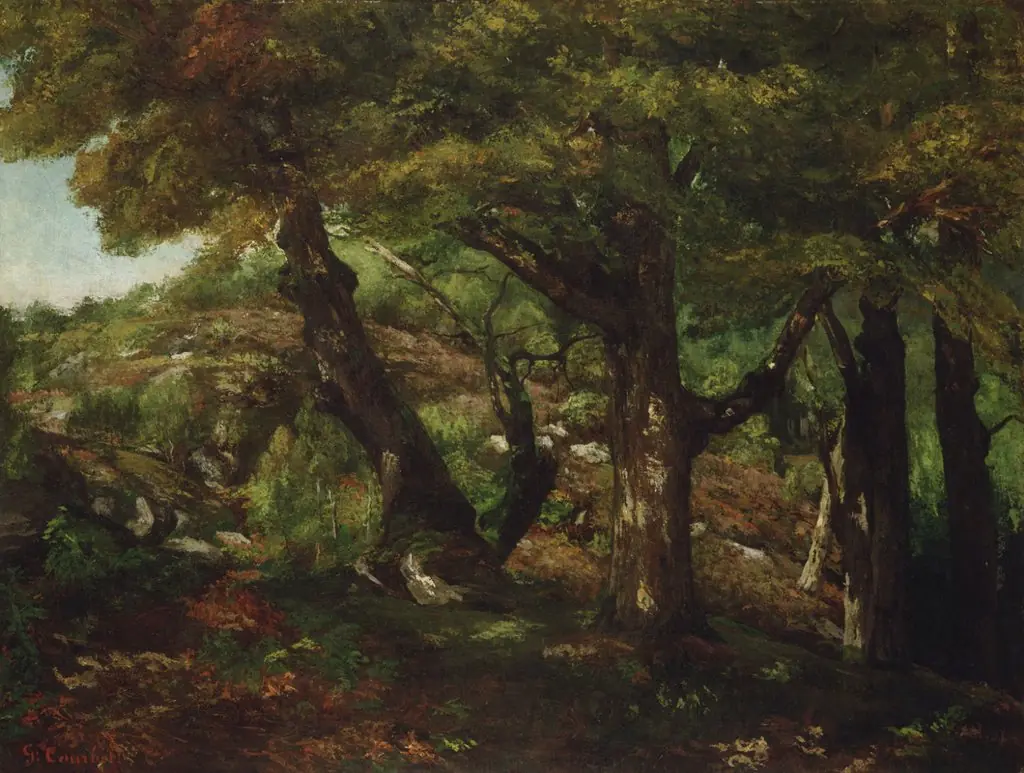
The painting is executed in oil on canvas, a medium Courbet favored for its luminous depth and textural flexibility. Measuring 60.8 cm in height and 73.3 cm in width, the work’s scale supports a close, detailed study of foliage and light, typical of Courbet’s plein-air practice. Handling is broad yet precise, with layered, broken brushwork that captures the dappled light filtering through the Bretonnerian canopy.
The composition’s restrained palette, earthy greens and ochres, conveys the damp, temperate atmosphere of the region, while the vertical format emphasizes the upward thrust of the tree trunk and branches.
History & Provenance
Gustave Courbet painted La Bretonnerie in the Department of Indre in 1856. The work was presented as a gift by the artist to Clément Laurier [1831–1878], who became its first recorded owner. By 1935 the painting was in a private collection in Poitiers, France, and was lent from there to the Gustave Courbet exhibition at the Kunsthaus Zurich that year.
In 1937 it appeared at Paul Rosenberg’s Paris gallery before being deposited with other works at the Banque Nationale pour le Commerce et l’Industrie in Libourne. Nazi forces confiscated it on 28 April 1941 as part of the ERR seizure. Hermann Göring selected the painting from the Jeu de Paume on 14 September 1941, and it was subsequently recorded in the Göring collection.
After World War II it was recovered and restituted via Allied channels to Paul Rosenberg and Co. in New York.
The Harrimans acquired it in June 1947 and later donated it in 1972 to the National Gallery of Art, Washington, D.C.
La Bretonnerie in the Department of Indre is held in the collection of the National Gallery of Art in Washington, D.C., where it was accessioned in 1972 as a gift from The W. Averell Harriman Foundation. The painting entered the foundation's possession after being sold to Marie N. Harriman and W. Averell Harriman in New York in June 1947. Prior to its acquisition by the Harrimans, the work had a complex history involving the Paul Rosenberg galleries in Paris and New York, and it was temporarily confiscated by the Nazi ERR in 1941 while deposited in Libourne.
The artwork was exhibited at the Kunsthaus in Zurich in 1935, loaned from a private collection in Poitiers, and shown again at the Paul Rosenberg Galleries in Paris in 1937. Following its restitution and subsequent sale, it was not publicly exhibited again until its donation to the National Gallery of Art.
Overview
Gustave Courbet's 1856 oil on canvas, La Bretonnerie in the Department of Indre, exemplifies the artist's commitment to Realism. This painting portrays a solitary oak tree within a natural landscape, reflecting Courbet's interest in depicting unidealized subjects from direct observation. It stands as a characteristic example of his work from a period when he was actively challenging traditional artistic conventions.
Subject & Meaning
The central focus of the composition is a robust, gnarled oak tree, its branches twisting against a cloudy sky. The ground around its trunk is depicted with dry grass and rocks, sloping gently upwards. Courbet deliberately chose this unassuming natural element, rather than a heroic or picturesque scene, to highlight the inherent dignity and reality of everyday subjects, a core tenet of the Realist movement.
Own this work as a print
Artist & collection
Artist
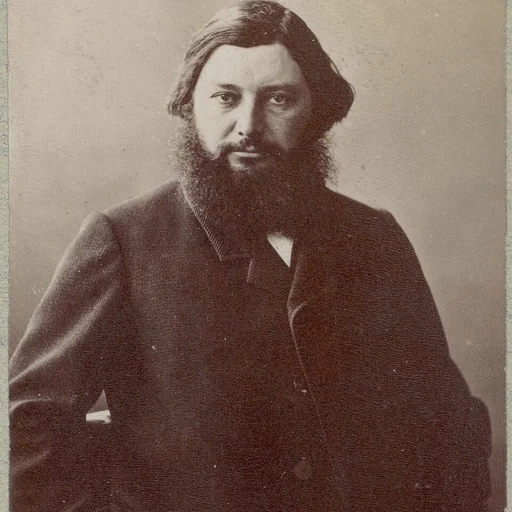
Jean Désiré Gustave Courbet (UK: KOOR-bay; US: koor-BAY; French:; 10 June 1819 – 31 December 1877) was a French painter who led the Realism movement in 19th-century French painting.