Artwork
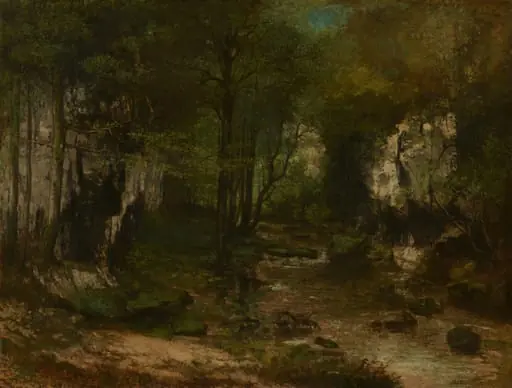
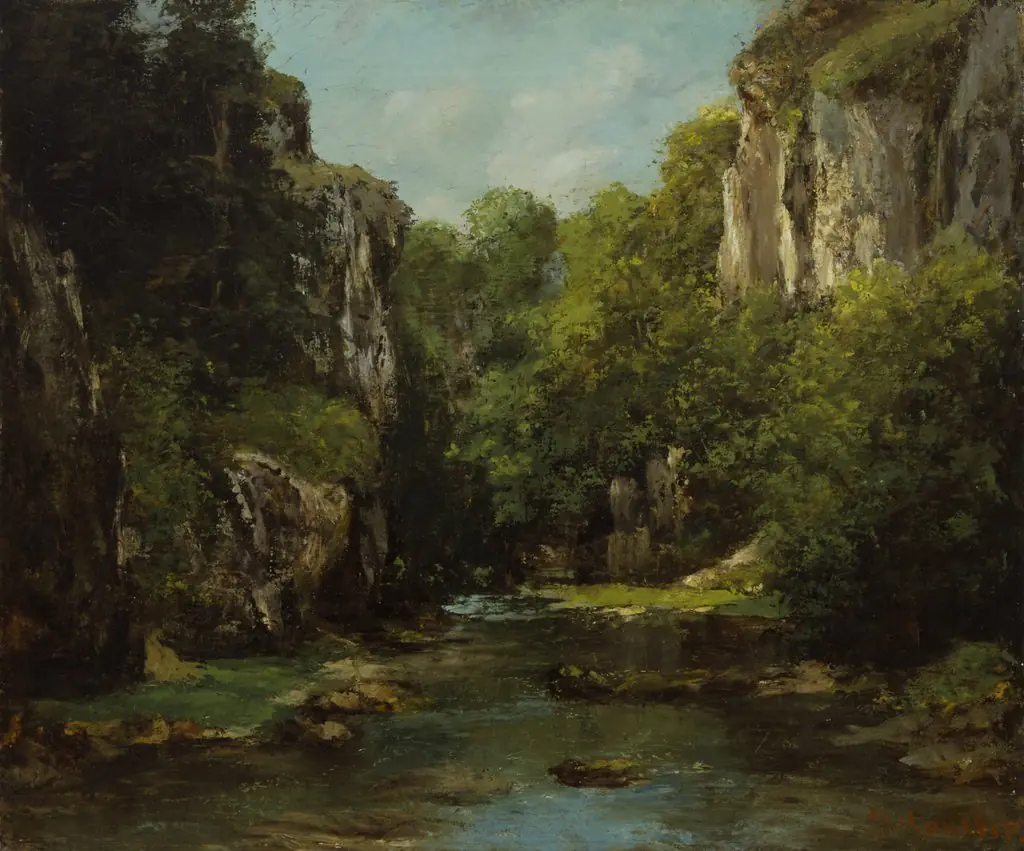
The Hidden Brook
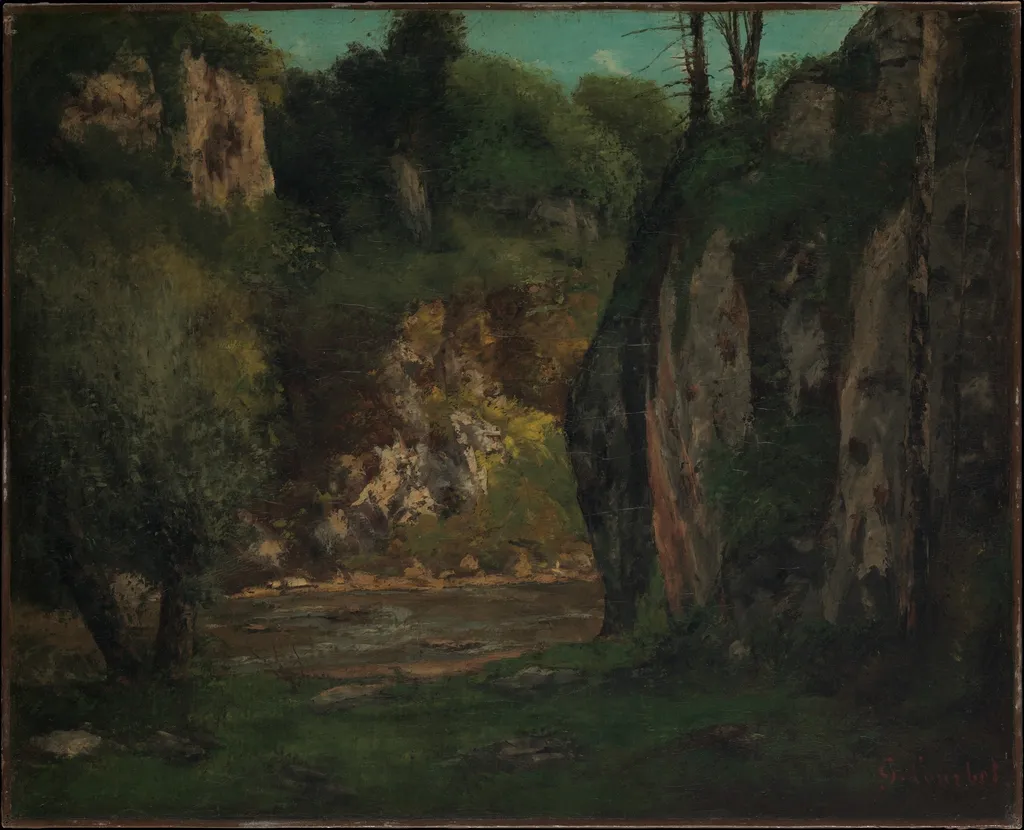
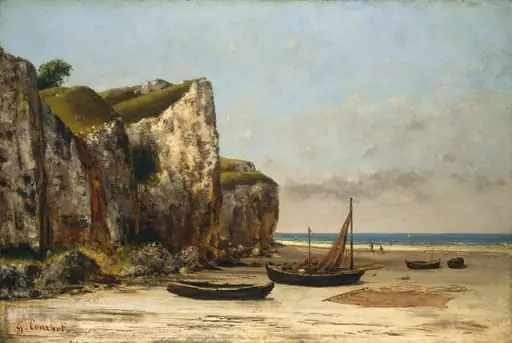
The Hidden Brook is an oil painting by the Realist artist Gustave Courbet. It dates from 1873 and is held in the collection of the Metropolitan Museum of Art.
About this work
Subject & Meaning
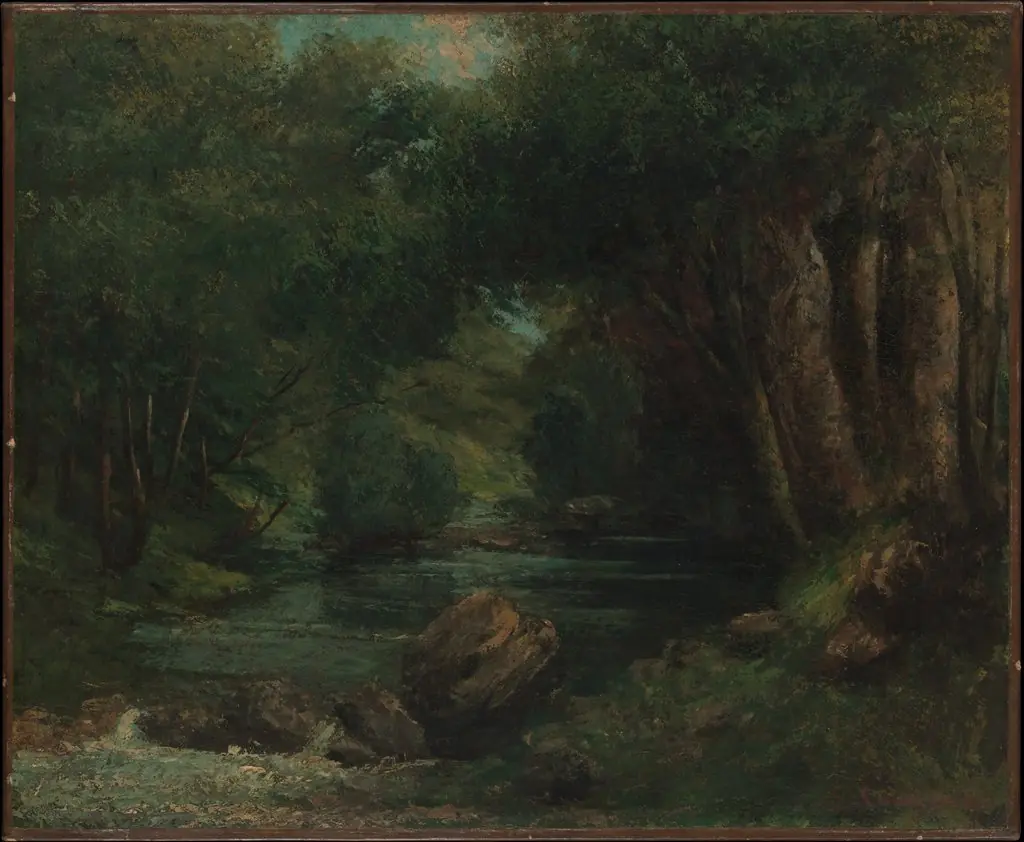
The Hidden Brook, painted by Gustave Courbet in 1873, portrays a secluded stream winding through a wooded terrain, rendered in oil on canvas.
The Hidden Brook, painted by Gustave Courbet in 1873, portrays a secluded stream winding through a wooded terrain, rendered in oil on canvas. The composition emphasizes a quiet river that is partially concealed by foliage, a motif that underscores the artist's fascination with unspoiled nature typical of his landscape works. By focusing on the subtle flow of water within a dense setting, the work suggests themes of hidden vitality and the intimate relationship between water and land. The painting, catalogued as a landscape genre piece, is housed in the Metropolitan Museum of Art.
Technique & Style
The Hidden Brook is an oil painting on canvas, executed by Gustave Courbet in 1873. The work measures 59.4 by 75.6 centimeters, an orientation consistent with a horizontal landscape composition. Classified as a landscape painting, it depicts a river scene, placing it within Courbet's broader engagement with naturalistic outdoor subjects.
The use of oil paint on canvas aligns with the standard support and medium favored by the artist for his landscape production during this period. The painting is held in the collection of the Metropolitan Museum of Art. Beyond these documented facts, the available sources do not provide further detail on specific brushwork, palette, surface handling, or stylistic analysis.
History & Provenance
The Hidden Brook was created in 1873 by Gustave Courbet, executed in oil on canvas measuring approximately 59.4 by 75.6 centimeters. The work is a landscape depicting a brook and its surrounding terrain. No commission or earlier ownership information is provided in the sources; the painting's recorded provenance begins with its acquisition by the Metropolitan Museum of Art, where it remains in the collection.
It is classified as a landscape painting within Courbet's oeuvre. No specific accession number or detailed exhibition history is recorded in the available sources.
Overview
Gustave Courbet's oil painting, "The Hidden Brook," from 1873, exemplifies his commitment to the Realism movement. This landscape portrays a secluded natural setting, characteristic of Courbet's focus on depicting the world as it appeared without idealization. It stands as a testament to his direct observation of nature, a core principle of the artistic current he championed.
Context
As a pivotal figure and founder of the Realism movement, Gustave Courbet challenged the prevailing artistic norms of his era. He consciously moved away from the dramatic narratives of Romanticism and the idealized forms favored by academic institutions. Instead, Courbet advocated for an art grounded in observable reality, presenting subjects without embellishment or moralizing overtones, a revolutionary stance in 19th-century French art.
Legacy
Courbet's innovative approach to painting, characterized by its directness and rejection of conventional idealization, had a profound impact on subsequent generations of artists. His commitment to depicting the tangible world and his bold use of paint laid groundwork that would later be explored by movements such as Impressionism, with its focus on light and immediate perception, and even Cubism, in its re-evaluation of form and representation.
Own this work as a print
Artist & collection
Artist
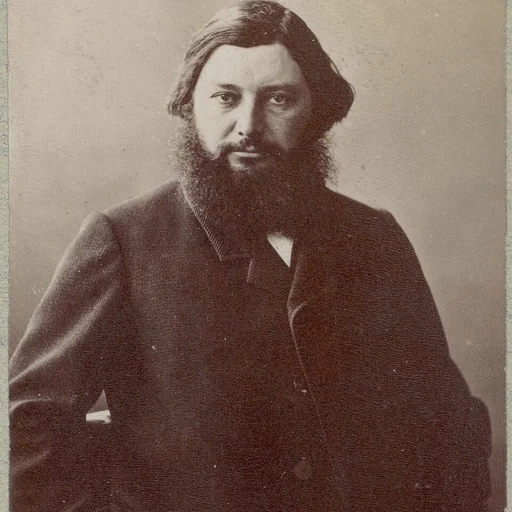
Jean Désiré Gustave Courbet (UK: KOOR-bay; US: koor-BAY; French:; 10 June 1819 – 31 December 1877) was a French painter who led the Realism movement in 19th-century French painting.