Artwork
Tarquin and Lucretia
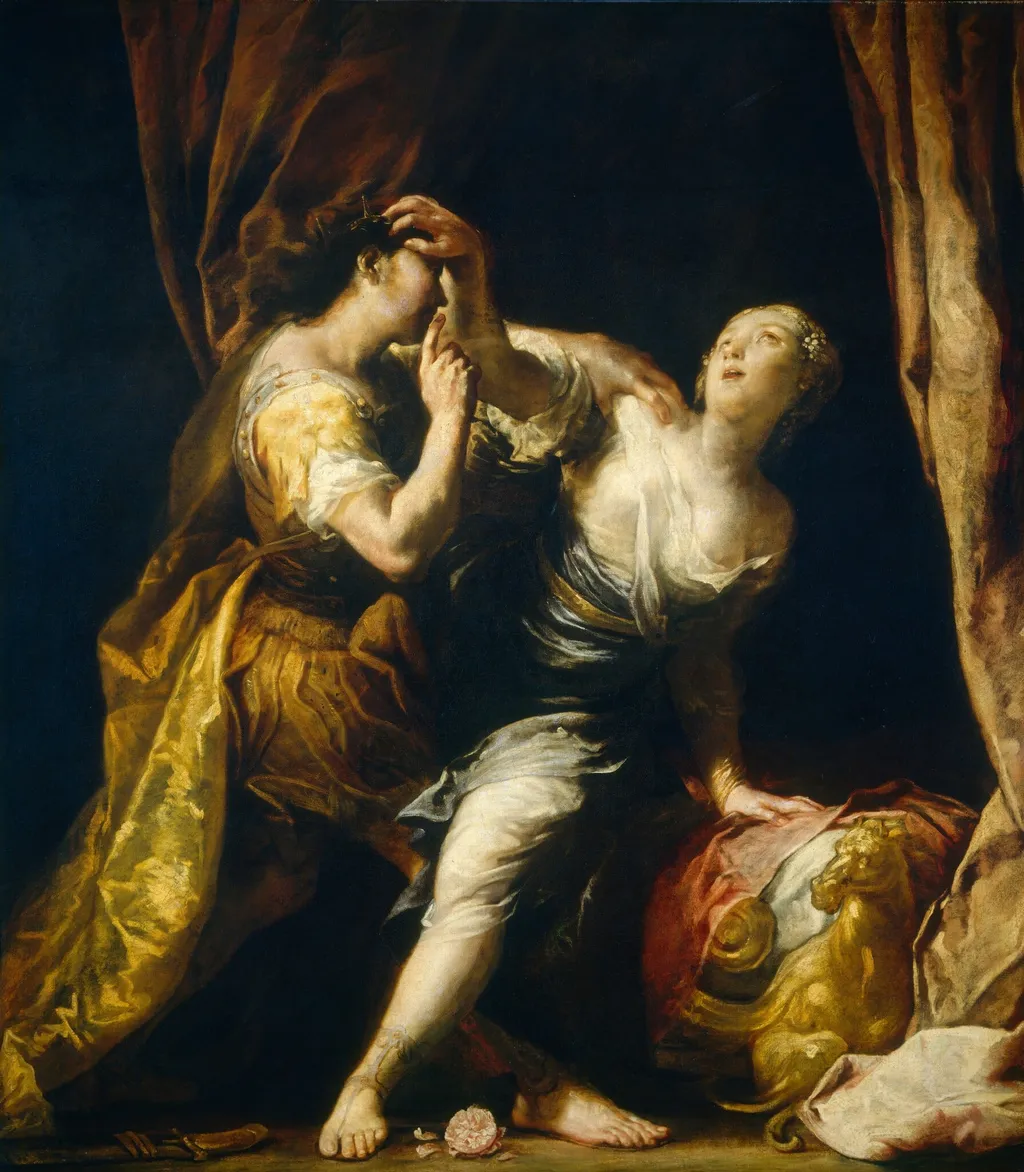
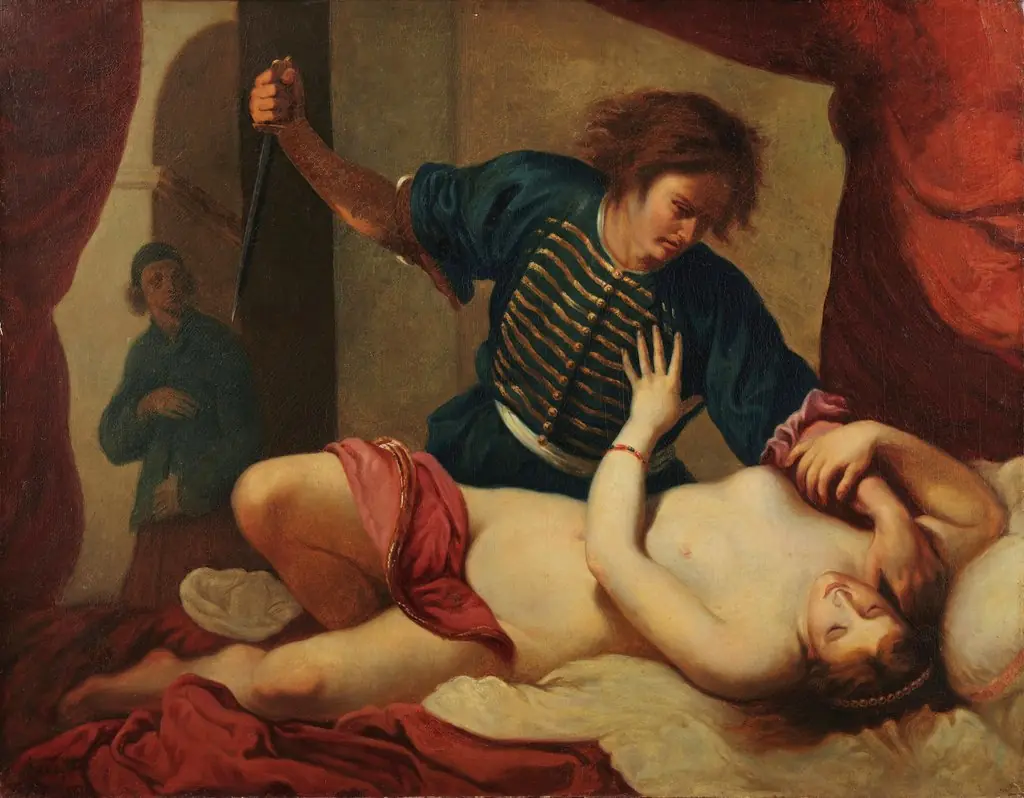
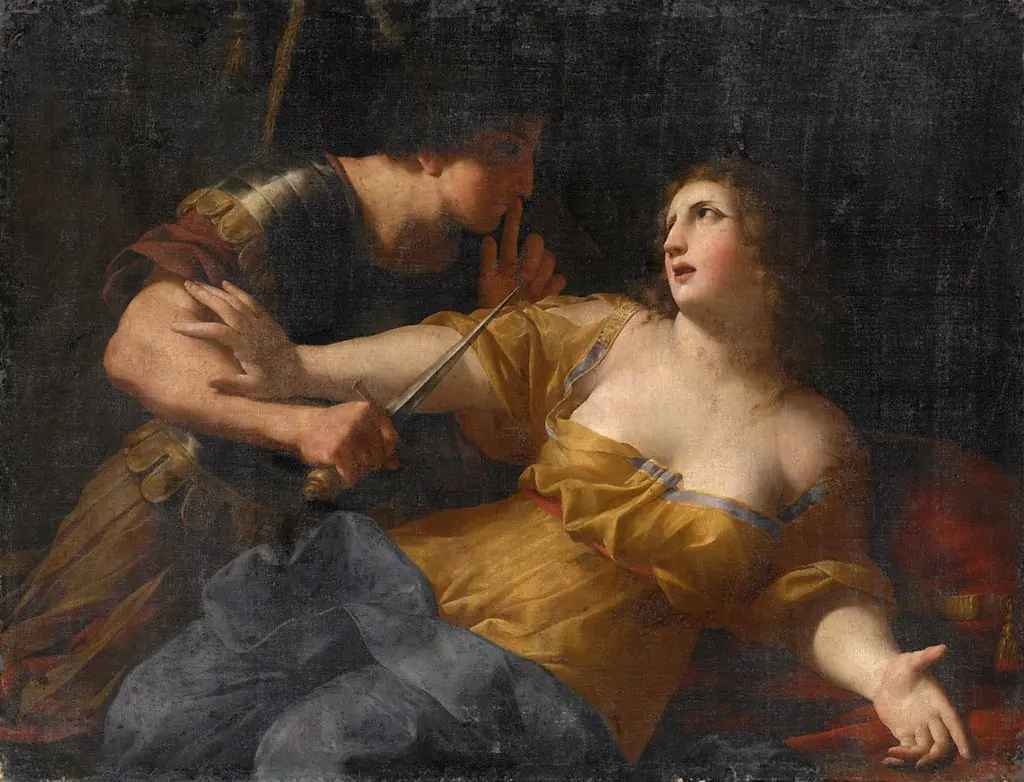
Tarquin and Lucretia is an oil painting by the Baroque artist Giuseppe Maria Crespi. It dates from 1698 and is held in the collection of the National Gallery of Art.
About this work
Subject & Meaning
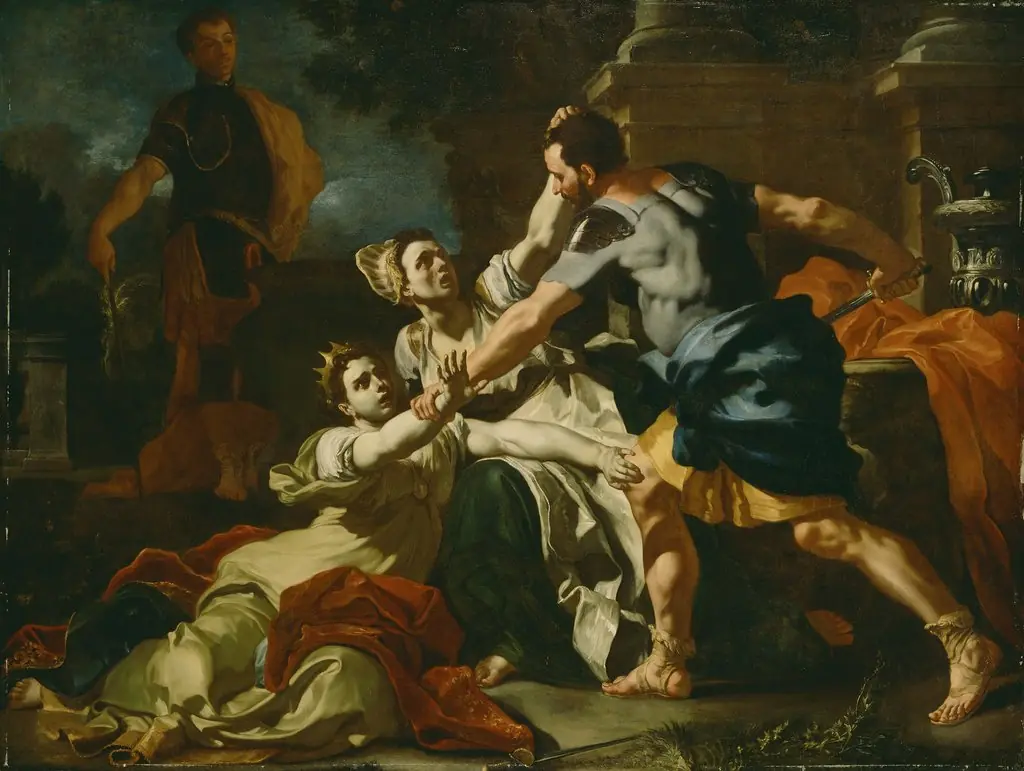
The canvas shows Lucius Tarquinius Superbus confronting Lucretia, a scene that illustrates the legendary rape that triggered the fall of the Roman monarchy.
The canvas shows Lucius Tarquinius Superbus confronting Lucretia, a scene that illustrates the legendary rape that triggered the fall of the Roman monarchy. Executed in oil on canvas in 1697, the work belongs to the history‑painting genre and uses the figures of the tyrant king and the virtuous wife to embody themes of political oppression and the violation of female chastity. By dramatizing the moment of assault, Crespi’s composition functions as a moralizing exemplar of republican ideals, warning of the consequences when authority abuses power.
Technique & Style
Tarquin and Lucretia is executed in oil on canvas, a standard medium for late seventeenth-century Italian history painting. The work measures approximately 195 by 171.5 centimeters, a substantial scale suited to its dramatic narrative subject. Crespi's handling reflects the Bolognese tradition of painterly modeling, with the oil medium allowing for fluid transitions between figure and shadow.
The painting is classified as a history painting, a genre demanding rigorous draftsmanship and expressive characterization. Held in the Samuel H. Kress Collection at the National Gallery of Art, the canvas has survived through multiple ownerships since the early eighteenth century, indicating stable condition and preservation.
History & Provenance
Giuseppe Maria Crespi executed the oil-on-canvas painting Tarquin and Lucretia in 1697. By 1739, the work was recorded in the Palazzo Barbazza in Bologna, where it remained at least until the 1760s. It subsequently entered the collection of Duke Albert von Sachsen-Teschen by 1768, though it was then misattributed to Mattia Preti.
The painting passed through the Brussels collections of Guillaume Verbelen and J.J. Chapuis, appearing in their respective sales in 1833 and 1865, still listed under the incorrect attribution. In 1937, the work was in the hands of M.A. Almas in Paris before being acquired by Le Bouheler. The Samuel H. Kress Foundation purchased the piece in 1938, and it was gifted to the National Gallery of Art in Washington, D.C., in 1952.
Giuseppe Maria Crespi's Tarquin and Lucretia (1697) is held by the National Gallery of Art in Washington, D.C., where it forms part of the Samuel H. Kress Collection. The painting was acquired by the Kress Foundation in New York in 1938 and officially gifted to the National Gallery in 1952. Prior to its arrival in the United States, the work passed through several European collections, including the Palazzo Barbazza in Bologna by 1739 and the collection of Duke Albert von Sachsen-Teschen by 1768, where it was misattributed to Mattia Preti.
It subsequently appeared in sales in Brussels in 1833 and 1865 before reaching Paris in 1937. The source material does not record specific exhibition histories for the work.
Context
Tarquin and Lucretia by Giuseppe Maria Crespi (1697) entered the art-historical record under the name of Mattia Preti, reflecting the painting’s long misattribution that persisted from at least the 1760s until its acquisition by the Samuel H. Kress Foundation in 1938. Early modern inventories and sale catalogues in Brussels associated the work with Preti, a confusion cemented by Duke Albert von Sachsen-Teschen’s 1768 drawing and its 1778 engraving, which reproduced a pendant then thought to be by Preti. The painting’s reattribution to Crespi followed its purchase in 1938, aligning it with the artist’s mature history paintings and Bologna’s late Baroque milieu.
Its placement in the Kress Collection and subsequent gift to the National Gallery of Art, Washington, D.C., secured its place in American museum scholarship, where it is studied as a key example of Crespi’s narrative intensity and chiaroscuro within the tradition of Italian history painting.
Overview
This oil on canvas painting, titled Tarquin and Lucretia, captures a pivotal and dark episode from ancient Roman history. It depicts the dramatic confrontation between the Etruscan prince Tarquin and the noblewoman Lucretia, a narrative deeply embedded in the foundation myths of the Roman Republic. The artwork focuses on the intense emotional and narrative climax of this tragic tale.
Own this work as a print
Artist & collection

Artist
Giuseppe Maria Crespi (14 March 1665 – 16 July 1747), nicknamed Lo Spagnuolo ('The Spaniard'), was an Italian late Baroque painter of the Bolognese School.