Artwork
Tarquin and Lucretia
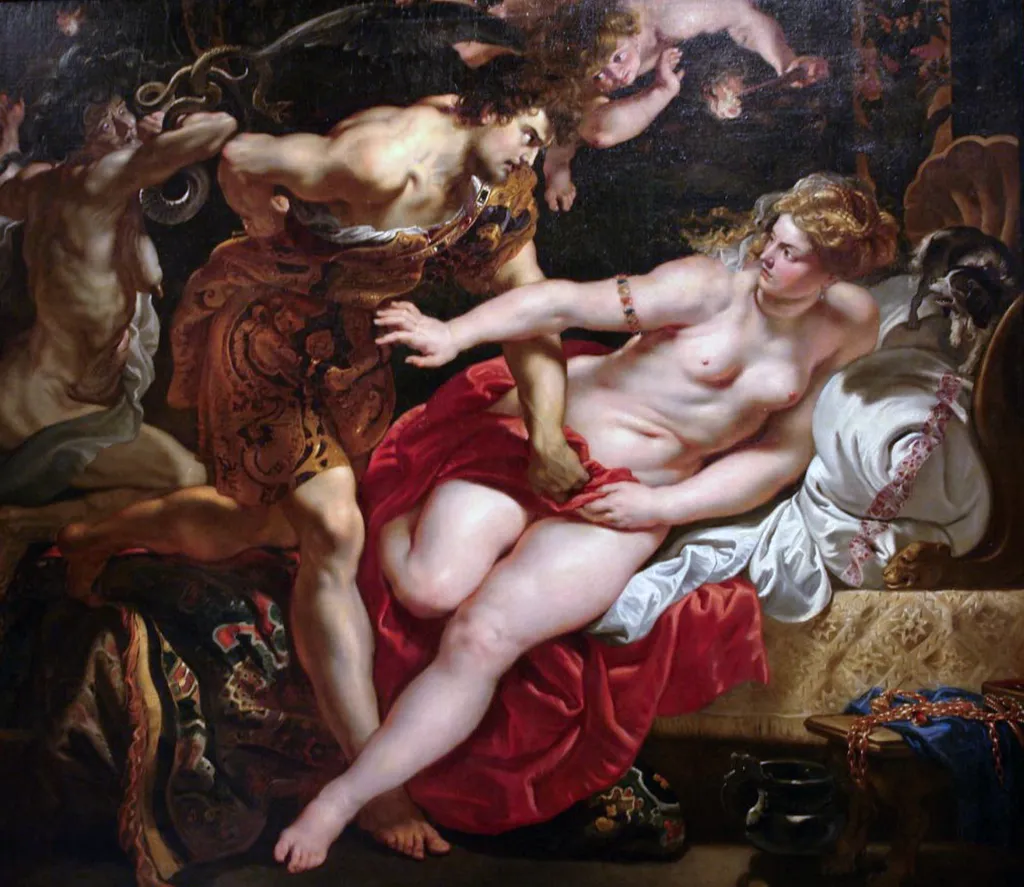
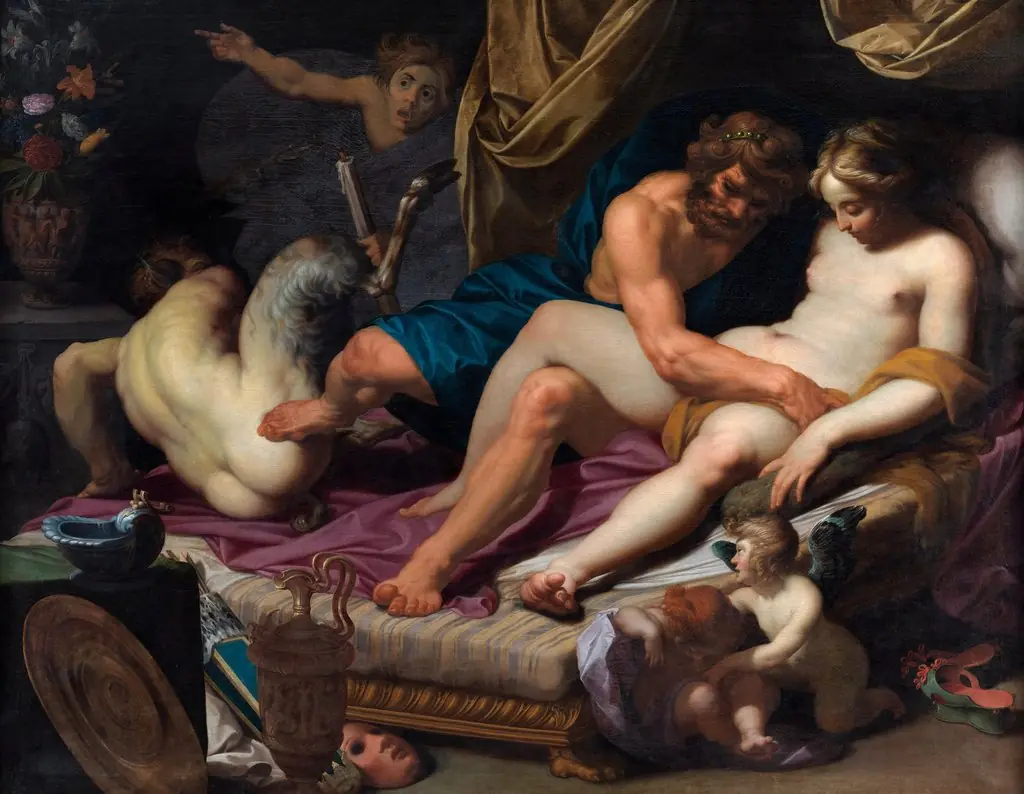
Tarquin and Lucretia is a tempera painting by the Flemish Baroque painting artist Peter Paul Rubens. It dates from 1610 and is held in the collection of the Hermitage Museum.
About this work
Subject & Meaning
By drawing on Ovid’s Fasti rather than Livy, Rubens emphasizes Tarquinius’ inner turmoil and the moral drama rather than a mere historical recount.
The painting illustrates the rape of Lucretia by Sextus Tarquinius, the central narrative identified as the main subject. Rubens chooses the instant before the threatened assault, showing Tarquinius in oriental‑style robes that suggest his moral corruption, with his sword concealed behind his back while he attempts to persuade Lucretia with blandishments. Lucretia’s refusal is met by the shocked Cupid hovering above, and to the left appears a Fury, possibly Tisiphone, brandishing a torch and a serpent that seems ready to strike Tarquinius, symbolizing the impending punishment for his crime.
By drawing on Ovid’s Fasti rather than Livy, Rubens emphasizes Tarquinius’ inner turmoil and the moral drama rather than a mere historical recount.
Technique & Style
The painting Tarquin and Lucretia is executed in tempera on canvas, measuring 214.5 cm by 187 cm. It depicts the moment of attempted seduction by Sextus Tarquinius toward Lucretia, rendered with dynamic composition and dramatic chiaroscuro characteristic of Peter Paul Rubens' Baroque style. The artwork features a hidden sword behind Tarquinius' back and a Cupid in flight illuminating the alcove, emphasizing emotional tension. A Fury figure, possibly Tisiphone, appears on the left, holding a torch and a serpent, symbolizing moral retribution.
The piece reflects Rubens' engagement with Ovid's Fasti rather than direct historical sources, portraying a psychological climax preceding explicit violence.
Context
Scholars generally date Tarquin and Lucretia to shortly after Rubens’ return from Italy in late 1608, basing the attribution on stylistic analysis. The figure of Lucretia appears in a drawing by Willem Panneels, a collaborator, within the Rubens Cantoor, indicating the painting existed by the 1620s and remained in the artist’s workshop for an extended period, possibly as a work made for himself. Compositionally, Rubens borrows from a Titian treatment of the same subject he likely saw in Spain, yet he shifts the psychological focus from a Renaissance exemplum of female virtue to Ovid’s Fasti, portraying Tarquin’s inner torment and the moment before explicit violence.
The addition of a Fury personification, possibly Tisiphone, introduces a mythological punitive layer, suggesting Tarquin’s impending fate. Post‑war restitution debates have further shaped its modern critical reception.
Overview
Tarquin and Lucretia is a 1610 tempera painting by Flemish artist Peter Paul Rubens, exemplifying the Flemish Baroque style through its dramatic scene and rich colors.
History & Provenance
Created in 1610, Tarquin and Lucretia is now part of the collection at the State Hermitage Museum.
Own this work as a print
Artist & collection
Artist
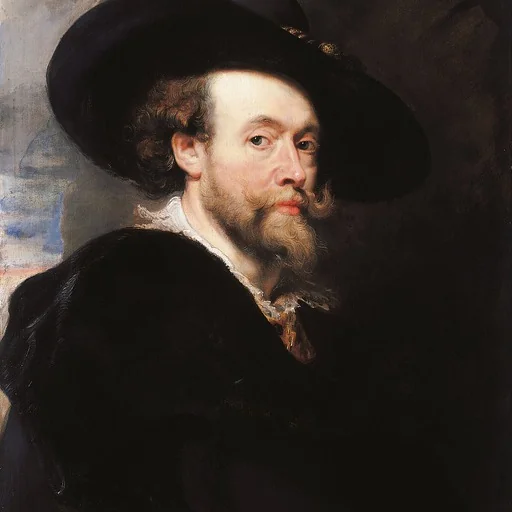
Sir Peter Paul Rubens ( ROO-bənz; Dutch:; 28 June 1577 – 30 May 1640) was a Flemish artist and diplomat.