Artwork
The Babylonian Whore
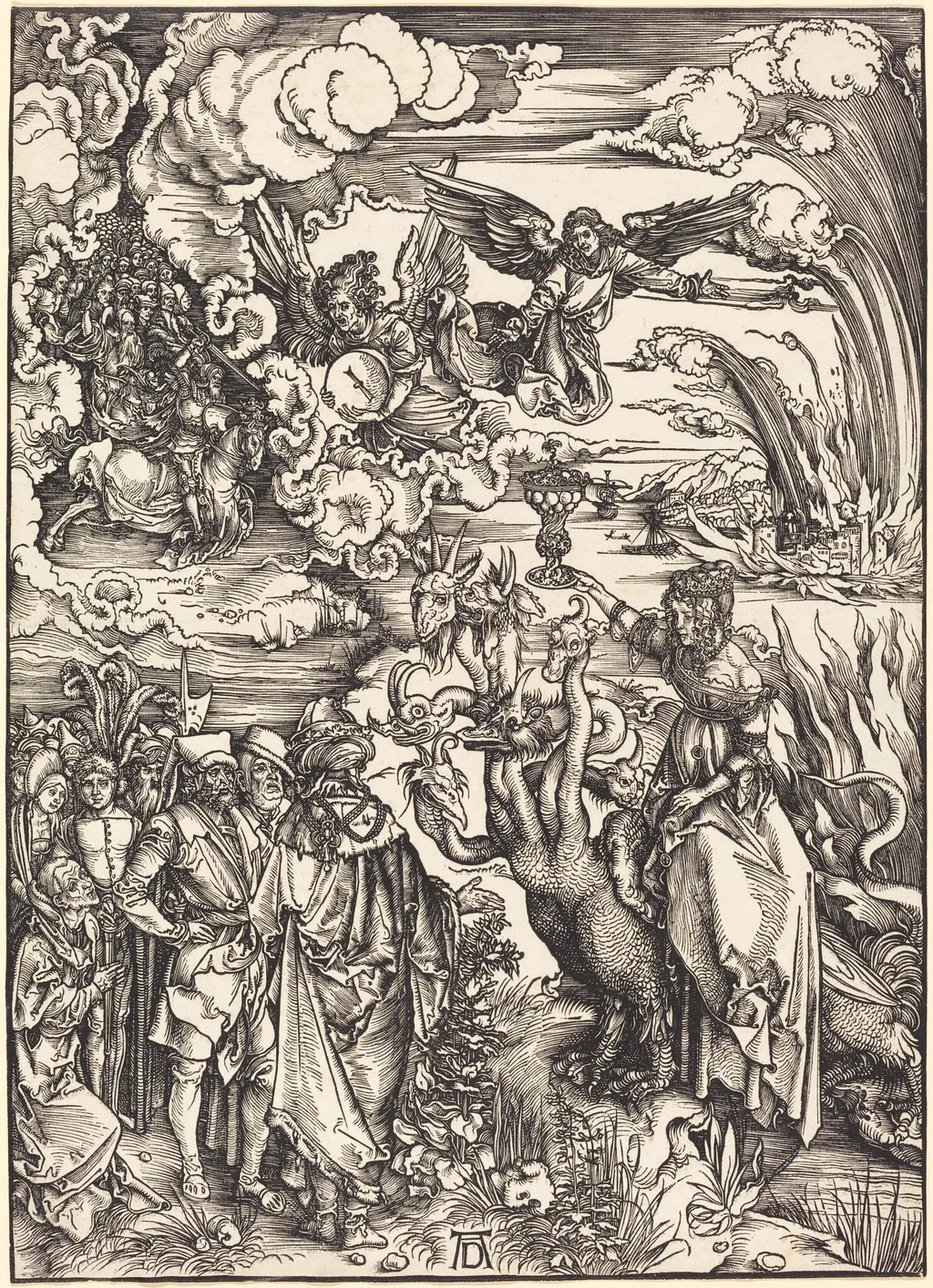
The Babylonian Whore is an ink print by the Northern Renaissance artist Albrecht Dürer. It dates from 1497 and is held in the collection of the Metropolitan Museum of Art.
About this work
Subject & Meaning
Albrecht Dürer's 1496 woodcut, titled The Babylonian Whore, serves as a visual interpretation of the Whore of Babylon as described in Revelation 17, 18, and 19.
Albrecht Dürer's 1496 woodcut, titled The Babylonian Whore, serves as a visual interpretation of the Whore of Babylon as described in Revelation 17, 18, and 19. As part of his larger Apocalypse series, the work functions as religious art within the German Renaissance tradition. The image depicts the specific biblical figure known as the Whore of Babylon, illustrating the apocalyptic narrative found in the Book of Revelation.
This print translates the scriptural text into a graphic representation, focusing on the symbolic entity central to the prophetic vision rather than a secular or historical portrait.
Technique & Style
Albrecht Dürer created The Babylonian Whore in 1496 as a woodcut print, a technique characteristic of the German Renaissance. The work was executed on laid paper, utilizing the woodcut medium to render the complex religious imagery derived from Revelation 17. The print measures approximately 38.9 to 39.3 cm in height and 28.2 cm in width.
Produced in Nuremberg, the piece demonstrates Dürer's mastery of line and form within the constraints of the woodblock printing process, serving as a key component of his Apocalypse series.
History & Provenance
Albrecht Dürer created the woodcut The Babylonian Whore in Nuremberg, with inception dates recorded as 1496 and 1 January 1498. The work serves as an illustration for Revelation chapters 17 through 19 within the artist's Apocalypse series. While the specific commissioning patron is not detailed in the available records, the print was produced during the German Renaissance movement.
Multiple major institutions currently hold impressions of this work, including the National Gallery of Art in Washington, D.C. (Rosenwald Collection), the Chester Beatty Library, the Städel Museum, and the Kupferstichkabinett in Berlin. The physical impressions are executed on laid paper, with dimensions ranging approximately from 38.9 to 39.3 cm in height and 28.2 cm in width.
The work is held in numerous public institutions, including the National Gallery of Art in Washington, D.C., where it resides in the Rosenwald Collection. Other major holdings include the Chester Beatty Library, the Kupferstichkabinett Berlin, the Staatliche Kunsthalle Karlsruhe, and the Germanisches Nationalmuseum. Additional copies are located at the National Gallery Prague, the Städel Museum, the Cleveland Museum of Art, the Los Angeles County Museum of Art, the Metropolitan Museum of Art, the Payne Gallery, the Museum of Fine Arts in Houston, and the Kupferstich-Kabinett Dresden. Specific inventory or accession numbers for these locations are not provided in the available sources.
Context
Albrecht Dürer's woodcut The Babylonian Whore, created in 1496, serves as a pivotal component of his Apocalypse series, a landmark achievement of the German Renaissance. The work visualizes the narrative of Revelation 17, 18, and 19, depicting the Whore of Babylon with a density of detail characteristic of Dürer's mature printmaking style. Produced in Nuremberg, the print established a new standard for religious woodcuts by combining complex iconography with unprecedented technical precision.
Its enduring significance is evidenced by its widespread preservation across major institutions, including the National Gallery of Art, the British Museum's sister institution the Chester Beatty Library, and the Kupferstichkabinett Berlin. These holdings underscore the piece's historical weight as a defining image of late 15th-century Northern European art.
Overview
The Babylonian Whore is a woodcut print created by Albrecht Dürer around 1497. It is a representation of a biblical figure.
Own this work as a print
Artist & collection
Artist
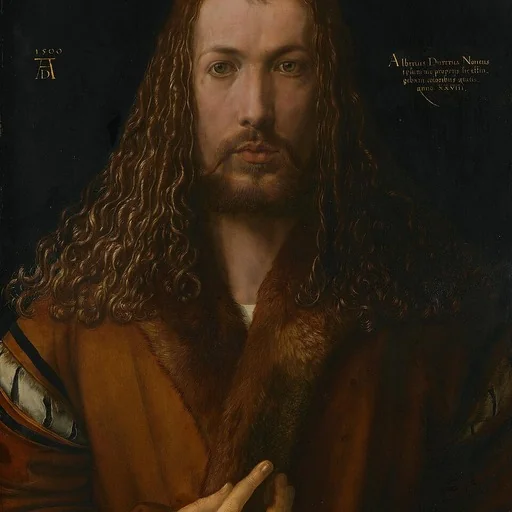
Albrecht Dürer spent his life in Nuremberg, a busy German city where artists traded prints like currency.

![Madonna and Child [obverse], by Albrecht Dürer](https://artifactworldgallery.com/img/albrecht-durer--madonna-and-child-obverse--d7b8ebf05d22ebe5-w320.webp)
![Lot and His Daughters [reverse], by Albrecht Dürer](https://artifactworldgallery.com/img/albrecht-durer--lot-and-his-daughters-reverse--b4ebf9b282faa17a-w320.webp)
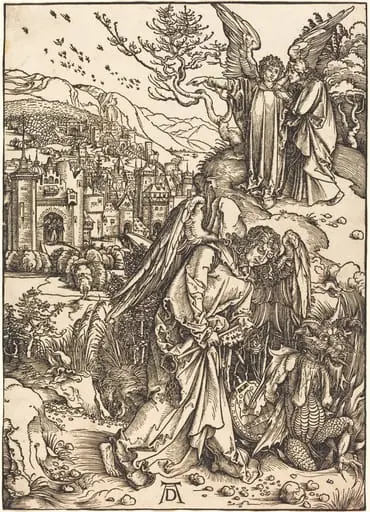 The Angel with the Key to the Bottomless Pit
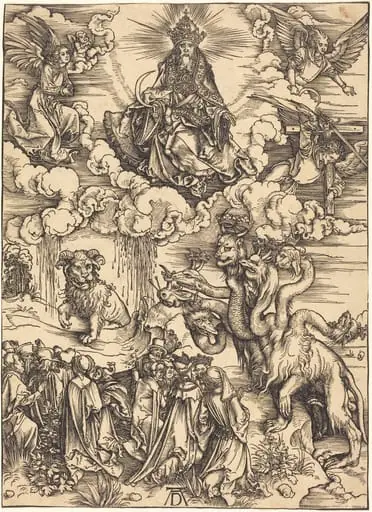 The Beast with Two Horns like a Lamb
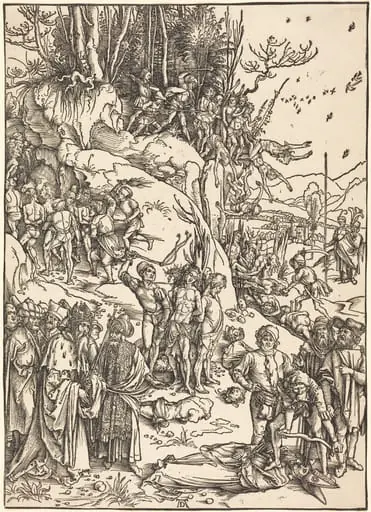 The Martyrdom of the Ten Thousand
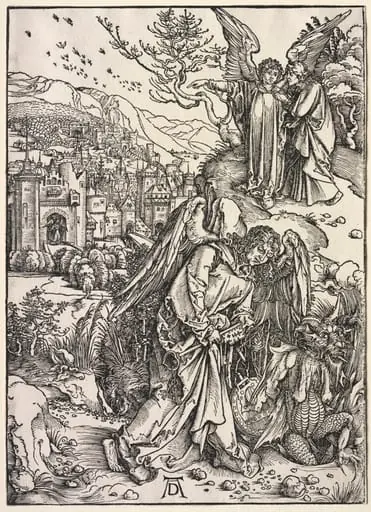 Revelation of St. John: Angel with the Key of the Bottomless Pit
 Ain Briester von Neunhe ...
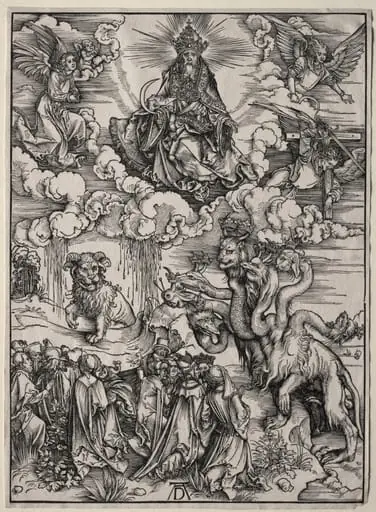 The Beast with Seven Heads and the Beast with Lamb's Horns
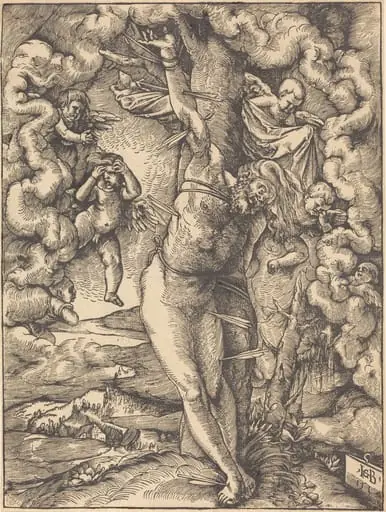 Saint Sebastian
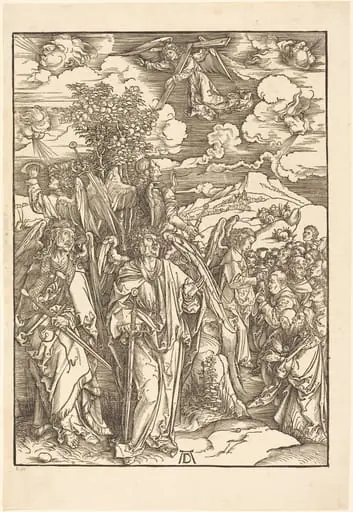 The Four Angels Holding the Winds
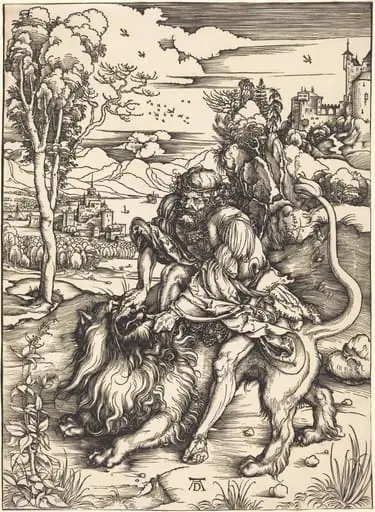 Samson Fighting with the Lion
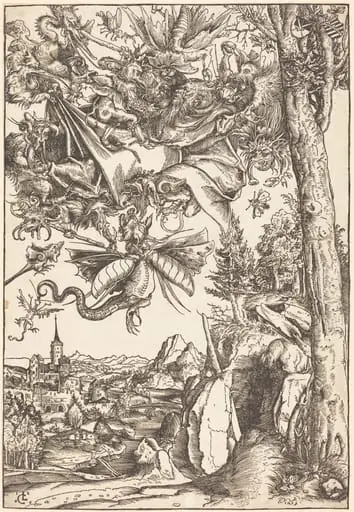 The Temptation of Saint Anthony
- Revelation of St. John: The Woman of Babylon
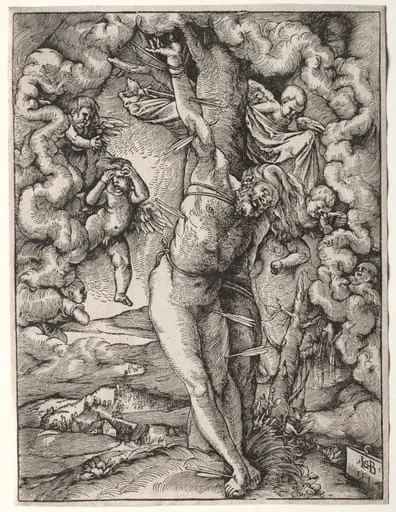 The Great St. Sebastian