Artwork
The Expulsion from Paradise
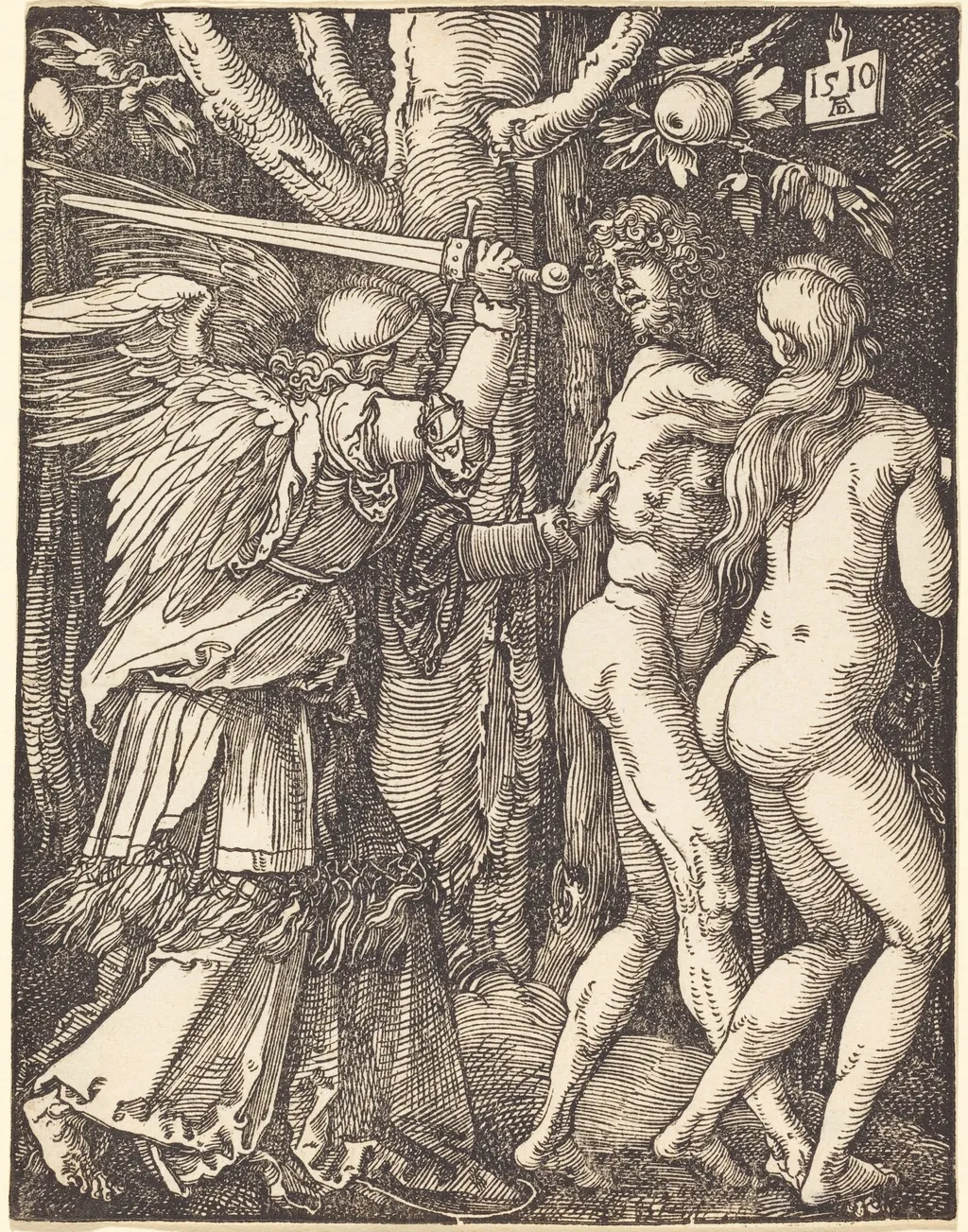
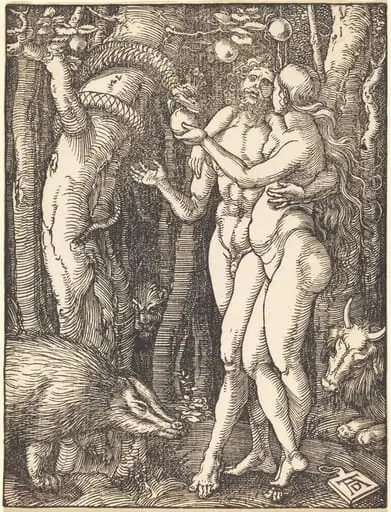
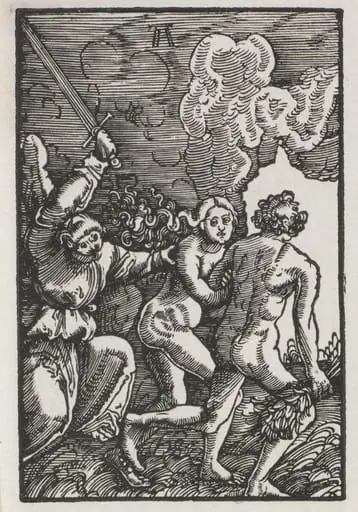
The Expulsion from Paradise is an ink print by the Northern Renaissance artist Albrecht Dürer. It dates from 1510 and is held in the collection of the Rosenwald Collection.
- Inscription
- Inscribed:in block, upper right, on hanging tablet: 1510 / AD [artist's monogram]; verso, bottom left, in graphite by a later hand:18; verso, bottom right, in graphite by a later hand: 3
About this work
Subject & Meaning
Albrecht Dürer's woodcut The Expulsion from Paradise illustrates the biblical narrative of the Fall of Man, derived directly from the Old Testament.
Albrecht Dürer's woodcut The Expulsion from Paradise illustrates the biblical narrative of the Fall of Man, derived directly from the Old Testament. The composition depicts Adam and Eve being driven out of Eden by a sword-wielding angel, marking their permanent separation from divine grace. Central to the scene is the Tree of the Knowledge of Good and Evil, which serves as the catalyst for their transgression and subsequent banishment.
As part of the Little Passion series, this print functions as a religious meditation on original sin and the loss of innocence, capturing the dramatic moment of humanity's expulsion from paradise.
Technique & Style
Albrecht Dürer created The Expulsion from Paradise as a woodcut printed on laid paper, characteristic of his German Renaissance style. The composition depicts Adam and Eve driven from the Garden of Eden by an angel, with the tree of the knowledge of good and evil central to the narrative. Measured at 9.8 cm in height and 12.5 cm in width, the print was produced between 1509 and 1510.
It belongs to the Little Passion series and reflects Dürer’s mastery of line and chiaroscuro to convey emotional intensity and theological themes. The work has been held by several collectors, including Joseph Daniel Böhm and Robert Scholtz, before being acquired by Lessing J. Rosenwald and gifted to the National Gallery of Art in 1943.
History & Provenance
The work titled The Expulsion from Paradise is a woodcut on laid paper created in 1510 by Albrecht Dürer. It entered the collection of Joseph Daniel Böhm in Vienna and later passed to Robert Scholtz in Budapest before being acquired by William Schab in New York. In 1940 it was purchased by Lessing J. Rosenwald in Jenkintown, Pennsylvania, and subsequently gifted to the National Gallery of Art in 1943.
The piece is part of the Rosenwald Collection and is held today by the National Gallery of Art, the Musée des Beaux-Arts de la ville de Paris, and the Museum of Fine Arts Ghent. Its creation falls within the German Renaissance movement and depicts the biblical fall of man as described in the Old Testament. The dimensions are 12.5 cm in height and 9.8 cm in width, and it was produced as part of Dürer’s Little Passion series.
The dating of the print is anchored to 1510, with inception recorded between 1509 and 1510, reflecting its place within Dürer’s early graphic work. The subject matter aligns with religious art of the period, emphasizing the expulsion from paradise as a theological narrative. The work’s provenance is documented through multiple owners, confirming its movement across European and American collections before institutional acquisition. Its inclusion in major museum inventories underscores its significance within Dürer’s oeuvre and the broader print tradition.
The woodcut is held by the National Gallery of Art in Washington, D.C., as part of the Lessing J. Rosenwald Collection. It entered the NGA in 1943 as a gift from Lessing J. Rosenwald, who had purchased it in 1940 through William Schab of New York. Earlier provenance traces the impression to Robert Scholtz in Budapest and before that to Joseph Daniel Böhm in Vienna.
According to Wikidata, impressions of the print are also located at the Musée des Beaux-Arts de la ville de Paris and the Museum of Fine Arts Ghent (MSK). No exhibition history is documented in the provided sources.
Context
The work is recognized as a pivotal religious print within the German Renaissance, exemplifying Dürer's mastery of woodcut technique and his deep engagement with biblical narrative. Its depiction of the expulsion from Eden draws directly on Old Testament themes and has been studied for its compositional precision and symbolic intensity. The print's provenance, traced through collectors such as Joseph Daniel Böhm and Robert Scholtz, culminated in its acquisition by the National Gallery of Art in 1943, underscoring its enduring scholarly and institutional significance.
Overview
Albrecht Dürer's 'The Expulsion from Paradise' is a woodcut executed in 1510, depicting the biblical narrative of Adam and Eve's banishment from Eden. The composition features the couple driven forward by a winged angel wielding a flaming sword. Eve is portrayed with a distinct expression of anguish, turning her head back toward the lost paradise, while Adam strides forward yet casts an upward glance at the divine messenger.
Dürer utilizes the woodcut medium to achieve remarkable tonal variation and linear precision, characteristic of his mature printmaking style. The artist employs dense cross-hatching and varied line weights to model the figures' anatomy and the surrounding foliage, creating a sense of volume and dramatic movement within a two-dimensional plane. This work exemplifies Dürer's synthesis of Northern European detail with Italian Renaissance principles of proportion and perspective.
Created during a period when the artist was refining his printmaking techniques to reach a broader European audience, the piece stands as a significant contribution to religious iconography of the German Renaissance. It demonstrates his ability to convey complex emotional states and theological themes through the stark contrast of black and white ink on laid paper.
Own this work as a print
Artist & collection
Artist
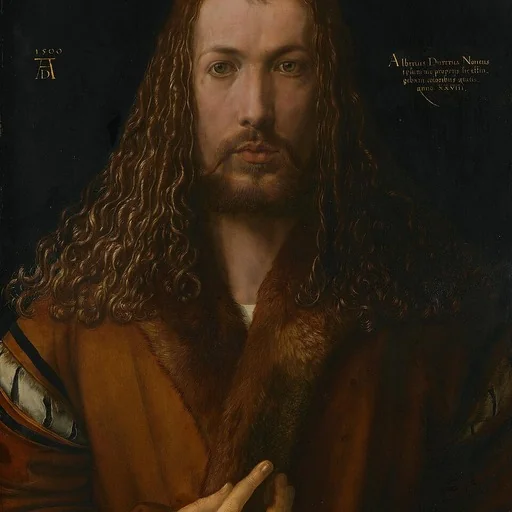
Albrecht Dürer spent his life in Nuremberg, a busy German city where artists traded prints like currency.
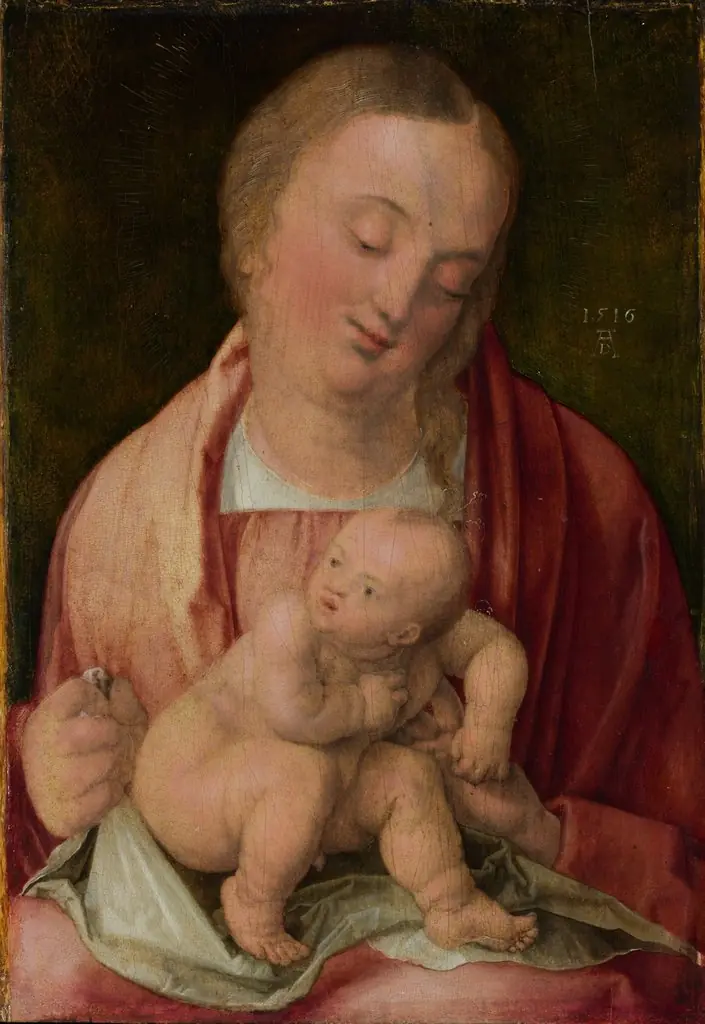
![Madonna and Child [obverse], by Albrecht Dürer](https://artifactworldgallery.com/img/albrecht-durer--madonna-and-child-obverse--d7b8ebf05d22ebe5-w320.webp)
![Lot and His Daughters [reverse], by Albrecht Dürer](https://artifactworldgallery.com/img/albrecht-durer--lot-and-his-daughters-reverse--b4ebf9b282faa17a-w320.webp)