Artwork
The Virgin Annunciate
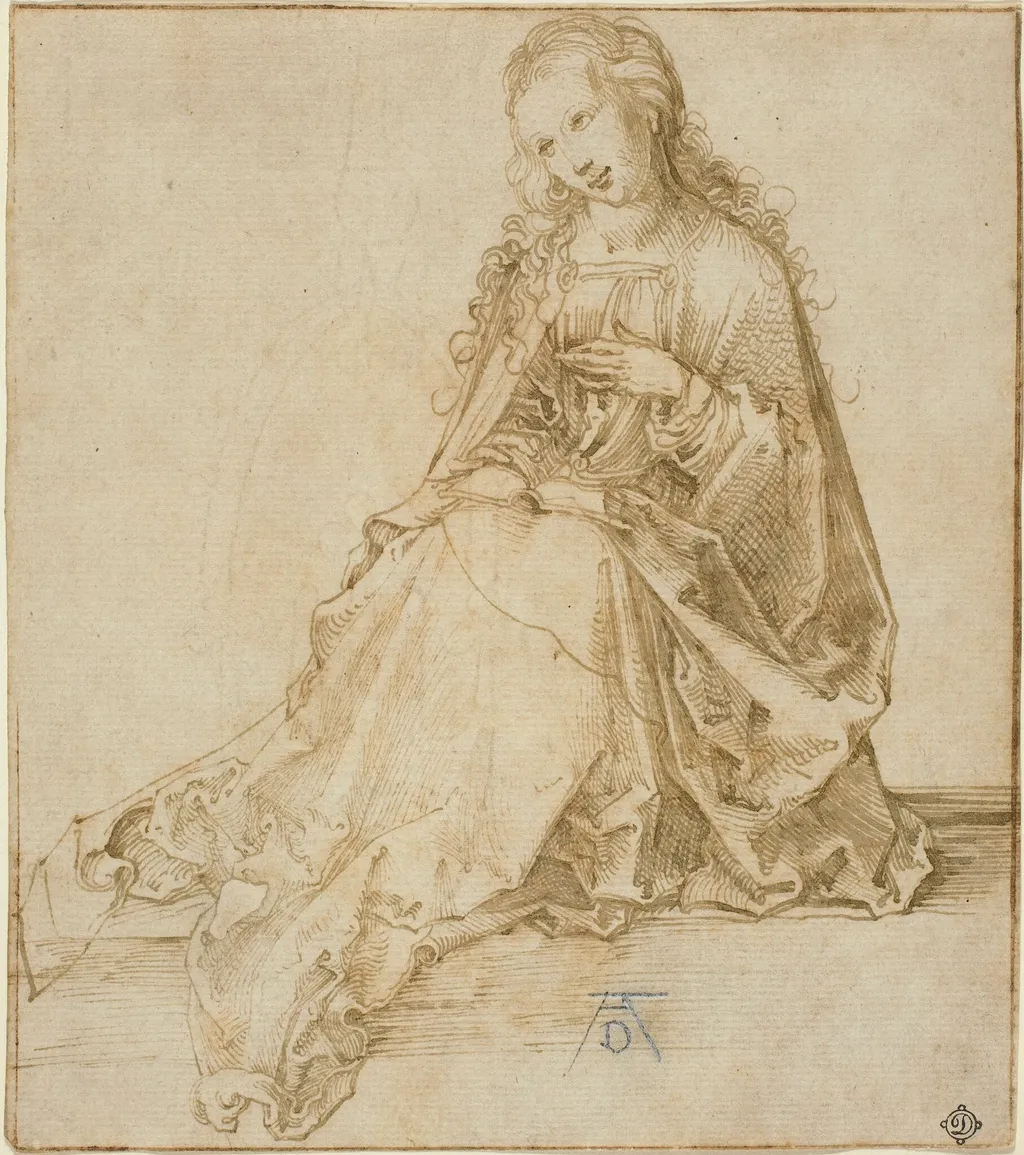
The Virgin Annunciate is an ink drawing by the Northern Renaissance artist Albrecht Dürer. It dates from 1497 and is held in the collection of the National Gallery of Art.
- Inscription
- Inscribed:by later hand, lower center in gray ink: AD (monogram)
About this work
Technique & Style
The work’s condition is stable, with no noted damage in the provenance record, allowing the fine ink lines and subtle tonal shading to remain intact.
The drawing was executed in pen and brown ink on laid paper, a medium recorded in the corpus as drawing. Dürer’s handling of line defines the delicate contours of the Virgin’s veil and the angelic gesture, while the compositional balance reflects early Northern Renaissance stylistic concerns with naturalistic detail and graceful movement. The work’s condition is stable, with no noted damage in the provenance record, allowing the fine ink lines and subtle tonal shading to remain intact. These formal qualities contribute to its classification as a religious drawing within the broader Annunciation narrative.
History & Provenance
Albrecht Dürer executed this pen and brown ink drawing on laid paper in 1495. The work's documented ownership begins with E. Desperet of Paris, whose collection was dispersed in a sale held by Clément in June 1865. Subsequent owners included Charles Paravey and Baron Etienne Martin de Beurnonville, with the latter's holdings auctioned in February 1885.
The drawing later entered the collection of Martin Le Roy before being sold at the Palais Galliera in March 1967 on behalf of Marquet de Vasselot.
Following a period in a private Bavarian collection, the sheet was handled by dealer Rolf Kistner in Nuremberg in November 1985. Ian Woodner of New York acquired the piece that same month. Upon Woodner's death, the work passed by inheritance to his daughters, Andrea and Dian Woodner, who donated it to the National Gallery of Art in Washington, D.C., in 1993.
The Virgin Annunciate was acquired by collector Ian Woodner in November 1985 through the dealer Rolf Kistner in Nuremberg, having previously been held in a private collection in Bavaria. It passed by inheritance to his daughters, Andrea and Dian Woodner, in New York, who gave it to the National Gallery of Art in Washington, D.C. in 1993, where it remains in the collection.
Prior to the Woodner ownership, the drawing passed through a succession of French owners and sales in the nineteenth and twentieth centuries, including E. Desperet, Charles Paravey, Baron Etienne Martin de Beurnonville, and Martin Le Roy, with auction appearances in Paris in 1865, 1878, 1885, and 1967.
Overview
Albrecht Dürer’s 1497 drawing, titled The Virgin Annunciate, presents a solitary figure of the Virgin Mary rendered in pen and brown ink on laid paper. The work captures a moment of the Annunciation, focusing exclusively on Mary’s reaction without the presence of the angelic messenger.
Subject & Meaning
In the composition, Mary is seated and appears startled, her expression conveying a blend of surprise and apprehension. By isolating her from Gabriel, Dürer emphasizes the personal, emotional impact of the divine announcement, inviting contemplation of the human response to a sacred event.
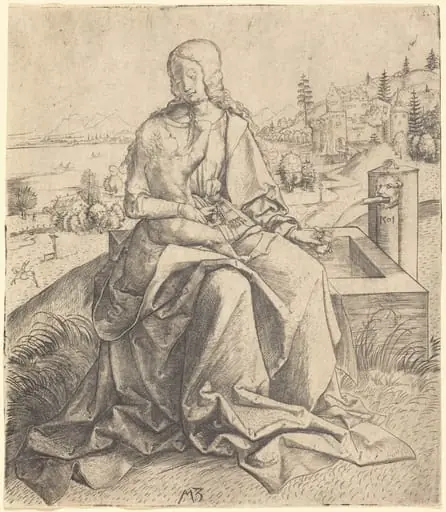
Own this work as a print
Artist & collection
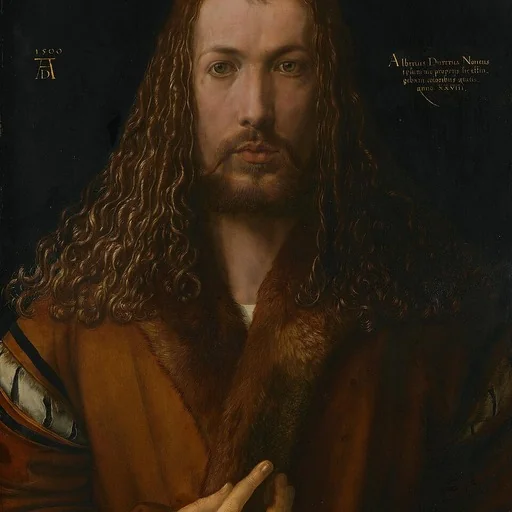
Artist
Albrecht Dürer spent his life in Nuremberg, a busy German city where artists traded prints like currency.

![Madonna and Child [obverse], by Albrecht Dürer](https://artifactworldgallery.com/img/albrecht-durer--madonna-and-child-obverse--d7b8ebf05d22ebe5-w320.webp)
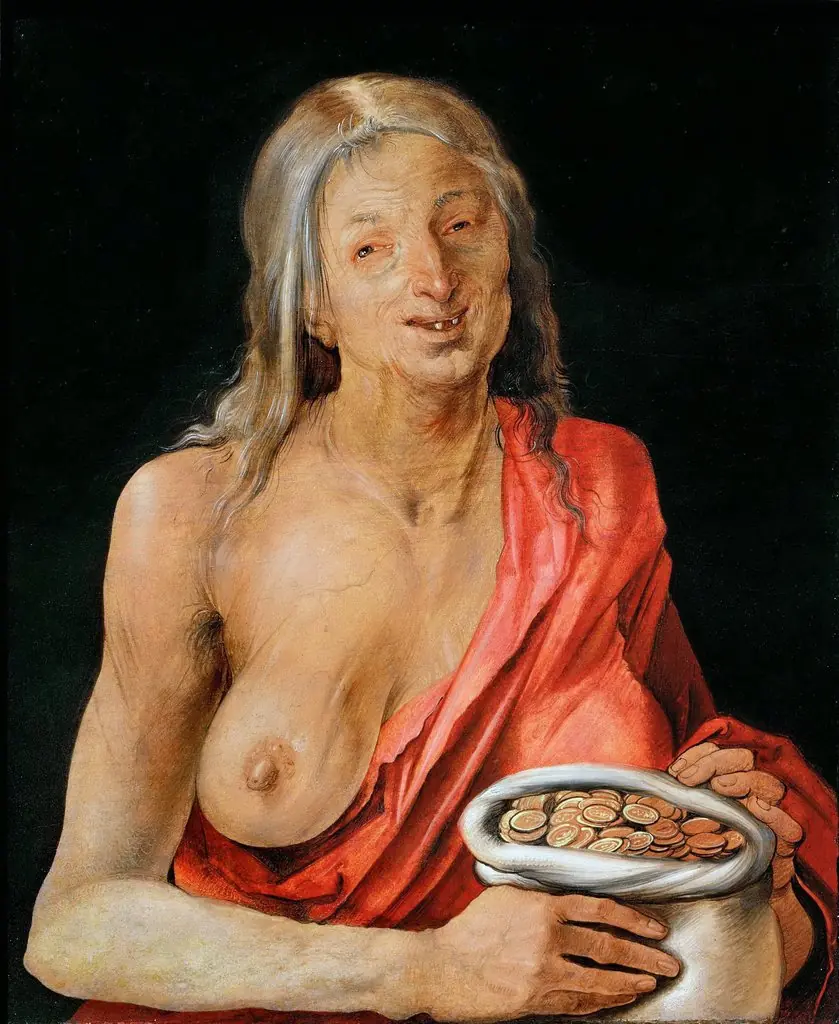
![Lot and His Daughters [reverse], by Albrecht Dürer](https://artifactworldgallery.com/img/albrecht-durer--lot-and-his-daughters-reverse--b4ebf9b282faa17a-w320.webp)
- Madonna and Child at a Fountain
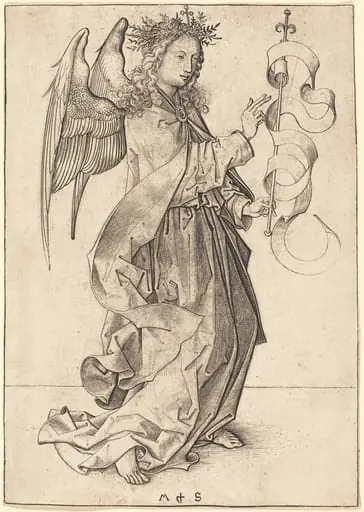 The Archangel Gabriel
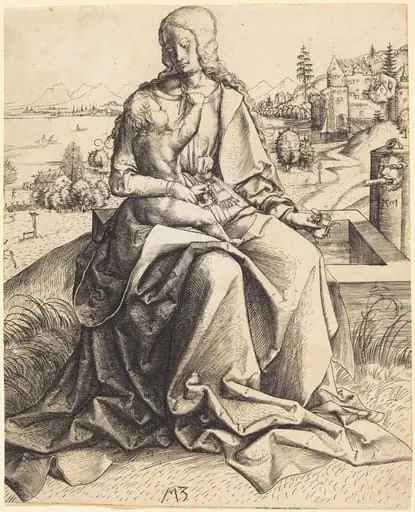 Madonna and Child at a Fountain
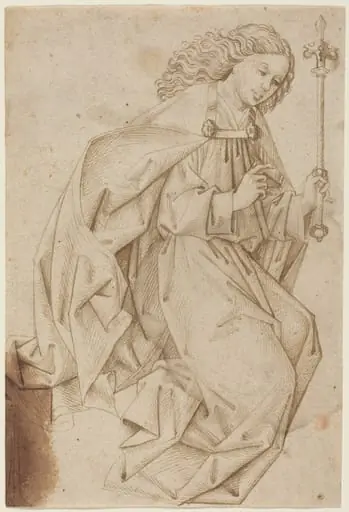 The Angel of the Annunciation
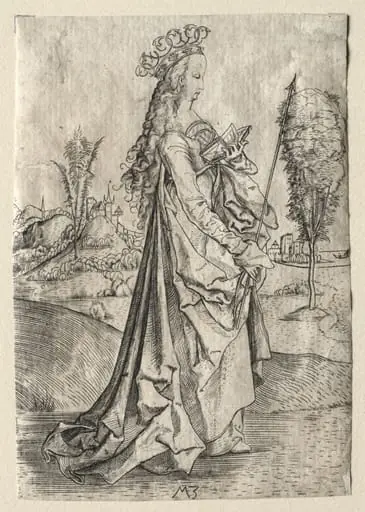 St. Ursula
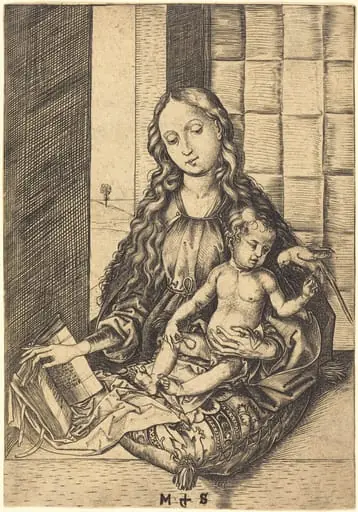 Madonna with a Parrot
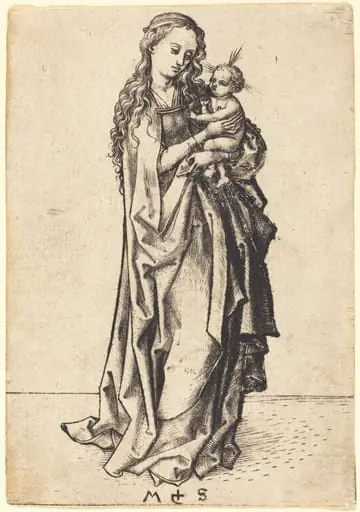 The Small Madonna and Child
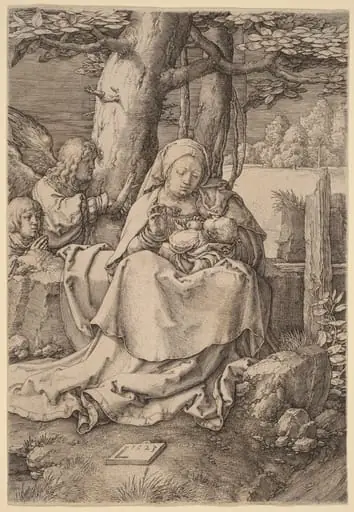 The Virgin and Child with Two Angels
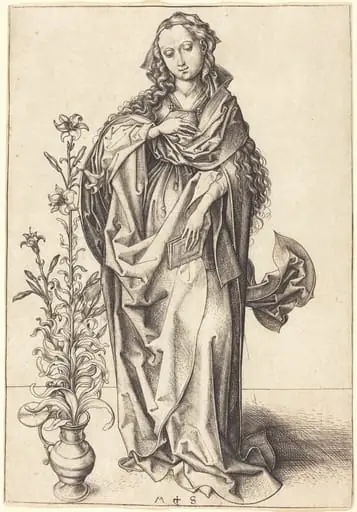 The Madonna
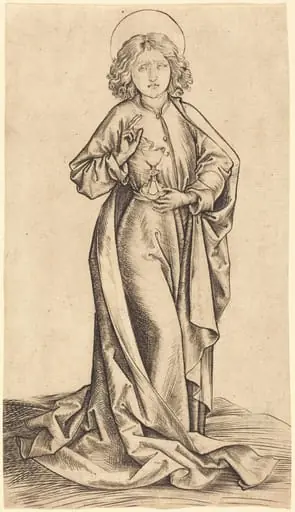 Saint John the Evangelist
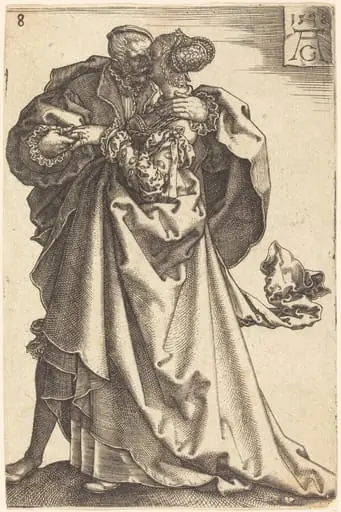 Large Wedding Dancers
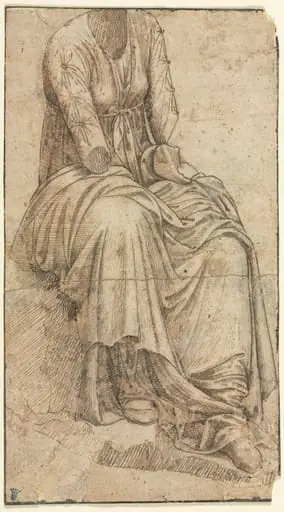 Copy of a Roman Statue of a Seated Woman