Artwork
Moonlight at Valmondois (Clair de lune a Valmondois)
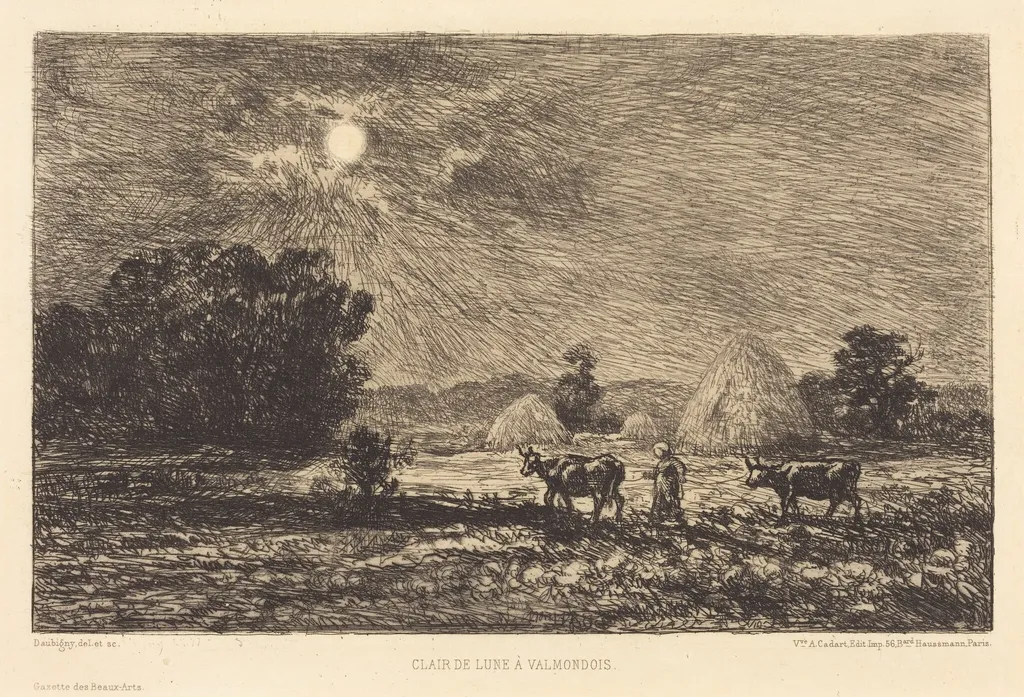
Moonlight at Valmondois (Clair de lune a Valmondois) is an ink print by the Impressionist artist Charles François Daubigny. It dates from 1877 and is held in the collection of the National Gallery of Art. Created in 1877, this etching by Charles‑François Daubigny presents a nocturnal countryside scene illuminated by a full moon.
About this work
Overview
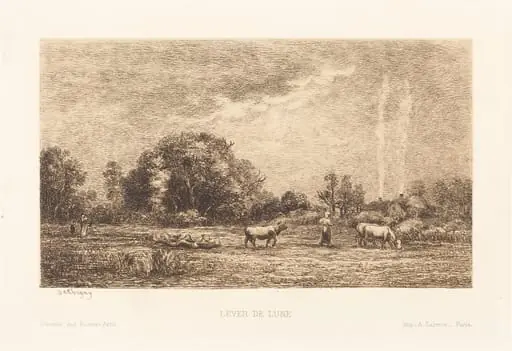
Created in 1877, this etching by Charles‑François Daubigny presents a nocturnal countryside scene illuminated by a full moon. A solitary figure leads two cows across a field toward a modest group of haystacks, while dark silhouettes of trees rise against a faintly glowing sky.
Subject & Meaning
The composition emphasizes the quiet interaction between human activity and rural life under moonlight, highlighting the subtle interplay of natural illumination and the calm of a night‑time landscape.
Technique & Style
Daubigny employed fine, incised lines typical of etching to render delicate gradations of light and shadow, achieving a soft atmospheric effect while preserving detailed textures in the foliage and the figures.
History & Provenance
As a member of the Barbizon school, Daubigny was known for exploring landscape themes through both painting and printmaking. This work reflects his interest in experimenting with etching and related processes during the later phase of his career.
Context
The piece belongs to a period when French artists were increasingly attentive to the effects of natural light, a concern that would later inform the development of Impressionism. Daubigny’s focus on rural scenes aligns with the Barbizon tradition of depicting the French countryside.
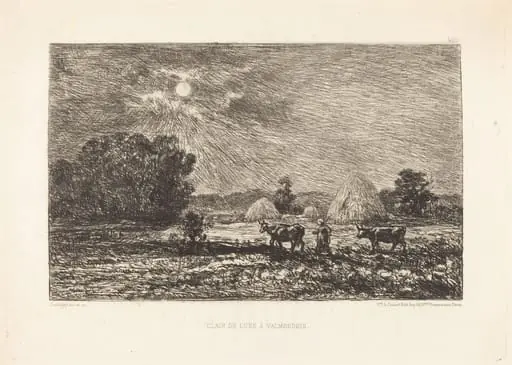
Own this work as a print
Artist & collection
Artist
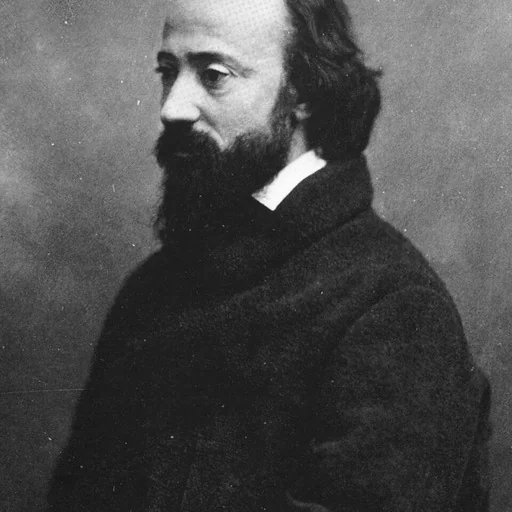
Charles-François Daubigny ( DOH-bin-yee, US: DOH-been-YEE, doh-BEEN-yee, French:; 15 February 1817 – 19 February 1878) was a French painter, one of the members of the Barbizon school, and is considered an important precursor of…

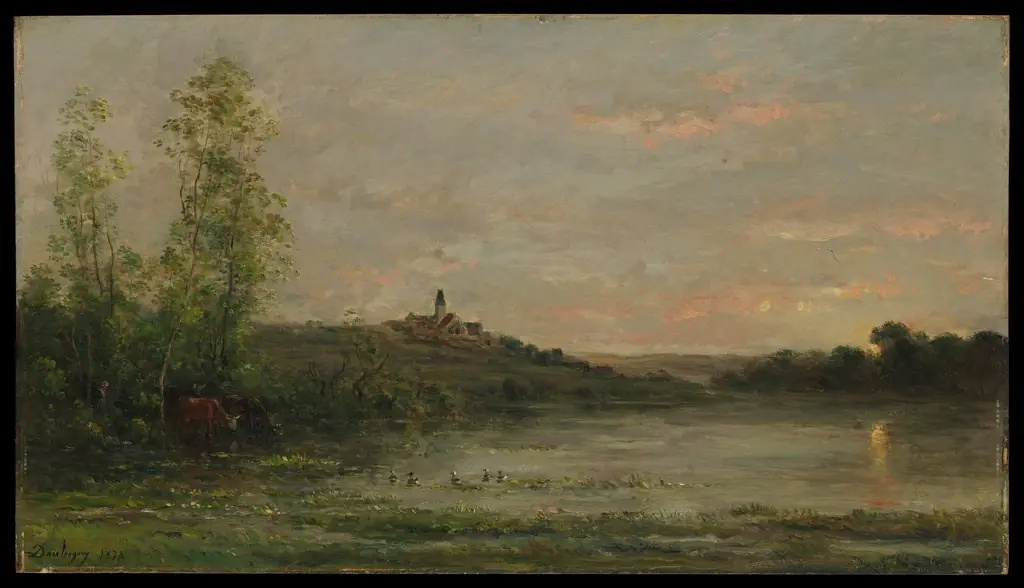
 Rising Moon (Lever de lune)
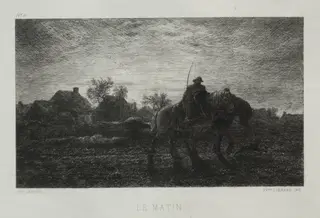 The Morning
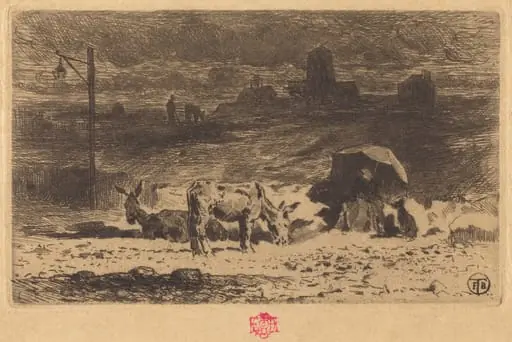 Les Anes de La Butte-aux-Cailles (Donkeys at La Butte-aux-Cailles)
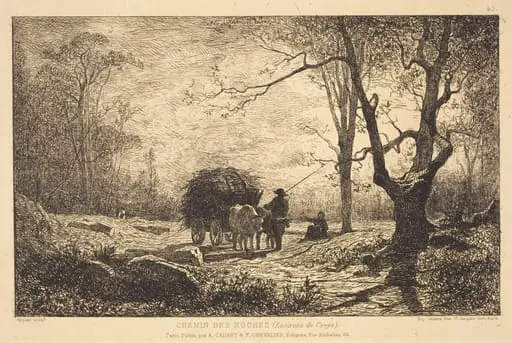 Chemin des Roches
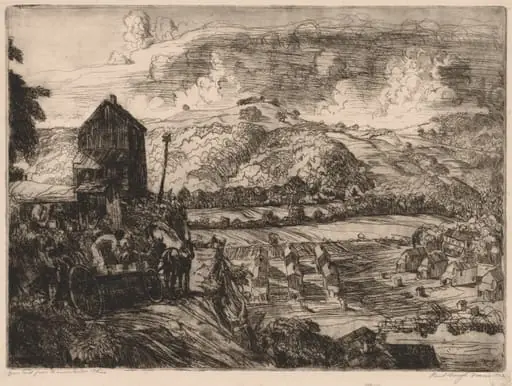 Our Hill from Dumstown, Ohio
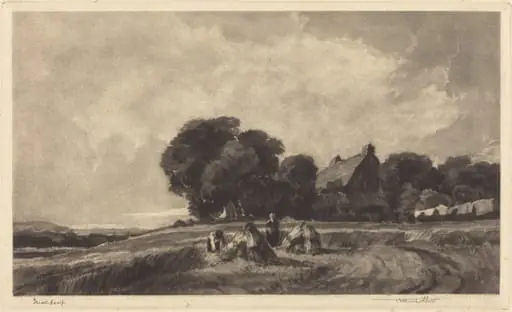 Cottage and Harvesters
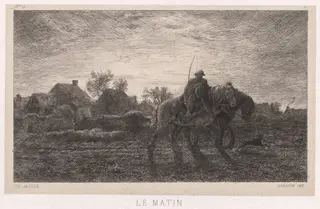 Morning
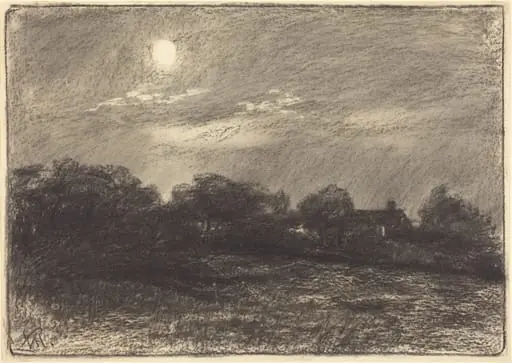 Evening, Farm Landscape
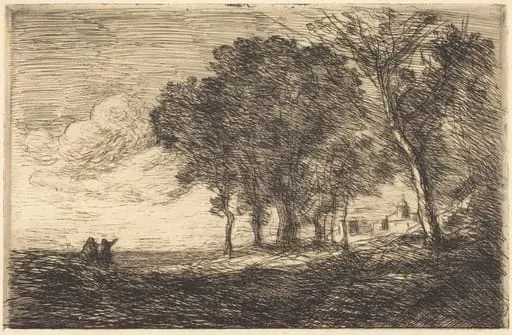 Italian Landscape (Paysage d'Italie)
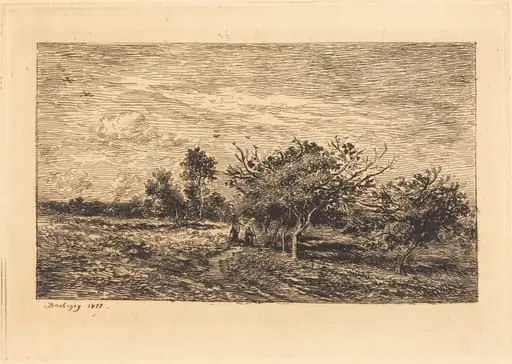 Apple Trees in Auvers (Pommiers a Auvers)
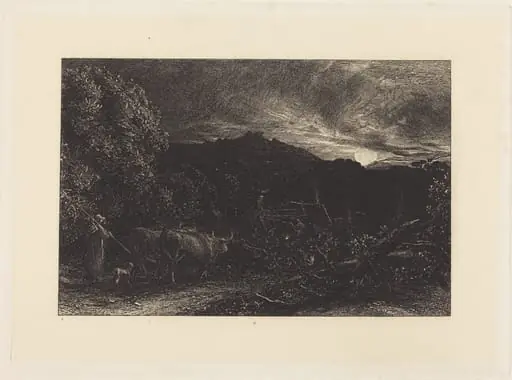 The Weary Ploughman
- Clair de lune à Valmondois (Moonlight at Valmondois)