Artwork
Bas-relief en pain d'épices ...
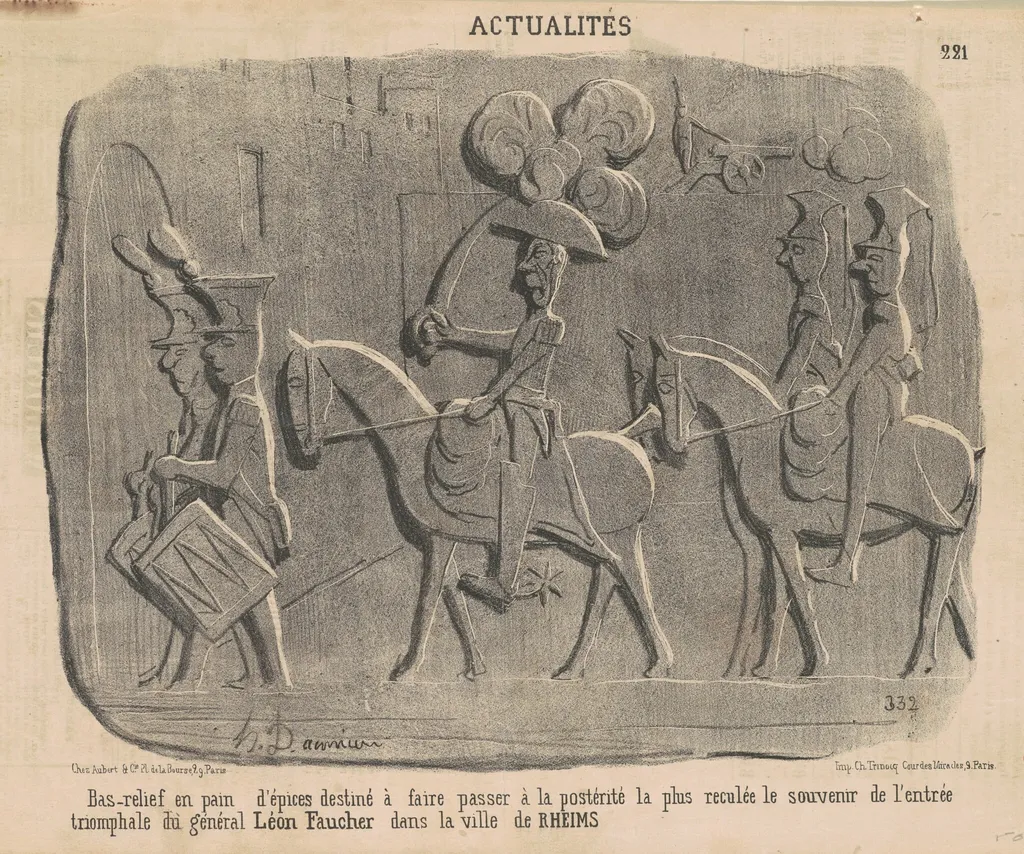
Bas-relief en pain d'épices ... is an ink print by the Impressionist artist Honoré Daumier. It dates from 1851 and is held in the collection of the National Gallery of Art. The work is a lithographic print that reproduces a bas‑relief composition.
About this work
This lithograph shows a busy parade of carved figures. Faces are stretched and hats tilt way too far. One man in the middle holds a baton like a tiny king.
Daumier used sharp lines to poke fun at fancy processions. The style feels like a 3D print made of gingerbread. It was new in 1851 but looks playful even today.
Check out how he shaped dough-like clay into this scene. Look up lithography next.
Overview
The work is a lithographic print that reproduces a bas‑relief composition. It presents a crowded procession rendered in a lively, exaggerated manner, with figures on foot and on horseback arranged in a rhythmic flow across the surface.
Subject & Meaning
The scene portrays a festive parade in which a central participant brandishes a baton, while another figure carries a drum. The exaggerated facial features and oversized hats give the figures a caricatural quality, suggesting a satirical commentary on ceremonial pomp.
Technique & Style
Executed in lithography, the image relies on sharp, defined lines and strong contours to convey depth and volume, echoing the three‑dimensional quality of the original bas‑relief. The stylized rendering and bold outlines heighten the work’s humorous, critical tone.
History & Provenance
Created in 1851, the print reflects the artist’s interest in using print media to disseminate social critique. It was produced during a period when lithography was increasingly employed for mass‑produced satirical images, allowing wider circulation of the work.
Own this work as a print
Artist & collection
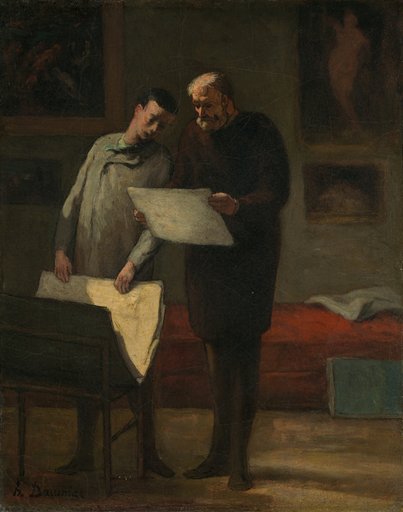
Artist
Honoré-Victorin Daumier (French: ; 26 February 1808 – 10 or 11 February 1879) was a French painter, sculptor, and printmaker, whose many works offer commentary on the social and political life in France, from the…

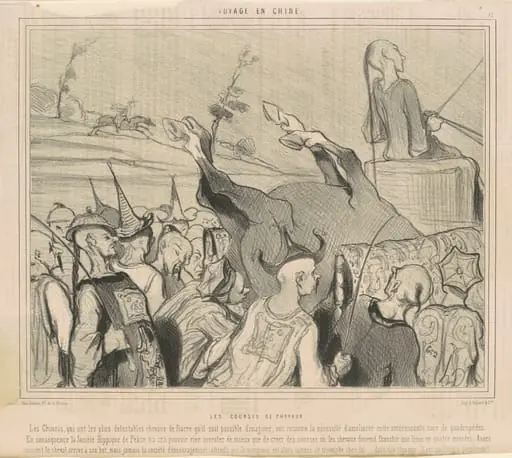 Les courses de chevaux
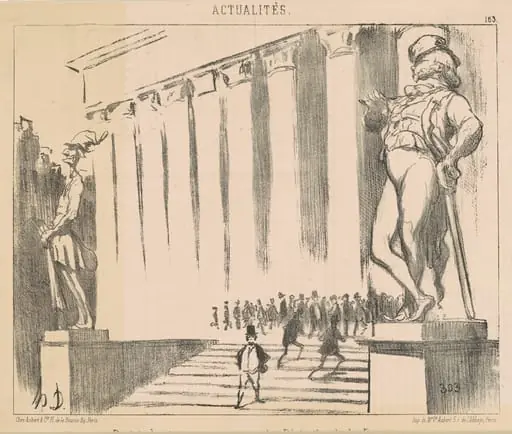 Projet de statutes pour orner ... la Bourse
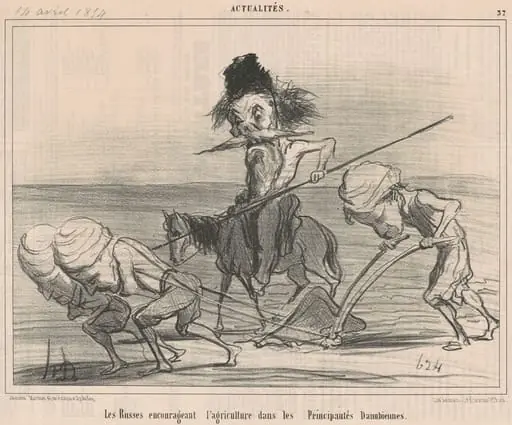 Les russes encourageant l'agriculture
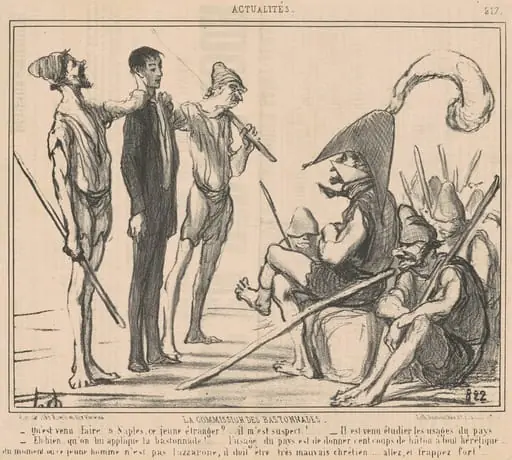 Commission des bastonnades
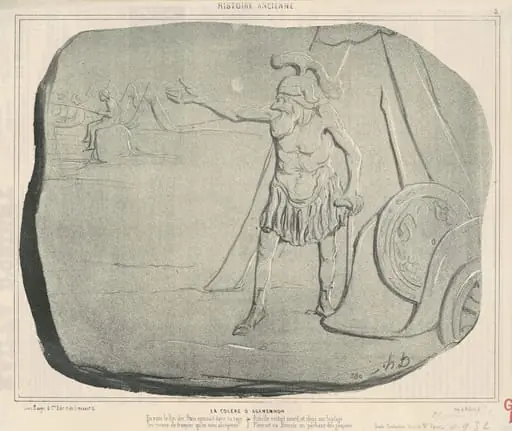 La colére d'Agamemnon
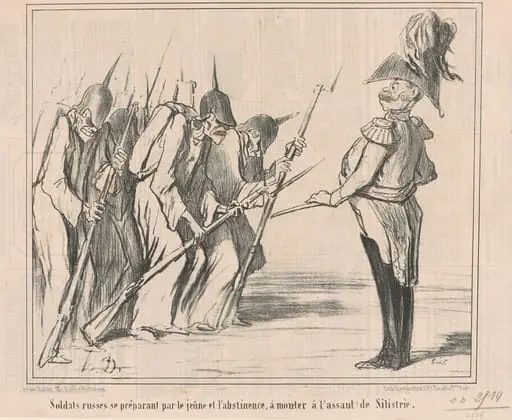 Soldats russes se préparant par le jeune ...
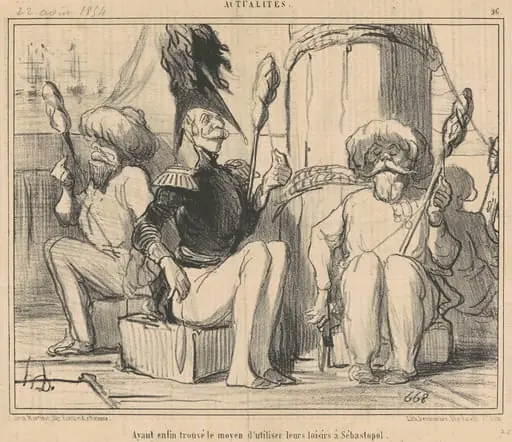 Ayant enfin trouvé le moyen d'utiliser leurs loisirs!
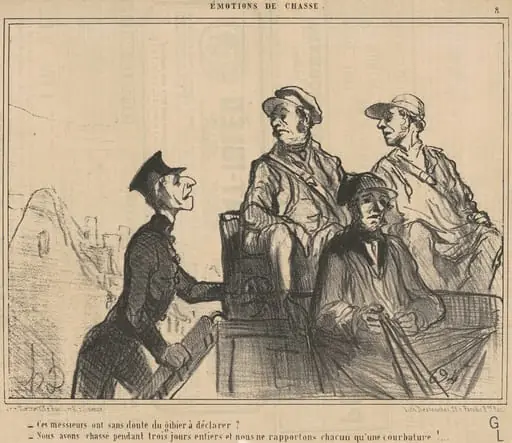 Ce messieurs ont ... du gibier a déclarer? ...
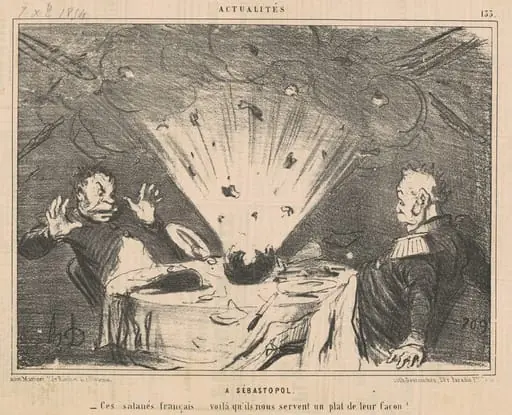 Sébastopol