Artwork
C'est t'y a vous c'hien la?
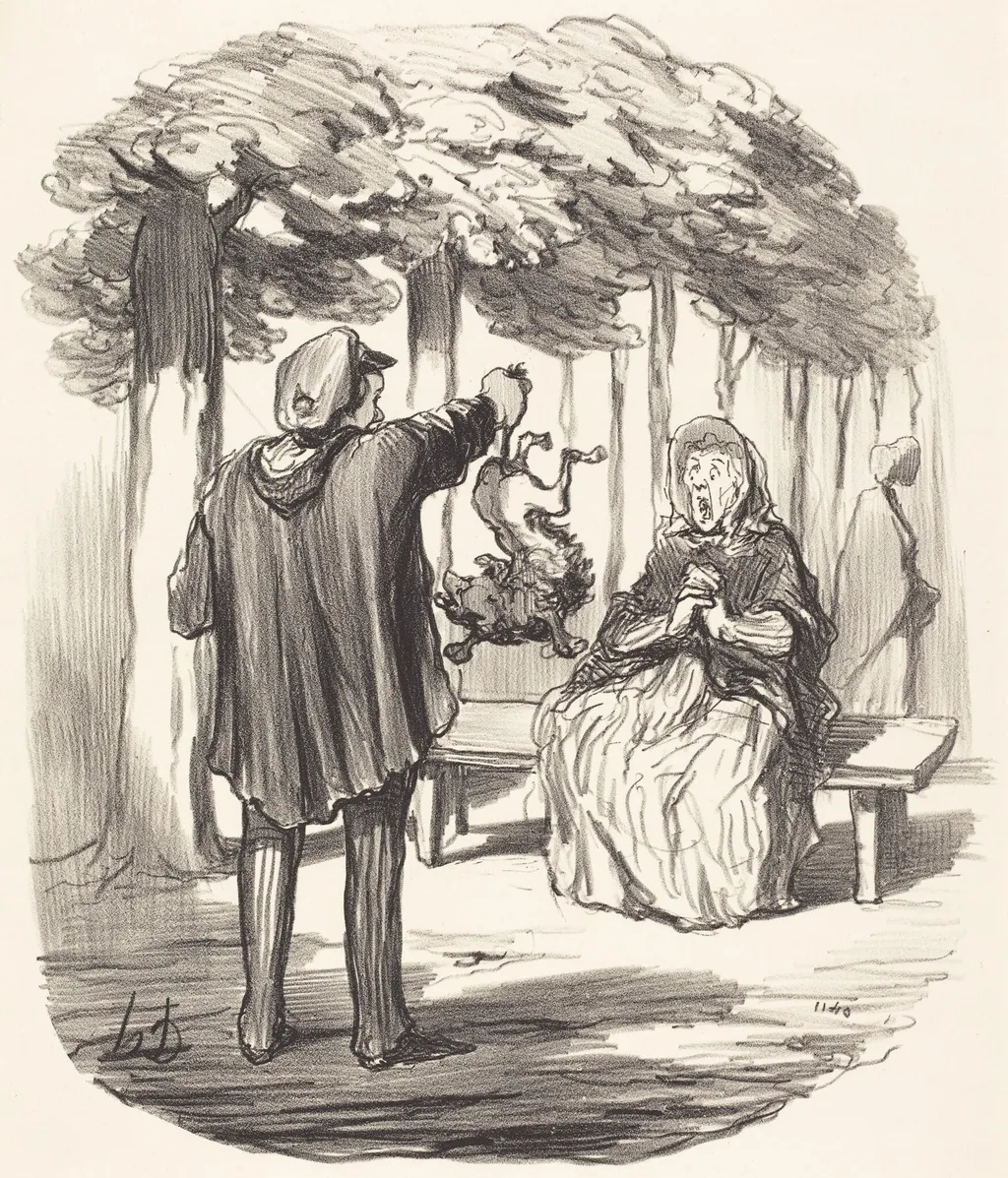
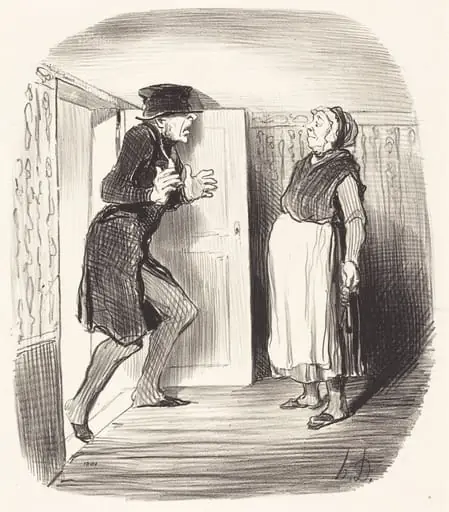
C'est t'y a vous c'hien la? is an ink print by the Romanticist artist Honoré Daumier. It dates from 1847 and is held in the collection of the National Gallery of Art.
About this work
Overview
Created in 1847, this lithograph by Honoré Daumier presents a brief, dynamic scene that captures a moment of urgent interaction between two figures. Rendered in the quick, sketch‑like line work typical of Daumier’s prints, the image conveys tension through gesture and posture, set against a dense, tangled arboreal backdrop.
Subject & Meaning
The composition depicts a man in antiquated attire pointing emphatically toward an unseen object, while a hooded woman seated nearby looks up, clasping her hands. The man's animated gesture suggests explanation or reprimand, hinting at a social or domestic dispute that Daumier often amplified to critique contemporary manners.
Technique & Style
Executed as a lithograph, the work relies on bold, gestural strokes that give the impression of a hurried sketch. The lines vary in thickness, emphasizing movement and emotional intensity, while the dense, gnarled tree above adds a sense of claustrophobic atmosphere, a hallmark of Daumier’s satirical visual language.
History & Provenance
Daumier, active as a painter, sculptor, and printmaker, regularly contributed to satirical journals such as La Caricature and Le Charivari. This print aligns with his prolific output for those publications, where his republican sympathies informed a steady stream of caricatures aimed at the monarchy, aristocracy, and clergy.
Context
The lithograph emerges from a period of intense political ferment in mid‑nineteenth‑century France, when republican ideas challenged established authority. Daumier’s work, including this piece, employed humor and exaggeration to comment on the social tensions and power dynamics of his time, reflecting the broader role of visual satire in public discourse.
Own this work as a print
Artist & collection
Artist
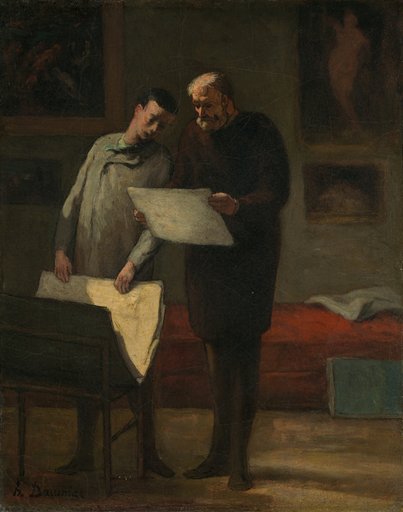
Honoré-Victorin Daumier (French: ; 26 February 1808 – 10 or 11 February 1879) was a French painter, sculptor, and printmaker, whose many works offer commentary on the social and political life in France, from the…









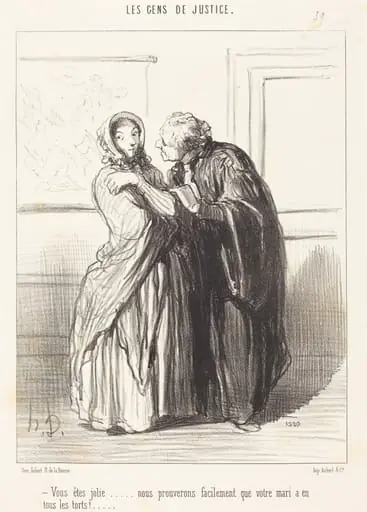 Vous êtes jolie...
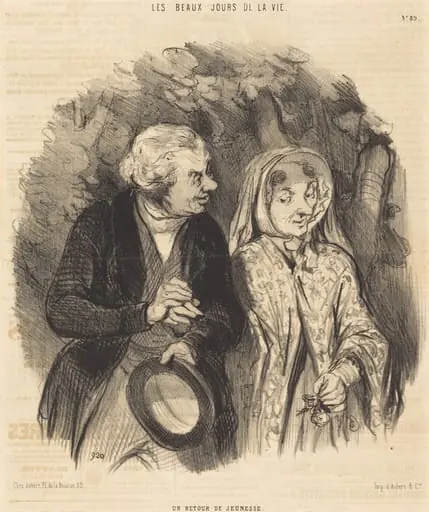 Un Retour de jeunesse
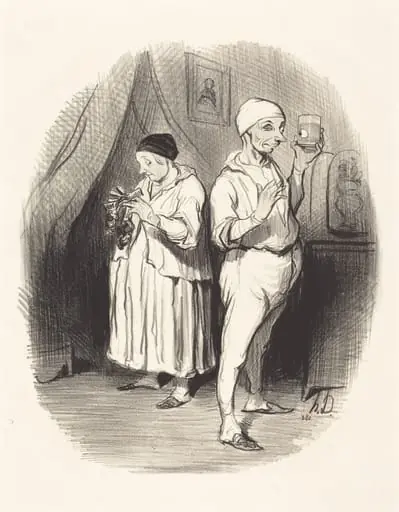 L'Oeil du maitre
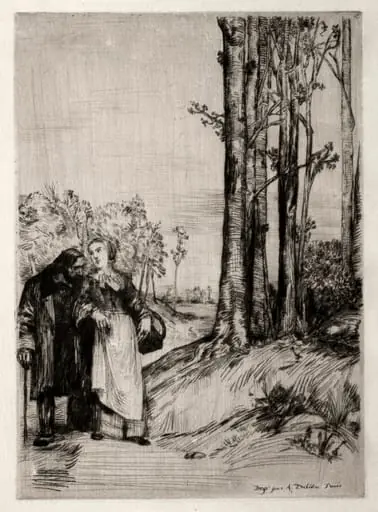 Le Promenade du convalescent
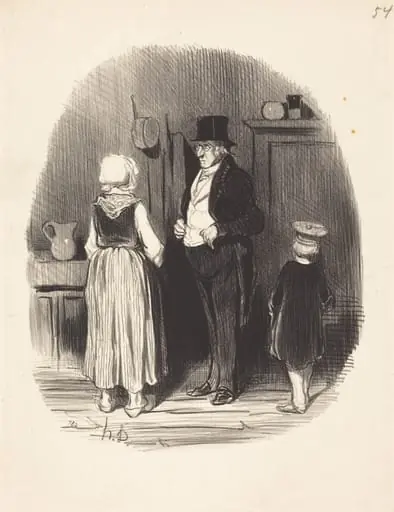 Comment!... tous mes moutons sont morts...
 Le Compte est-il bien exact?...
 Une Nouvelle connaissance
 Death and the Woodcutter, 4th plate (La Mort et le bûcheron)
 Domestic Dispute
 Inconvénient de visiter sans précaution un entresol...