Artwork
C'est toujours avec la plus profonde douleur
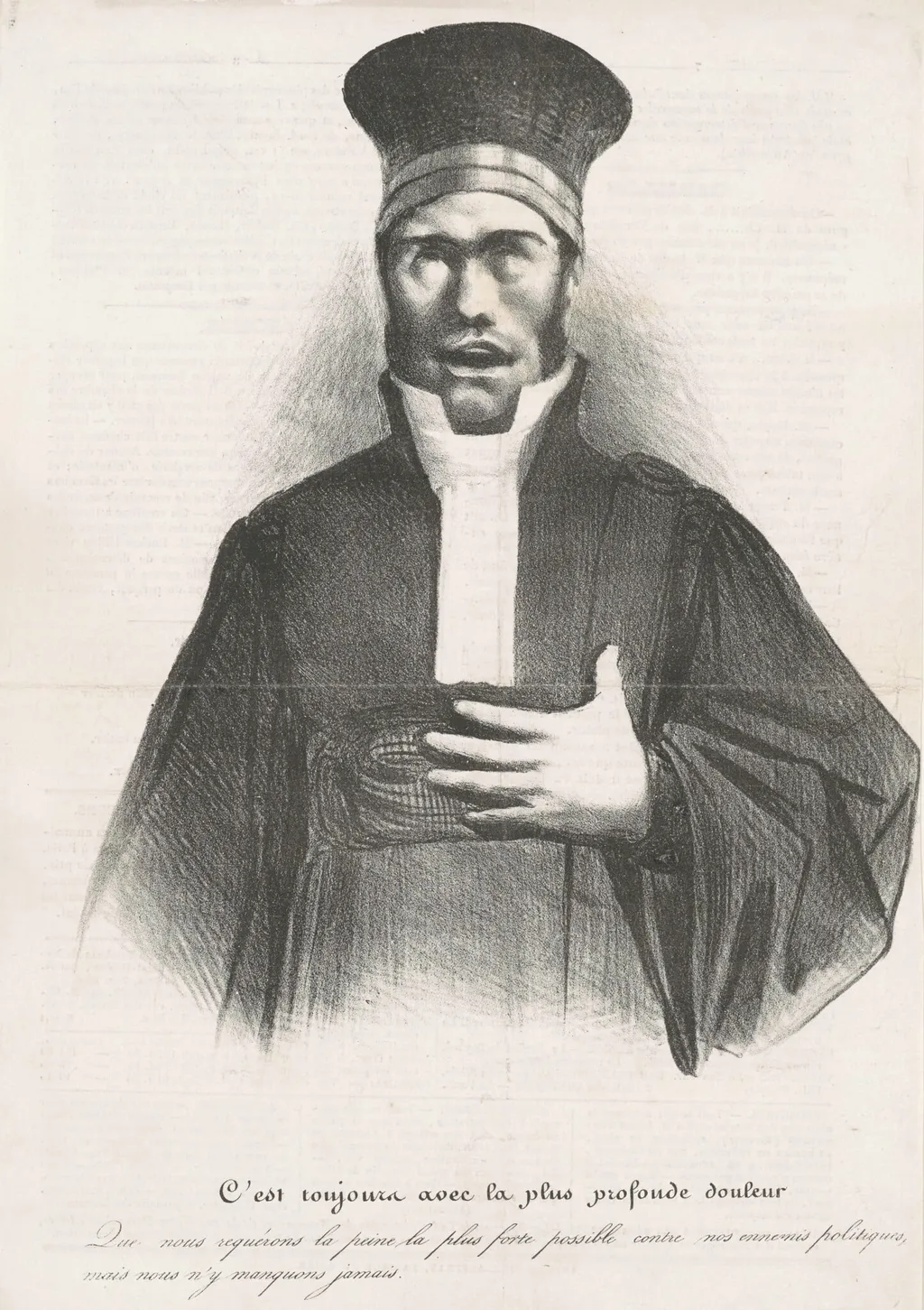
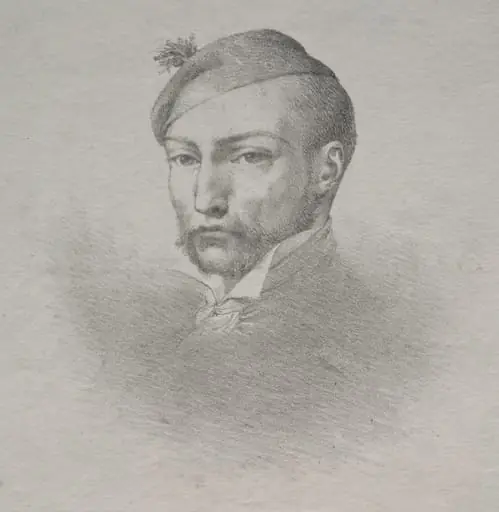
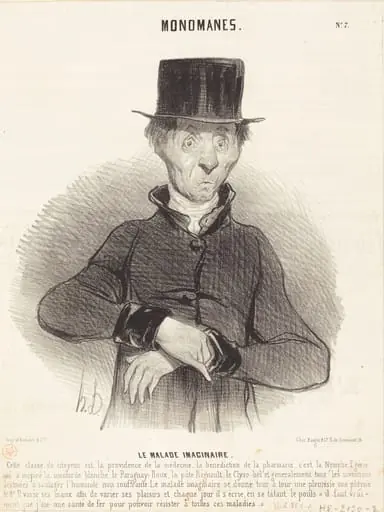
C'est toujours avec la plus profonde douleur is an ink print by the Romanticist artist Honoré Daumier. It dates from 1833 and is held in the collection of the National Gallery of Art.
About this work
Overview
C'est toujours avec la plus profonde douleur is a lithograph by Honoré Daumier, created as part of his series of social and emotional studies. The work presents a single figure from the waist up, rendered in stark tonal contrasts. Its restrained composition and somber mood reflect Daumier’s interest in quiet human suffering, conveyed without narrative detail or theatricality.
Subject & Meaning
The figure, clad in formal ceremonial clothing, appears isolated and introspective. The heavy shadows across the face suggest grief, possibly tied to loss or public mourning. Daumier avoids explicit symbolism, instead relying on posture and expression to evoke a universal sense of sorrow, aligning with his broader focus on the emotional weight carried by ordinary individuals.
Technique & Style
Daumier employed lithography to achieve subtle gradations of tone, using ink and stone to build depth through layered shading. The absence of line outlines and the soft transitions between light and dark create a sculptural quality in the figure’s face. This technique allowed him to convey psychological intensity with minimal detail, characteristic of his mature graphic style.
History & Provenance
Created in the mid-19th century, the print likely originated as part of Daumier’s contributions to periodicals or private portfolios. It was not widely published during his lifetime, and its survival reflects its status as a personal or experimental work. The piece entered institutional collections in the 20th century, valued for its emotional resonance and technical precision.
Context
Daumier produced this work amid political unrest and social upheaval in France, where public mourning was both personal and collective. While not tied to a specific event, the image resonates with the era’s atmosphere of loss, whether from death, displacement, or disillusionment. His prints often mirrored the unspoken grief of the urban poor and middle class.
Legacy
The lithograph exemplifies Daumier’s influence on modern printmaking, demonstrating how emotional depth could be achieved through economical means. Later artists and illustrators drew from his ability to convey complex inner states with minimal visual elements. It remains a quiet but enduring study in human vulnerability within the graphic arts tradition.
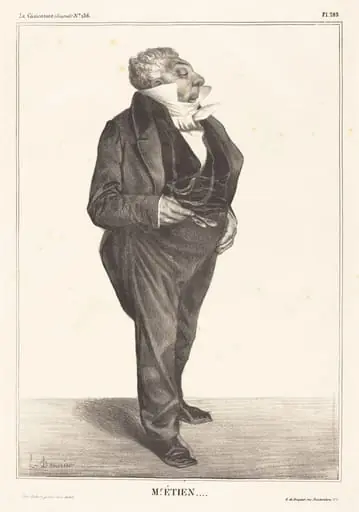
Own this work as a print
Artist & collection
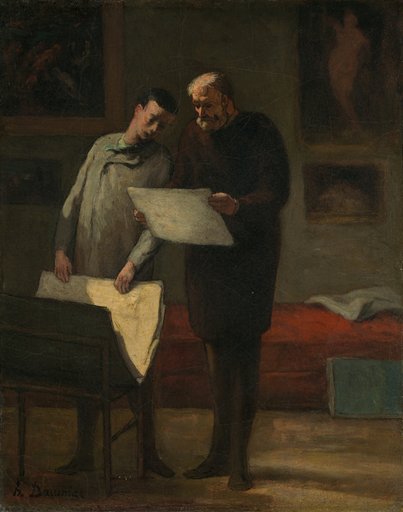
Artist
Honoré-Victorin Daumier (French: ; 26 February 1808 – 10 or 11 February 1879) was a French painter, sculptor, and printmaker, whose many works offer commentary on the social and political life in France, from the…