Artwork
Emotions Parisiennes: Une Victime des Factions
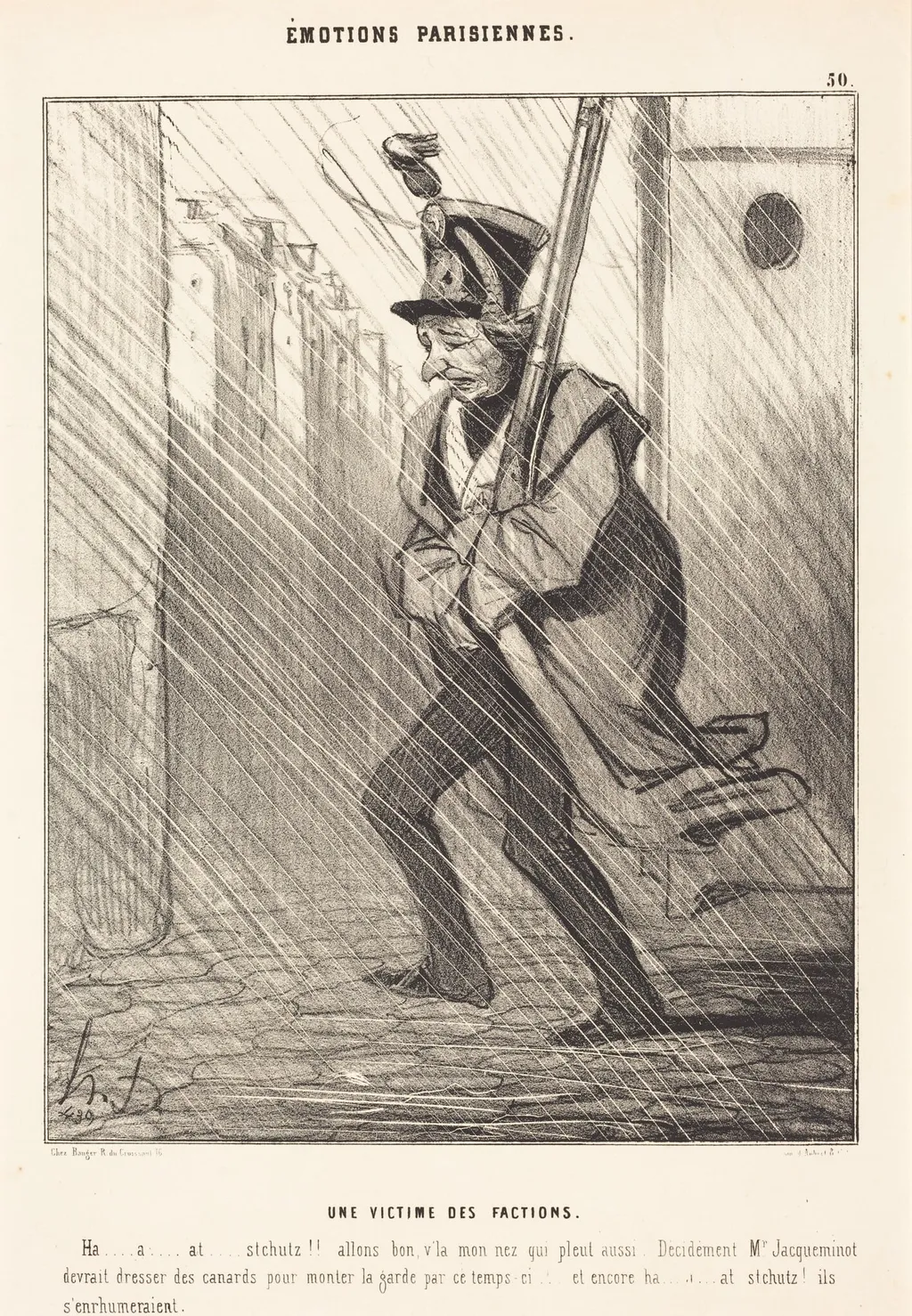
Emotions Parisiennes: Une Victime des Factions is an ink print by the Romanticist artist Honoré Daumier. It dates from 1842 and is held in the collection of the National Gallery of Art. Created in 1842, this black lithograph on wove paper portrays a solitary figure caught in a moment of turmoil.
- Inscription
- Inscribed:lower left in stone: h.D. / 439; upper center in plate: EMOTIONS PARISIENNES.; upper right in plate: 50.; lower left in plate: Chez Bauger R. du Croissant 16; lower right in plate: [Im]p d Aubert & [?]; across bottom in plate: UNE VICTIME DES FACTIONS. / Ha....a....at....stchutz!! allons bon, v'la mon nez qui pleut aussi. Décidément Mr. Jacqueminot / devrait dresser des canards pour monter la garde par ce temps-ci...et encore ha...a...at stchutz! ils / s'enrhumeraient.; by later hand, lower left in graphite: D. 728 iii
About this work
Overview
Created in 1842, this black lithograph on wove paper portrays a solitary figure caught in a moment of turmoil. The subject, dressed in a military‑style coat and hat, clutches a long pole or rifle while standing in rain, his expression a blend of anguish and resolve. The work exemplifies the artist’s focus on contemporary unrest through the medium of print.
Subject & Meaning
The central figure appears to be a victim of factional conflict, embodying the personal cost of political strife in Paris. His contorted face and drenched attire convey both physical discomfort and a determined stance, suggesting an individual caught between opposing forces during a period of civic agitation.
Technique & Style
Executed as a lithograph, the image was drawn directly onto a stone surface before being transferred to paper. Daumier employs bold, decisive lines and stark contrasts to heighten the emotional intensity, while the monochrome palette emphasizes the bleak atmosphere of the scene.
Context
The print emerged amid the aftermath of the 1830 Revolution, a time when France experienced repeated upheavals and shifting regimes. Daumier, active as a caricaturist for satirical journals, used such works to comment on the instability of the monarchy, aristocracy, and clergy, reflecting the broader climate of dissent.
Legacy
As an early example of Daumier’s politically charged printmaking, the lithograph illustrates his commitment to social critique through accessible media. Its stark portrayal of individual suffering within collective unrest continues to inform studies of 19th‑century French visual commentary.
Own this work as a print
Artist & collection
Artist
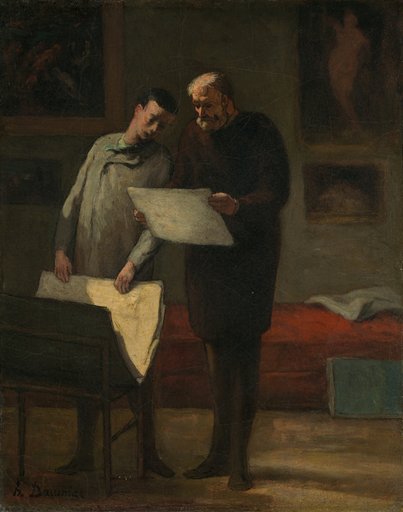
Honoré-Victorin Daumier (French: ; 26 February 1808 – 10 or 11 February 1879) was a French painter, sculptor, and printmaker, whose many works offer commentary on the social and political life in France, from the…

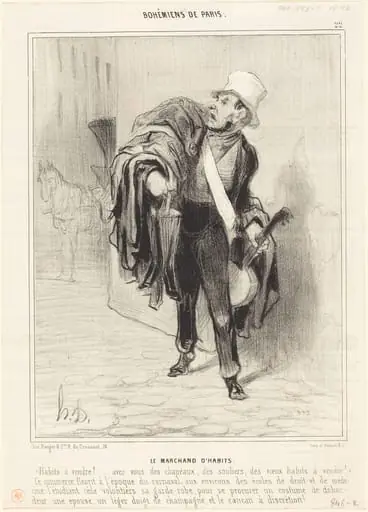 Le Marchand d'habits
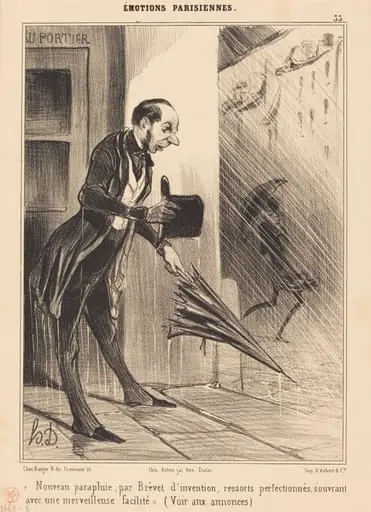 Nouveau parapluie, par Brevet...
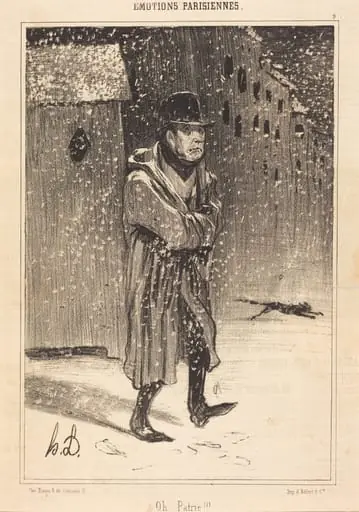 Oh Patrie!!!
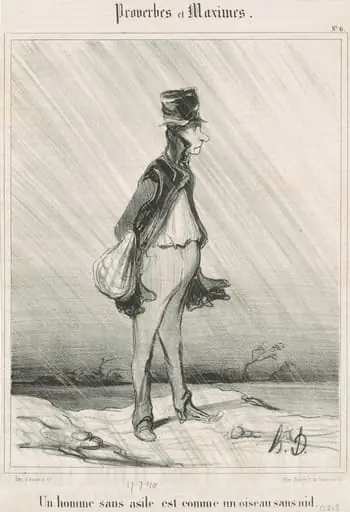 Un homme sans asile ...
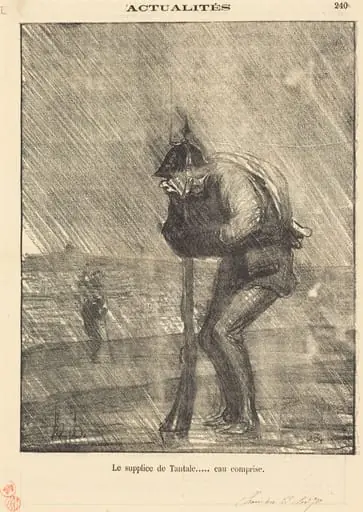 Le supplice de tantale... eau comprise
 In Love (Amoureux)
 Le Balayeur
 Monsieur... Monsieur, v'la vot' mouchoir
 Tu m'reprendras encore... a aller souhaiter...
 Le Ravageur
 The Collector of Cigar Stubs
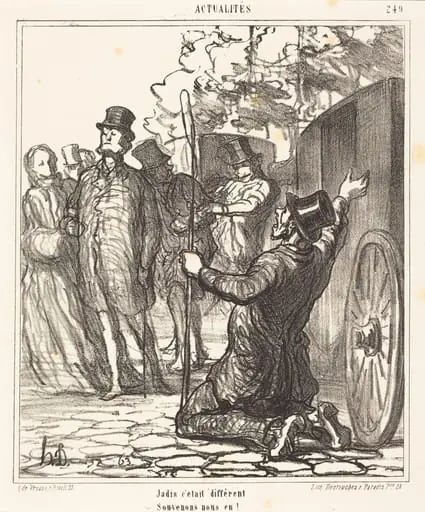
- Jadis c'était différent