Artwork
Le Cid se mettant aussi en campagne...
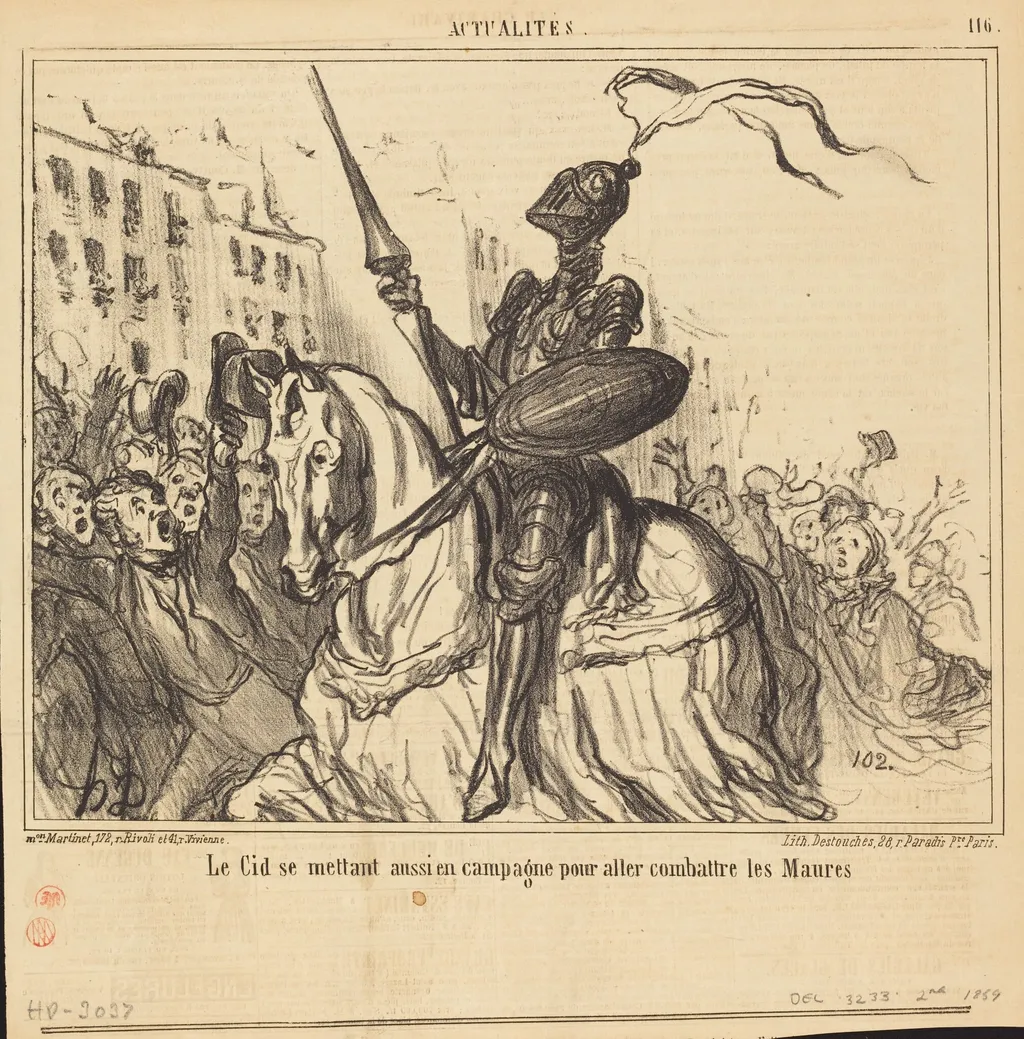
Le Cid se mettant aussi en campagne... is an ink print by the Impressionist artist Honoré Daumier. It dates from 1859 and is held in the collection of the National Gallery of Art.
About this work
Overview
Created in 1859, this lithograph on newsprint by Honoré Daumier captures a moment of military preparation with brisk, energetic lines.
Created in 1859, this lithograph on newsprint by Honoré Daumier captures a moment of military preparation with brisk, energetic lines. Executed in the medium he frequently used for journalistic satire, the work reflects Daumier’s engagement with contemporary political themes through the lens of historical allegory. Its rough, spontaneous quality aligns with the urgency of his commentary and the ephemeral nature of printed periodicals.
Subject & Meaning
The image depicts a lone armored knight, helmeted and mounted, amid a group of anxious foot soldiers bearing spears. The title, referencing the legendary figure of El Cid, evokes medieval chivalry while subtly mocking the performative grandeur of contemporary military posturing. Daumier uses this historical allusion to critique the theatricality and futility of authority figures mobilizing for conflict, likely alluding to France’s political instability under Louis-Philippe.
Technique & Style
Daumier employed lithography to achieve rapid, expressive marks suited to daily publication. The composition relies on loose, swirling strokes and uneven shading to convey motion and tension. The knight’s rearing horse and the fragmented figures around him suggest chaos rather than order.
The use of newsprint, cheap and disposable, underscores the work’s function as transient political commentary, not fine art.
History & Provenance
Produced during Daumier’s prolific period for the satirical press, particularly Le Charivari, this print was likely published in a newspaper or journal around 1859. Few original impressions survive due to the fragile nature of newsprint and the disposable intent of such works. Its survival reflects later recognition of Daumier’s significance, though it was originally intended for immediate public consumption.
Context
In 1859, France was navigating the twilight of the July Monarchy and the looming rise of Napoleon III. Daumier, a lifelong republican, used historical and literary references to veil his critiques of current leadership. The image’s chaotic energy mirrors public unease over militarism and the glorification of authority. His prints served as visual journalism, offering dissent where direct political speech was restricted.
Legacy
Though created for ephemeral circulation, this lithograph exemplifies Daumier’s enduring influence on modern graphic satire. His ability to distill complex social tensions into dynamic, economical imagery paved the way for later cartoonists and political illustrators. The work remains a testament to printmaking’s power as a tool for public critique, valued today for its historical insight rather than its original audience.
Own this work as a print
Artist & collection
Artist
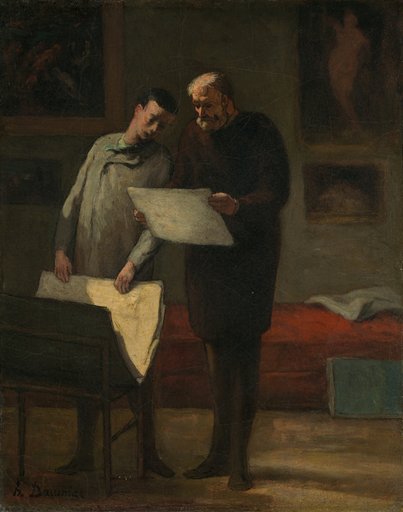
Honoré-Victorin Daumier (French: ; 26 February 1808 – 10 or 11 February 1879) was a French painter, sculptor, and printmaker, whose many works offer commentary on the social and political life in France, from the…









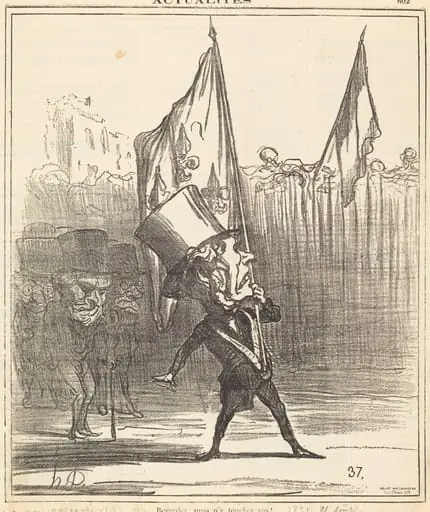 Regardez, mais n'y touchez pas!
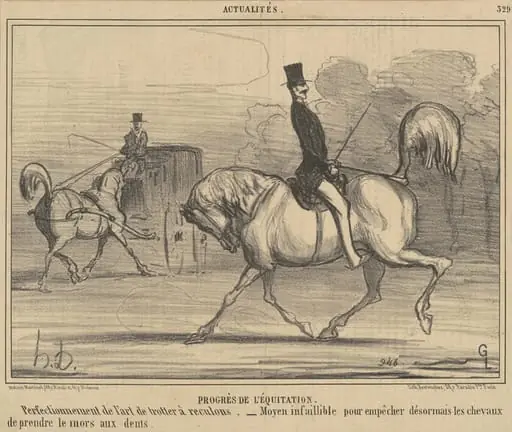 Progrès de l'équitation
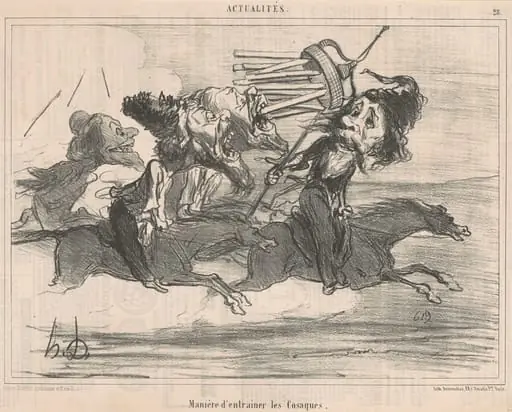 Maniére d'entrainer les cosaques
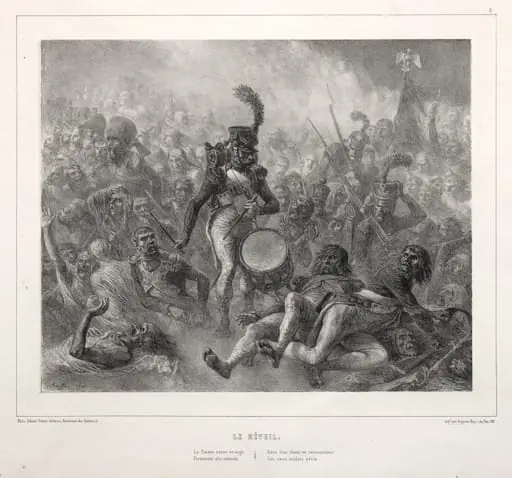 L'Album de 1832: Reveil
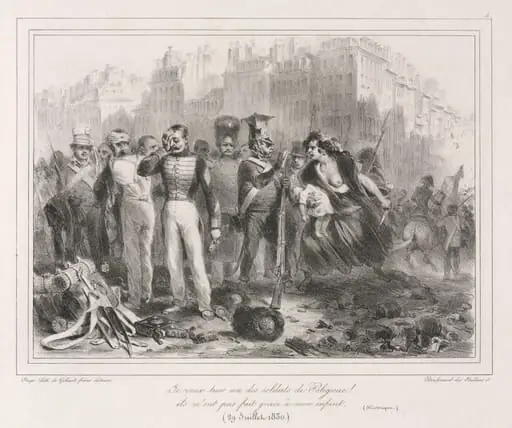 Album of 1831: I want to kill one of Polignac's soldiers. They did not spare my child (Historic)
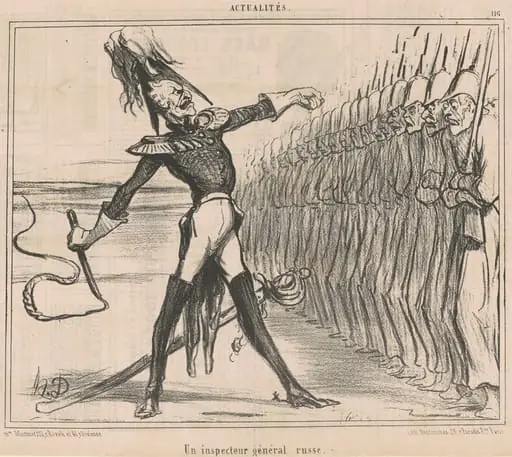 Un inspecteur général russe
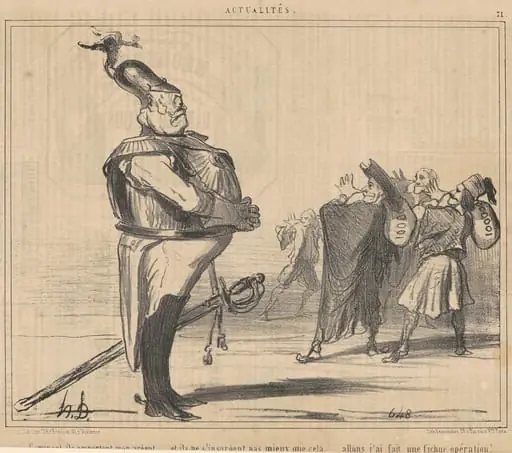 Comment, ils emportent mon argent ...
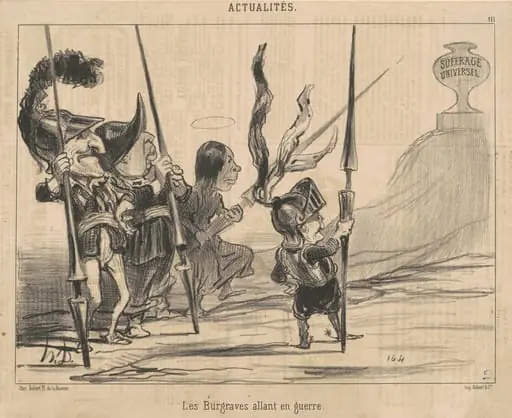 Les burgraves allant en guerre
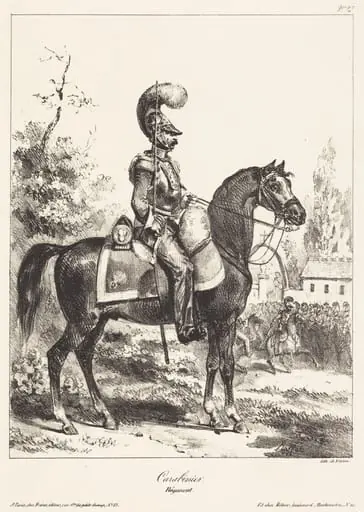 Carabinier
 Untitled
 Representant du Peuple (Representative of thePeople)
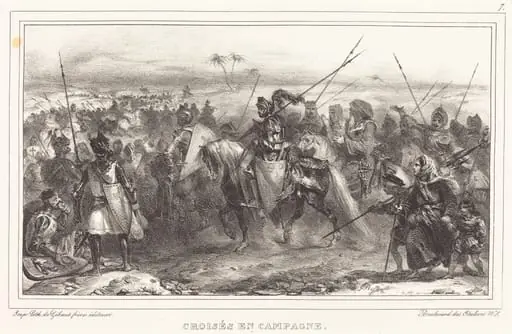
- Croisés en Campagne