Artwork
Les Trois petits saints
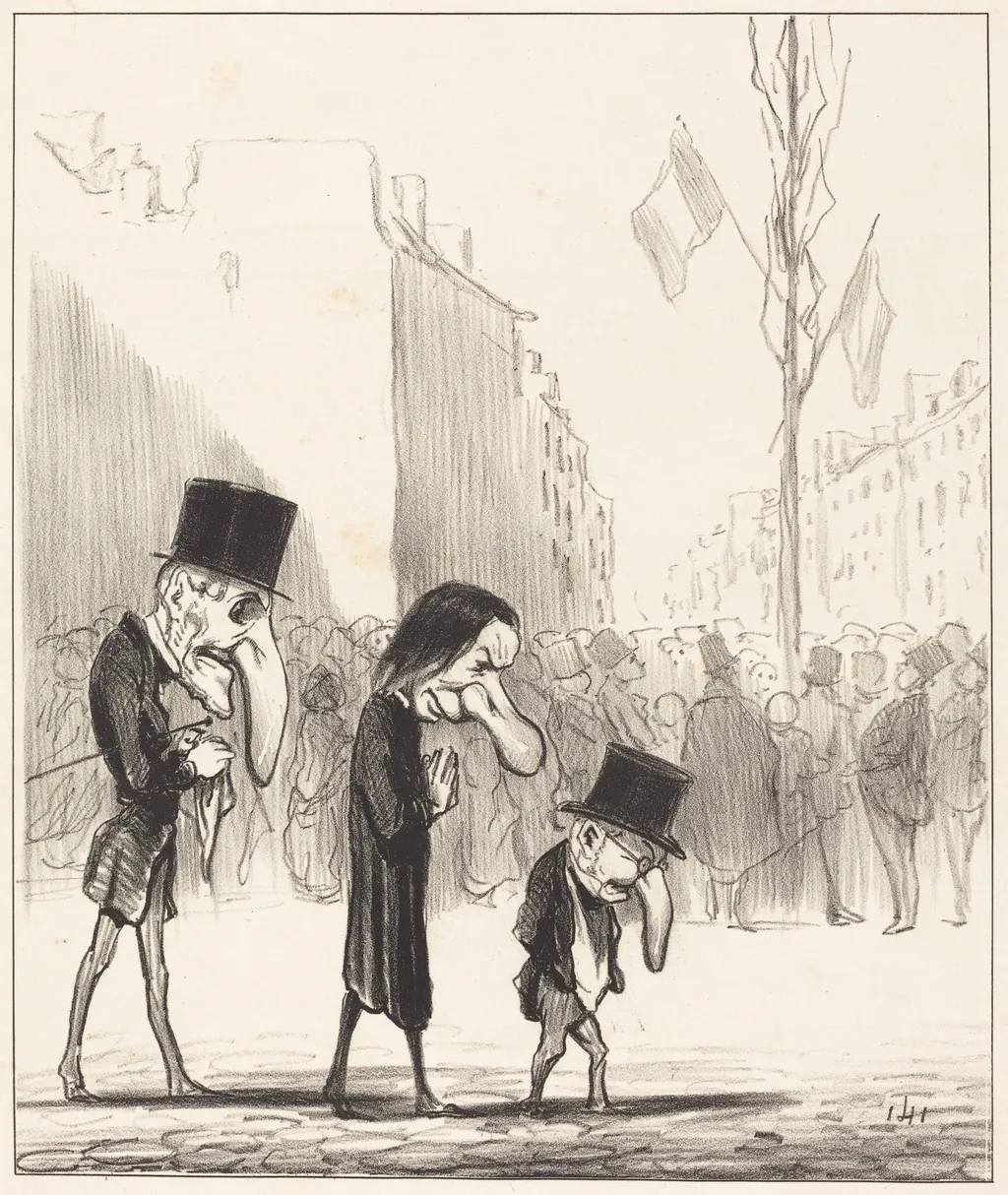
Les Trois petits saints is an ink print by the Romanticist artist Honoré Daumier. It dates from 1844 and is held in the collection of the National Gallery of Art.
About this work
Overview
Les Trois petits saints is a lithograph created by French artist Honoré Daumier in 1844. Characteristic of his socially conscious body of work, this print reflects Daumier's penchant for satirical commentary on 19th-century French society.
Subject & Meaning
The lithograph depicts three figures in a crowd, identifiable by their tall black hats and long coats, with faces obscured, conveying fear or embarrassment. The scene implies a sense of urgency or secrecy, potentially alluding to Daumier's critiques of societal elements such as monarchy, aristocracy, or clergy.
Technique & Style
Daumier employed quick, expressive lines in Les Trois petits saints, prioritizing emotional intensity over detailed rendering. This sketchy approach lends the scene a sense of immediacy and realism, consistent with his caricatural style as seen in publications like La Caricature and Le Charivari.
History & Provenance
Created in 1844, Les Trois petits saints is part of Daumier's prolific output of lithographs during this period. While specific provenance details are not provided, the work aligns with Daumier's active engagement with satirical printmaking for popular journals.
Context
This lithograph is situated within Daumier's broader critique of French social and political life in the 19th century. Its themes and style reflect the artist's role as a commentator on contemporary issues, using satire to address the monarchy, aristocracy, and clergy.
Legacy
Les Trois petits saints contributes to Daumier's legacy as a pioneering figure in 19th-century French satire. His use of lithography, a medium accessible to a broad audience, helped establish him as a vocal critic of his time, influencing subsequent generations of artists and caricaturists.
Own this work as a print
Artist & collection
Artist
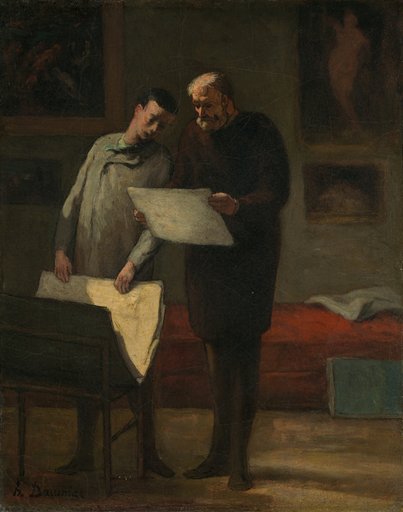
Honoré-Victorin Daumier (French: ; 26 February 1808 – 10 or 11 February 1879) was a French painter, sculptor, and printmaker, whose many works offer commentary on the social and political life in France, from the…









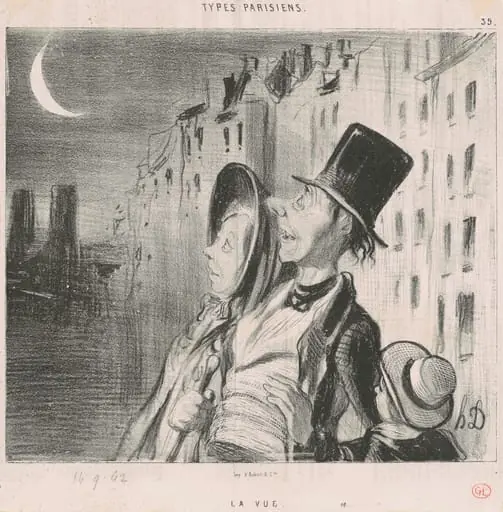 La Vue
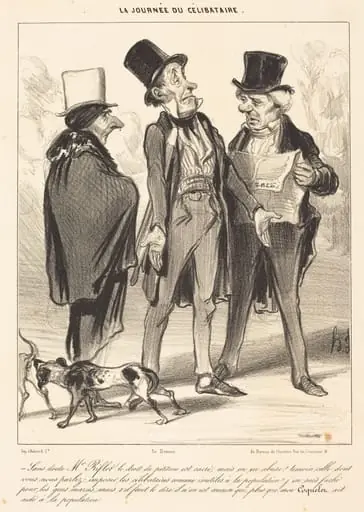 Sans doute M. Riflot le droit...
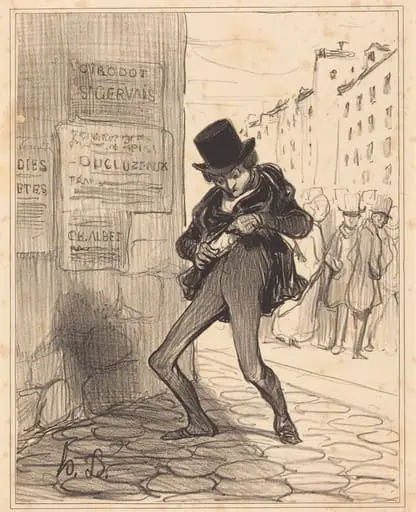 Volé!... Rue vide-gousset...
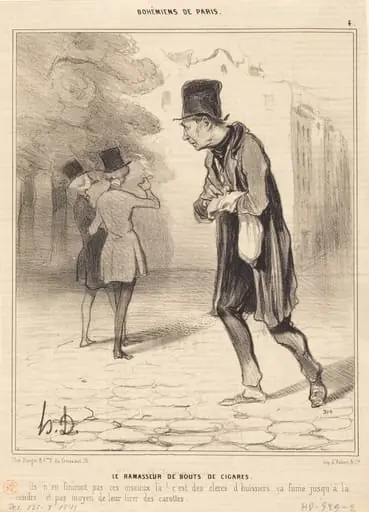 Le Ramasseur de bouts de cigares
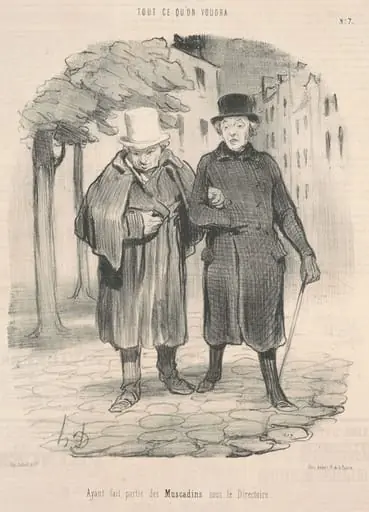 Ayant faitartie des muscadins sous le directoire
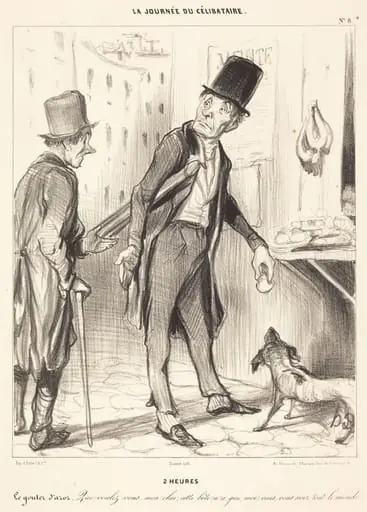 2 heures
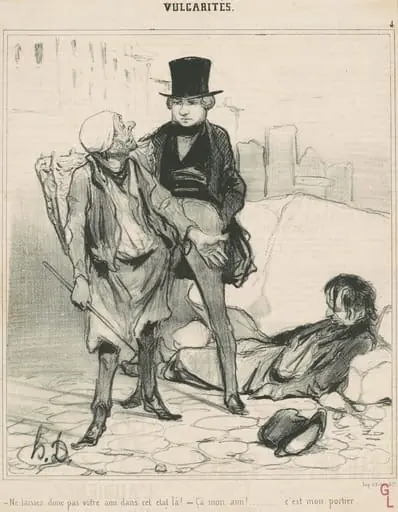 Ne laissez donc pas votre ami dans cet état la!
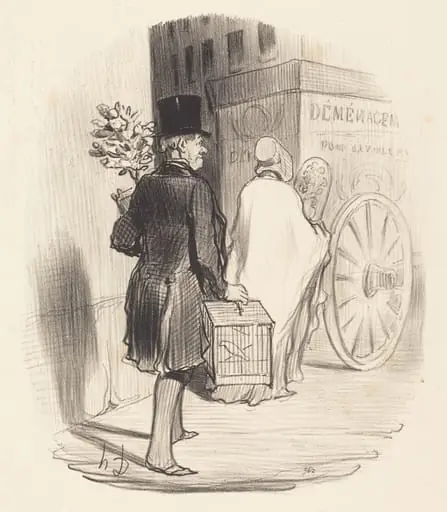 Parisien transportant dans un autre quartier...
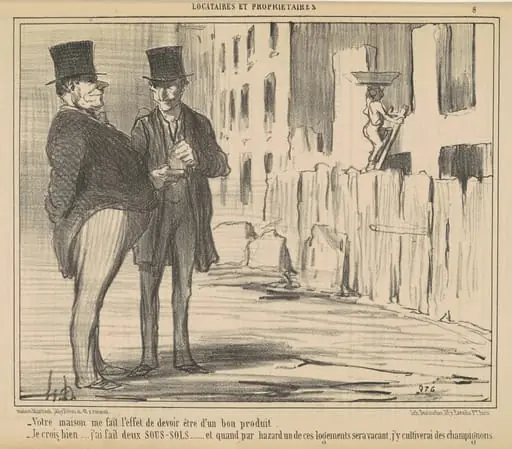 Votre maison me fait l'effet de devoir ...
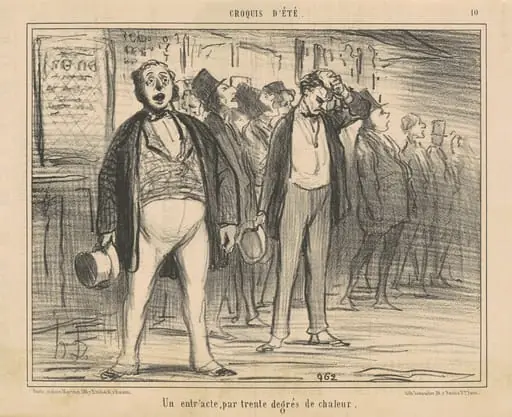 Un entr'acte, par trente degrés de chaleur
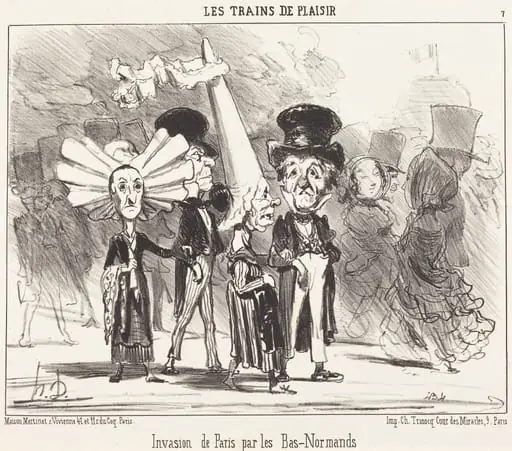 Invasion de Paris par les Bas-Normands
- Les Trois petits saints